Mosasaurus Coloring Pages (323+ Free Printables)
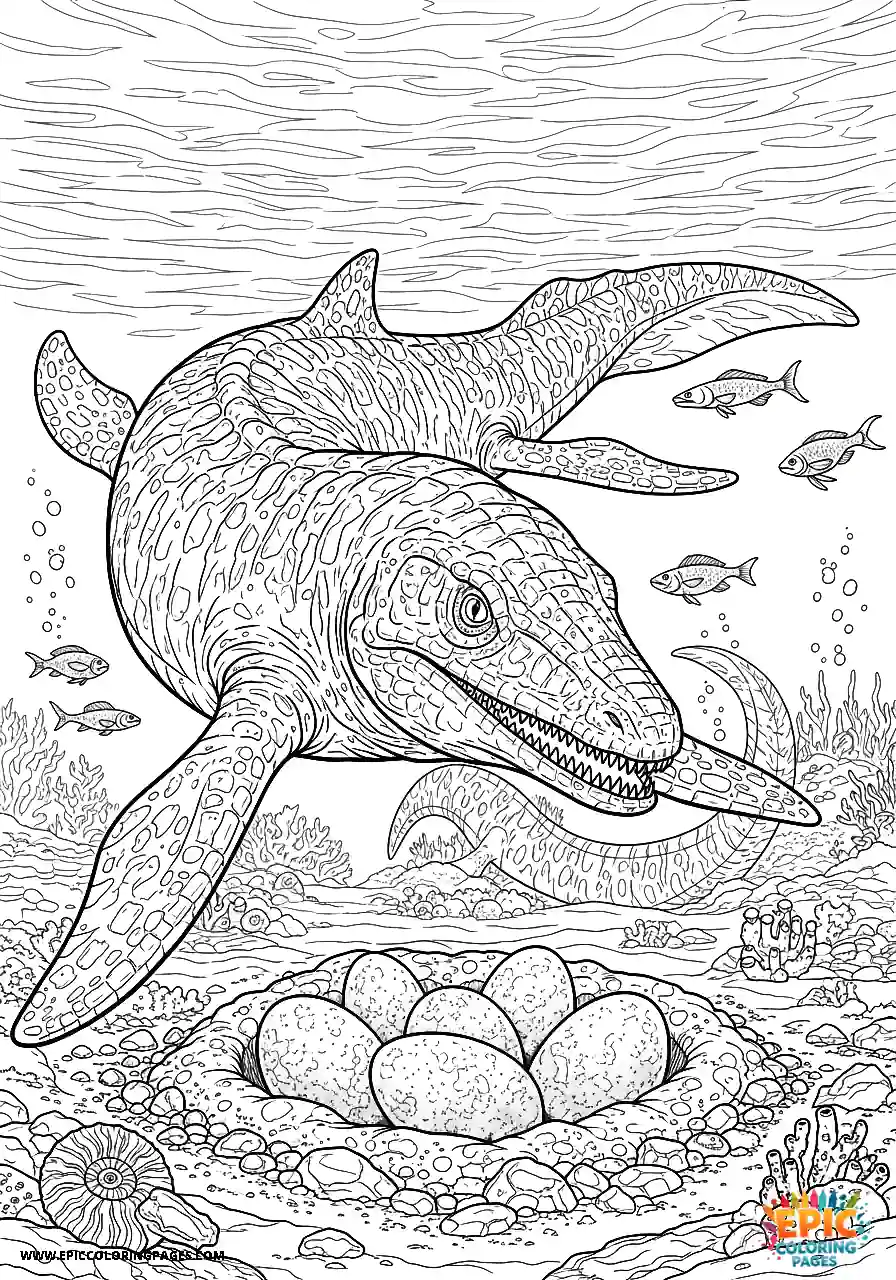
First discovered near the Meuse River in the Netherlands in 1764, the Mosasaurus is not actually a dinosaur but a colossal marine lizard belonging to the squamate family making it a close relative of modern monitor lizards and snakes. Dominating the Late Cretaceous oceans roughly 70 to 66 million years ago, this apex predator used its four paddle like flippers and a powerful tail fluke to propel itself through the water with terrifying speed. This collection of Mosasaurus coloring pages captures the hydrodynamic form of the “Meuse Lizard,” offering scientifically accurate depictions of its scales and double-hinged jaw alongside stylized versions for younger ocean explorers.
Physically, the Mosasaurus was built for efficiency in the open sea. Unlike the long-necked plesiosaurs, it possessed a robust, torpedo-shaped body that could reach lengths of up to 50 feet. Its skull was equipped with a second row of teeth on the roof of its mouth (pterygoid teeth) to secure slippery prey like ammonites and sharks. These illustrations provide a unique challenge for colorists to experiment with aquatic shading, counter shading techniques (dark backs and light bellies), and the interplay of light filtering through water on its sleek skin.

๐จ Free Interactive Editor - Customize Your Coloring Pages
Click on any image to open our FREE editor and add personalized text, emojis, zoom in for details, and save in professional 300 DPI quality!
Add Text
11+ fonts
Emojis
500+ items
Zoom
Precision
Save
300 DPI
Click any coloring page to start customizing!
Explore Different Mosasaurus Coloring Styles
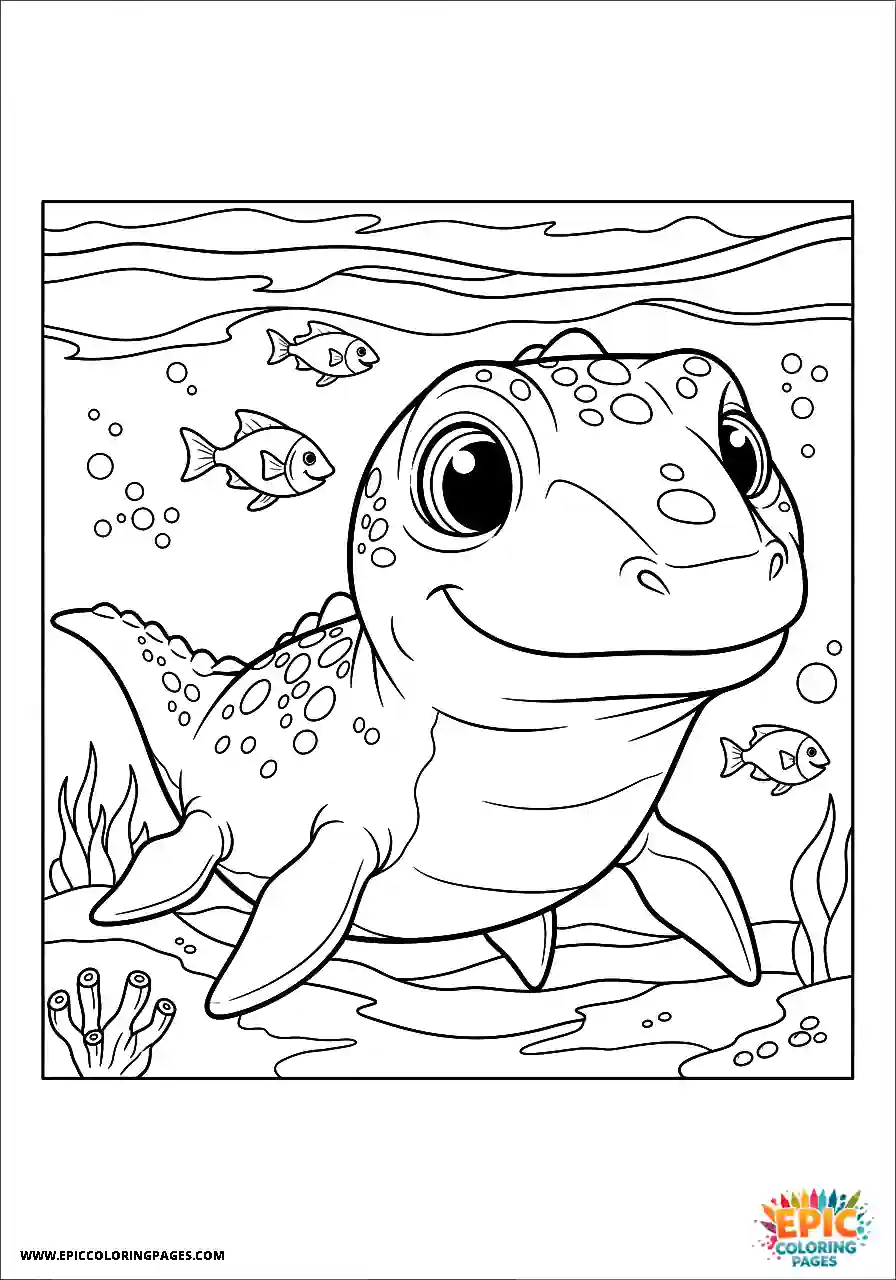
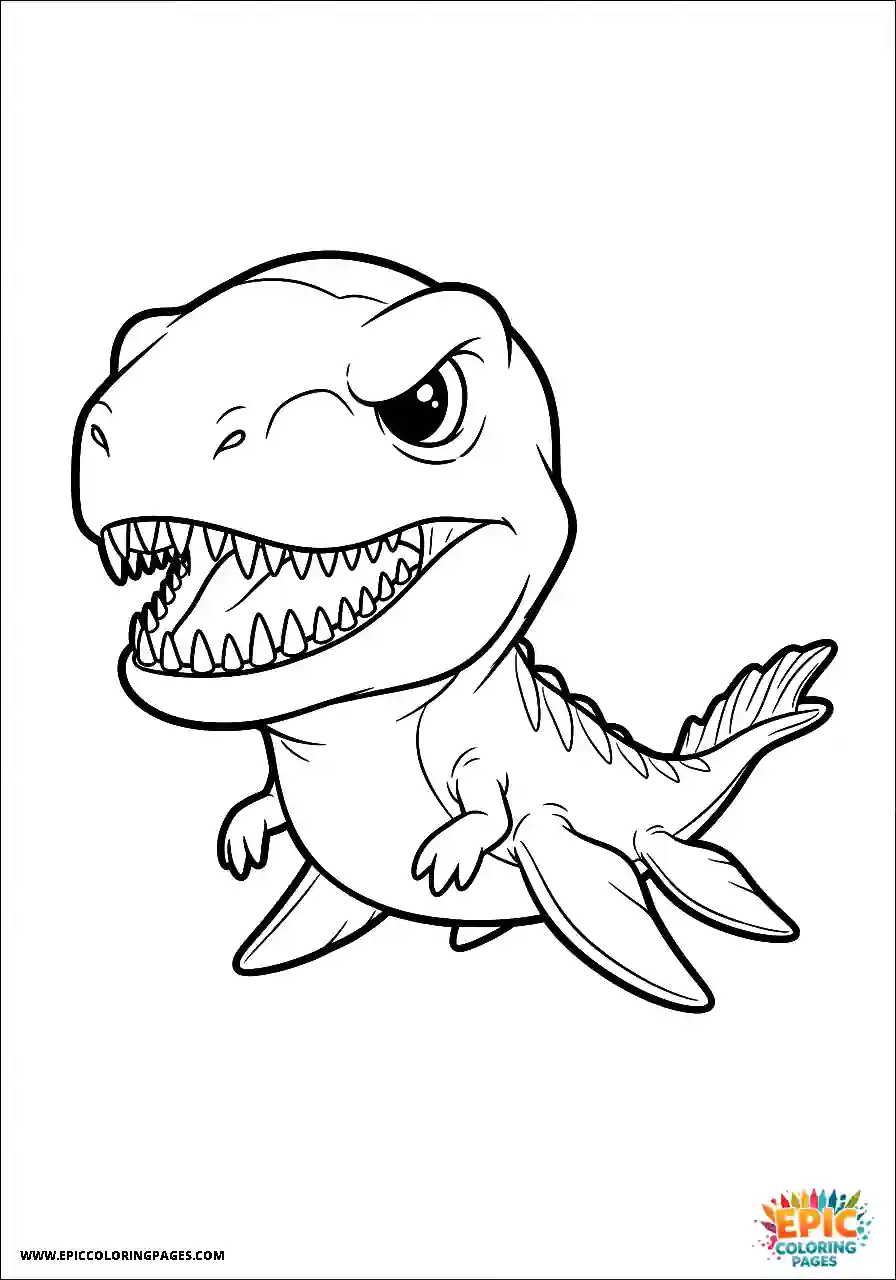
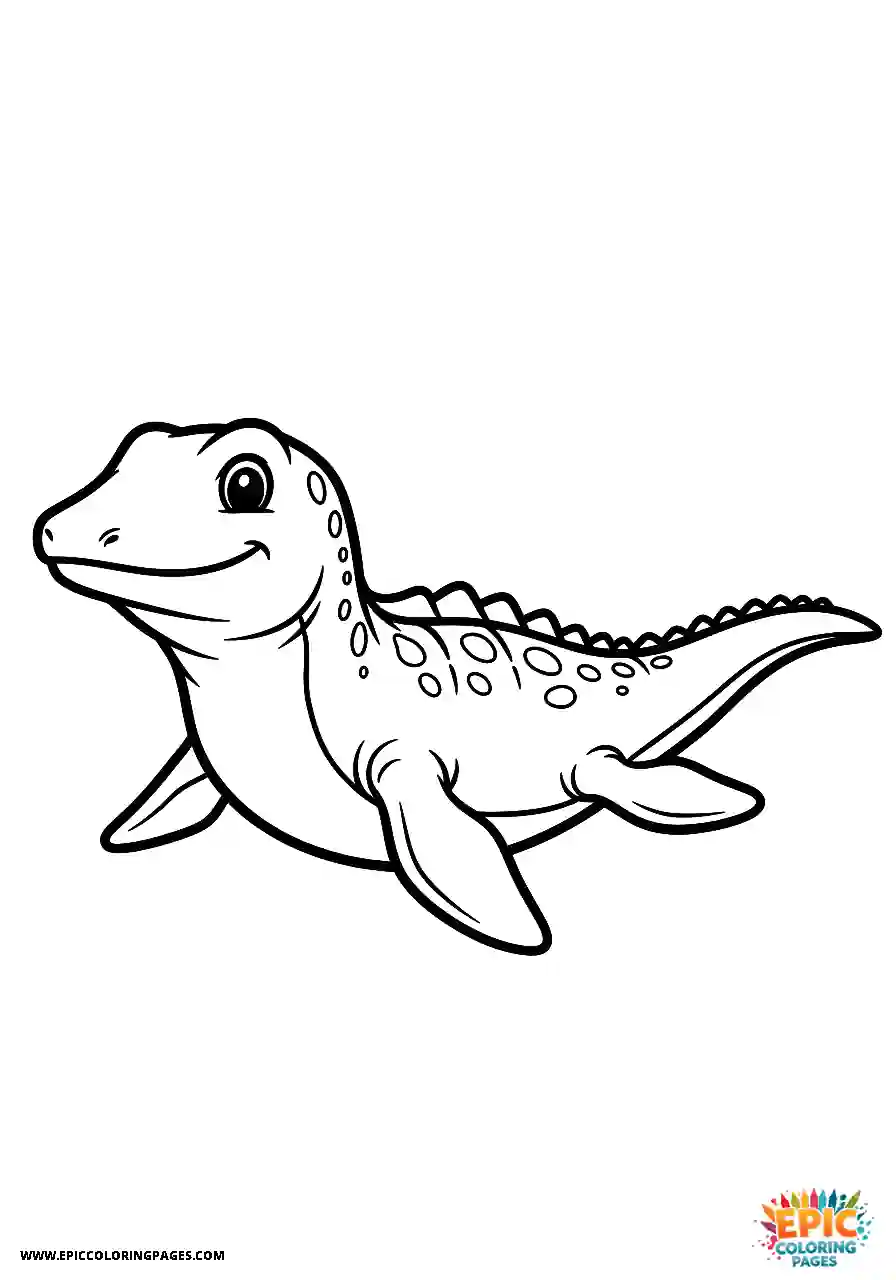
Our massive collection features Mosasaurus illustrations in every artistic style imaginable, ensuring there’s a perfect match for every skill level and personal preference. Young artists will absolutely love our cartoon and chibi versions, which transform this fearsome predator into an adorable ocean friend with big eyes and rounded features. These simplified designs are perfect for building confidence and developing fine motor skills in preschoolers and early elementary students.
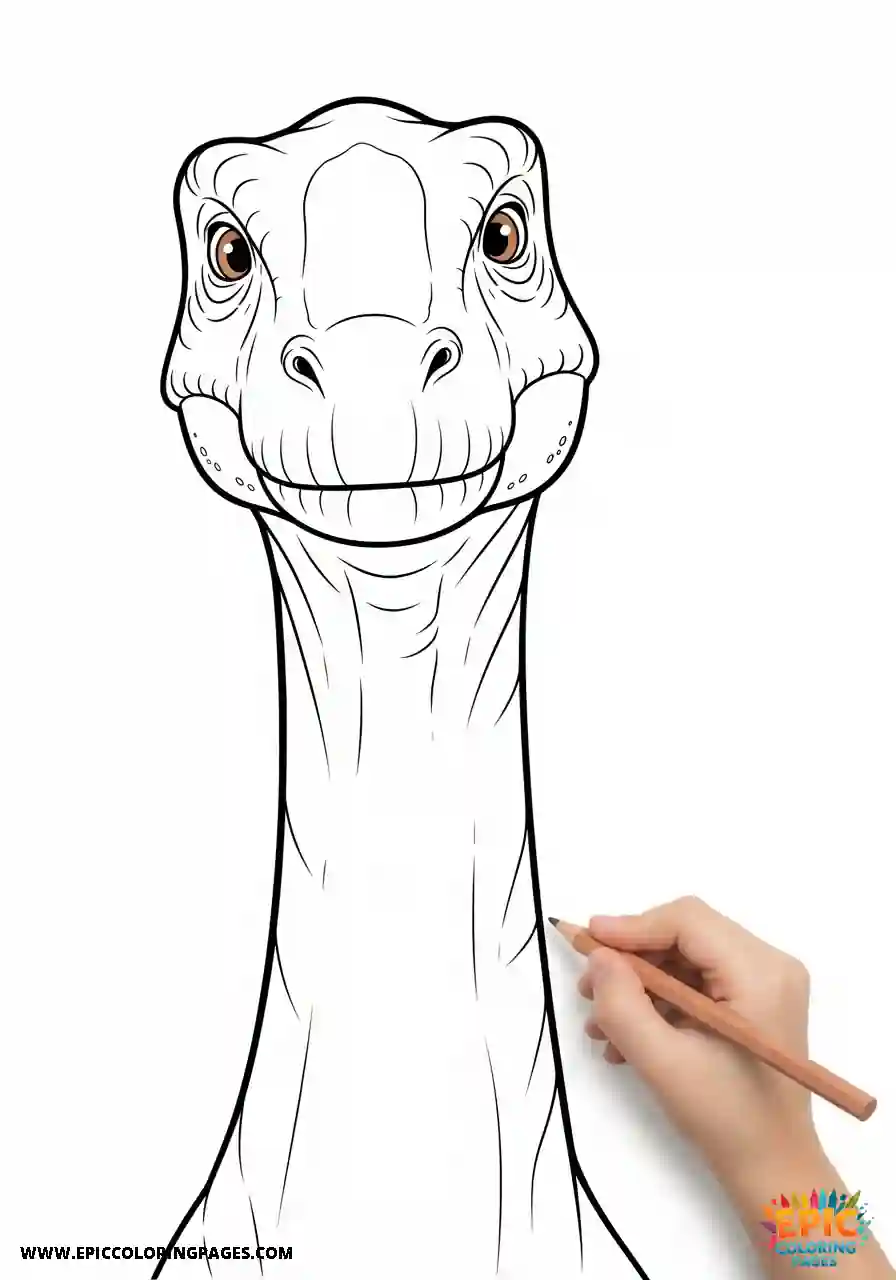
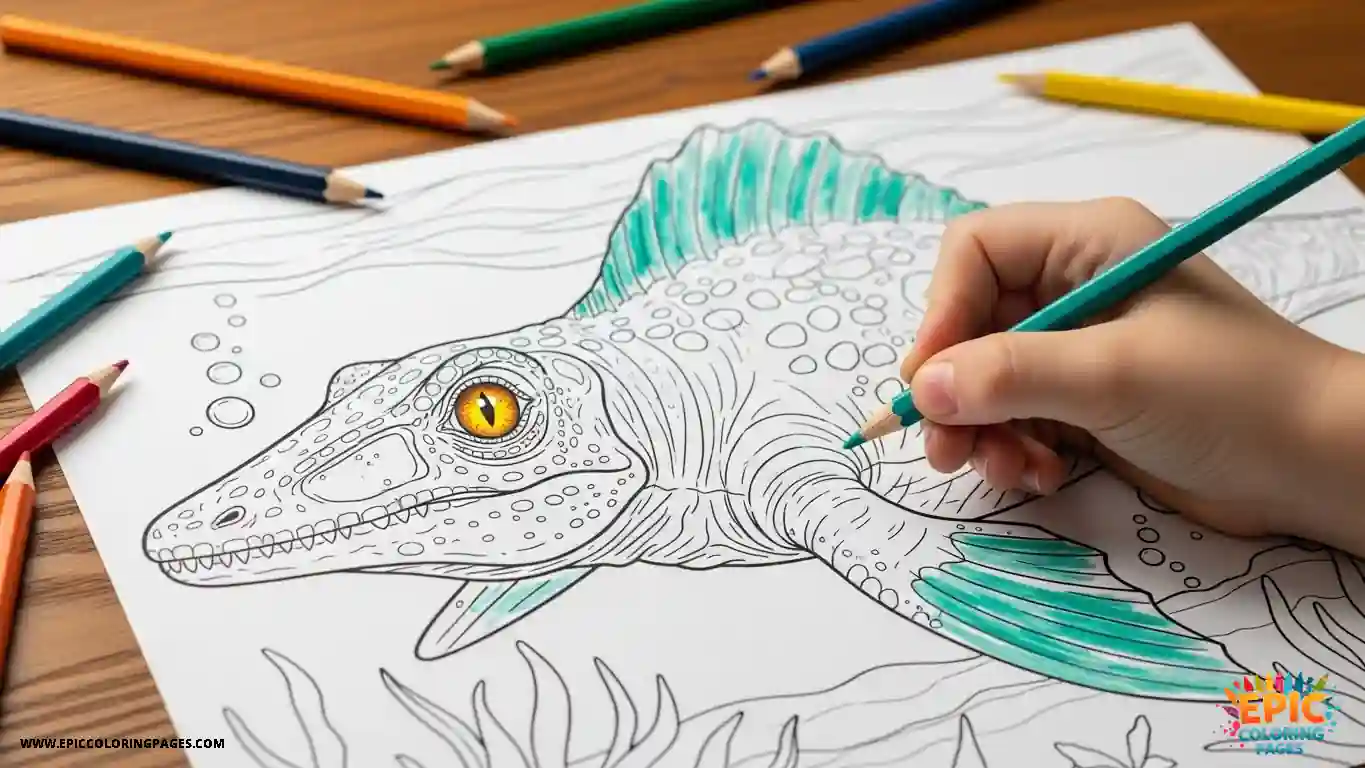
This collection focuses on the unique adaptations of this marine giant. You will find illustrations that highlight the streamlined anatomy necessary for hunting in ancient oceans, challenging you to render smooth textures rather than the rough skin of land dinosaurs. We also feature scenes of the Mosasaurus breaching the water’s surface famous from modern cinema allowing you to practice water effects, splashes, and the contrast between wet skin and the open air. Whether you prefer a realistic biological study or a dramatic action scene, these pages capture the essence of the ocean’s greatest predator.
Download Your Preferred Mosasaurus Coloring Image
More Dinosaur
Want to explore even more prehistoric creatures? Our main Dinosaur Coloring Pagesย collection features hundreds of additional designs including T-Rex, Triceratops, Velociraptor, Pteranodon, and dozens of other fan-favorite species! From fierce carnivores to gentle herbivores, from flying reptiles to other marine giants, you’ll find an endless supply of free printable coloring pages to fuel your dinosaur obsession. Click through to discover your next coloring adventure and build your own prehistoric art portfolio!
Professional Coloring Tips for Mosasaurus
The Mosasaurus presents a unique challenge that sits somewhere between coloring a dinosaur and coloring a modern marine animal. This ancient marine reptile not actually a dinosaur, but a massive ocean-dwelling predator offers rich opportunities for artistic interpretation while teaching you techniques applicable to any aquatic subject.
Understanding the Mosasaurus Form
Before selecting your first color, take time to observe the shape you’re working with. The Mosasaurus had a streamlined, torpedo-like body built for moving through water. This affects how you should approach shading and color placement. Water-dwelling creatures tend to have countershading darker on top, lighter underneath which helps them blend into their environment when viewed from above or below.
Notice the powerful tail, paddle-like flippers, and massive jaw. These aren’t just details to color in; they’re functional features that tell you something about how to render them convincingly. The tail would have constant muscle definition from propelling this creature through water. The flippers were likely smooth and streamlined. The jaw, filled with conical teeth, was the business end of an apex predator.
Color Choices Grounded in Biology
While nobody has seen a living Mosasaurus, we can make educated guesses based on modern marine reptiles and the environments these creatures inhabited. Sea turtles, saltwater crocodiles, and marine iguanas provide reasonable references for coloring approaches.
Consider starting with a base of deep blue-gray or greenish-gray along the back and sides. These colors make sense for an animal hunting in coastal waters where blending with the ocean depths offered survival advantages. The underbelly works well in cream, pale gray, or even a subtle yellow-tinged white. This lighter underside isn’t just aesthetically pleasing it reflects how light behaves underwater and how predators use countershading as camouflage.
Avoid the temptation to make everything uniformly one color. Real animals have variation. Subtle shifts between blue-gray and green-gray across different body sections create visual interest while remaining biologically plausible. Some areas might lean slightly warmer, others cooler, depending on how blood flow might have affected surface coloration or how light interacts with different parts of the body.
Working With Water Environment
One of the most effective ways to elevate your Mosasaurus coloring is acknowledging that this creature lived underwater. This doesn’t mean you need to color an elaborate ocean scene, but understanding how water affects appearance helps immensely.
Water filters out colors as depth increases, with reds disappearing first, then oranges and yellows, leaving mostly blues and greens in deeper water. If you’re showing your Mosasaurus at depth, leaning heavily into cool colors makes scientific sense. For a creature near the surface, you have more freedom with warmer tones.
Light behaves differently underwater than in air. It scatters and creates dappled patterns as it filters down through the surface. You can suggest this by leaving irregular lighter patches across the back and sides not stark white, but lighter values of your base colors. These don’t need to be precisely rendered; subtle variations that break up solid color convey the underwater environment effectively.
If you choose to add water around your Mosasaurus, remember that water isn’t simply blue. It reflects the sky, contains particles, and has depth. Lighter blues or blue-greens work for shallower water or areas near the surface. Deeper blues or even blue-violets suggest greater depth. Adding horizontal bands of slightly different values creates the impression of water layers and distance.
Texture and Scale Patterns
The Mosasaurus likely had skin somewhere between smooth (like a dolphin) and subtly textured (like a sea turtle). How you render this affects the overall impact of your coloring.
For a smoother appearance, use consistent, even strokes that follow the body’s curves. Blend your colors gradually without harsh transitions. This approach emphasizes the creature’s streamlined form and suggests efficiency in water.
For more texture, incorporate subtle scale patterns, particularly along the back and sides. These don’t need to be large or distinct small, overlapping impressions created with slightly darker versions of your base color add visual interest without overwhelming the form. Apply these more heavily on the head, along the spine, and on the upper portions of the tail where you want to draw attention.
The underbelly should be smoother with minimal texture. This reflects both the likelihood that ventral surfaces were less scaled and creates a nice contrast with the more textured dorsal surface.
Creating Depth and Dimension
The cylindrical body of the Mosasaurus requires careful shading to avoid looking flat. Imagine a tube the center top catches the most light, while sides gradually darken as they curve away from your light source.
Establish your light direction first. Top-down lighting is most natural and easiest to execute consistently. The spine and upper surfaces remain your lightest values, while the sides gradually darken. The lowest point of the sides, just before the form begins to curve toward the belly, should be your darkest value on the main body. Then the belly slightly lightens again.
The flippers need particular attention. These are relatively flat, paddle-like structures. Shade them as planes rather than rounded forms. If your light comes from above and slightly to the side, one flipper might be mostly in light while the opposite flipper falls largely in shadow. The flipper edges can be slightly darker than centers, creating the impression of thickness.
The tail tapers and has vertical flukes at the end. This requires dimensional shading too the tail shouldn’t be uniformly colored from base to tip. As it tapers, adjust your values to maintain the sense of volume. The flukes themselves are thin and should be shaded to show this.
The Head and Face Details
The Mosasaurus head is where personality emerges. This was an intelligent predator, and your coloring choices here create mood and character.
The eyes are crucial. Marine reptiles typically have darker eyes, often black or very dark brown. But a completely flat black eye looks lifeless. Leave a small highlight a tiny spot of white or very light gray positioned consistently with your light source. This single detail brings immediate life to your creature.
Consider adding a slightly darker ring around the eye or a subtle color shift in the area immediately surrounding it. This creates depth and draws attention to this focal point. Some colorists add a thin ring of a contrasting color perhaps a muted orange or yellow to suggest the intensity of a predator’s gaze.
The mouth area offers opportunities for contrast. The jaw line might be slightly darker, creating definition. If the mouth is open, the interior should be considerably darker than the exterior pinks, reds, or purples work well, transitioning to darker values toward the throat. Teeth should be off-white or cream rather than pure white, with shadows where they emerge from the gums and highlights on their tips or ridges.
Background and Context Decisions
Your background choice dramatically affects how the Mosasaurus reads visually. A completely white background creates a clean, almost scientific illustration feel. Your creature pops forward clearly, which works well for educational contexts or when you want the Mosasaurus to be the undisputed star.
Adding even a simple horizon line or depth gradient changes the entire feeling. A simple two-tone background lighter blue above, darker below immediately establishes an underwater environment. This takes minimal effort but adds significant context.
If you want more environmental detail, keep it supporting rather than competing. Suggestions of other marine life small fish rendered loosely with simple shapes add interest without distraction. Keep these elements lighter in value and less saturated in color than your main subject. They should enhance, not compete.
Bubbles are tempting but easily overdone. If you include them, make them various sizes, keep them sparse, and use them to suggest movement or direction rather than decorating the entire page.
Material Considerations
Colored pencils excel with marine subjects because the gradual blending possible with pencils mimics how colors transition underwater. Build up layers slowly, using light pressure initially. For smooth areas, use circular motions or strokes that follow the body’s contours. Blending stumps or colorless blender pencils help create the seamless gradations that suggest slick, aquatic skin.
Markers require more planning since they’re less forgiving. The trick with markers for a Mosasaurus is working quickly while colors are wet to blend edges. Start with lighter colors and add darker values while previous layers are still slightly damp. This creates the smooth transitions that suit marine subjects. Alcohol-based markers blend more easily than water-based for this application.
Watercolor pencils or actual watercolors naturally suit aquatic subjects. The fluid blending mimics water itself. If you’re using watercolor techniques, remember to preserve your lightest lights by leaving them unpainted or lifting color with a damp brush. Work from light to dark, building up depth gradually.
Gel pens serve as excellent finishing tools. White gel pens add those crucial highlights to eyes and create light-catching water droplets if your Mosasaurus is breaching. Metallic or glitter gel pens can suggest the play of light on wet skin, though use these sparingly to avoid kitsch.
Common Mistakes and Corrections
Many people make the Mosasaurus too uniformly colored, which reads as flat and unnatural. Even within your chosen color palette, incorporate subtle variations. The back might shift from blue-gray to green-gray along its length. The sides might lighten slightly mid-body. These variations create visual interest and suggest a living creature rather than a colored shape.
Another frequent issue is inconsistent light direction. If the top of the head is light, the top of the back should be too. If the left flipper is shaded, the left side of the tail should receive similar treatment. Inconsistent lighting breaks the illusion of a three-dimensional form. Before you go too far, step back and verify your light logic holds throughout.
Over-detailing the entire body is exhausting to create and exhausting to view. Not every scale or texture needs equal attention. Focus your finest details on the head and areas near it, letting other regions be rendered more simply. This creates a natural focal point and prevents visual overwhelm.
If your creature looks muddy, you’ve likely mixed too many colors or blended colors that don’t harmonize. Stick to a limited palette of colors that work together blues, greens, and grays typically harmonize for marine subjects. If you want warmth, add it strategically rather than throughout.
Advanced Techniques Worth Exploring
Once you’re comfortable with basic coloring, consider atmospheric perspective. If you’re adding any background elements distant rocks, other creatures, underwater vegetation make them lighter, less saturated, and less detailed than your foreground Mosasaurus. This mimics how water diffuses details at distance and creates impressive depth.
Experiment with suggesting bioluminescence. While we don’t know if Mosasaurus had this feature, artistic license allows speculation. Subtle glows along certain areas perhaps the throat, edges of flippers, or running in lines along the body create striking visual interest. Use light colors (pale blues, greens, or purples) and make surrounding areas slightly darker to enhance the glow effect.
Try creating a sense of motion. If your Mosasaurus is swimming, color might be slightly blurred along the tail’s trailing edge, suggesting water displacement. Adding a few simple lines behind the creature in slightly lighter shades of your water color suggests motion trails.
Consider the story your coloring tells. Is this a creature in calm waters, hunting, fleeing, or simply cruising? Your color intensity, contrast choices, and compositional decisions all contribute to narrative. High contrast with dramatic dark and light suggests tension or drama. Softer, more harmonious colors create calm.
Developing Your Personal Approach
Color the same Mosasaurus outline multiple times with different approaches. Try one with realistic, muted colors and careful biological accuracy. Create another with bold, saturated colors that prioritize visual impact over realism. Attempt a monochromatic version using only blues, exploring how much dimension and interest you can create with a single color family.
Each version teaches you something different. The realistic version develops your observational skills and understanding of natural color harmony. The bold version pushes you to make brave choices and understand how saturation affects mood. The monochromatic attempt forces you to rely entirely on value rather than color variety to create interest.
Photography of modern marine animals provides endless inspiration. Study how light plays across a sea turtle’s shell or how a seal’s wet skin reflects light. Notice the subtle color variations in a shark’s skin or how manatees have mottled, complex coloring despite seeming uniformly gray at first glance. These observations inform your prehistoric creature coloring.
The Breaks between coloring sessions matter too. Stepping away and returning with fresh eyes reveals what’s working and what needs adjustment. Details that seemed essential might look fussy. Areas that felt complete might need one more layer. Distance provides perspective.
The Mosasaurus, being an extinct creature, gives you remarkable freedom. There’s no photograph to match, no definitive “correct” version. Use scientific knowledge as a foundation, but don’t let it constrain your artistic choices. The goal isn’t perfect accuracy it’s creating something visually compelling that respects the creature’s nature while expressing your artistic voice.
Interesting facts about the Mosasaurus
Is Mosasaurus a dinosaur?
Technically, no! While Mosasaurus lived during the same time period as dinosaurs (the Late Cretaceous, about 70-66 million years ago), it was actually a marine reptile, not a dinosaur. Mosasaurus belonged to a group called mosasaurs, which were more closely related to modern snakes and monitor lizards than to dinosaurs like T-Rex or Triceratops.
Are Mosasaurus real?
Absolutely! Mosasaurus was a real creature that dominated the oceans during the Late Cretaceous period. The first Mosasaurus fossil was discovered in the Netherlands in 1764 near the Meuse River (which gave the creature its name, meaning “Meuse lizard”). Since then, paleontologists have found numerous Mosasaurus fossils across North America, Europe, and other continents.
Why is Mosasaurus not a dinosaur?
The key difference lies in anatomy and habitat. Dinosaurs were land-dwelling reptiles with legs positioned directly under their bodies, while Mosasaurus was fully aquatic with paddle-like flippers. Mosasaurus also had a different skull structure and was part of the squamate reptile lineage (related to snakes and lizards), whereas dinosaurs belong to an entirely separate evolutionary branch called Archosauria.
Can Mosasaur breathe on land?
No, Mosasaurus could not breathe on land or function outside of water. While it did breathe air using lungs (like whales and dolphins today), its massive body and flipper-adapted limbs meant it was completely dependent on water for support. If stranded on land, a Mosasaurus would have been unable to support its own weight and would have suffocated.
Could Mosasaurus breathe air?
Yes! Despite being a fully aquatic creature, Mosasaurus breathed air through lungs, just like modern whales, dolphins, and sea turtles. It would have regularly surfaced to take breaths. This is one of the key differences between Mosasaurus and fish, which extract oxygen from water through gills.
What killed the Mosasaur?
The Mosasaurus went extinct 66 million years ago during the mass extinction event that also wiped out the non-avian dinosaurs. This catastrophic event was caused by a massive asteroid impact in what is now Mexico’s Yucatan Peninsula, combined with intense volcanic activity. The impact created tsunamis, blocked out the sun with debris, and caused dramatic climate changes that collapsed marine food chains, ultimately leading to the Mosasaurus’s extinction.
Did Mosasaurus eat other dinosaurs?
While Mosasaurus didn’t hunt land-dwelling dinosaurs, fossil evidence shows it was an apex predator that ate almost anything it could catch in the ocean! Its diet included fish, sea turtles, smaller marine reptiles, ammonites (shelled cephalopods), seabirds, and even other mosasaurs. If a land dinosaur fell into the water or waded too deep, a Mosasaurus certainly would have attacked it.
How long could a Mosasaurus live?
Scientists estimate that Mosasaurus had a lifespan of approximately 20-30 years based on growth ring analysis in fossilized bones (similar to counting tree rings). However, many individuals likely didn’t reach maximum age due to predation when young, disease, or competition with other large marine predators.
Are Mosasaur fossils rare?
Mosasaur fossils are relatively common compared to many other prehistoric creatures! Because they lived in marine environments where fossilization is more likely to occur (due to rapid burial in sediment), and because they were widespread across ancient oceans, paleontologists have discovered numerous well-preserved specimens. However, complete skeletons are still considered valuable finds, and certain species remain rare.