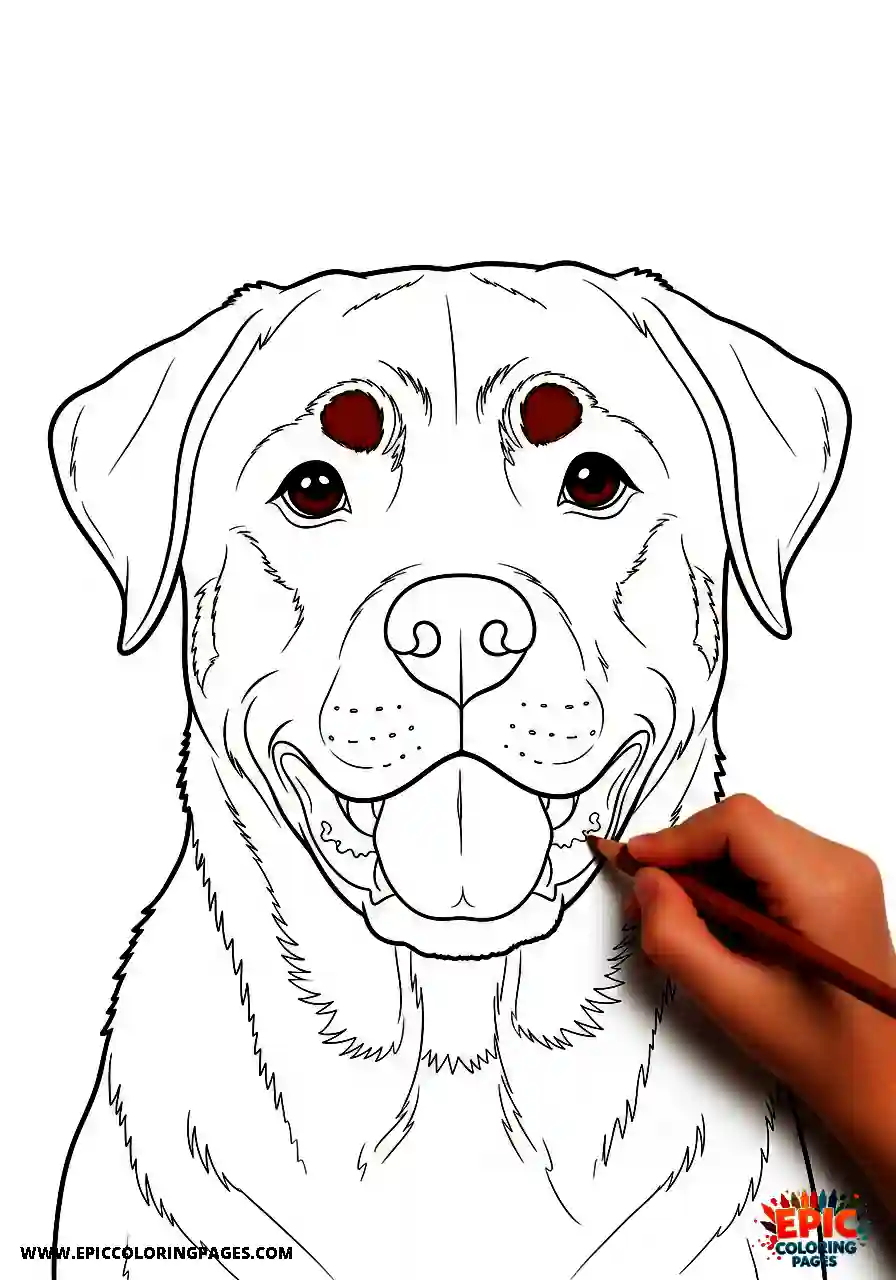
Great Dane Coloring Pages (381+ Free Stylized Printables)
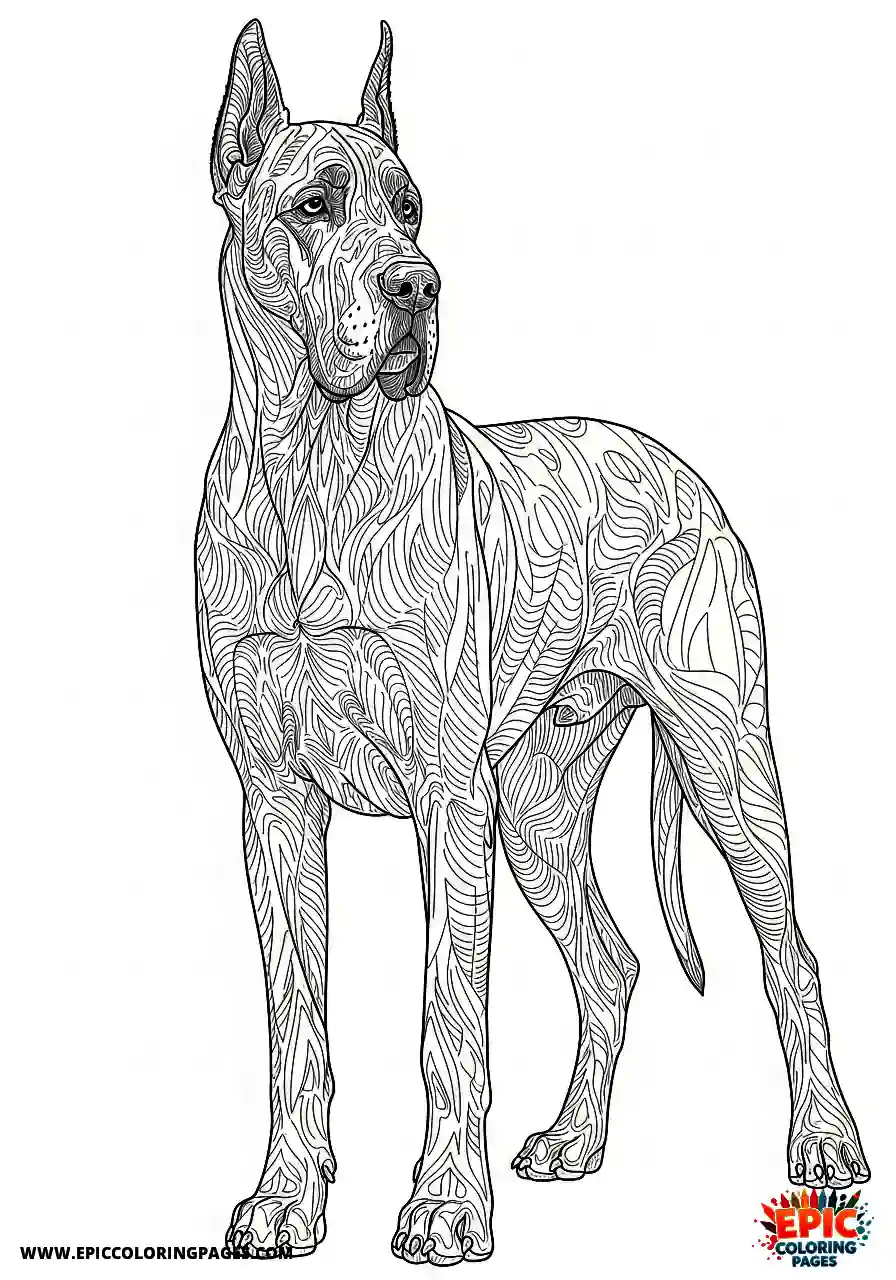
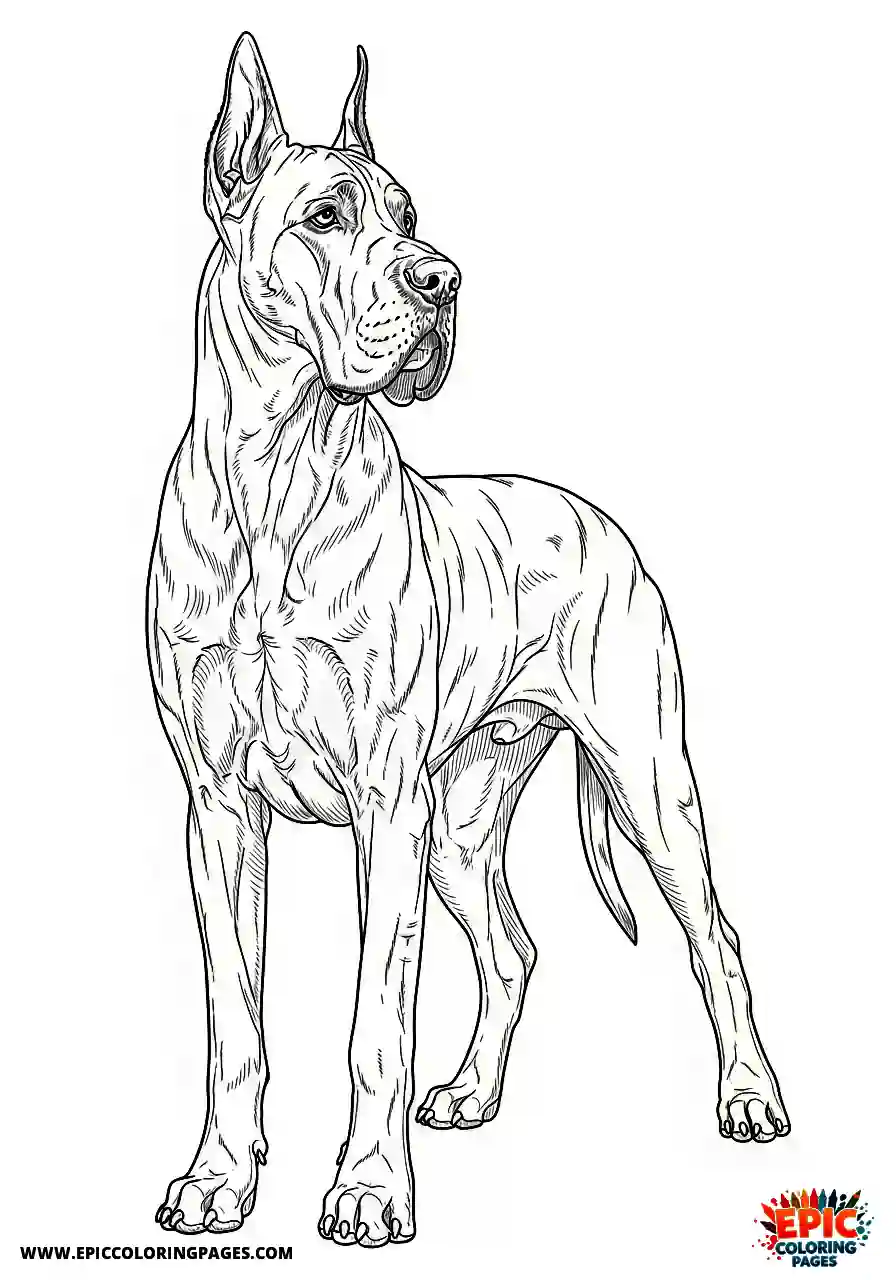
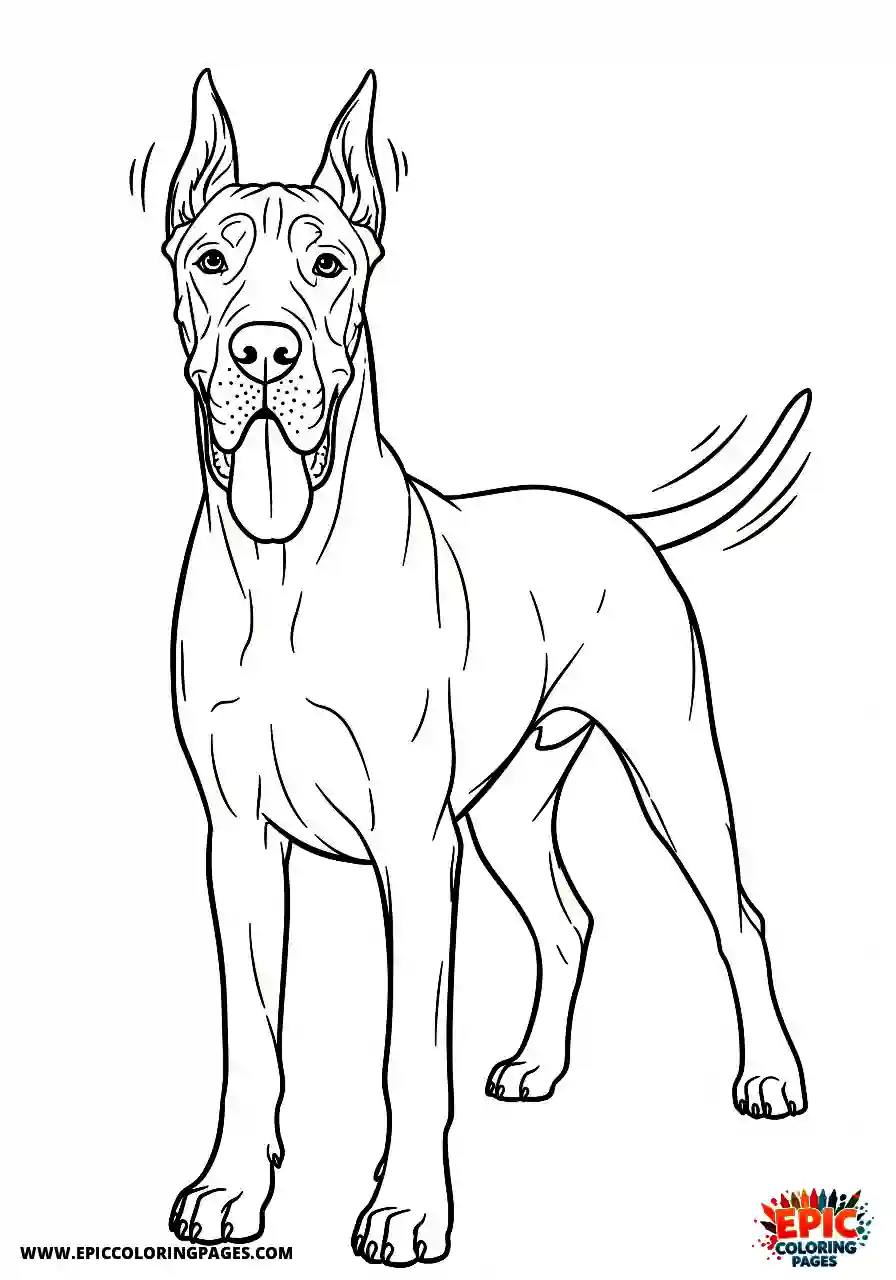
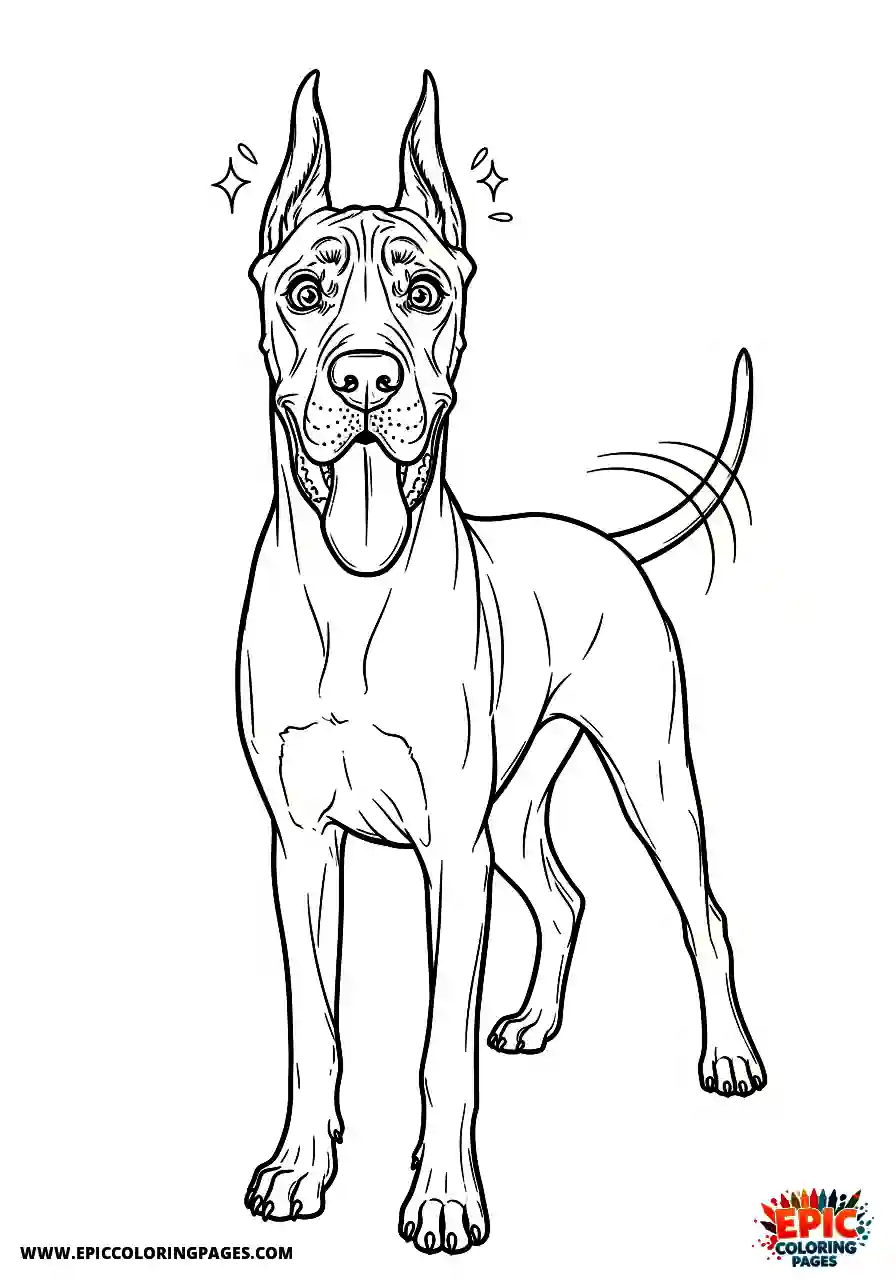
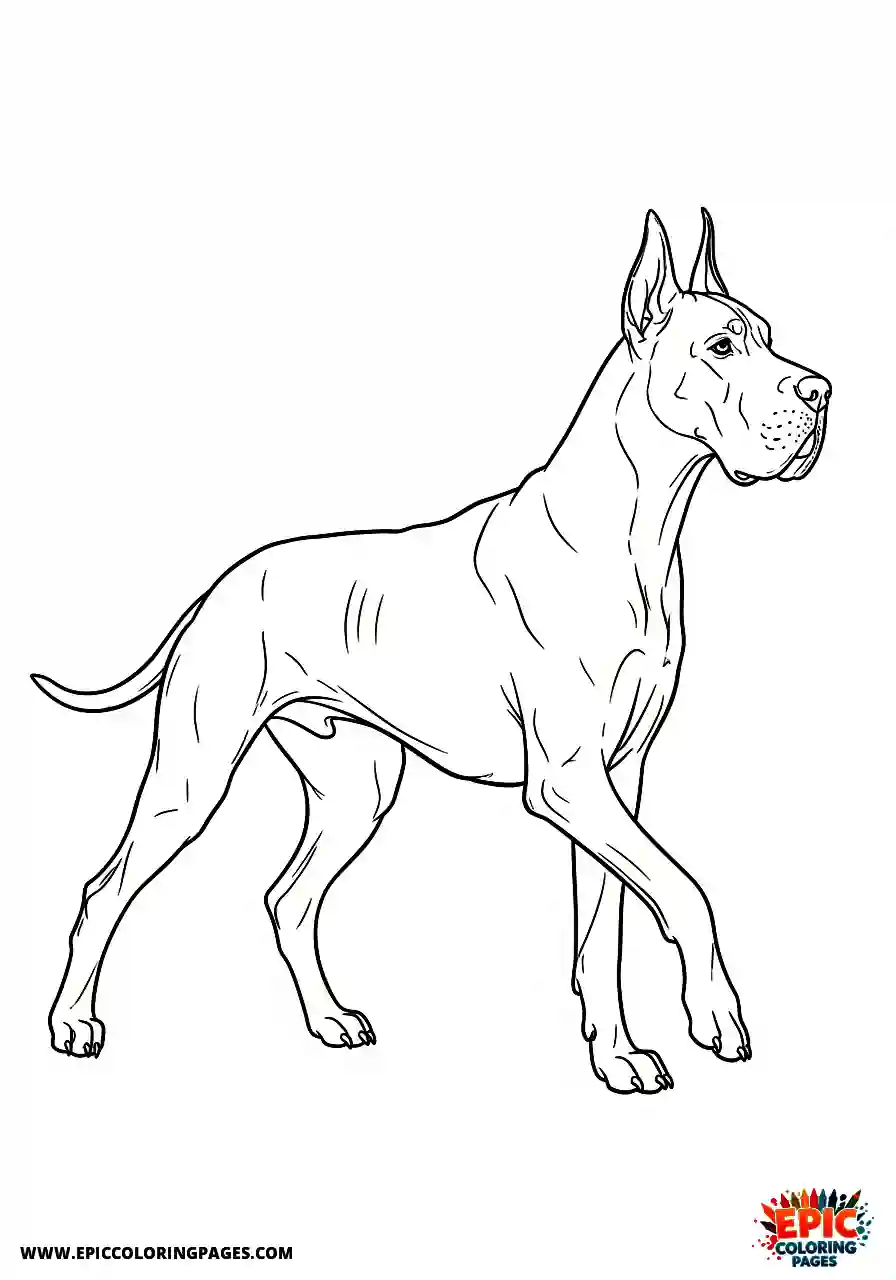
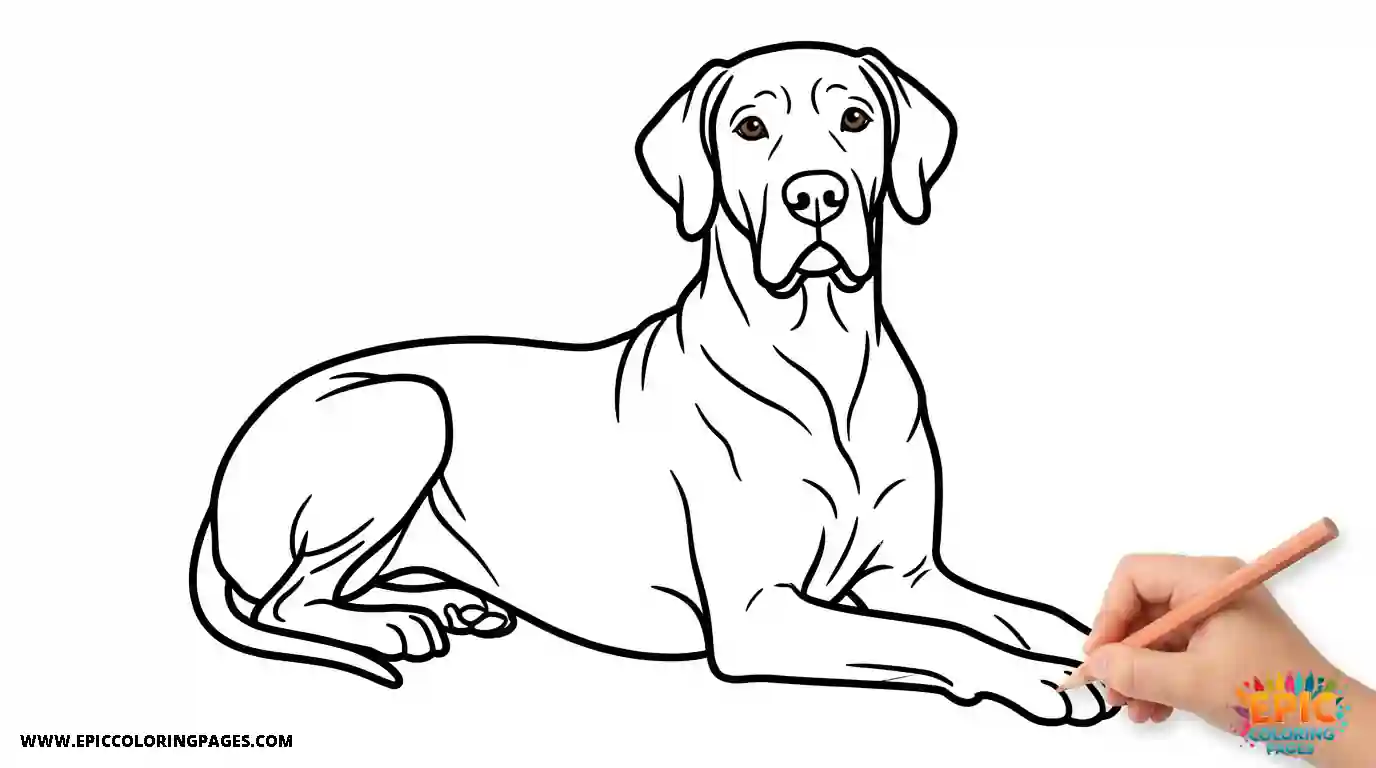
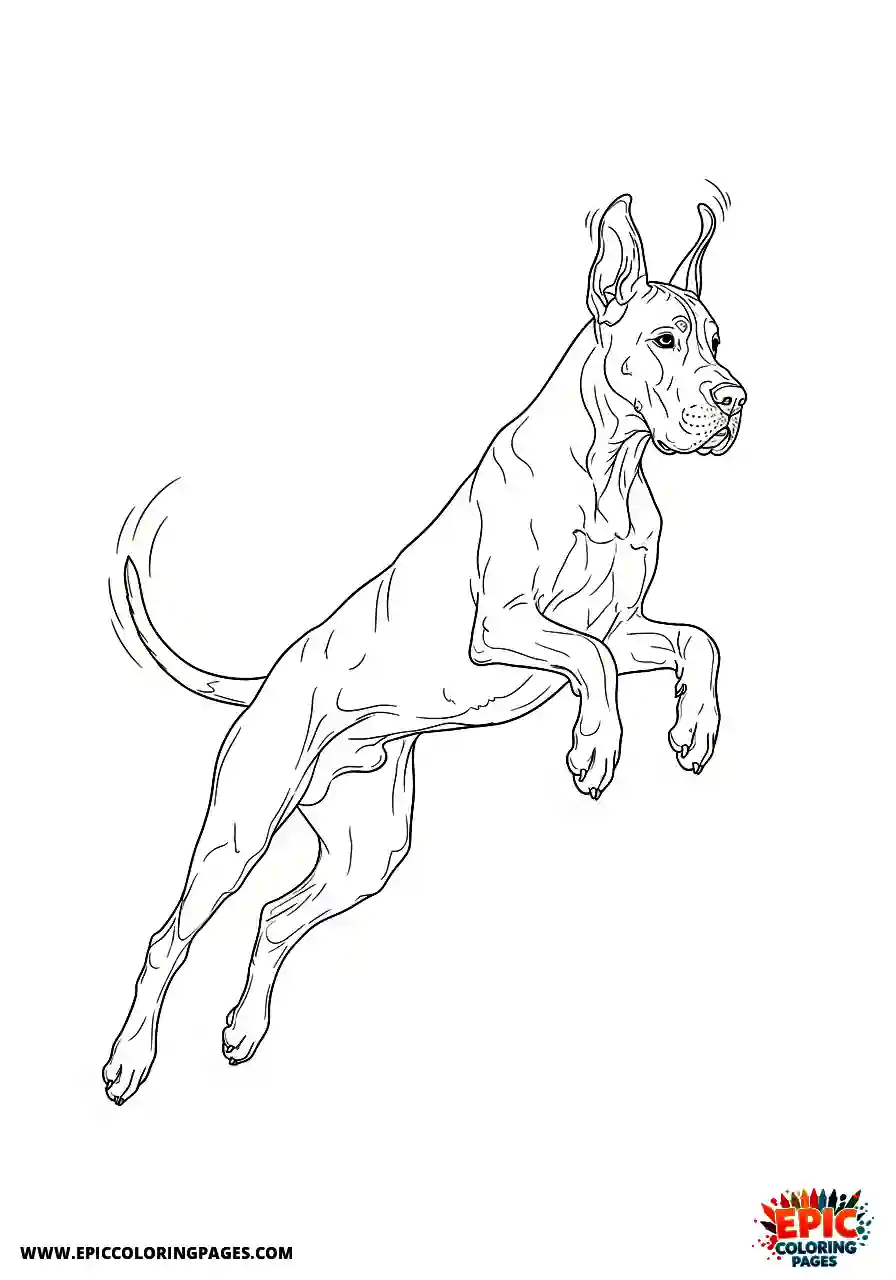
Long-limbed and architecturally striking, the Great Dane stands as one of the most visually distinctive dog breeds ever developed. Originating in Europe with strong historical ties to Germany, this breed was refined for both strength and elegance, resulting in a canine silhouette defined by elongated legs, a deep chest, and a refined head structure. Its anatomy offers a rich subject for line-based illustration: sweeping contours, proportional symmetry, and large surface areas that translate exceptionally well into high-quality coloring compositions.
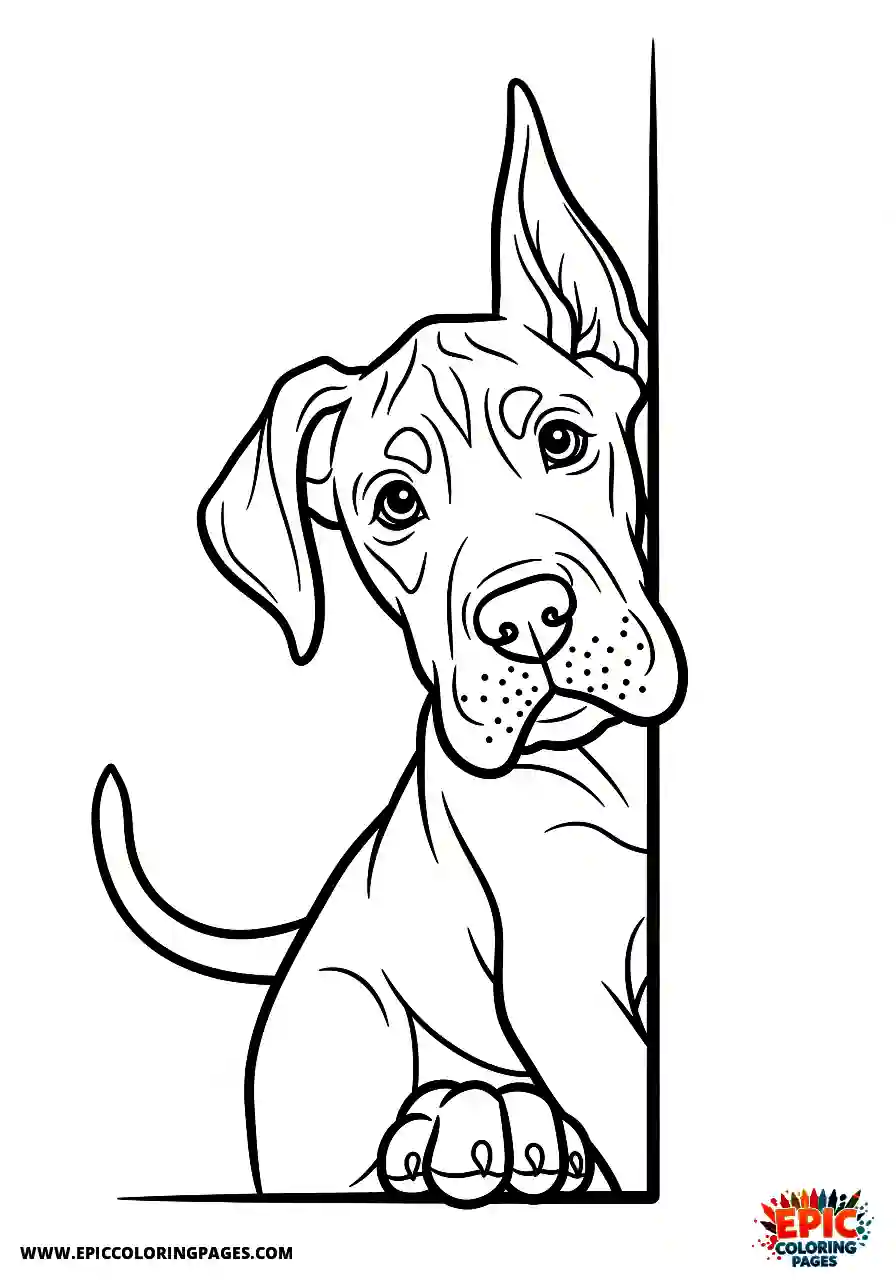
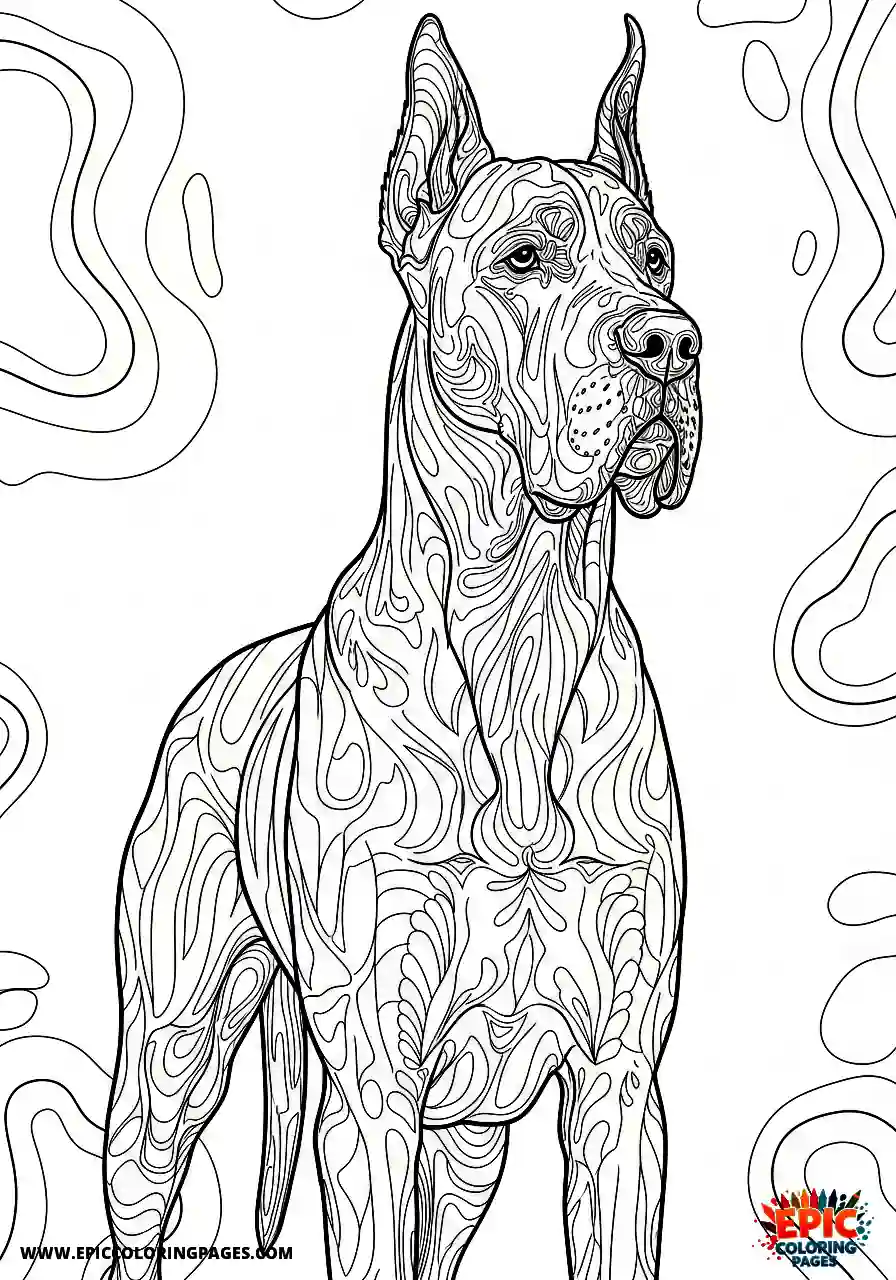
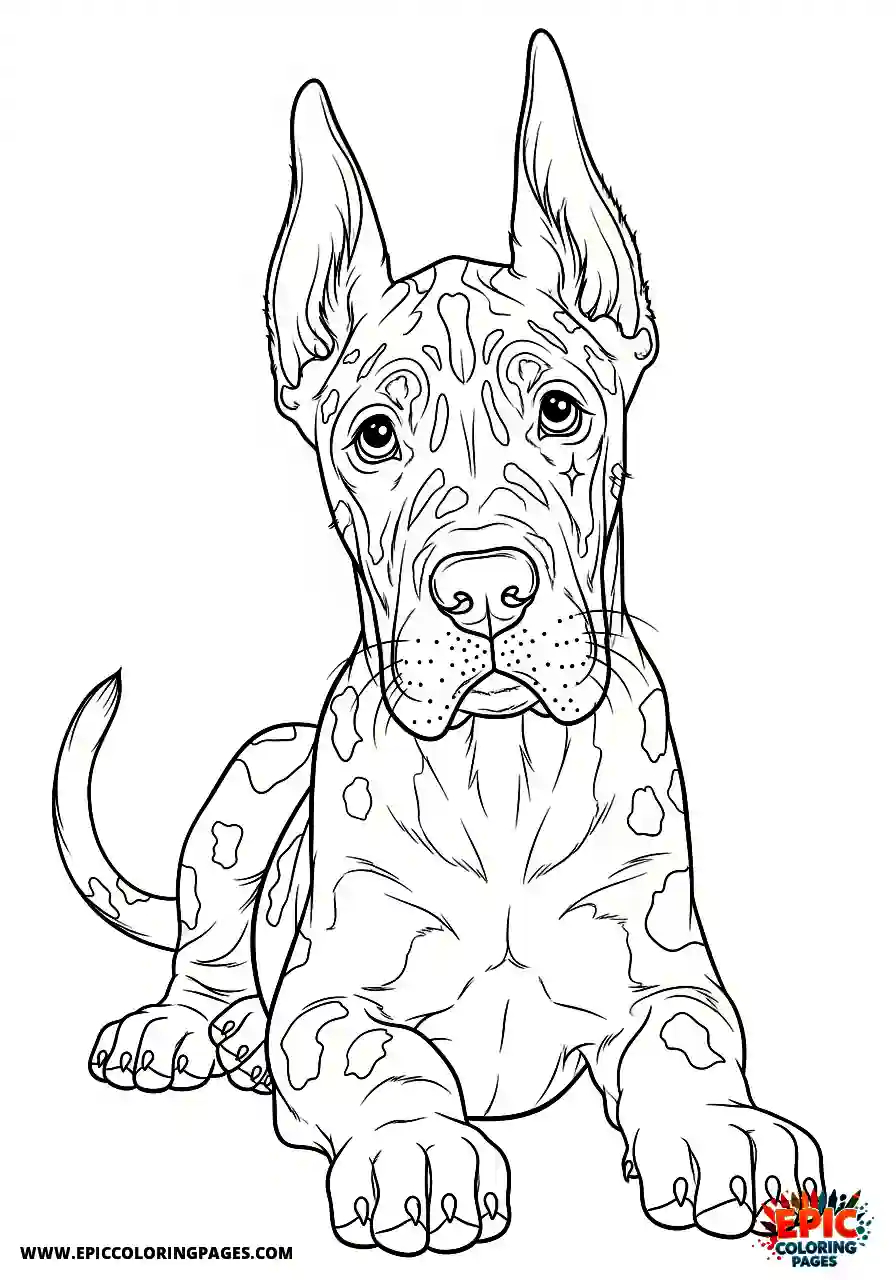
From an artistic perspective, the Great Dane provides a versatile canvas across multiple illustration styles. The breed’s minimal yet powerful coat patterns ranging from harlequin to mantle allow for both simplified children’s outlines and intricate adult-focused designs. Its calm temperament and dignified posture often influence how it is depicted visually: seated in composed stances, standing tall with balanced weight distribution, or interacting gently within domestic environments. These traits make it ideal for a wide spectrum of printable coloring pages, from educational sheets to stylized interpretations.

🎨 Free Interactive Editor - Customize Your Coloring Pages
Click on any image to open our FREE editor and add personalized text, emojis, zoom in for details, and save in professional 300 DPI quality!
Add Text
11+ fonts
Emojis
500+ items
Zoom
Precision
Save
300 DPI
Click any coloring page to start customizing!
The Anatomy and Visual Identity of Great Dane Illustrations
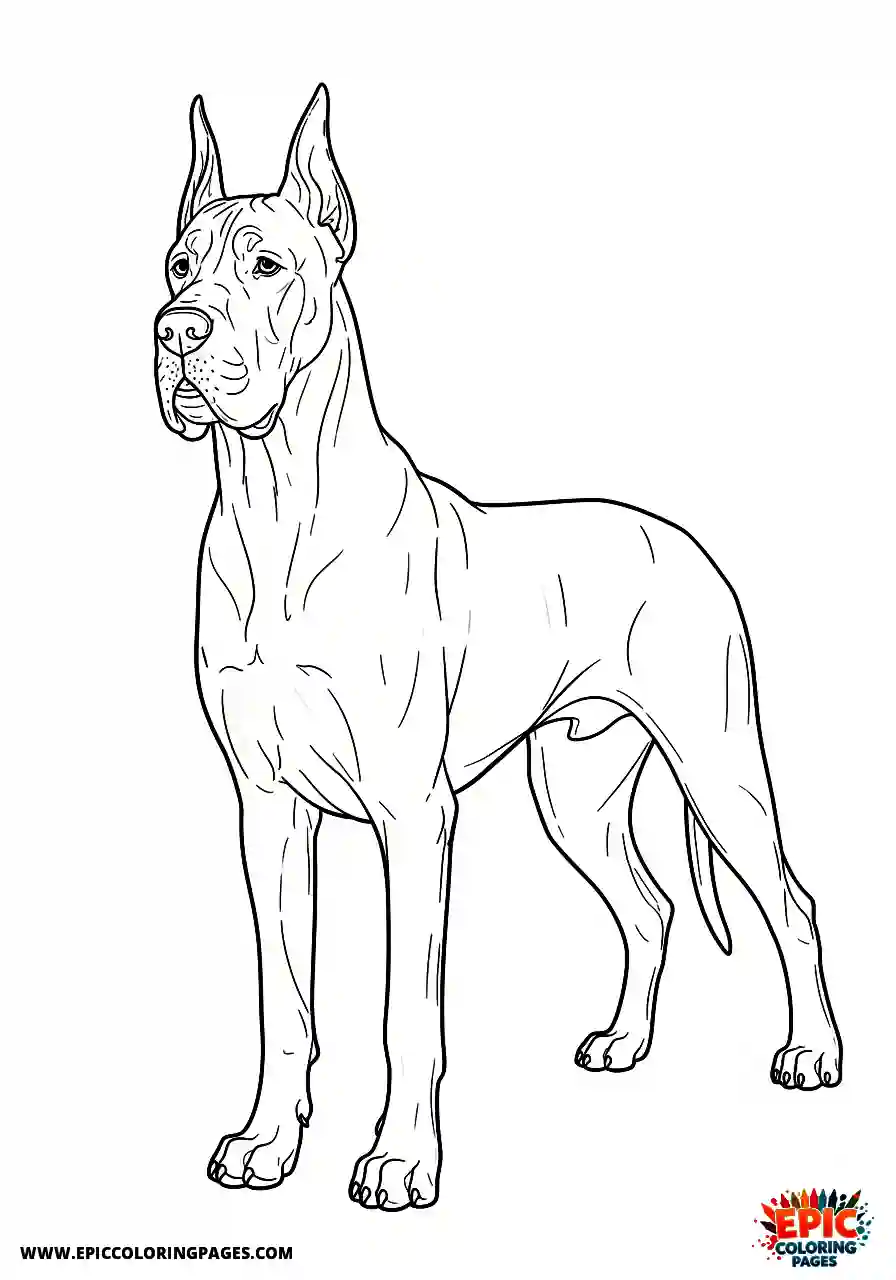
The structural composition of the Great Dane plays a critical role in how it is translated into line art. Its elongated limbs require careful proportional balance to avoid distortion, while the head rectangular with a defined muzzle demands precision in contouring. Artists often emphasize the breed’s verticality, using full-body compositions that highlight its towering stature relative to surrounding elements.
Equally important is the treatment of negative space. Due to the breed’s short coat and smooth musculature, shading is typically minimized in favor of clean outlines and controlled detailing. This allows for adaptability across different coloring skill levels. In simplified formats, bold strokes define the silhouette; in advanced illustrations, subtle anatomical markers such as rib curvature and joint articulation introduce complexity without overwhelming the composition.
Classic Great Dane Animation Collection
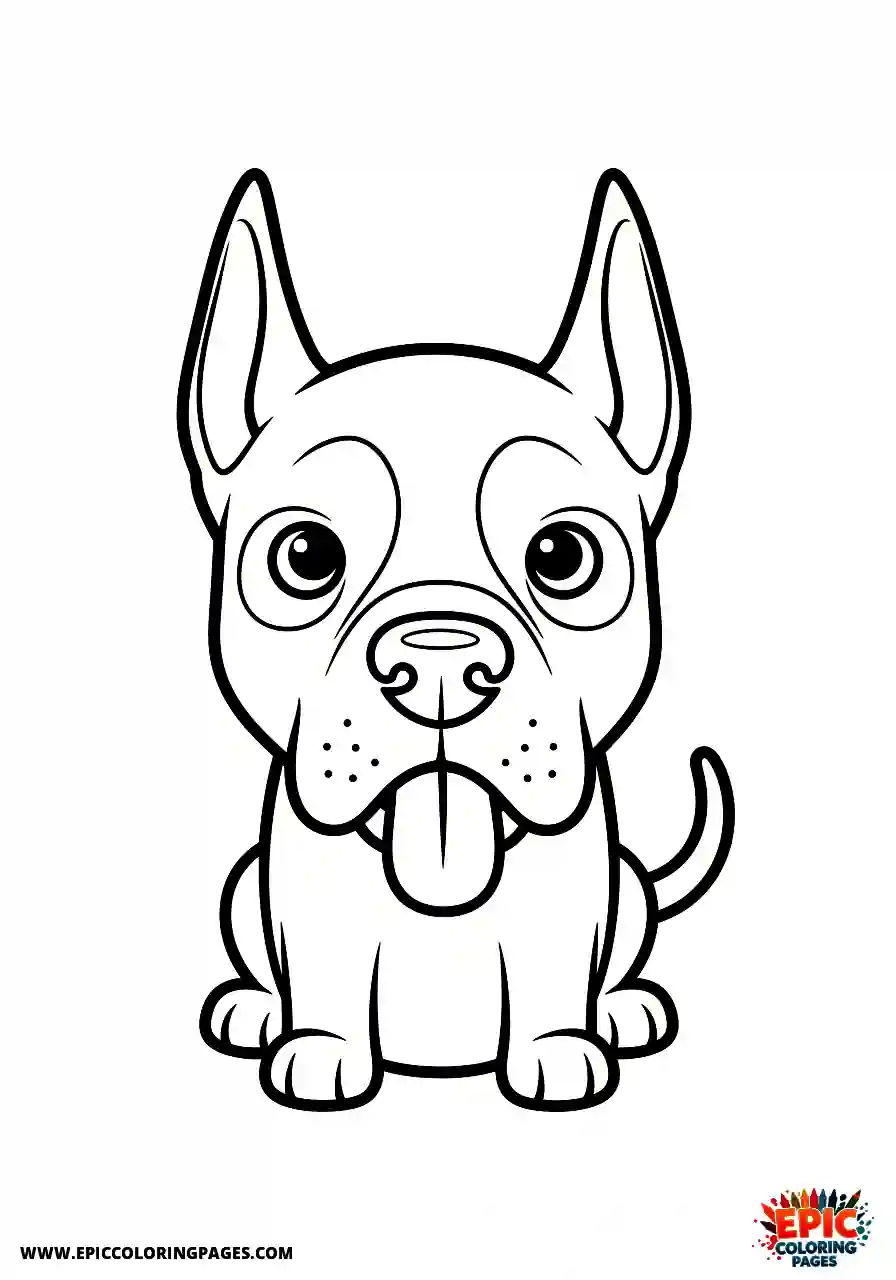
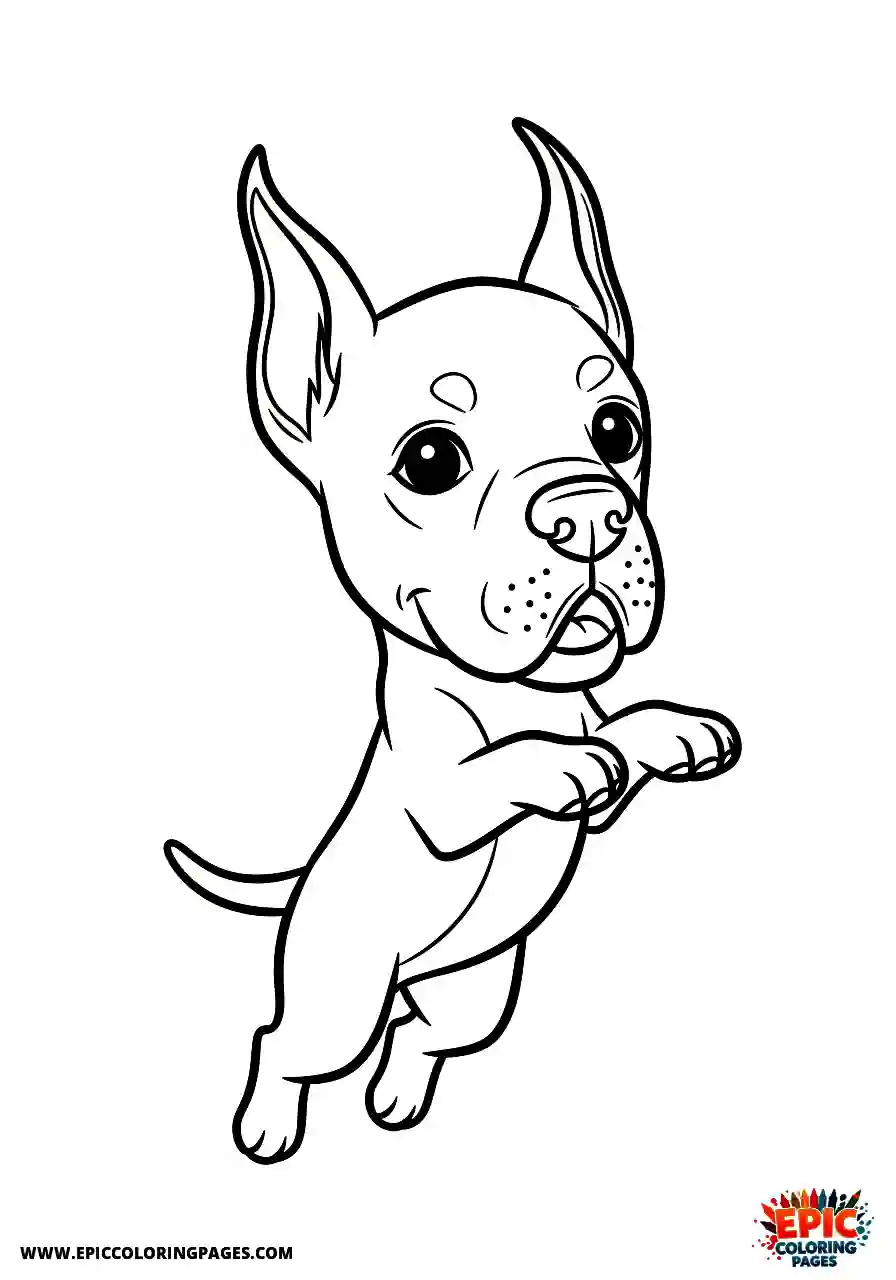
This curated collection explores the Great Dane through a wide spectrum of visual interpretations, combining Animation, Cartoon, Chibi, Manga, Anime, Kawaii, and Realistic styles into a cohesive gallery. Expect exaggerated proportions in chibi renditions, expressive facial features in cartoon adaptations, and highly detailed anatomical accuracy in realistic drawings. Each variation captures a different dimension of the breed’s identity whether emphasizing its size, temperament, or visual elegance while maintaining recognizable structural traits.
Huge collection of free dog coloring pages
If you’re drawn to the challenge of drawing large dogs with a variety of coat patterns, exploring our extensive library of working and giant breeds will provide you with even more inspiration. Our collection was created to help artists hone their skills across a variety of breeds and artistic styles.
Visit our complete page of puppy coloring pages.
Professional Coloring Tips
Why Great Danes Make Perfect Coloring Subjects
Great Danes bring a unique challenge to your coloring table. Their massive size means lots of surface area to work with, while their gentle expressions require subtle shading techniques you won’t find in smaller dog breeds.
The folds in their jowls, the way light hits their muscular shoulders, and those soulful eyes deserve your best work.
Capturing the Great Dane's Coat Colors
The Classic Harlequin Pattern
This black-and-white spotted coat is iconic, but tricky. Start with your white base completely untouched resist the urge to add gray shadows right away.
For the black patches, use deep charcoal or black with a blue undertone. The secret? Leave tiny white highlights along the top edges of each spot where natural light would hit.
Build your shadows with cool grays only where the body curves away from your imaginary light source.
Fawn and Brindle Techniques
Fawn Great Danes have that gorgeous golden-tan coat that catches light beautifully. Layer your colors: start with pale yellow, add peachy tones in the middle values, then deepen with light browns.
For brindle, you’re adding tiger stripes to that fawn base. Use short, irregular strokes with a dark brown pencil. Don’t make them uniform real brindle patterns are wonderfully messy.
The stripes should follow the muscle contours. Study the shoulder blade area carefully.
Blue and Black Coats
Black Great Danes aren’t truly black they’re dark with blue-gray highlights. Use a navy blue or cool gray for your highlights instead of white. This keeps the coat looking natural.
Blue Great Danes have that slate-gray color that changes dramatically in different lighting. Mix cool grays with tiny touches of blue and lavender. The nose leather should be darker than the coat.
Mastering Those Distinctive Features
The Jowls and Face Wrinkles
Great Dane jowls are where beginner colorists struggle. Each fold creates a shadow, but they’re not harsh lines.
Use your lightest pressure for the top of each fold, gradually increasing pressure as you move into the crease. Blend with a colorless blender or light circular motions.
The area under the jaw tends to collect the deepest shadows don’t be afraid to go dark here.
Eyes That Show Personality
Great Dane eyes are typically dark brown, but you need at least four shades to make them convincing. Start with your darkest brown around the pupil and outer edge.
Leave a bright white spot for the catch light this single detail brings the whole face to life. Position it at 10 o clock or 2 o’clock, never dead center.
Add a subtle ring of amber or warm brown in the middle zone. This creates depth.
The Ears
Those floppy ears have thin skin that light passes through, especially at the edges. If you’re coloring a fawn Dane, the ear edges should be slightly warmer and lighter than the main ear color.
Where the ear folds over, create a strong value change. The inside of the ear is darker and cooler in temperature.
Shading a Large Body Effectively
Understanding Great Dane Musculature
Great Danes are athletes, not fluffy pillows. Their chest is deep, shoulders are pronounced, and you can often see individual muscle groups.
Identify your light source first. The chest planes that face the light get your lightest values. The underside of the chest, between the front legs, and behind the shoulders collect shadows.
Use reference photos of real Great Danes in similar poses to see how light actually behaves on their bodies.
Creating Depth on Large Areas
A Great Dane’s ribcage and hindquarters give you big spaces to work with. This is where many colorists go flat.
Use gradual transitions. If you’re working with colored pencils, make small circular motions and build up slowly. Markers require planning start light and add layers.
The topline of the back catches the most light. The belly and inner legs need your mid-tones. Where legs meet the body, go darker.
Color Palette Recommendations by Medium
For Colored Pencils
You need warm and cool versions of each color. For a fawn Dane: cream, yellow ochre, raw sienna, burnt sienna, light brown, and dark brown.
Add cool gray, warm gray, and black for shadows. A colorless blender is essential for large areas.
Premium pencils like Prismacolor or Faber-Castell lay down smoother and blend better for dog fur textures.
For Markers
Alcohol-based markers like Copics work better than water-based for large dog bodies. You need a blender marker (colorless) to soften edges.
For a blue Dane, grab cool gray series: CG0.5, CG2, CG4, CG6, plus C1 and C3. Add touches of B000 for that blue cast.
Work in sections, keeping a wet edge to avoid harsh lines. Start light you can’t erase markers.
For Digital Coloring
Use a textured brush that mimics pencil or pastel. Flat airbrush shading looks artificial on dog fur.
Work in layers: base color, shadows, highlights, then a final texture layer. Lower the opacity on your shadow layer to around 40-60% for natural blending.
Sample colors from actual Great Dane photos to build a realistic palette.
Common Mistakes to Avoid
Over-Smoothing the Coat
Great Danes have short, smooth coats, but that doesn’t mean perfectly blended like glass. Leave some texture tiny variations in pressure create realistic fur.
Over-blending makes them look plastic. Stop before you think you’re done.
Ignoring the Background
Your beautiful Great Dane coloring deserves a thoughtful background. Even simple grass or a solid color helps the dog pop forward.
If the dog is dark, use a lighter background. Light-colored Danes look better against medium to dark backgrounds.
Making Everything the Same Value
Squint at your work. If everything looks like the same shade of gray when you squint, you need more contrast.
Push your darks darker and keep your lights lighter. The middle values can be subtle, but your extremes need to be bold.
Advanced Techniques Worth Trying
Adding Environmental Lighting
If your Great Dane is on grass, add a subtle green reflection on the underside and paws. This is called bounce light and it’s what separates good coloring from great coloring.
Blue sky above? Add the tiniest hint of blue to the top of the head and back. Be subtle a little goes miles.
Creating Motion Blur
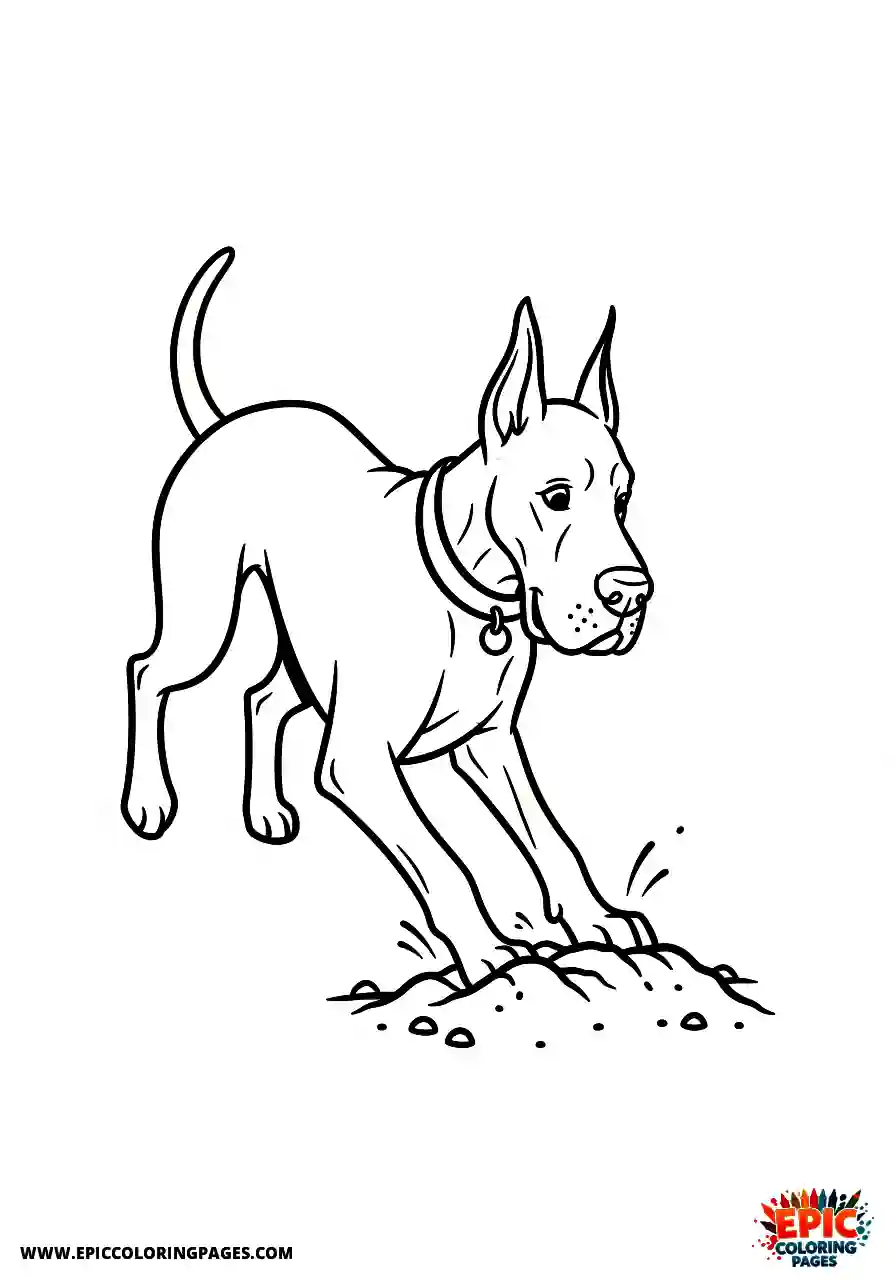
For action poses, try leaving the tail tip slightly less detailed or use horizontal strokes that suggest movement. The focal point should be crisp (usually the face), with details getting softer toward the edges.
This guides the viewer’s eye and adds energy.
Selective Detail
You don’t need to render every whisker and eyelash. Focus your tightest detail work on the eyes and face. The body can be suggested with looser strokes.
This actually looks more natural than uniformly tight detail everywhere.
Building Your Skills Progressively
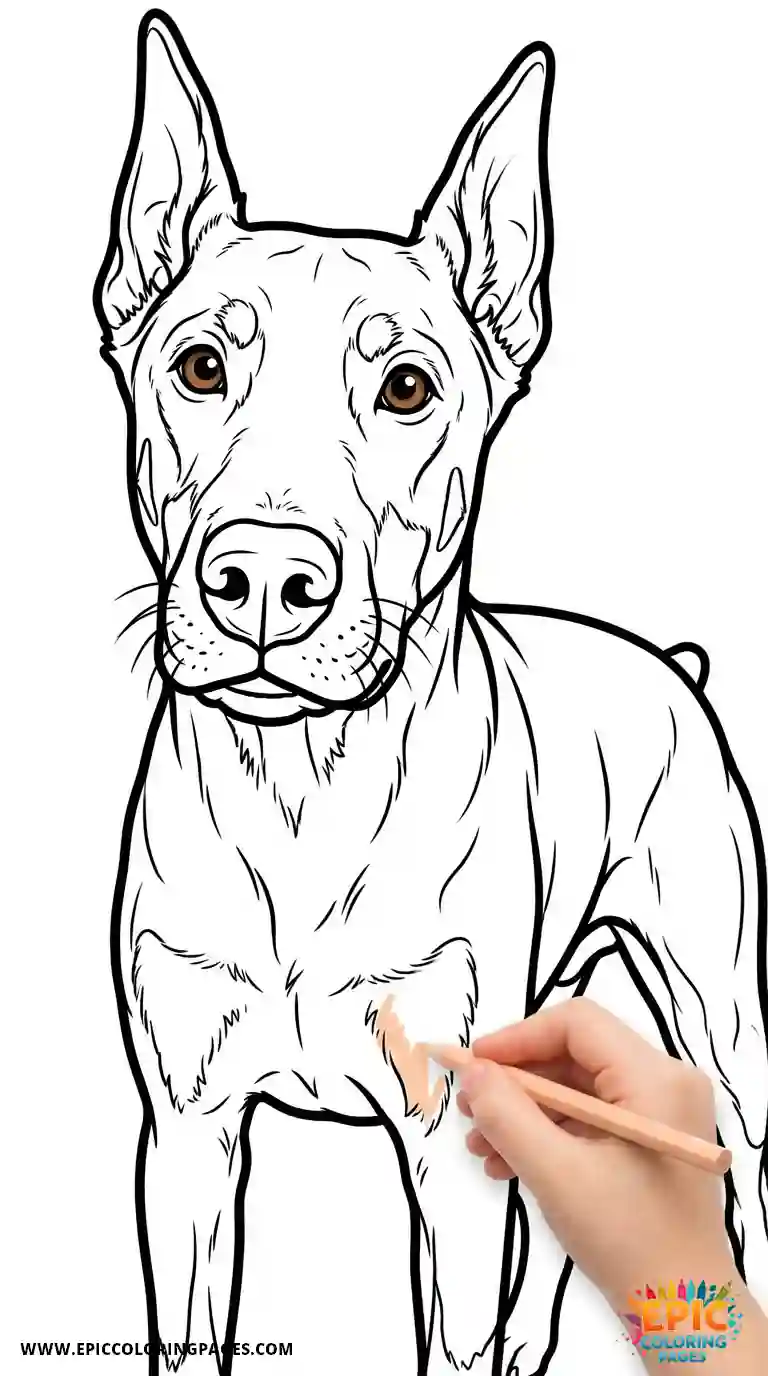
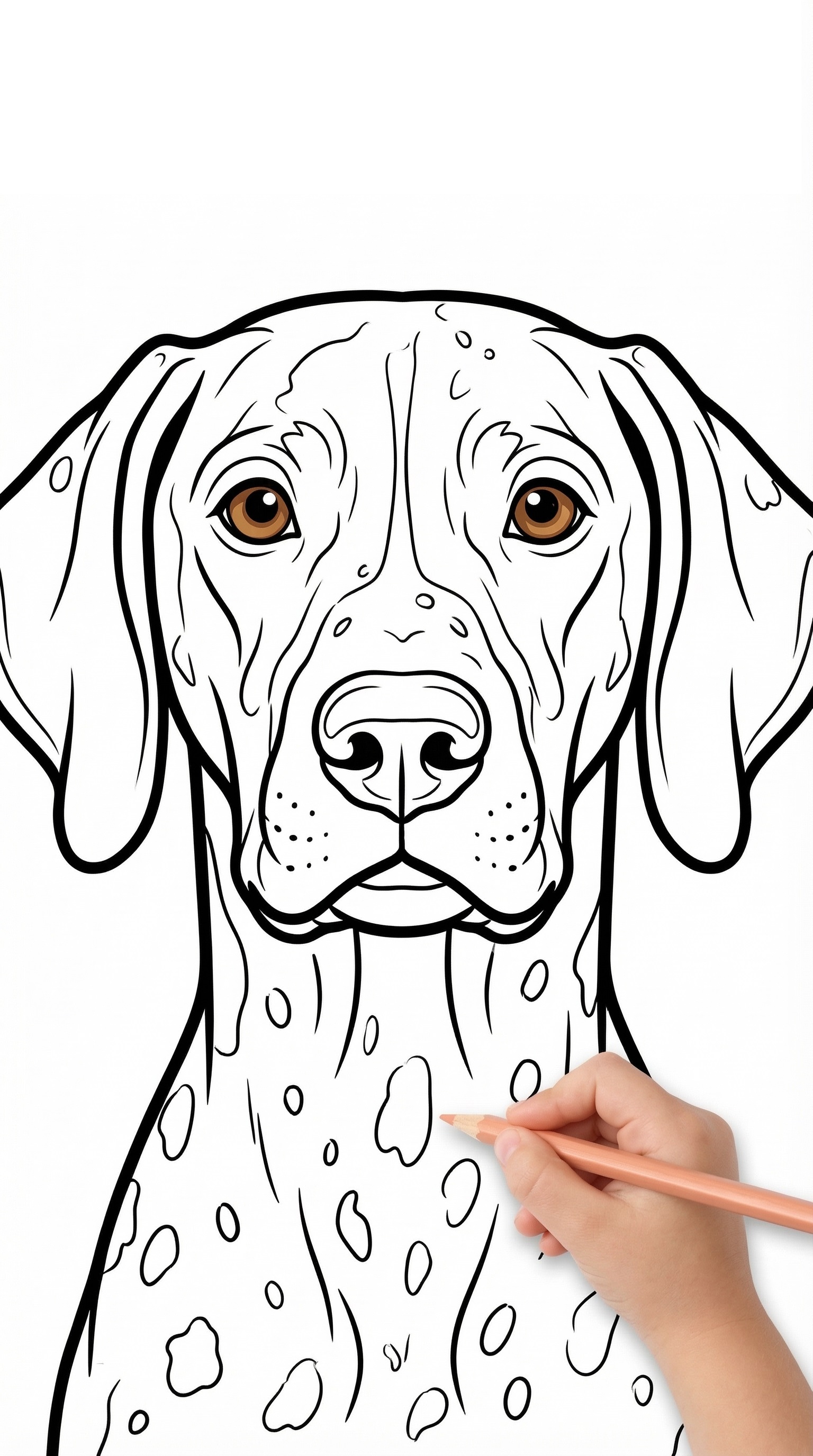
Start with simple portrait pages showing just the head. Master the eyes, nose, and jowls before tackling full-body poses.
Move to seated poses next less complicated than running poses. The proportions are easier to shade correctly when the dog is still.
Finally, try action poses: running, jumping, or playing. These require understanding how muscles compress and extend.
Take photos of your finished work. Comparing your first Great Dane to your twentieth shows progress you won’t notice day-to-day.
Every page teaches you something. That’s the whole point.
Frequently asked questions and interesting facts about Great Dane
Understanding Great Dane characteristics enhances appreciation for their unique features when studying these coloring pages. The following questions address common inquiries about breed traits, care requirements, and historical background.
How long do Great Danes live?
They typically have a lifespan of 7 to 10 years, though exceptional care can extend this to 12 years.
What were Great Danes bred for?
Originally developed in Germany, they were bred to hunt wild boar and serve as guardians for country estates.
Do Great Danes shed?
Yes, they possess a short, single coat that sheds moderately throughout the year.
How tall is a Great Dane?
Adult males generally stand between 30 and 32 inches, while females range from 28 to 30 inches.
What is the maximum size Great Danes reach?
Some individuals can exceed 34 inches at the shoulder and stand over 7 feet tall when on their hind legs.
How much do Great Danes weigh?
Males typically weigh between 140 and 175 pounds; females usually weigh 110 to 140 pounds.
How much does a Great Dane cost?
Purchasing a puppy from a reputable breeder generally costs between $1,500 and $3,000 USD.
Are Great Danes aggressive?
No, modern breeding focuses on a friendly, dependable, and patient temperament, often called “gentle giants.”
When does a Great Dane stop growing?
They reach their full height around 18 months but continue to develop muscle mass until age 3.
Are Great Danes good family dogs?
Their patient nature and loyalty make them excellent family companions when properly socialized.
Are Great Danes hypoallergenic?
They are not hypoallergenic; they produce dander and shed fur that can trigger allergies.
Where do Great Danes come from?
Despite the English name, the breed originated entirely in Germany.
Are Great Danes intelligent?
Yes, they rank well in working intelligence and are highly responsive to consistent, positive training.
Are Great Danes dangerous?
They are not inherently dangerous, though their massive size requires responsible ownership and training to prevent accidents.
Are Great Danes protective?
They are naturally vigilant and their physical presence acts as a significant natural deterrent.
What does a Great Dane eat?
They require high-quality, large-breed specific dog food, often consuming between 6 to 10 cups daily.