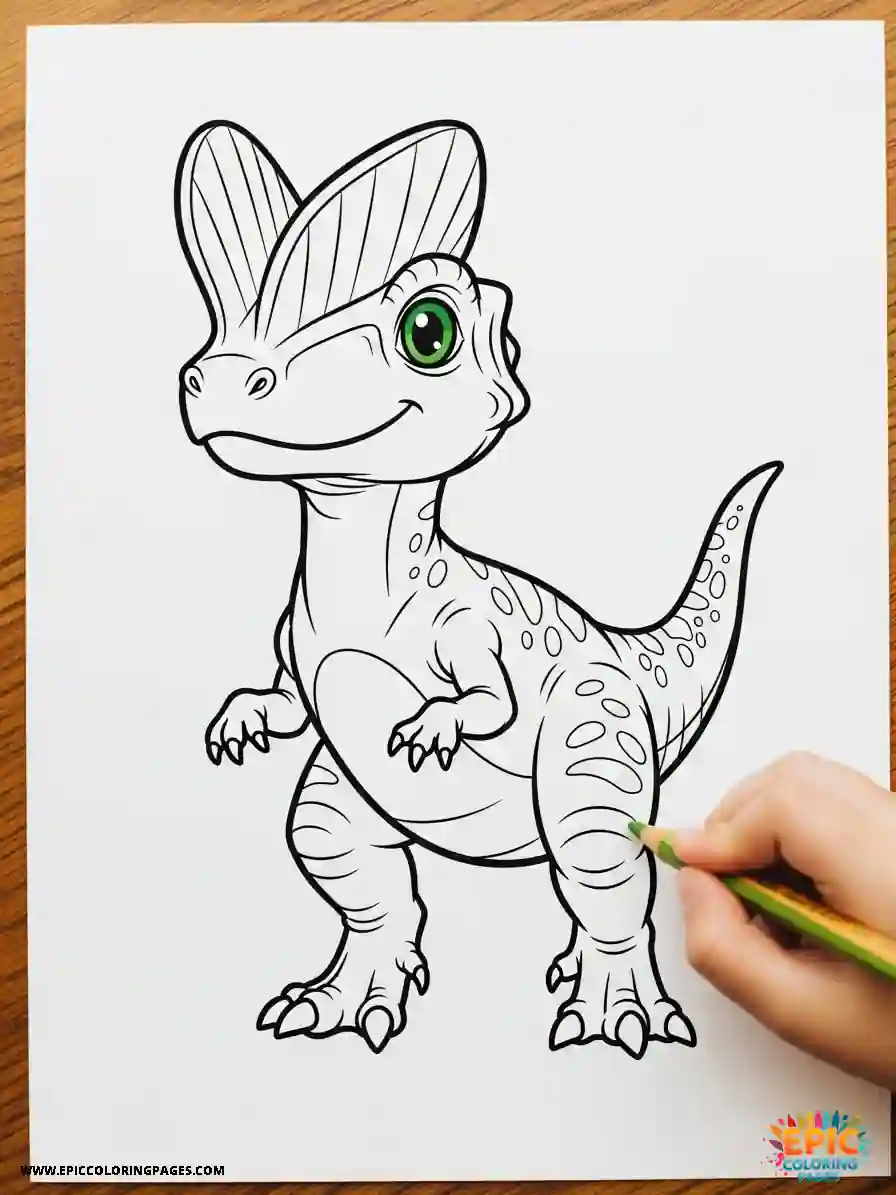
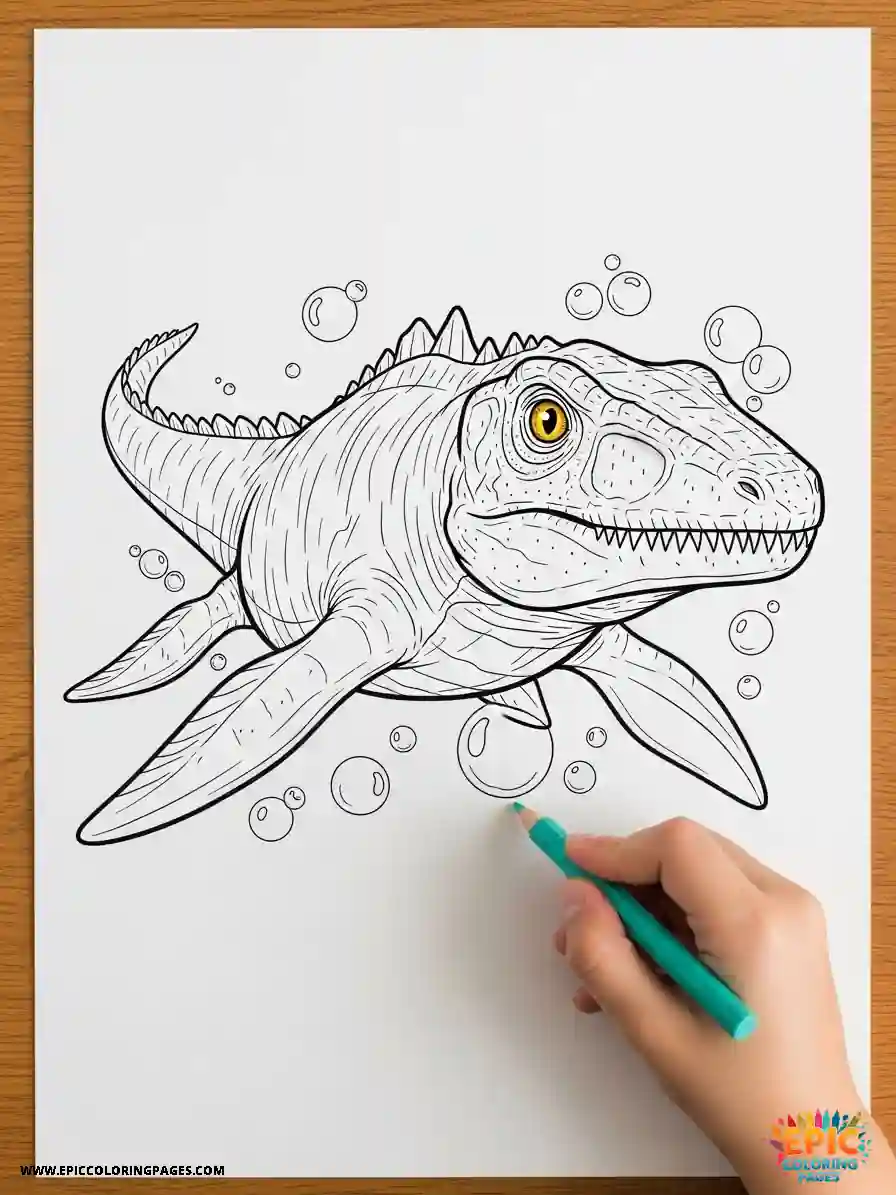
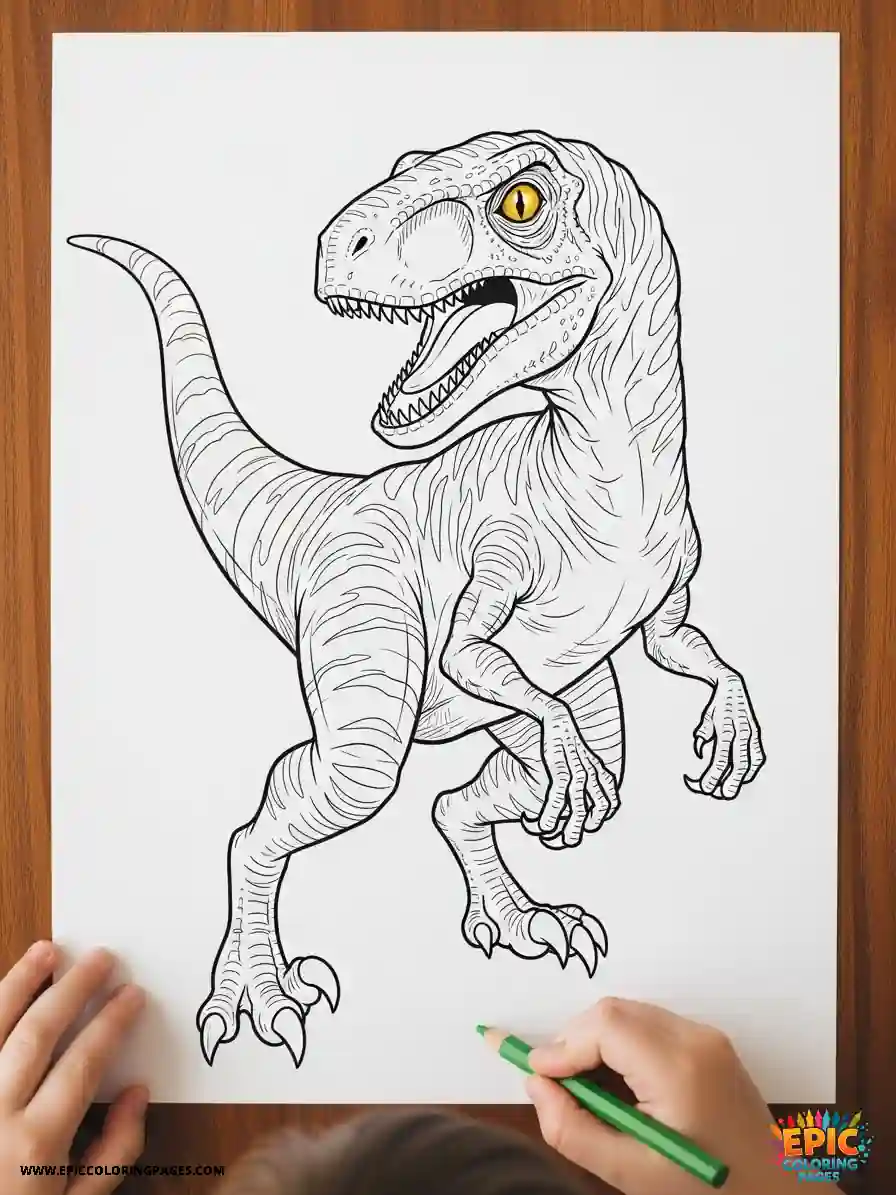
Carnotaurus Coloring Pages (281+ Free Printables)
Discovered in the La Colonia Formation of Argentina, the Carnotaurus is one of the most distinctive theropods of the Late Cretaceous period. Known as the โMeat-Eating Bullโ due to the prominent horns above its eyes, this predator combined a deep, bulldog-like skull with an incredibly fast running speed powered by massive tail muscles. This collection of Carnotaurus coloring pages captures the ferocity and unique anatomy of this South American giant, offering scientifically accurate depictions for educational use as well as stylized versions for younger dinosaur enthusiasts.
Physically, the Carnotaurus stands apart from the Tyrannosaurus Rex with its extremely short vestigial arms and armor-plated skin. Fossil evidence suggests it was covered in rows of osteoderms (bony bumps) rather than feathers, providing a fantastic opportunity for colorists to practice texture and shading. These illustrations highlight the interplay of light on its rugged hide and horned brow, challenging artists to bring depth and dimension to one of history’s most aggressive hunters.

๐จ Free Interactive Editor - Customize Your Coloring Pages
Click on any image to open our FREE editor and add personalized text, emojis, zoom in for details, and save in professional 300 DPI quality!
Add Text
11+ fonts
Emojis
500+ items
Zoom
Precision
Save
300 DPI
Click any coloring page to start customizing!
Capturing the Horned Predator
This collection focuses on the unique silhouette that sets the Carnotaurus apart from other meat-eaters. Unlike generic dinosaur outlines, our realistic pages emphasize the rows of osteoderms covering the back and the muscular tail structure that allowed for explosive sprints. We have also included stylized adaptations that exaggerate the “bull-like” horns and the comically short arms, allowing younger artists to engage with the “Toro” character made famous in pop culture without the intimidating realism.
The Best Selection of Carnotaurus Coloring Printables


More Epic Dinosaurs
If you loved these horned predators, don’t stop here! The prehistoric world is vast and full of amazing creatures waiting for your artistic touch.
Explore our massive pillar collection of Dinosaur Coloring Pagesย to find T-Rexes, Triceratops, Raptors, and much more. Click the link to expand your Jurassic collection!
Professional Coloring Tips for Carnotaurus Pages
Bringing a Carnotaurus to life through coloring is an exciting challenge that combines paleontological knowledge with artistic creativity. This distinctive predator from Late Cretaceous Argentina offers unique features that make it stand out in any dinosaur collection.
Understanding Your Subject
The Carnotaurus earns its name “meat-eating bull” from the prominent horns above its eyes. These weren’t delicate ornaments but thick, robust structures that give this dinosaur its signature silhouette. When approaching your coloring page, study these horns first. They’re your anchor point for the entire piece, demanding attention and setting the tone for your color choices.
The skull itself presents fascinating opportunities. Carnotaurus possessed an extremely short, deep snout quite unlike the elongated jaws of other large theropods. This gave it an almost bulldog-like profile. Consider how light would interact with these compressed facial features, creating shadows in the recessed areas and highlights on the protruding bone structures.
Color Theory and Prehistoric Speculation
We’ll never know the exact coloration of Carnotaurus, but we can make educated guesses based on modern analogs and its environment. The Patagonian landscape during the Late Cretaceous was warm and relatively open, with seasonal variations.
For a naturalistic approach, consider earthy base tones. Reddish-browns, ochres, and warm grays would have provided effective camouflage in dusty, semi-arid environments. However, don’t feel constrained by conventional “dinosaur colors.” Modern predators often display surprising patterns think of the bold stripes on tigers or the varied plumage of predatory birds.
Counter-shading remains a solid principle: darker tones along the back and sides, gradually lightening toward the belly. This pattern appears throughout the animal kingdom because it works, breaking up the three-dimensional form and making the animal harder to spot.
For those wanting to push creative boundaries, consider sexually dimorphic patterns. Perhaps males displayed bolder colors on their horns or along their necks during mating season, similar to many modern reptiles and birds. Rich reds, deep purples, or striking oranges on the head and upper body could suggest a display function while maintaining believability.
Technical Approaches by Medium
- Colored Pencils excel with dinosaur subjects because they allow precise control over texture and layering. Start with your lightest values and build gradually. For Carnotaurus skin, use small circular motions to create a subtle pebbled texture. The scales weren’t uniform larger, platelike scales probably covered the back and sides, while smaller scales protected joints and the belly. Pay special attention to the horns. These were likely covered in keratin, similar to modern horn cores. Use directional strokes that follow the curve and growth pattern of the horn. Layer a darker base color, then add lighter tones on the upper surfaces where sun would strike. A touch of white or pale yellow on the very tips creates dimension and suggests wear.
- Markers demand confidence but reward bold decisions. Work from light to dark, and remember that most markers are unforgiving. Test your color combinations on scrap paper first. For smooth blending, work quickly while the ink is still wet, or invest in a colorless blender marker. The Carnotaurus’s powerful legs deserve careful attention with markers. These limbs carried significant muscle mass. Use darker tones in the recesses between muscle groups, and leave the muscle bellies slightly lighter. The transition between these values creates the illusion of form.
- Crayons might seem elementary, but they produce wonderfully rich, waxy textures that suit reptilian skin beautifully. Press firmly for saturated areas like the back and head, and lighten your touch for the underbelly. The slight texture crayon naturally creates can mimic scales without additional effort.
- Digital Coloring opens unlimited possibilities. Work in layers one for base colors, separate layers for shadows and highlights, and perhaps a texture overlay layer. Set your shadow layer to “multiply” and your highlight layer to “overlay” or “soft light” for more natural blending. Create a custom brush for scales by designing a simple pattern and saving it as a brush preset. Vary the size and opacity as you work across the body to suggest the natural variation in scale size and prominence.
Anatomical Details That Matter
The forelimbs of Carnotaurus were remarkably reduced even more so than Tyrannosaurus rex. These tiny arms were essentially vestigial, and many reconstructions show them as surprisingly small. Don’t exaggerate their size. A few careful strokes suggesting their presence is more accurate than prominent, detailed limbs.
The tail deserves as much attention as the head. Carnotaurus had a deep, flexible tail that likely aided in rapid turning during pursuit of prey. Color it with the same care as the body, maintaining your pattern and allowing the form to show through your color choices. The tail tapered to a fine point, so gradually reduce detail and intensity as you move toward the tip.
The legs tell a story of power. The thigh bones were robust, the lower legs athletic and built for running. Carnotaurus was likely one of the faster large theropods, possibly reaching speeds that would surprise us. Emphasize the muscular upper legs with stronger color saturation and more pronounced shadows. The lower legs, covered in scales over thin flesh and bone, should appear leaner with more visible underlying structure.
Creating Environment and Context
A Carnotaurus doesn’t exist in a vacuum. Even if your coloring page shows only the dinosaur, your color choices can suggest its environment. Warm, saturated colors suggest midday heat in open country. Cooler tones might place your dinosaur in shade or during the softer light of dawn or dusk.
If your page includes background elements, coordinate your choices. A Carnotaurus hunting at sunset might show warm oranges and pinks in the sky, with those colors reflected subtly in the highlights along the dinosaur’s back. A predator moving through vegetation would pick up green cast shadows on its underside.
Advanced Techniques
- Weathering and battle damage adds realism and storytelling. Carnotaurus likely engaged in head-butting behavior with rivals, using those prominent horns. Consider adding slightly darker or discolored areas around the horn bases, suggesting healed injuries or thickened skin from repeated impacts. Small scratches along the flanks, colored slightly lighter than surrounding skin, suggest encounters with prey or rivals.
- Eye treatment can make or break your piece. The eyes should draw the viewer in. Start with a mid-tone base color amber, gold, or even a reptilian yellow-green. Add a darker ring around the outer edge of the iris, and place your darkest dark in the pupil. Here’s the crucial part: leave a small white or very light spot for the catchlight. This tiny highlight makes the eye appear wet and alive. Position it consistently with your light source.
- Atmospheric perspective applies even to single-subject pieces. If showing the dinosaur in profile, the far side of the body should be slightly less saturated and perhaps minutely darker than the near side. This subtle shift creates depth and prevents the image from appearing flat.
Common Mistakes to Avoid
Don’t over-blend. While smooth gradients have their place, too much blending eliminates texture and can make your dinosaur look rubbery or plastic. Skin has character subtle variations in color and tone create visual interest.
Avoid using pure black for shadows. Black deadens colors and creates unnatural-looking results. Instead, use dark browns, deep purples, or very dark versions of your base color for shadows. This maintains color harmony and keeps your image vibrant.
Don’t neglect the light side. Beginning colorists often focus heavily on shadows and forget that highlighted areas need attention too. Where light strikes surfaces directly, lighten your colors appropriately. This contrast between light and shadow creates the three-dimensional form.
For Young Artists
If you’re just starting out, here’s a simplified approach: choose three colors one light, one medium, one dark. Use the medium color for most of the body. Add the dark color where you see lines indicating muscles, folds, or underneath parts of the dinosaur. Use the light color sparingly on top surfaces. This basic approach teaches value relationships without overwhelming you with choices.
For Experienced Colorists
Challenge yourself with unconventional color schemes while maintaining believability. A leucistic Carnotaurus, for instance, with pale colors and reduced pigmentation, creates an striking appearance while remaining grounded in real biological possibilities. Or explore how different lighting conditions the blue-tinted light before dawn, the golden hour’s warm glow, or even moonlight would transform your color palette.
Consider the square-cube law in your rendering. Larger animals often display duller colors because maintaining bright pigmentation across huge surface areas is metabolically expensive. However, this isn’t absolute use it as a guideline rather than a rule.
Finishing Touches
Once your Carnotaurus is fully colored, step back and assess the overall piece. Does your eye travel naturally through the composition? The horns and head should typically draw attention first, then guide the viewer along the body. If something seems off, it’s often a value issue rather than a color problem. Squint at your work or take a photo and convert it to grayscale to check your value structure.
Consider adding a subtle background color or vignette if working digitally or with markers. This grounds your dinosaur and prevents it from floating on white space. A gradient from darker at the edges to lighter behind the dinosaur creates subtle depth.
The beauty of coloring Carnotaurus lies in balancing scientific understanding with creative expression. Every choice you make from the russet tones on its flanks to the shadow beneath its jaw contributes to bringing this remarkable predator back to life, if only on paper. Take your time, trust your instincts, and most importantly, enjoy the process of creation.
Interesting facts about the Carnotaurus Dinosaur
Why is the Carnotaurus called "Toro" in popular culture?
Many kids recognize the Carnotaurus as “Toro” because of the popular animated series Jurassic World: Camp Cretaceous. In the show, “Toro” is a fierce Carnotaurus with a scar. We have many designs that capture that aggressive, “villain” look perfect for fans of the series.
What makes the Carnotaurus look different from a T-Rex?
The easiest way to tell them apart in your coloring pages is to look at the head and arms. The Carnotaurus has two distinct horns above its eyes (like a bull) and an extremely short, deep snout. Also, its arms are even smaller and stubbier than a T-Rex’s!
Is Carnotaurus a real dinosaur?
Yes, it is 100% real! While it looks like a movie monster, the Carnotaurus sastrei was a real therapod discovered in Argentina. It is the only known carnivorous dinosaur with horns, making it a favorite subject for paleo-artists and coloring enthusiasts.
When did Carnotaurus live?
The Carnotaurus lived during the Late Cretaceous period, approximately 72 to 69.9 million years ago. This means they roamed the Earth right before the mass extinction event that wiped out the dinosaurs.
What dinosaurs did Carnotaurus eat?
Scientists believe the Carnotaurus was a fast predator that likely ate small to medium-sized dinosaurs. It may have hunted sauropods (long-necked dinosaurs) by using its speed to ambush them. In your coloring pages, you can draw them hunting in a prehistoric forest!
Why was Carnotaurus so fast?
The Carnotaurus had massive thigh muscles (caudofemoralis) attached to its tail, which made it one of the fastest running large theropods. It was built for speed, likely sprinting to catch prey rather than engaging in long fights.