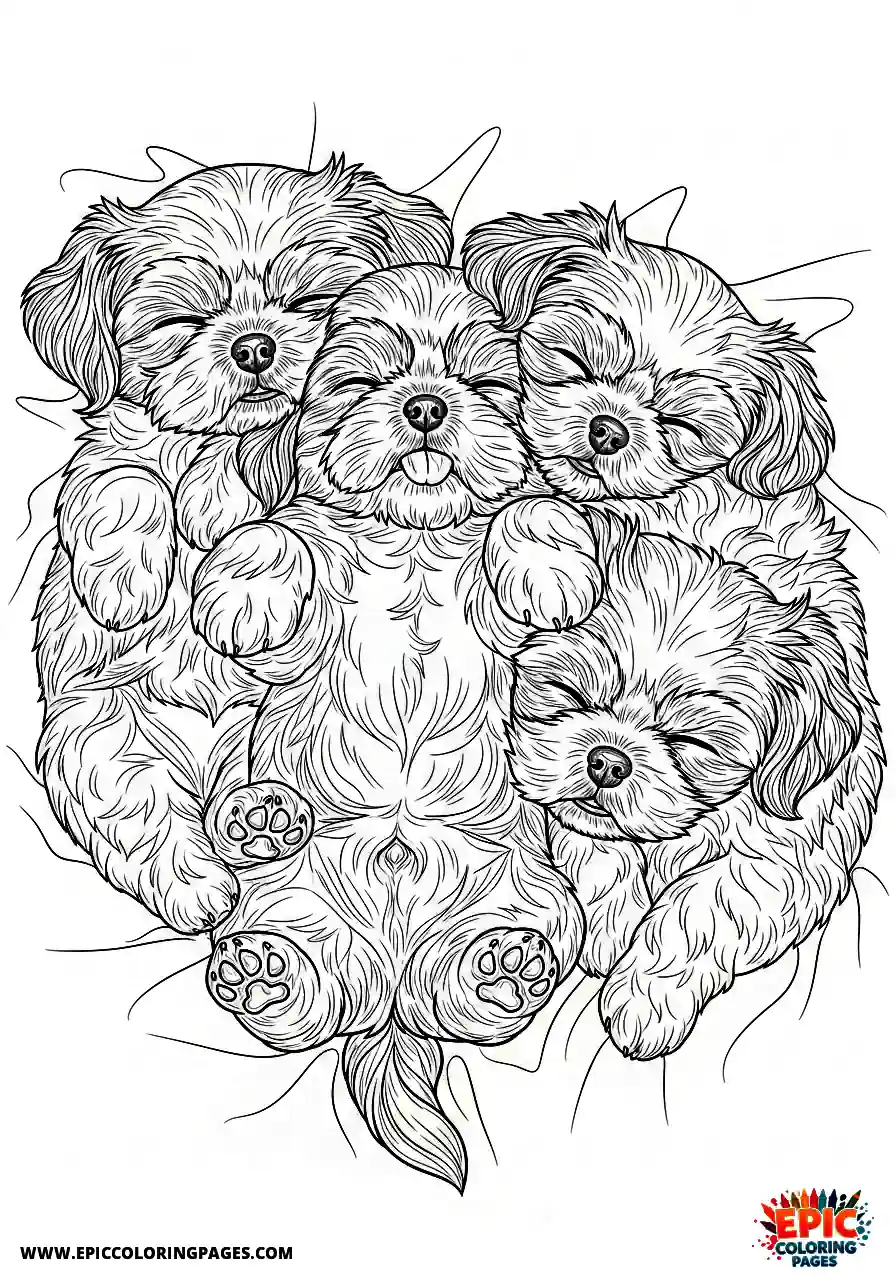
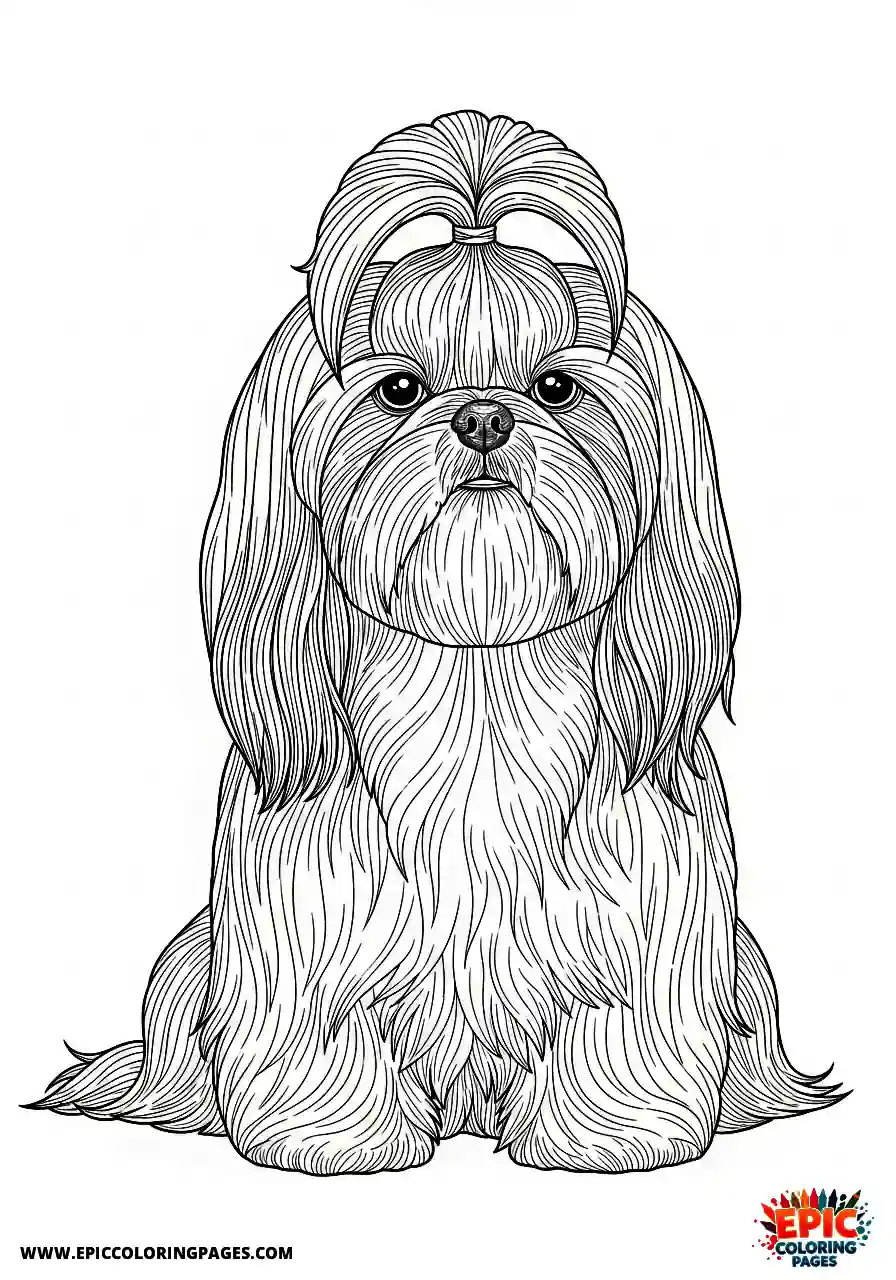
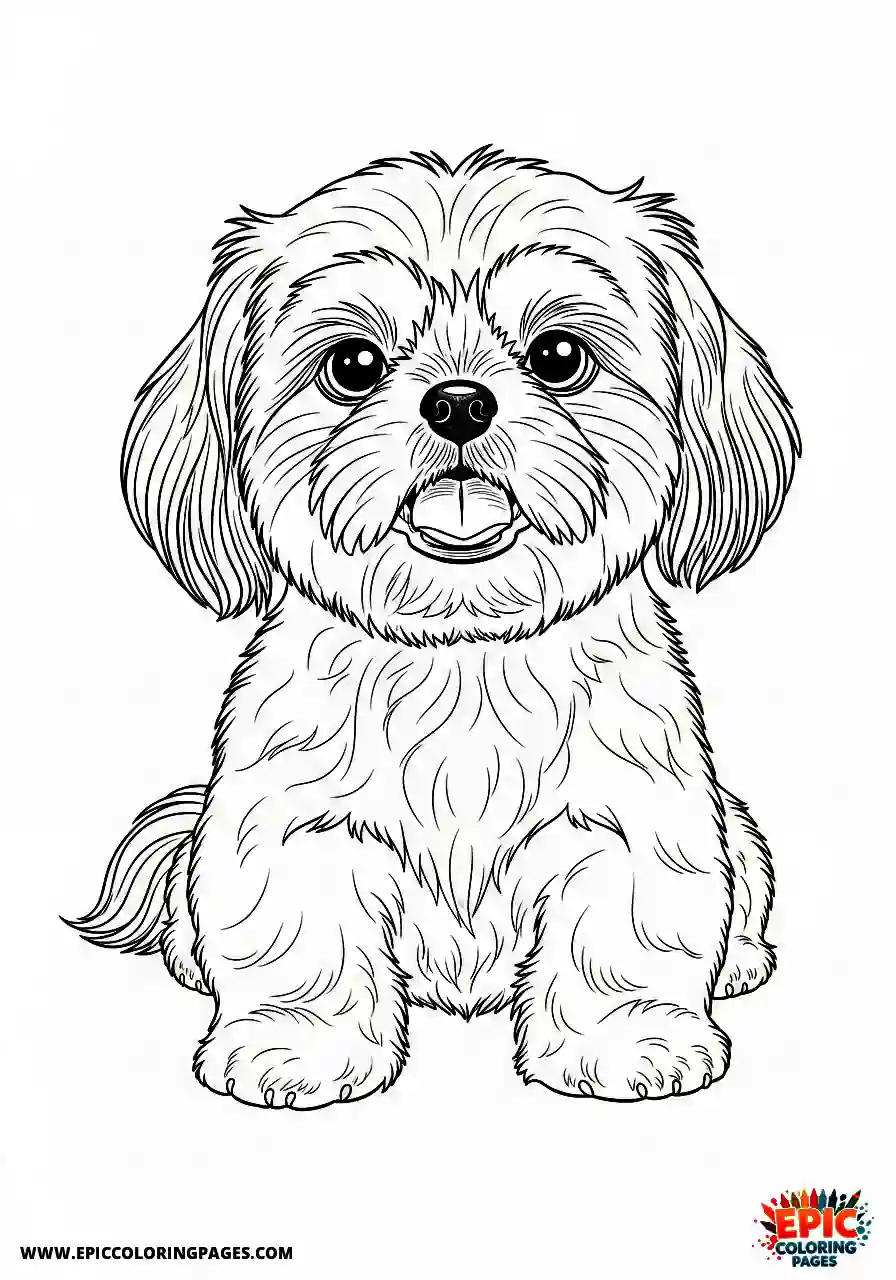
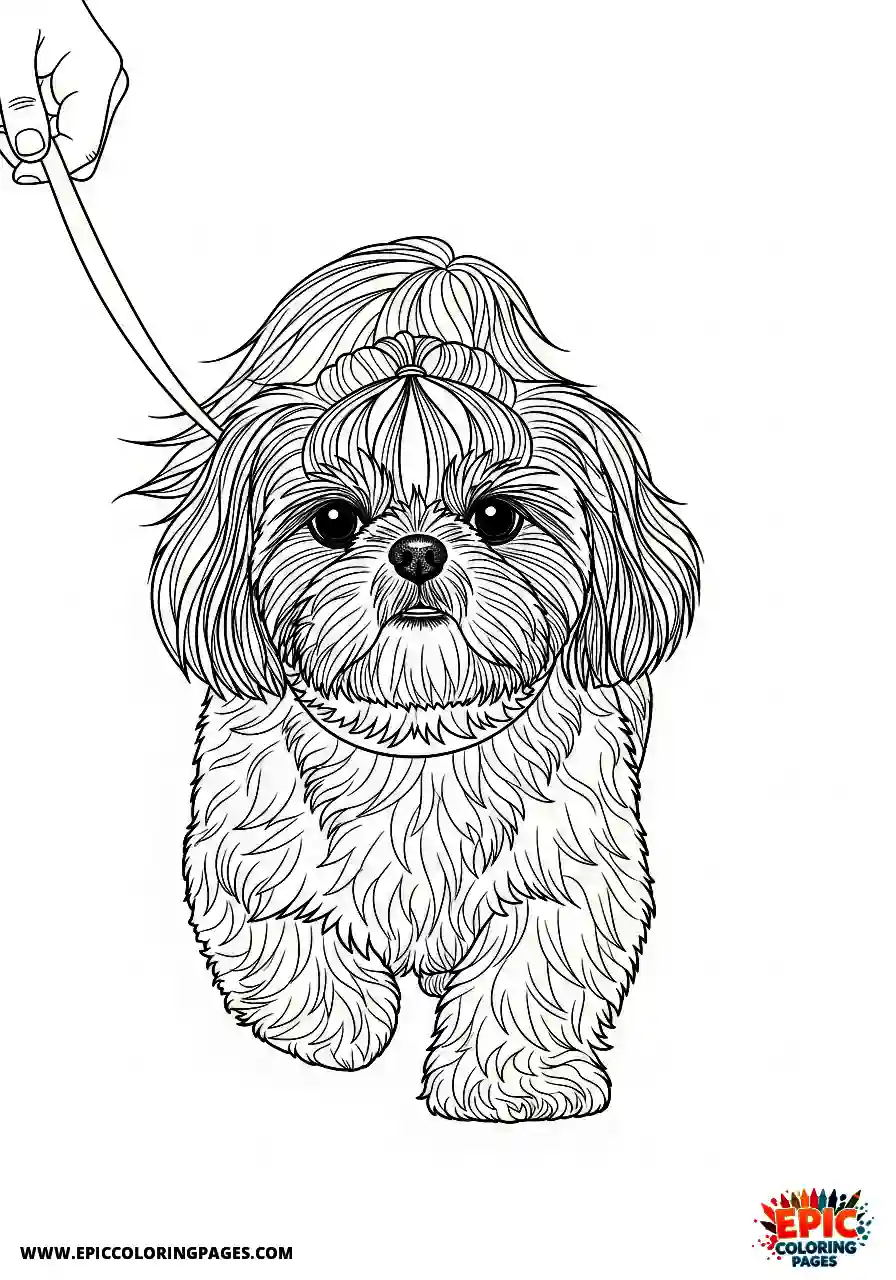
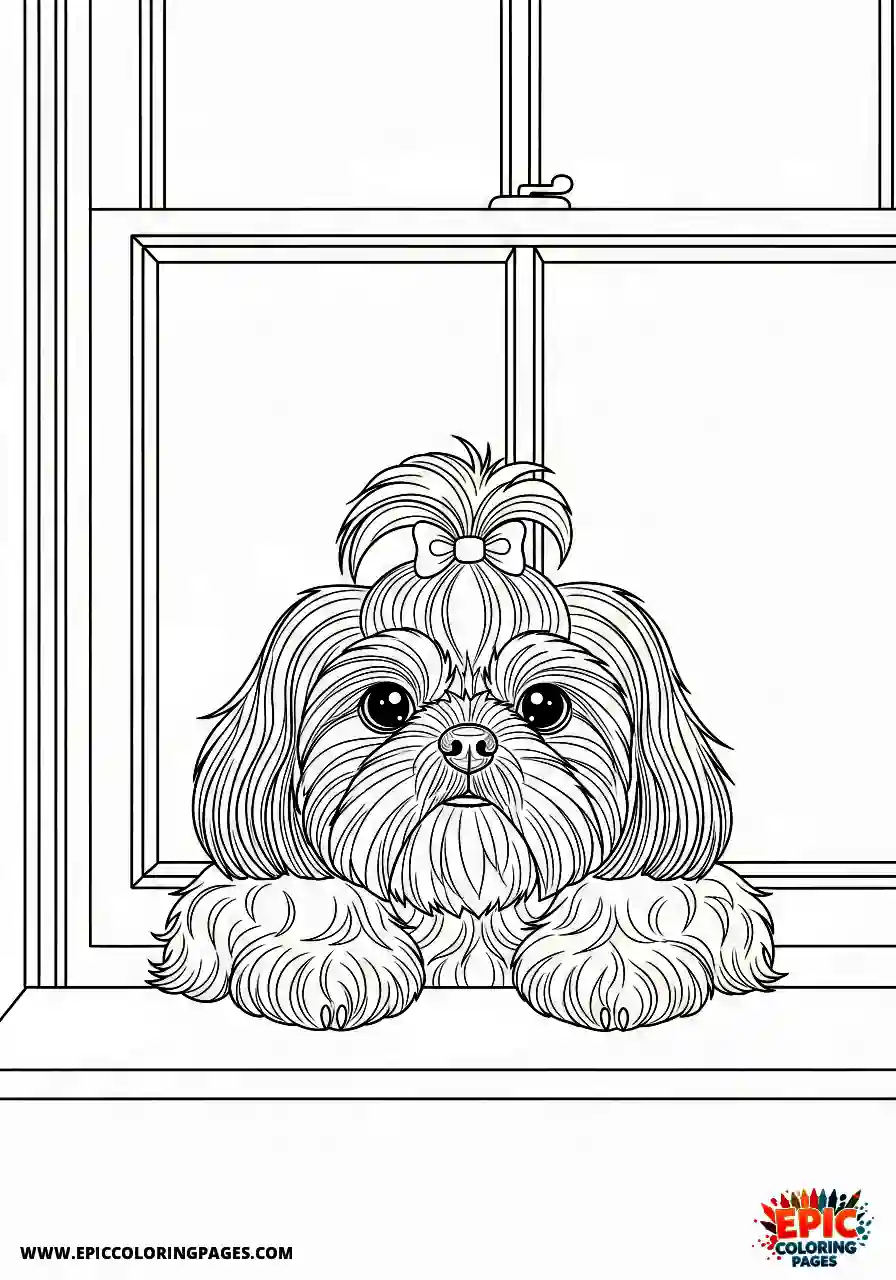
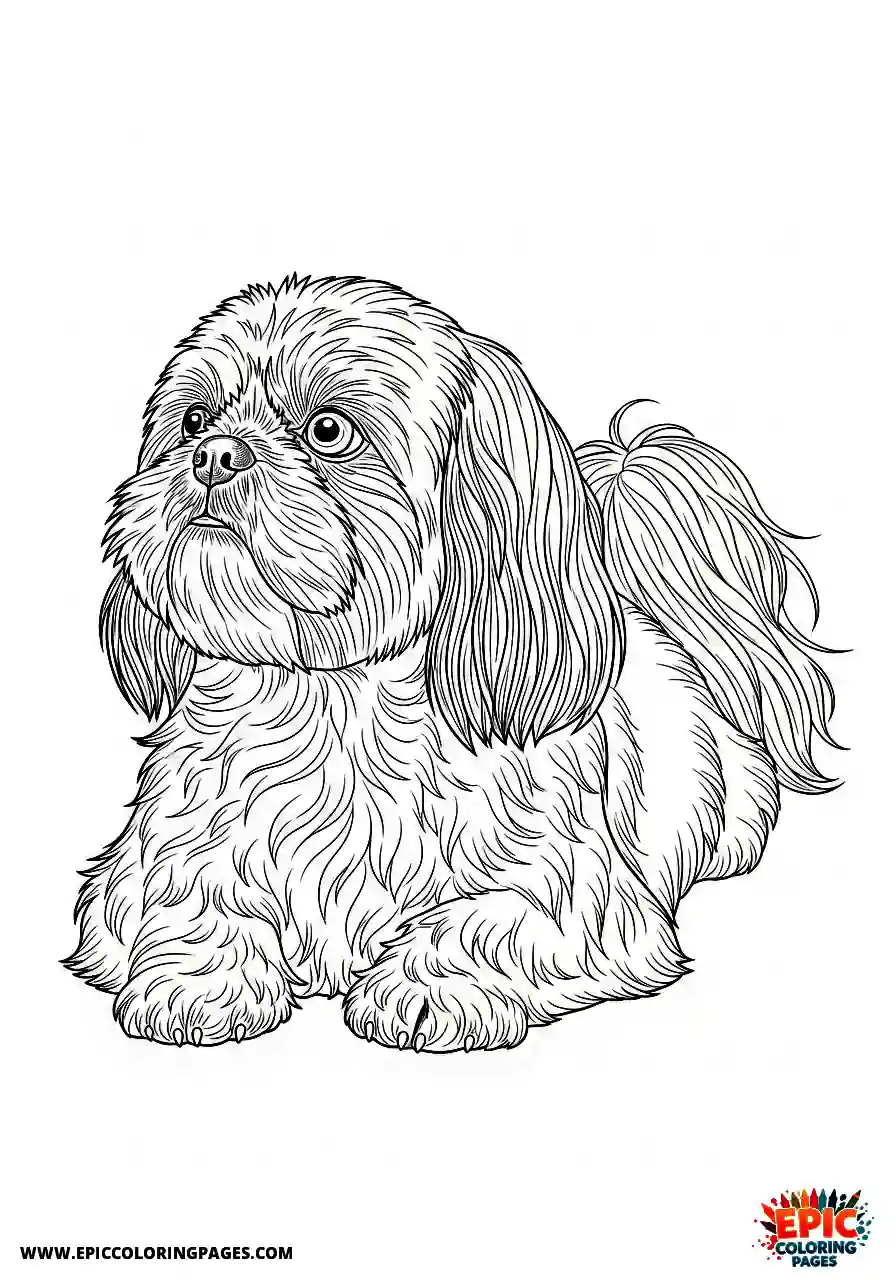
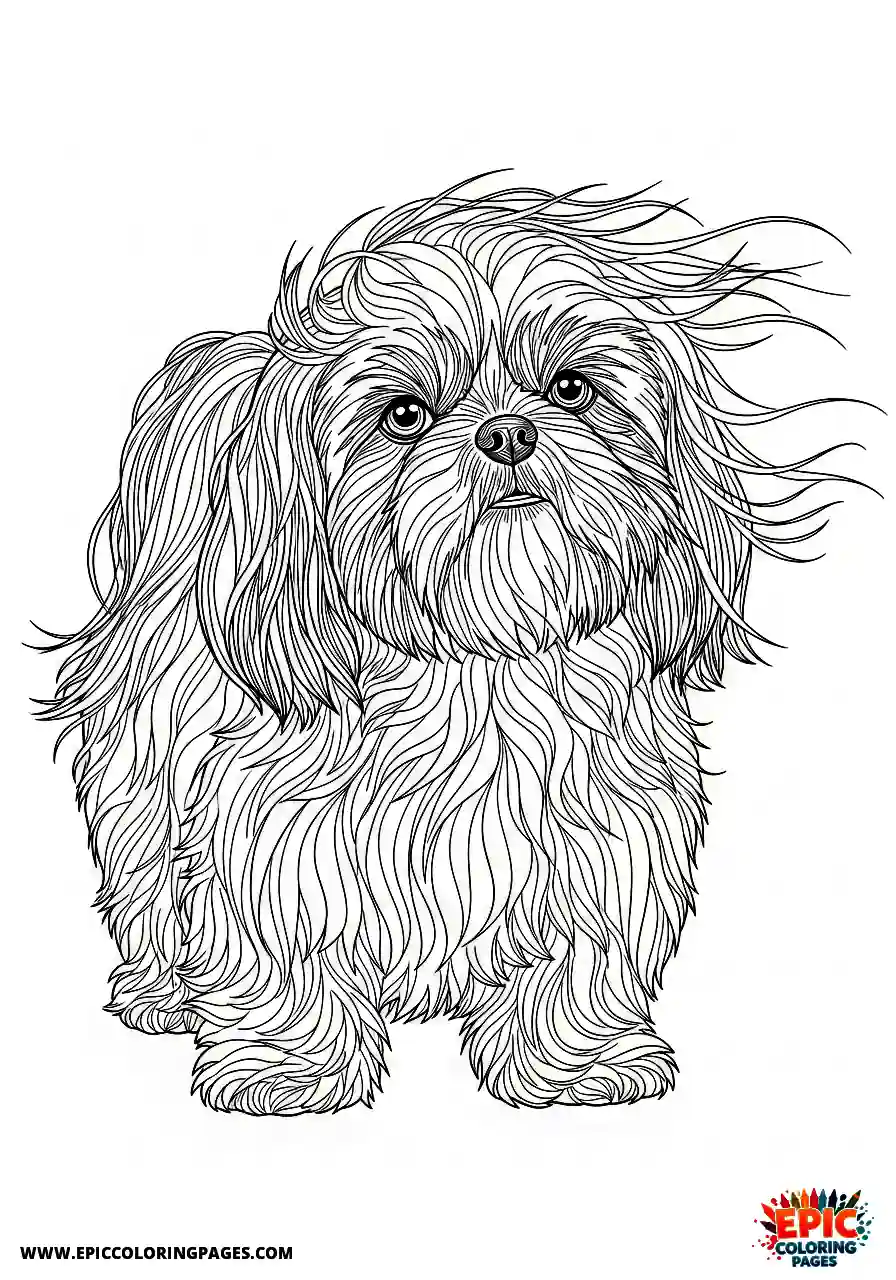
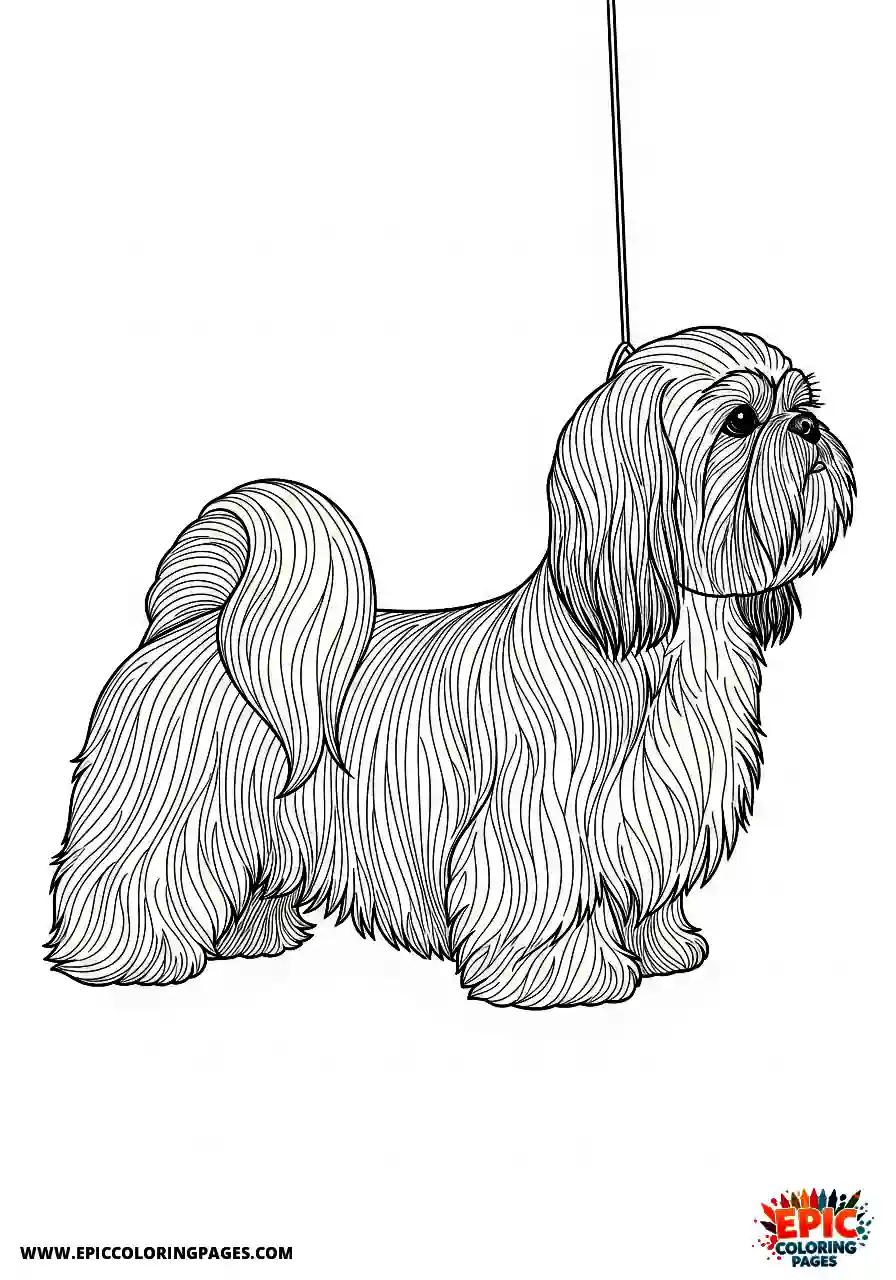
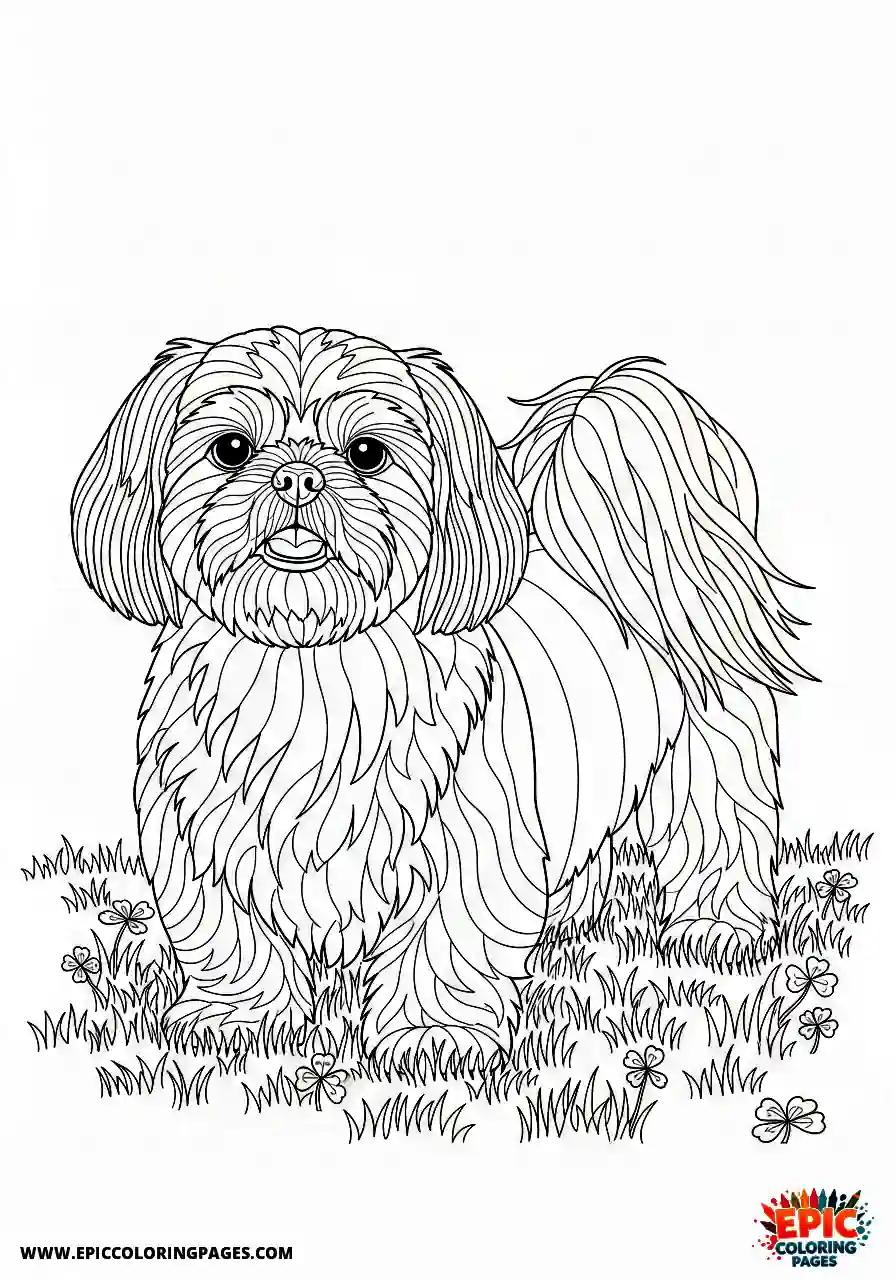
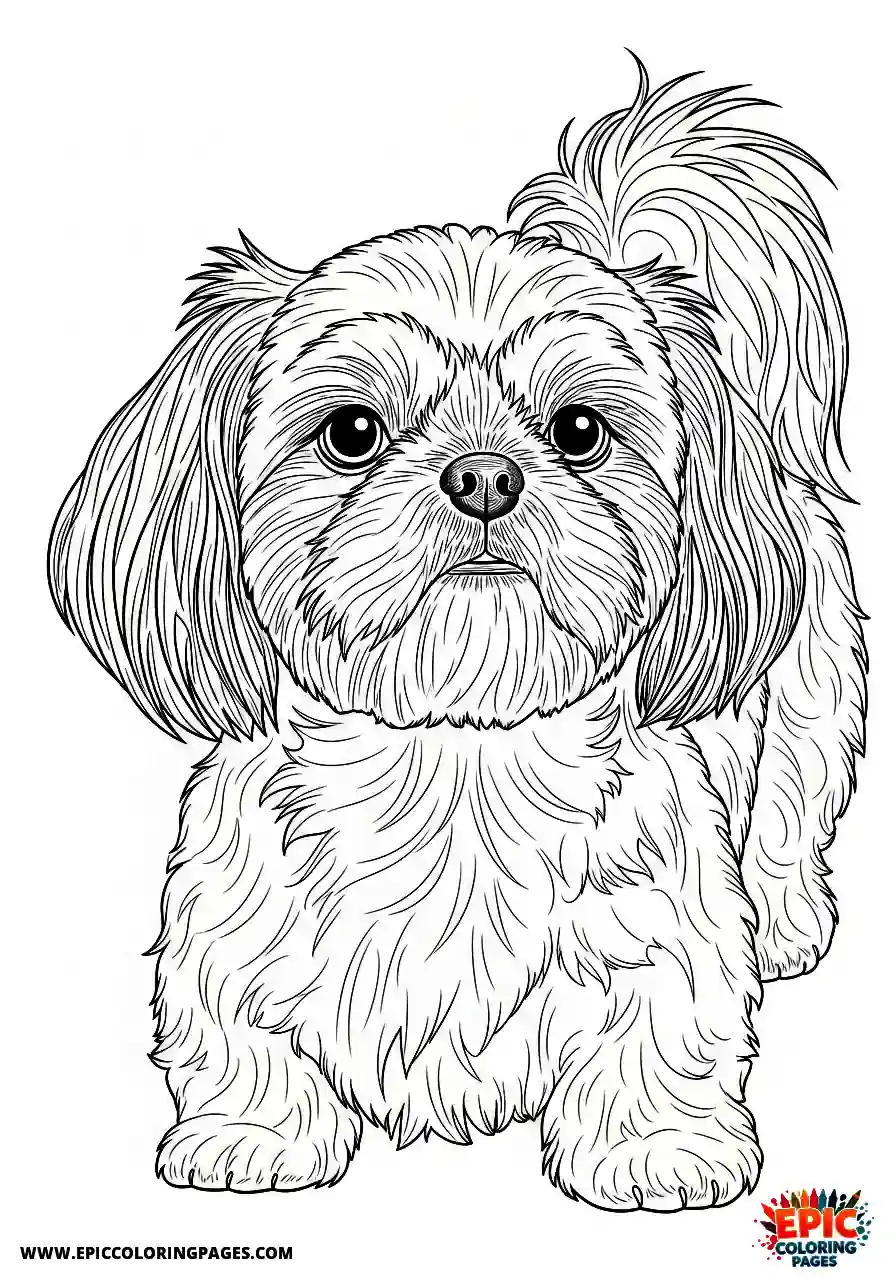
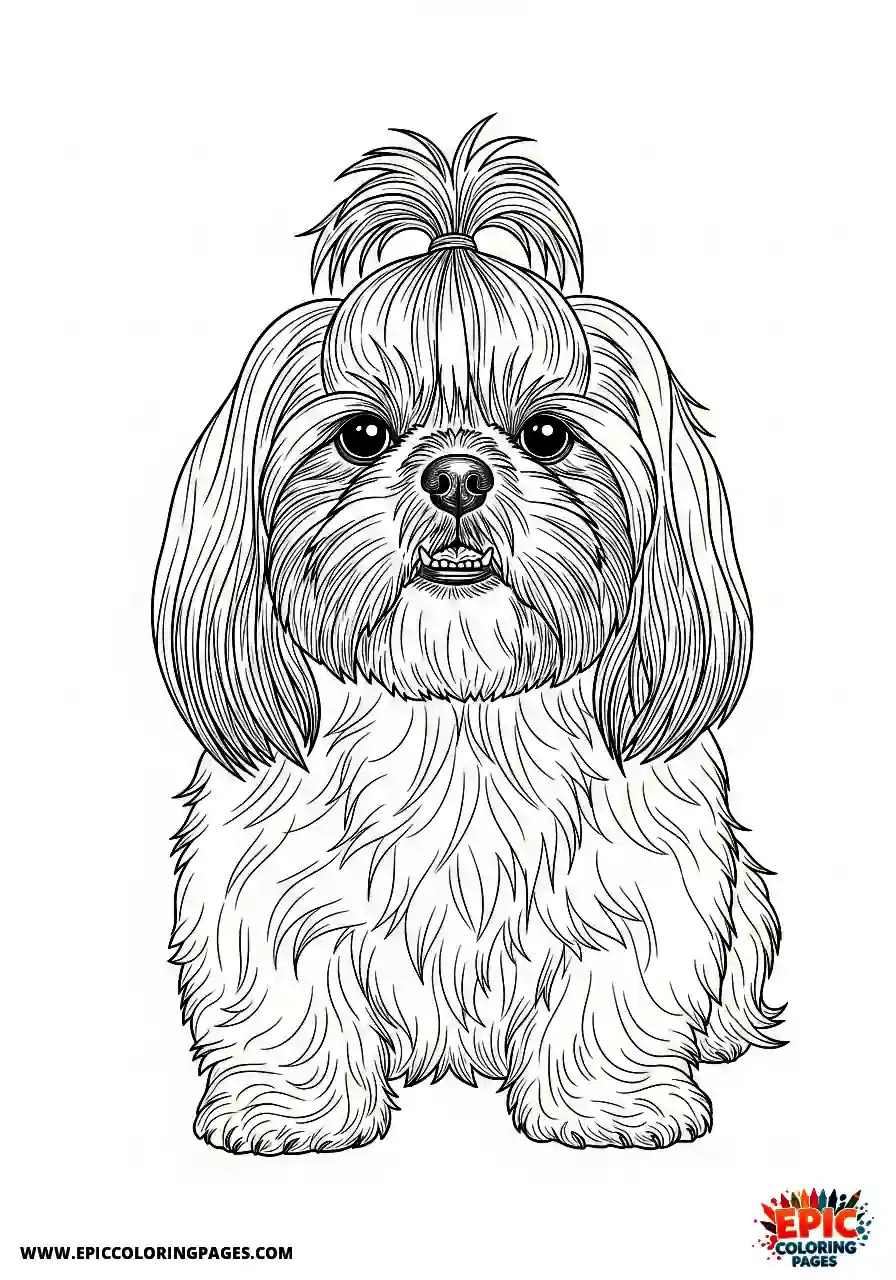
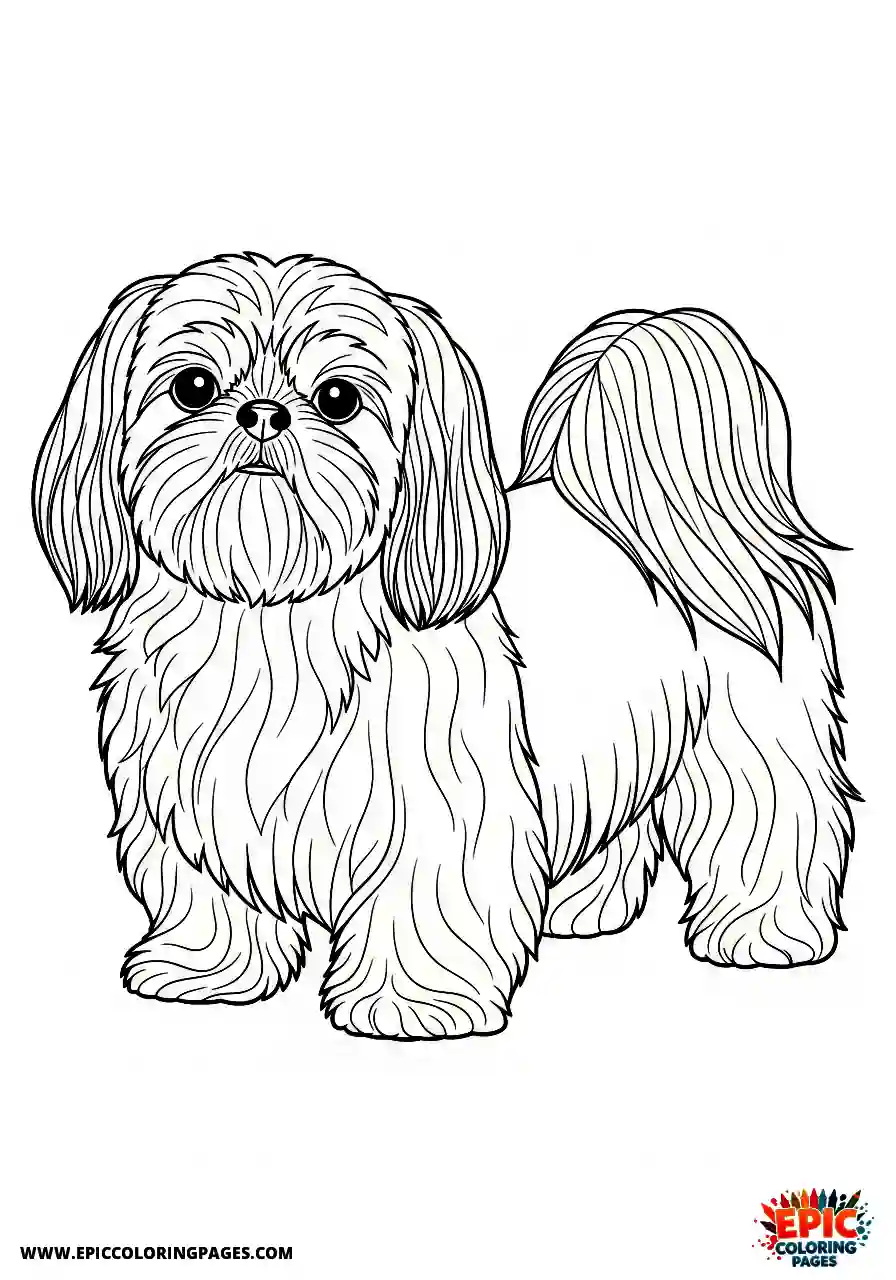
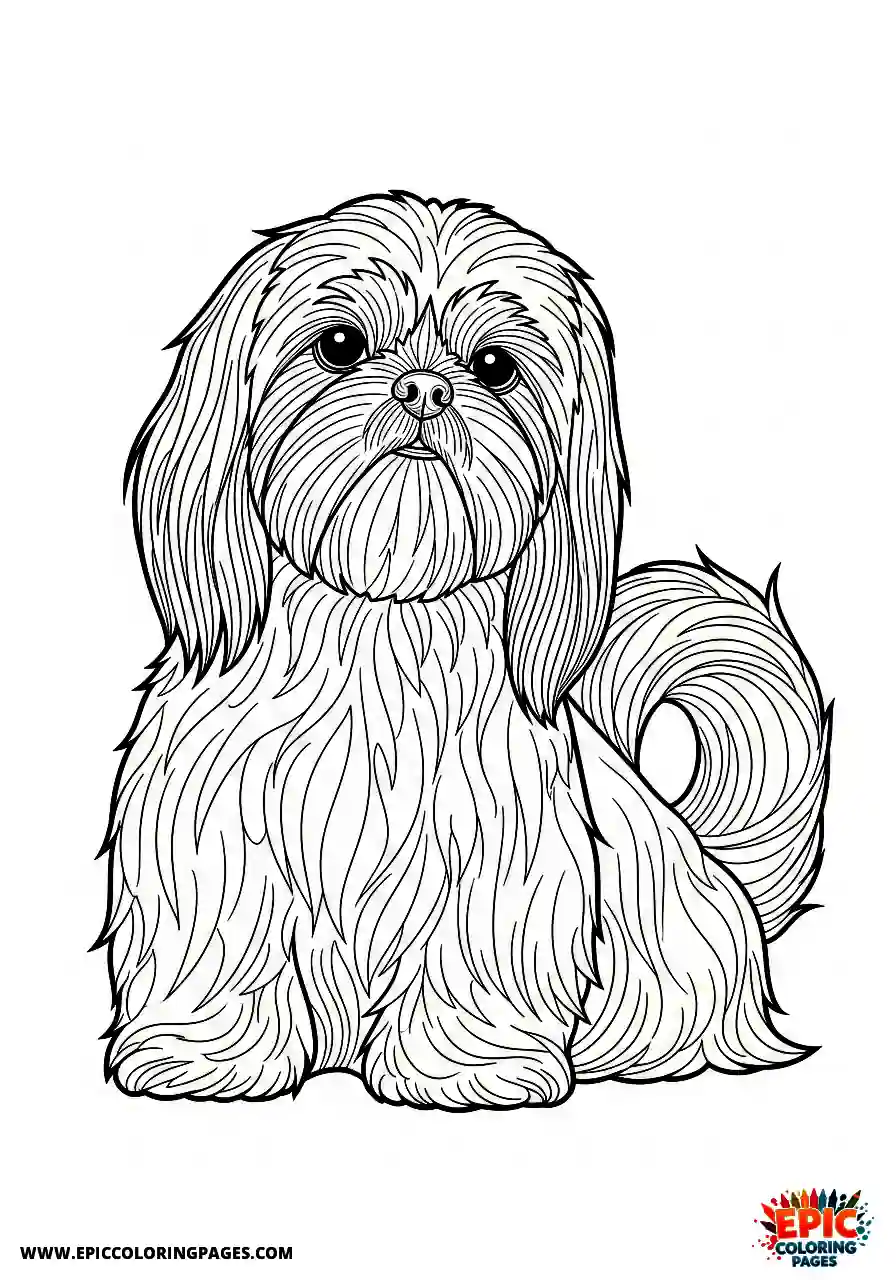
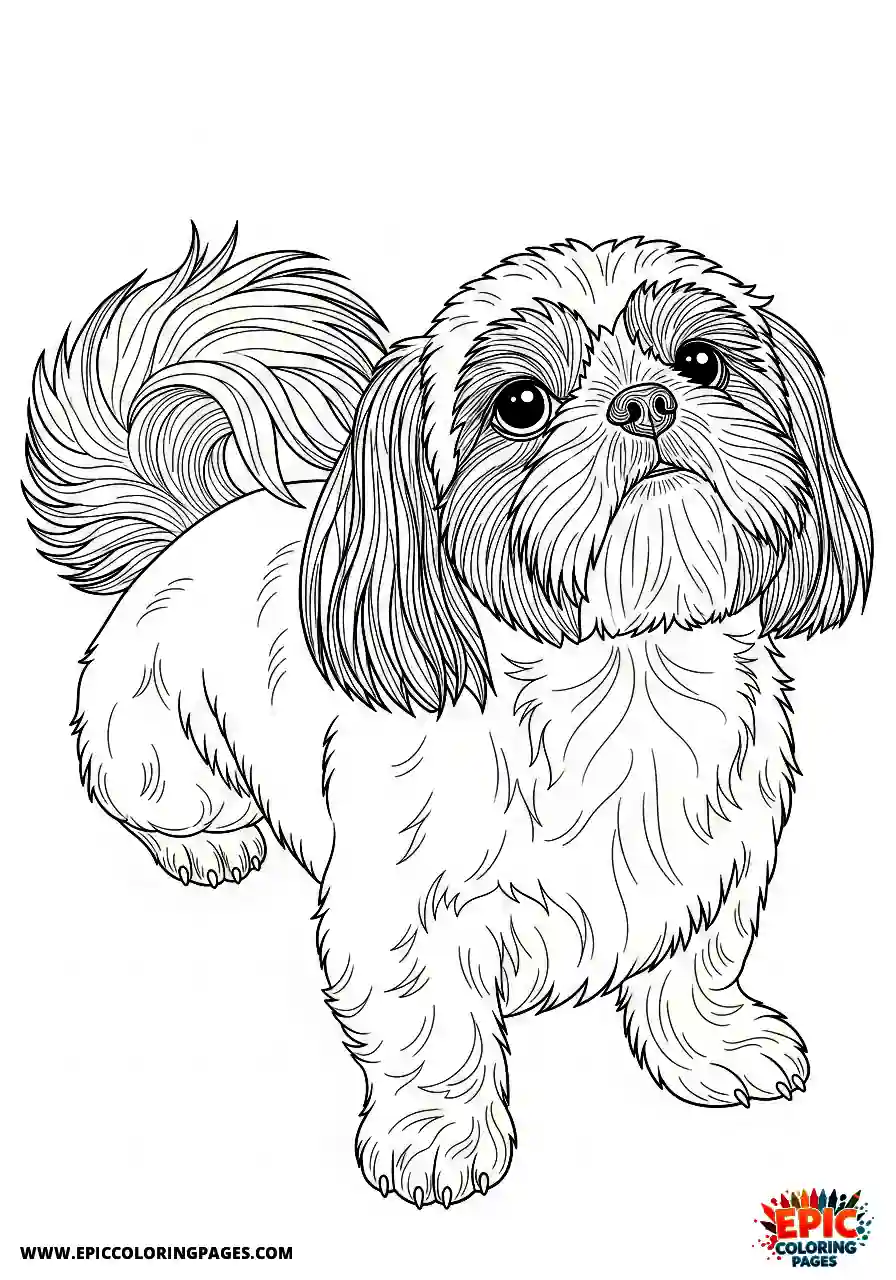
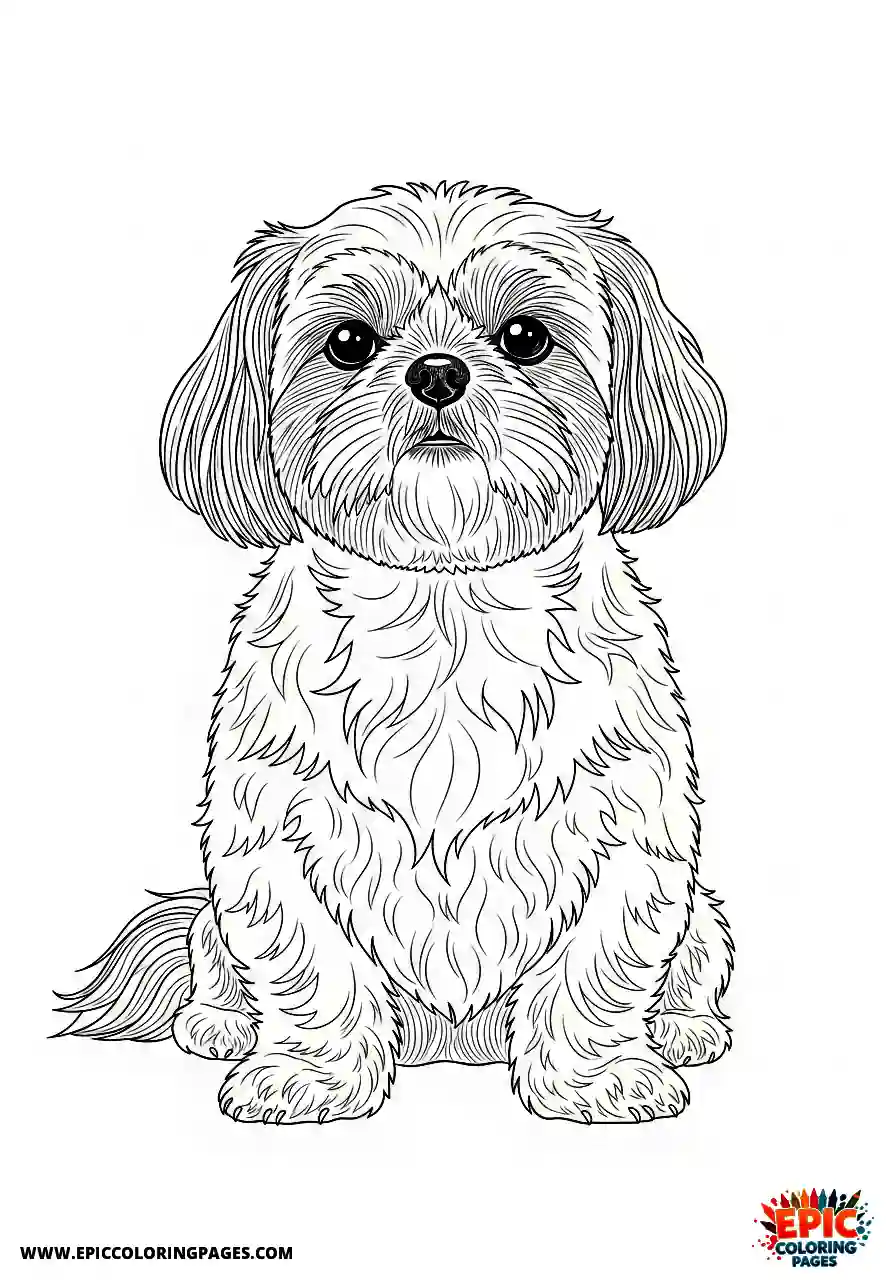
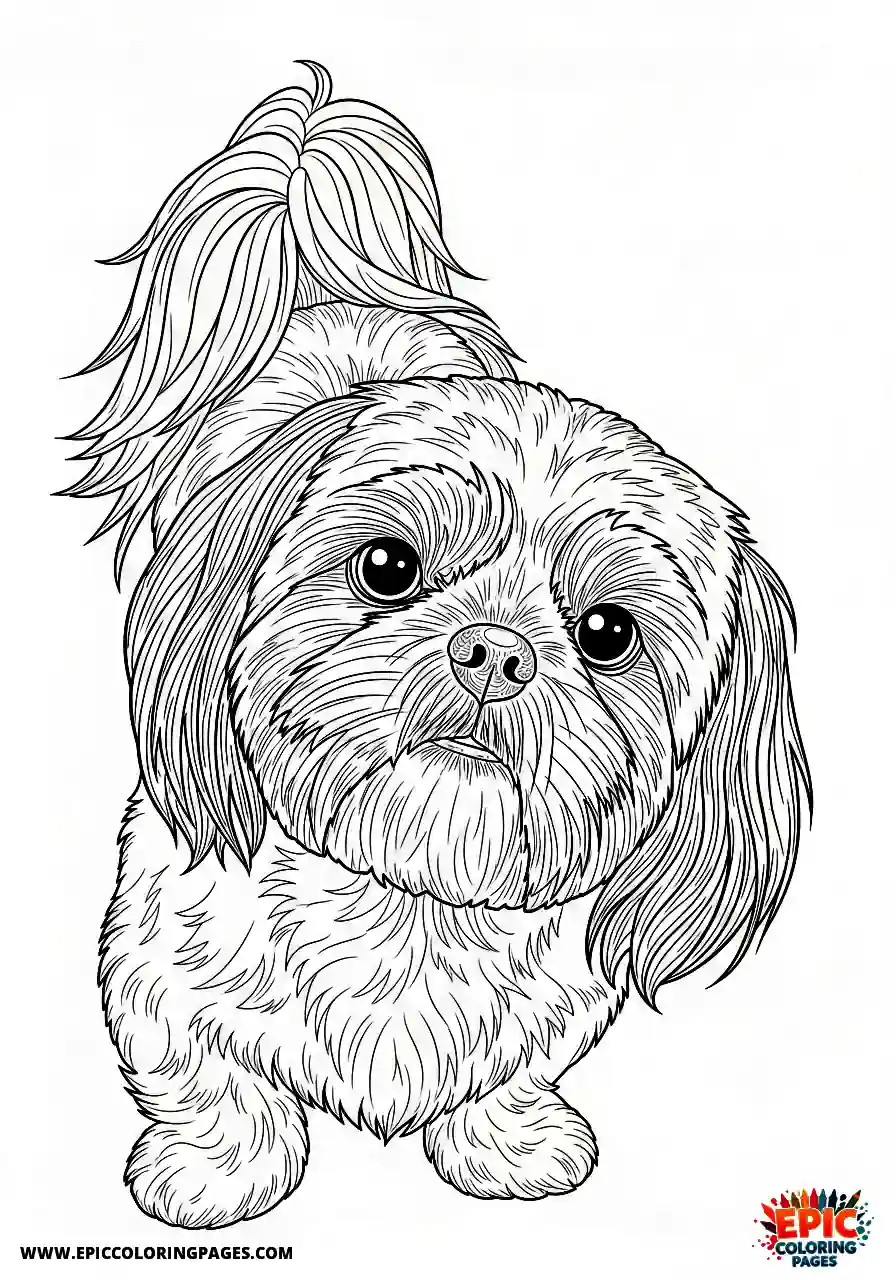
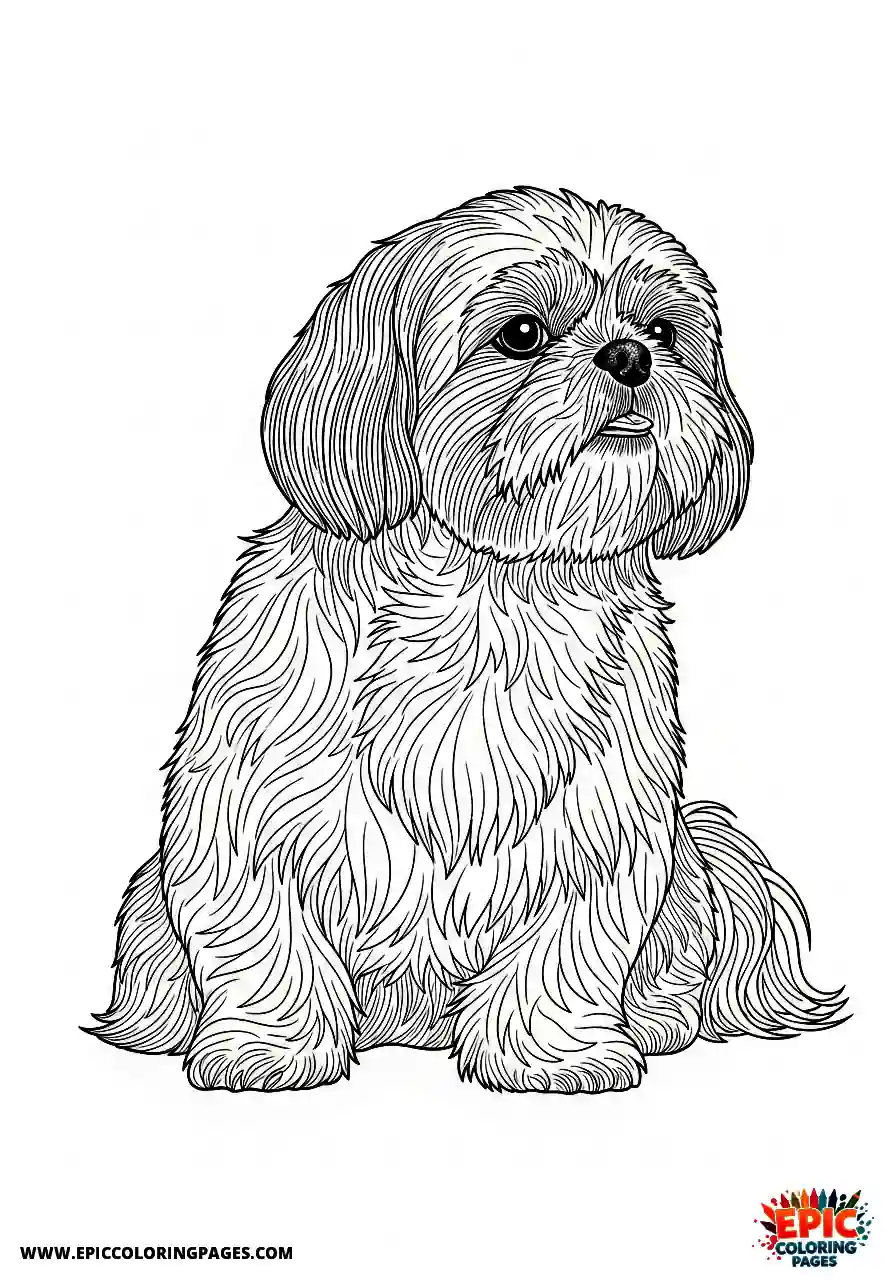
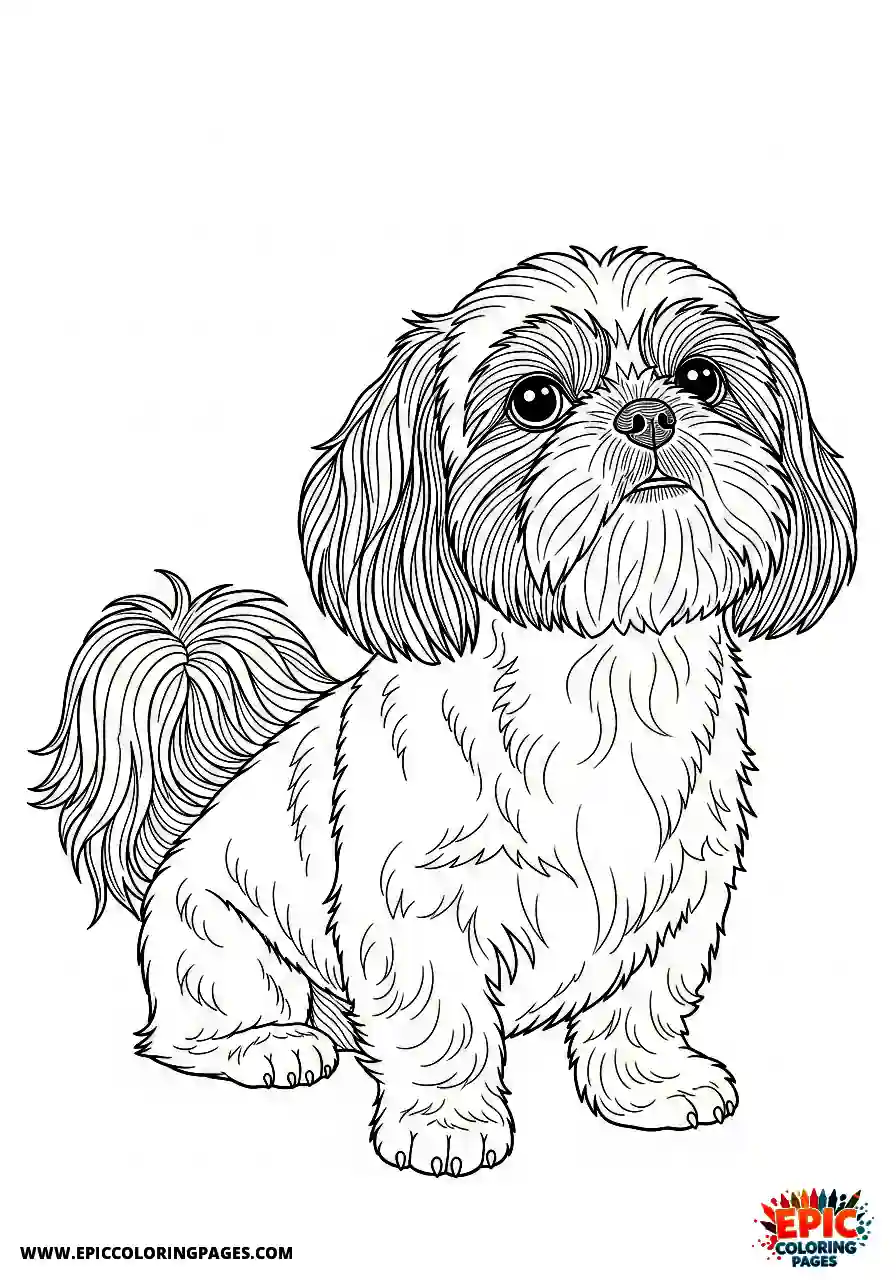
Professional Tips for Coloring Shih Tzu Pages
Understanding Shih Tzu Coat Patterns
Shih Tzus rock some of the most varied color combinations in the dog world. You’ll see everything from solid golds to dramatic black-and-white partis.
The classic look? A white blaze running down the face with darker ears. But here’s where it gets fun no two Shih Tzus wear their coats the same way.
When you’re choosing colors, think about how their fur actually grows. It’s not flat like paper. Their double coat creates natural shadows and highlights that make them look three-dimensional.
Layering Colors for Realistic Fur
Start light, then build darker. Always.
Grab your lightest shade first, maybe a cream or pale gold. Color the entire body section with gentle, directional strokes. These strokes should follow how the fur actually flows on a real dog.
Then pick your mid-tone. This is where the magic happens. Add it in short, quick strokes that mimic individual hairs. Don’t fill everything in. Leave some of that base color peeking through.
Finally, your darkest shade goes in the deepest areas: under the ears, beneath the chin, where the legs meet the body, and along the belly.
Capturing That Signature Shih Tzu Face
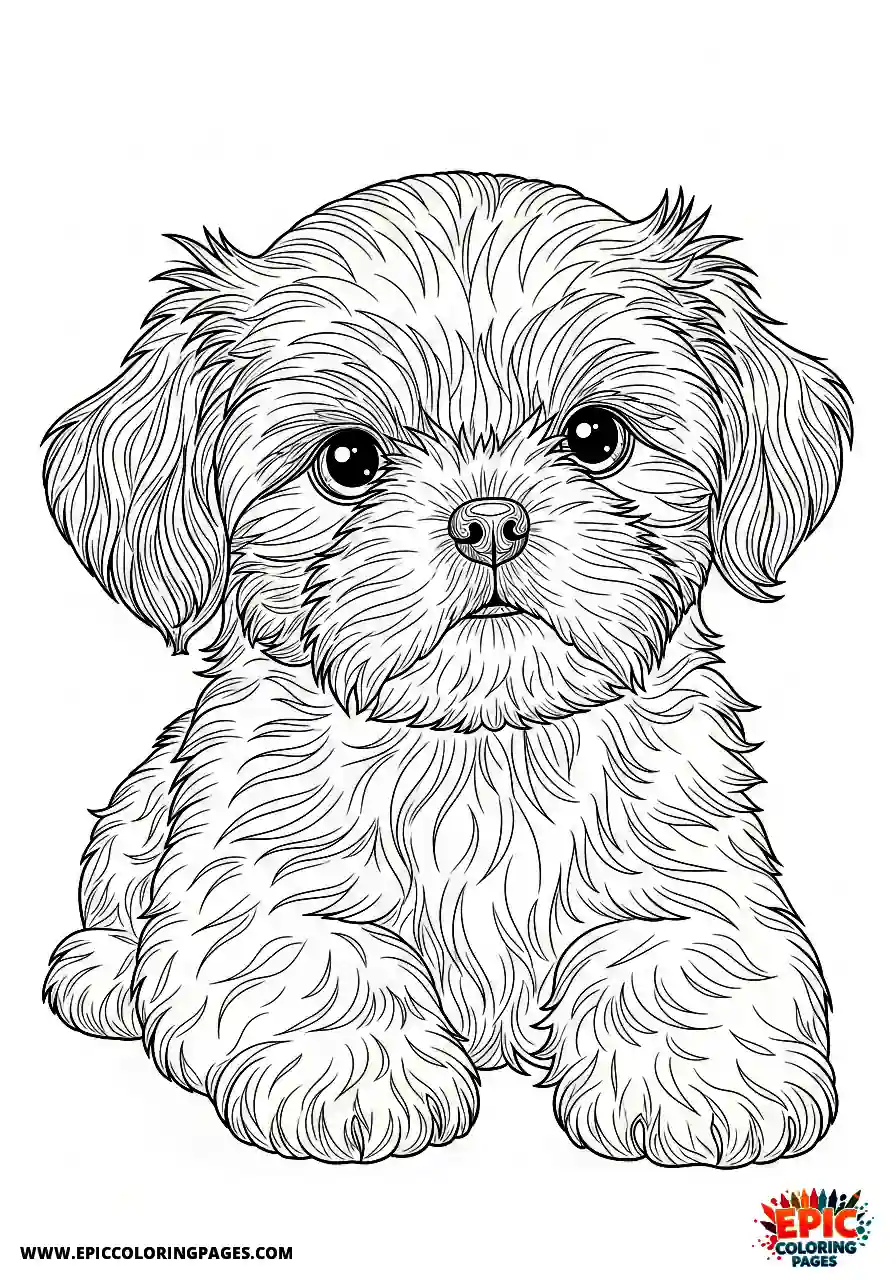
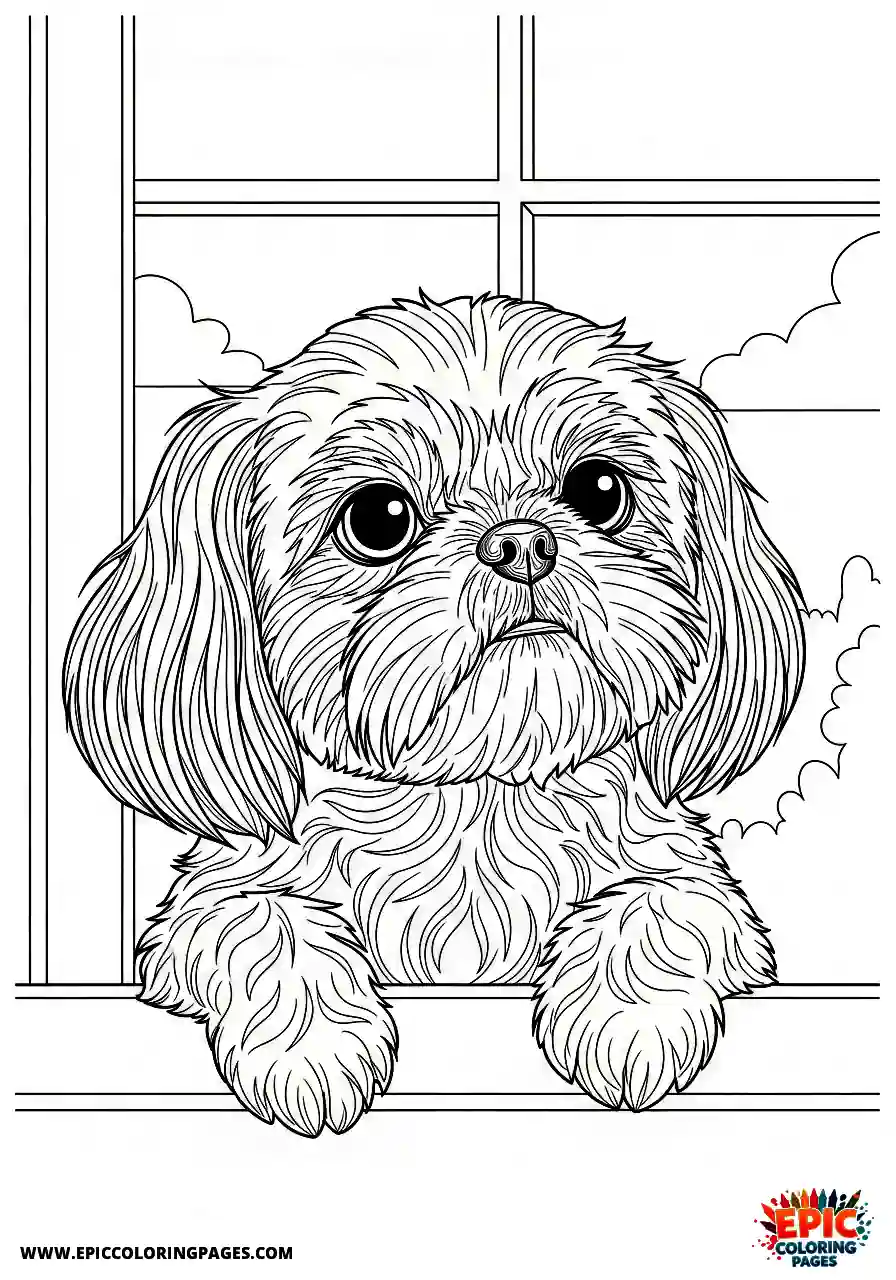
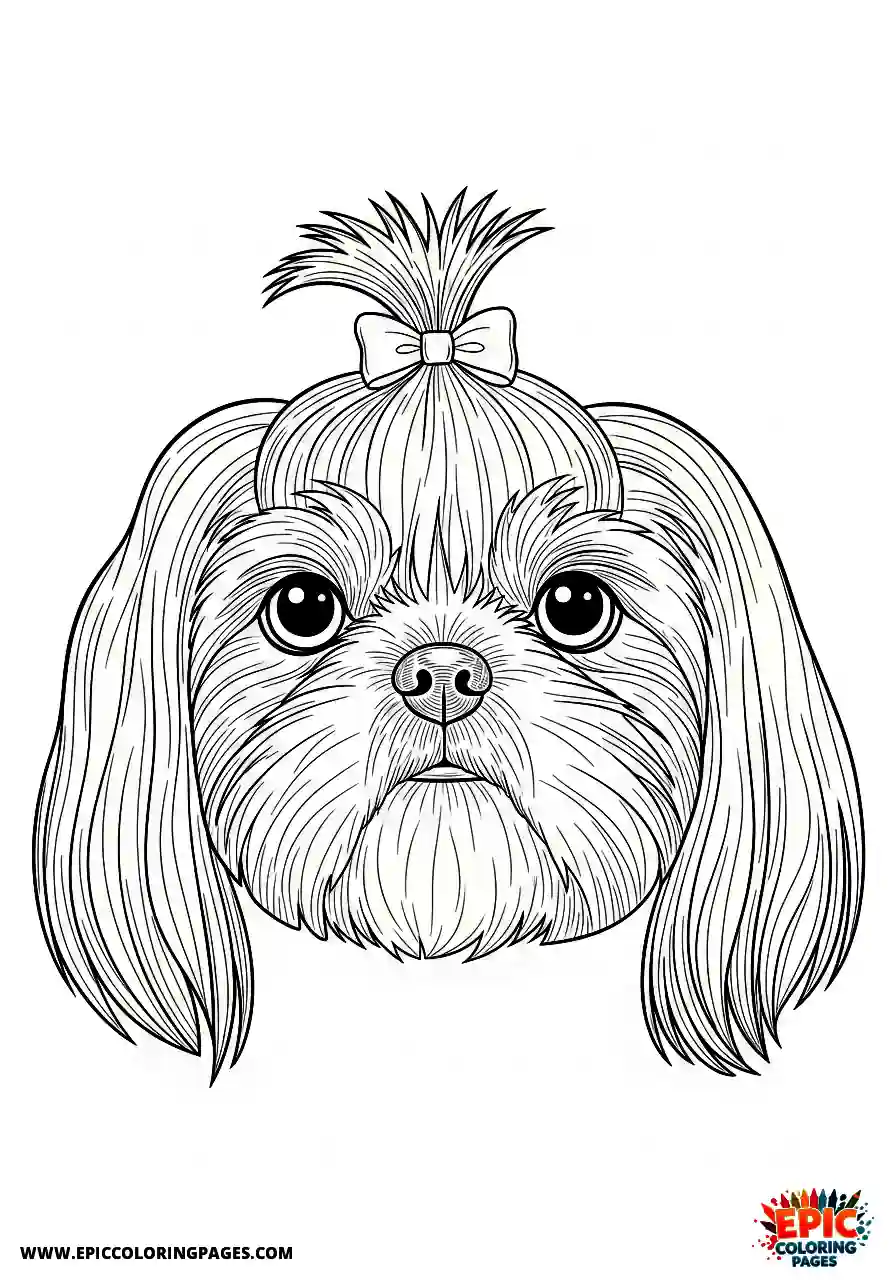
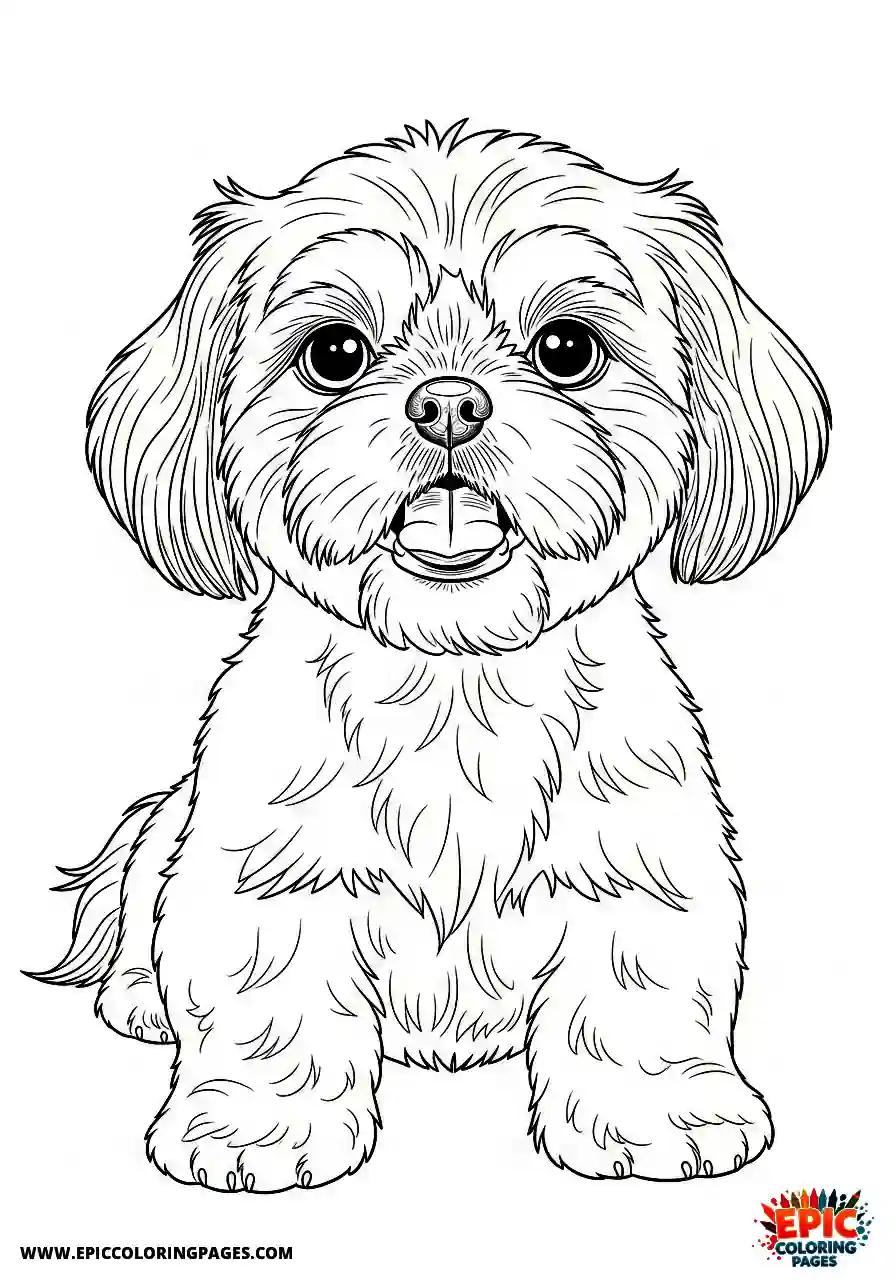
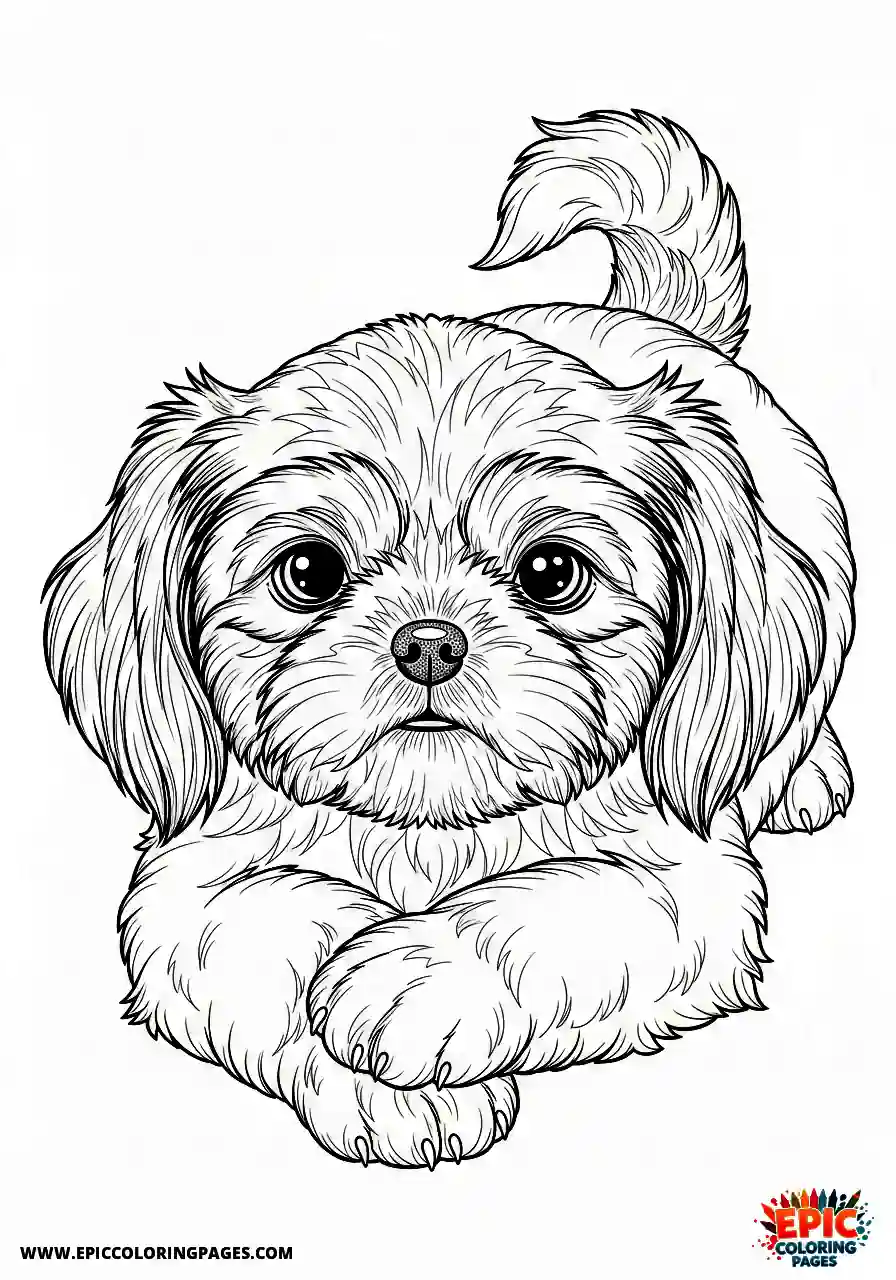
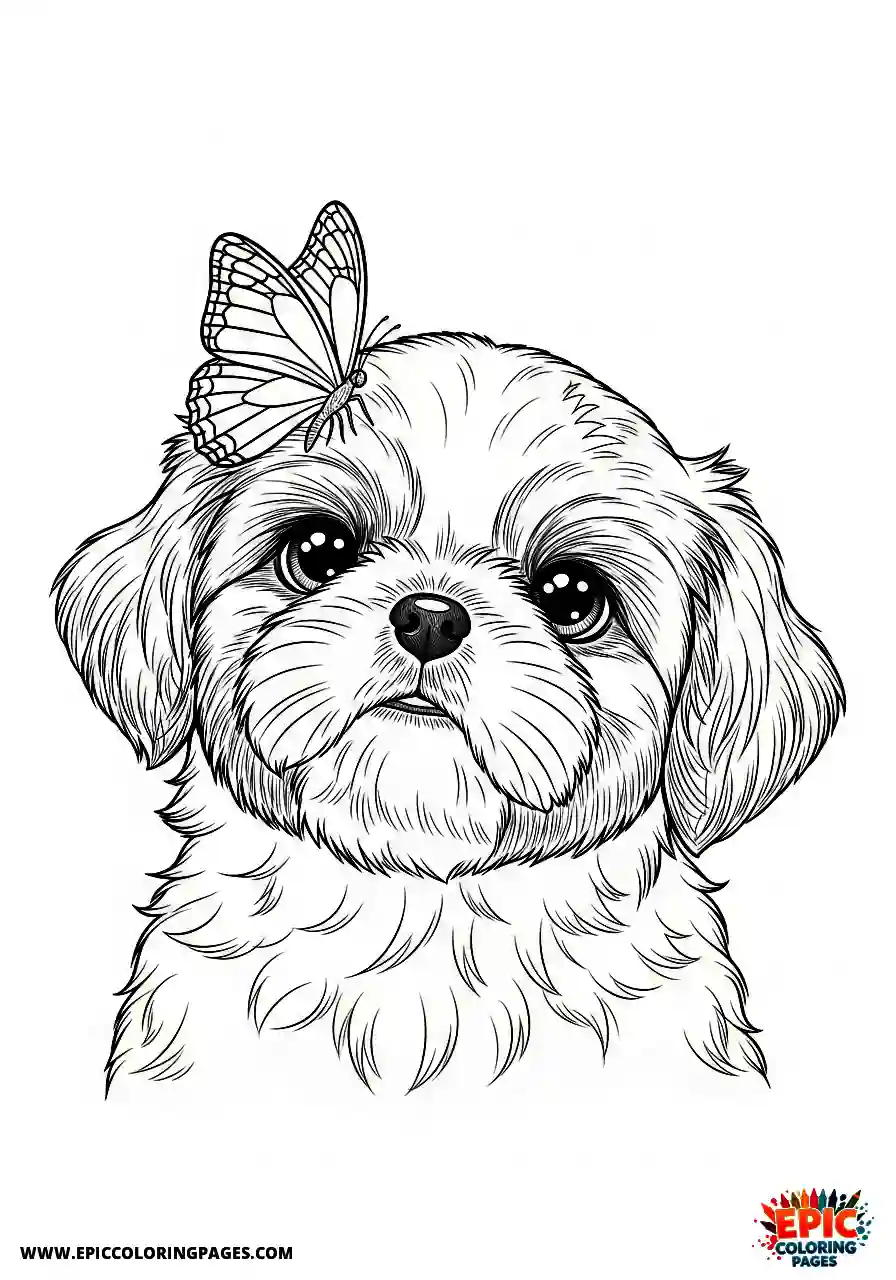
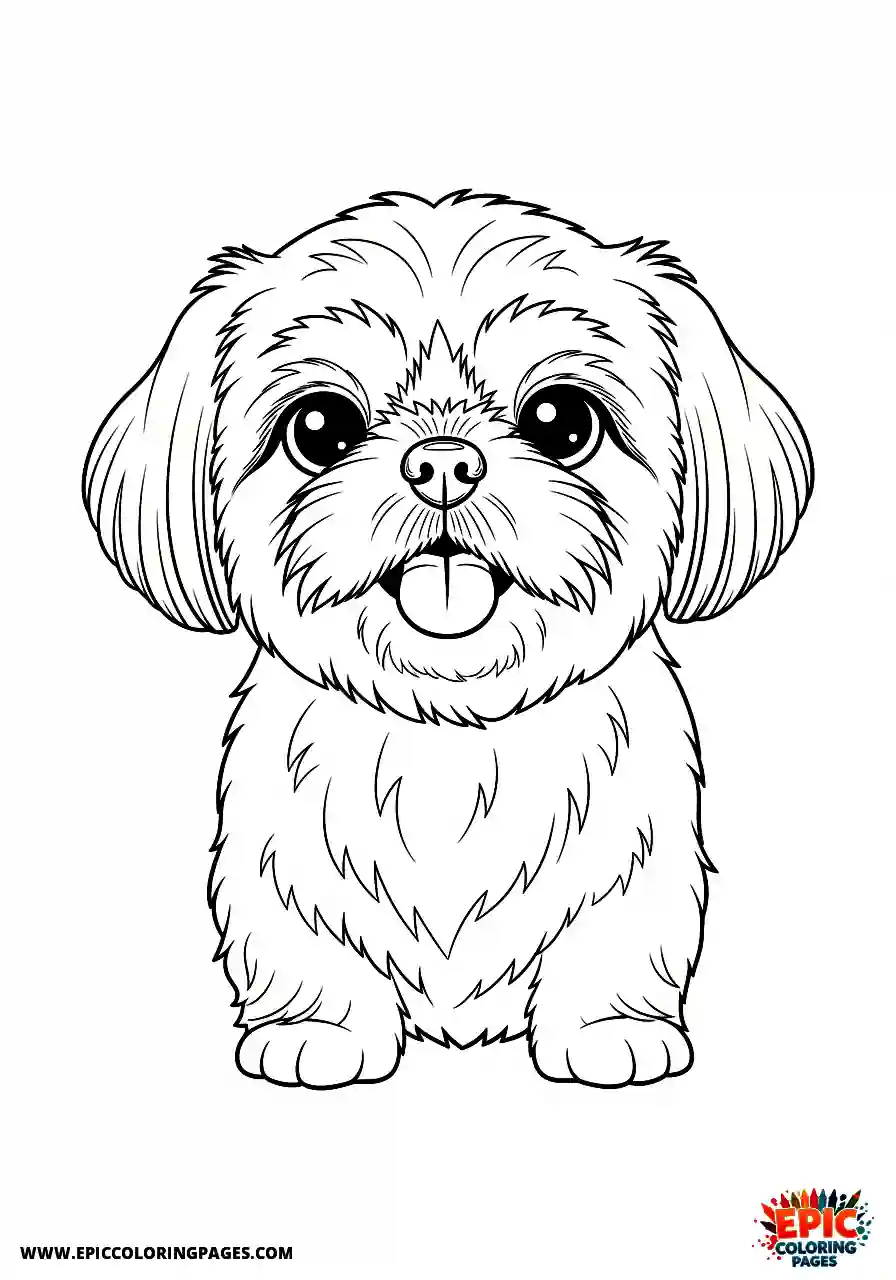
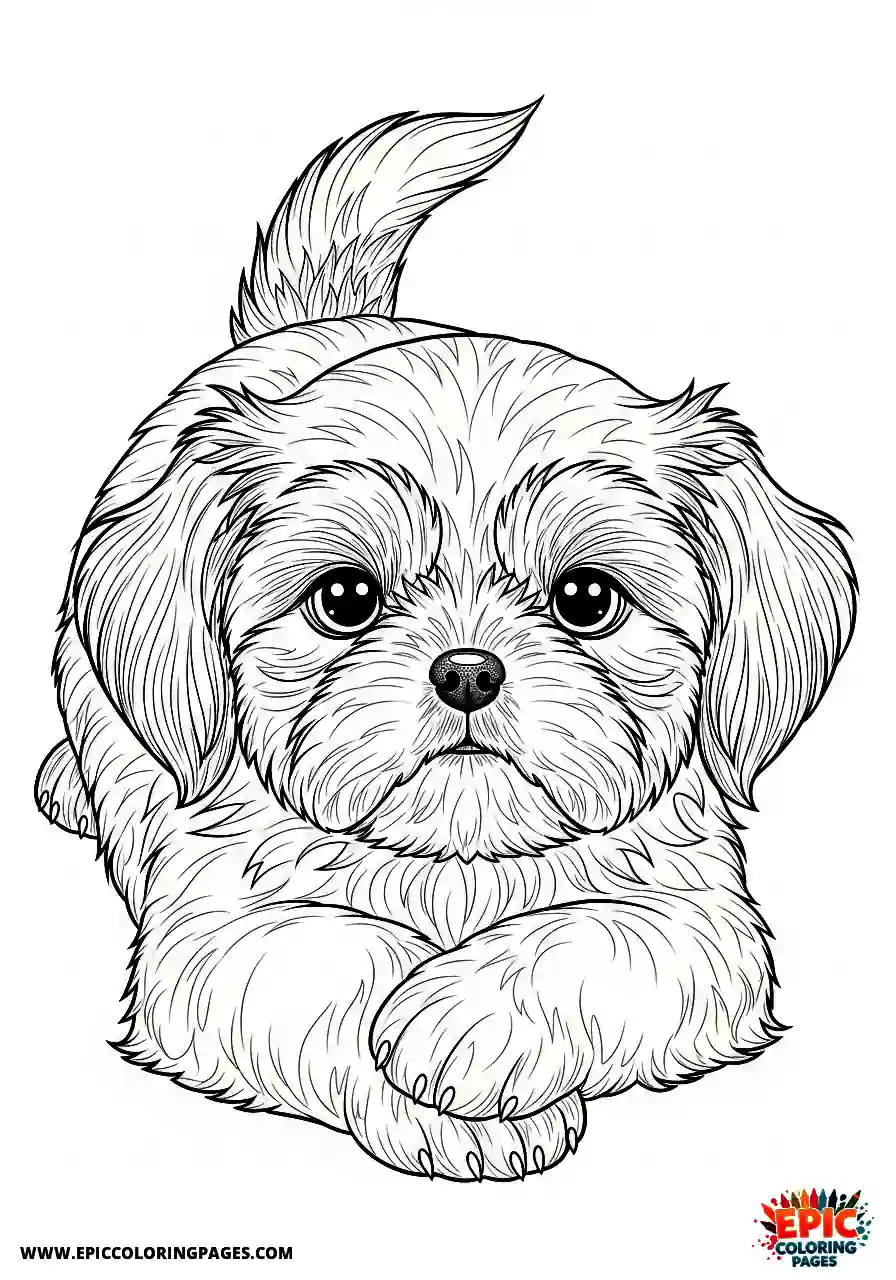
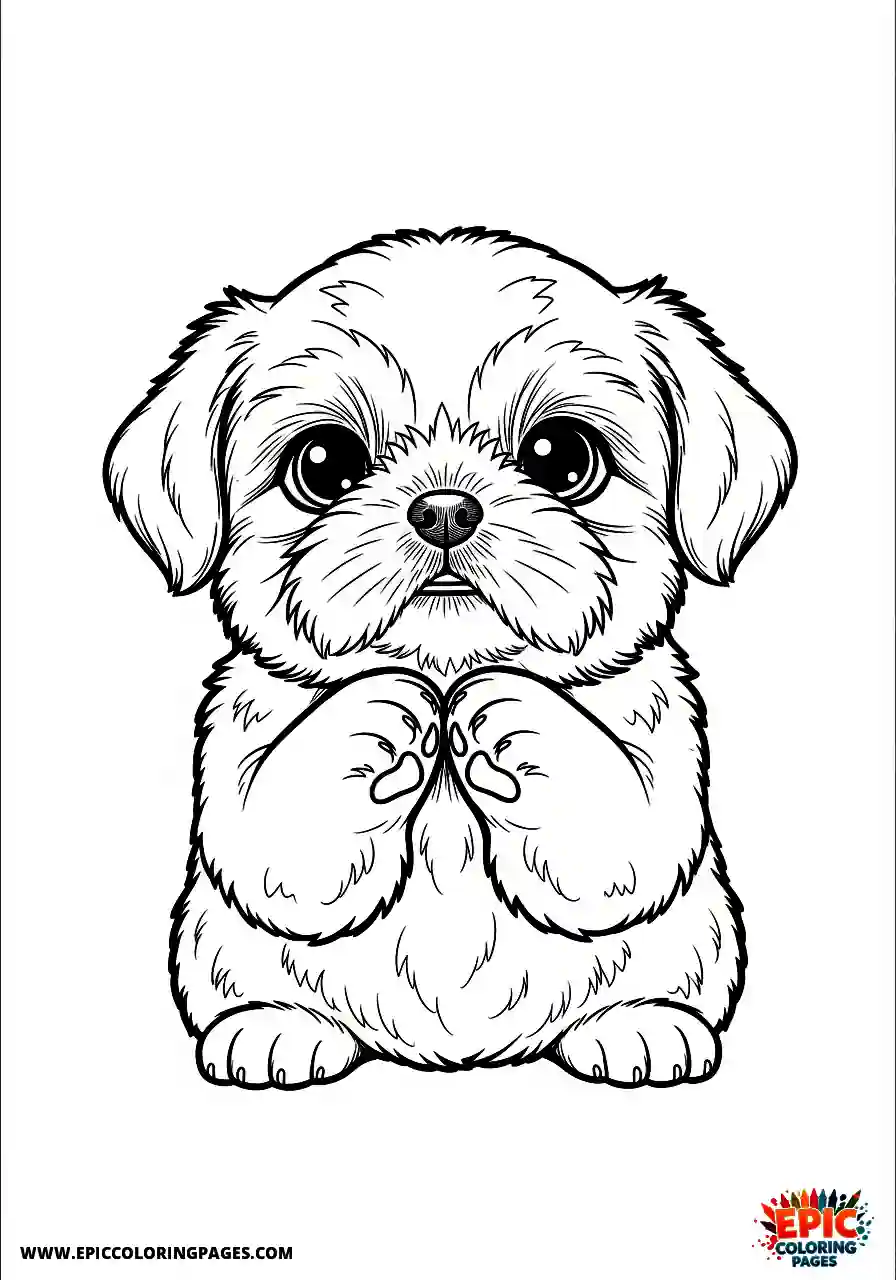
Those big round eyes are what make people fall in love with this breed. They deserve special attention.
Leave a tiny white dot in each eye that’s your catchlight. It makes the eyes look alive and wet. Position it in the same spot in both eyes for consistency.
The nose is typically black, but here’s a pro move: add a hint of purple or dark blue to black. Straight black can look flat. That slight color variation creates depth.
The Flowing Facial Hair
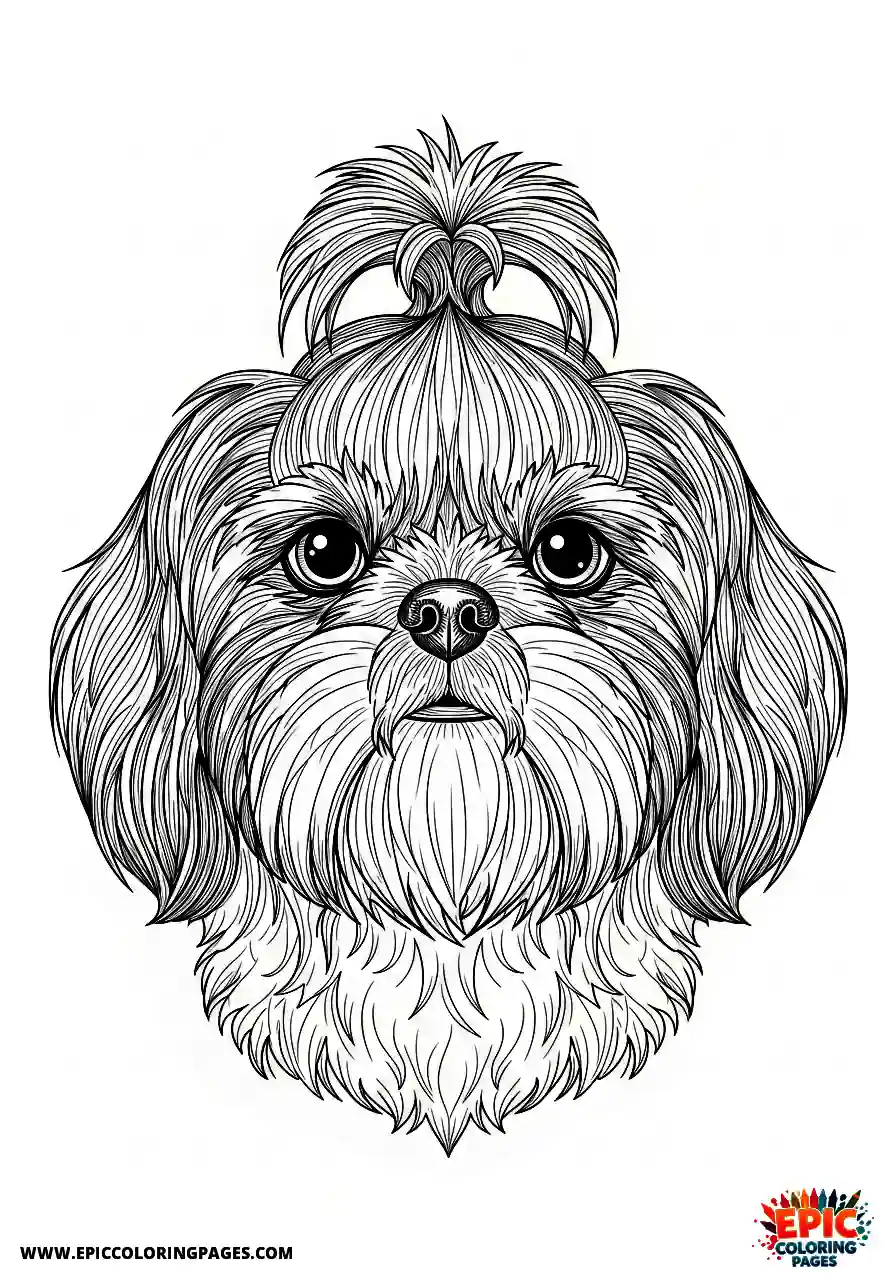
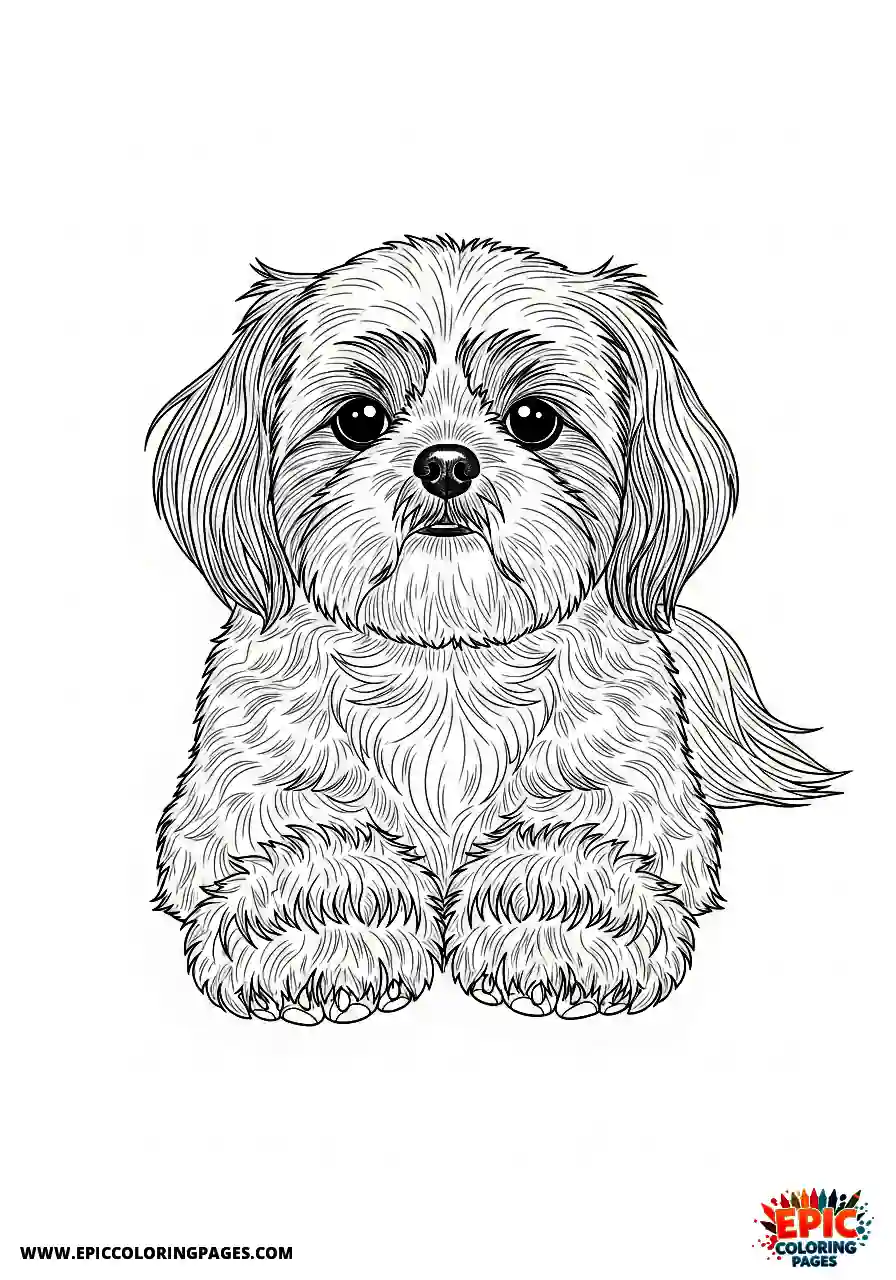
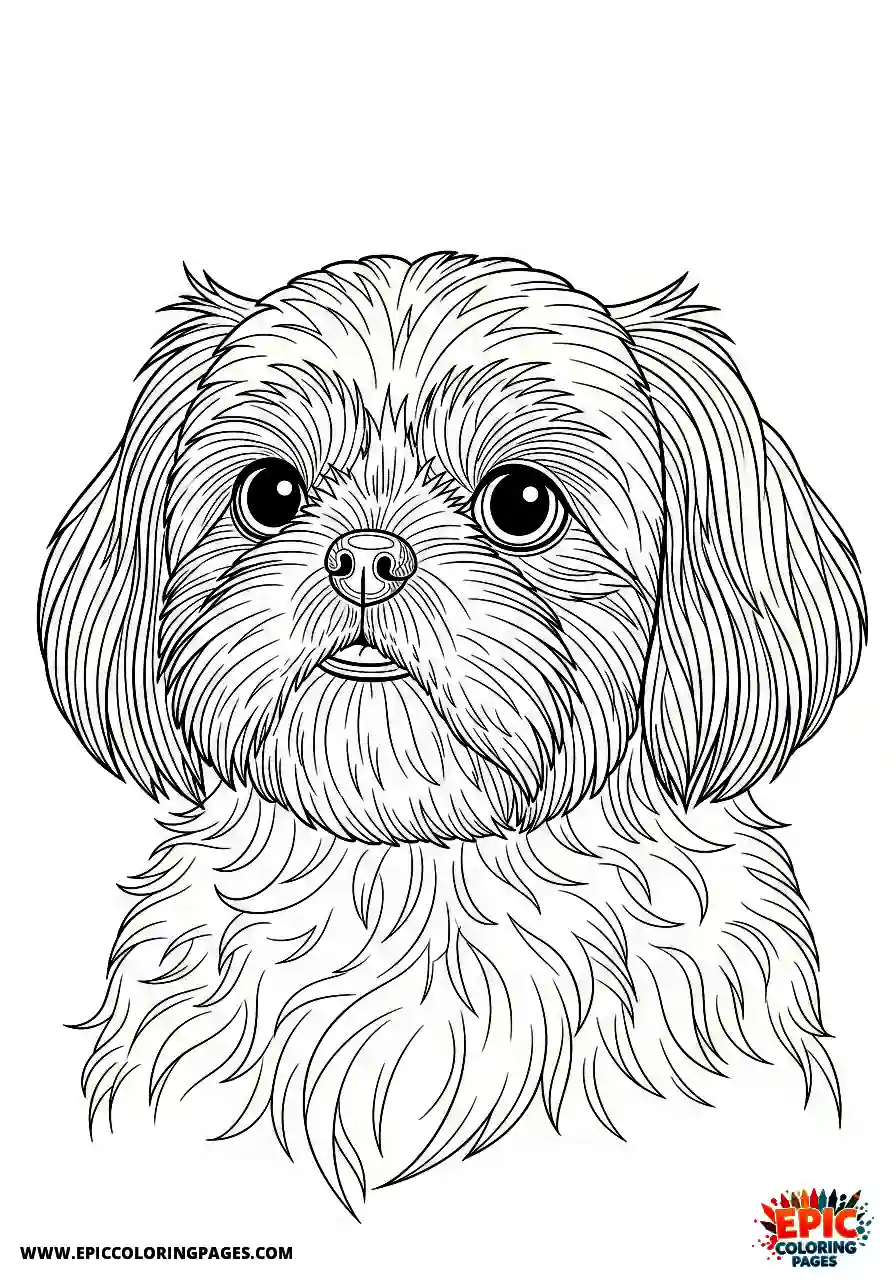
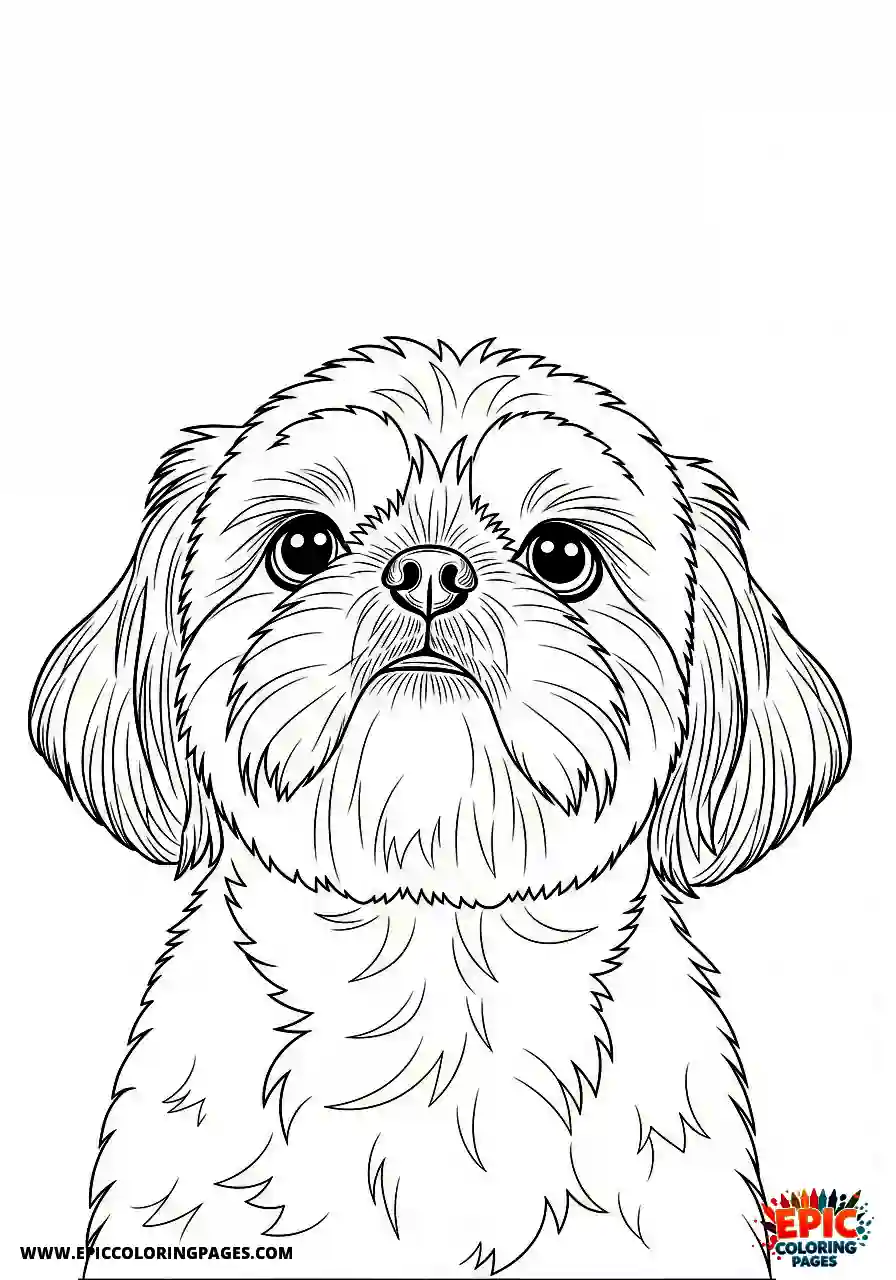
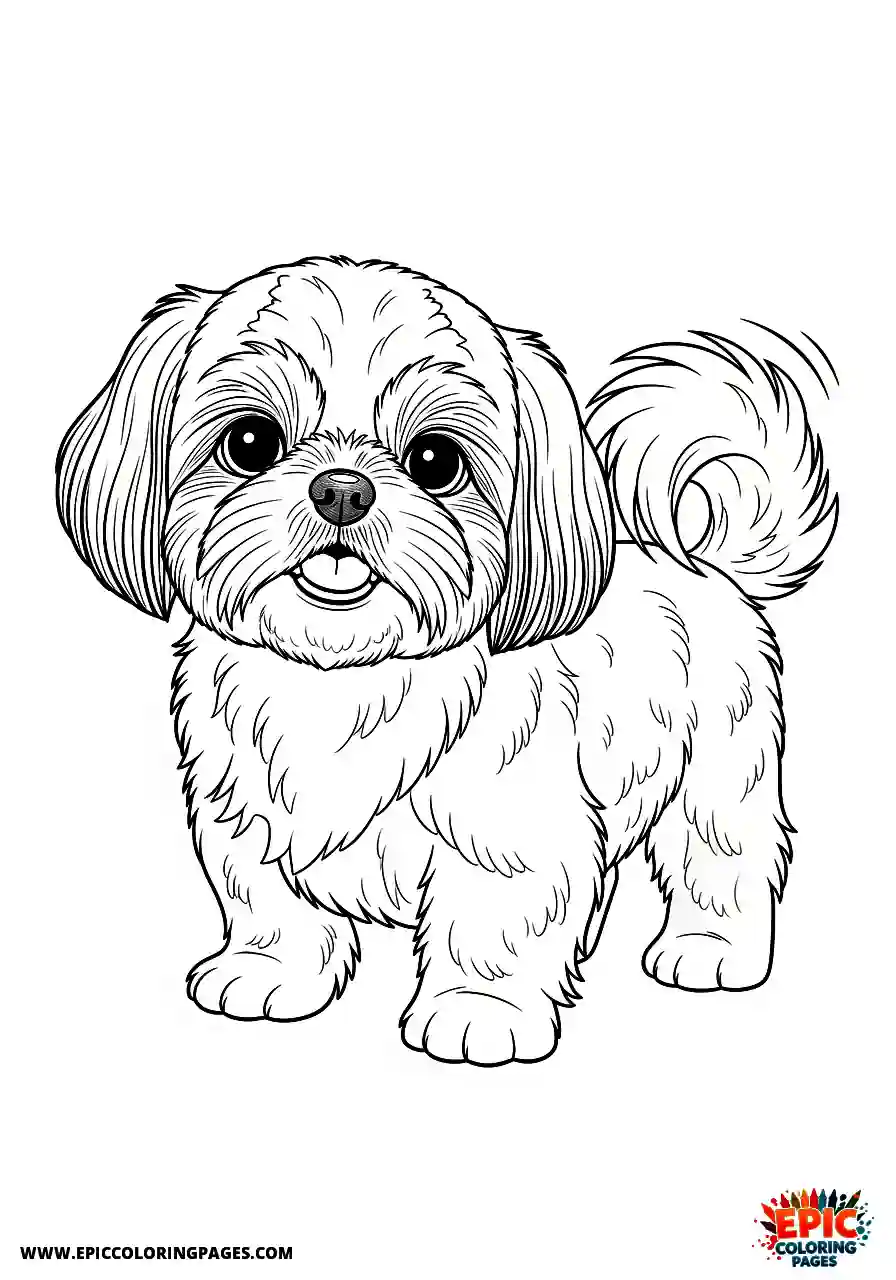
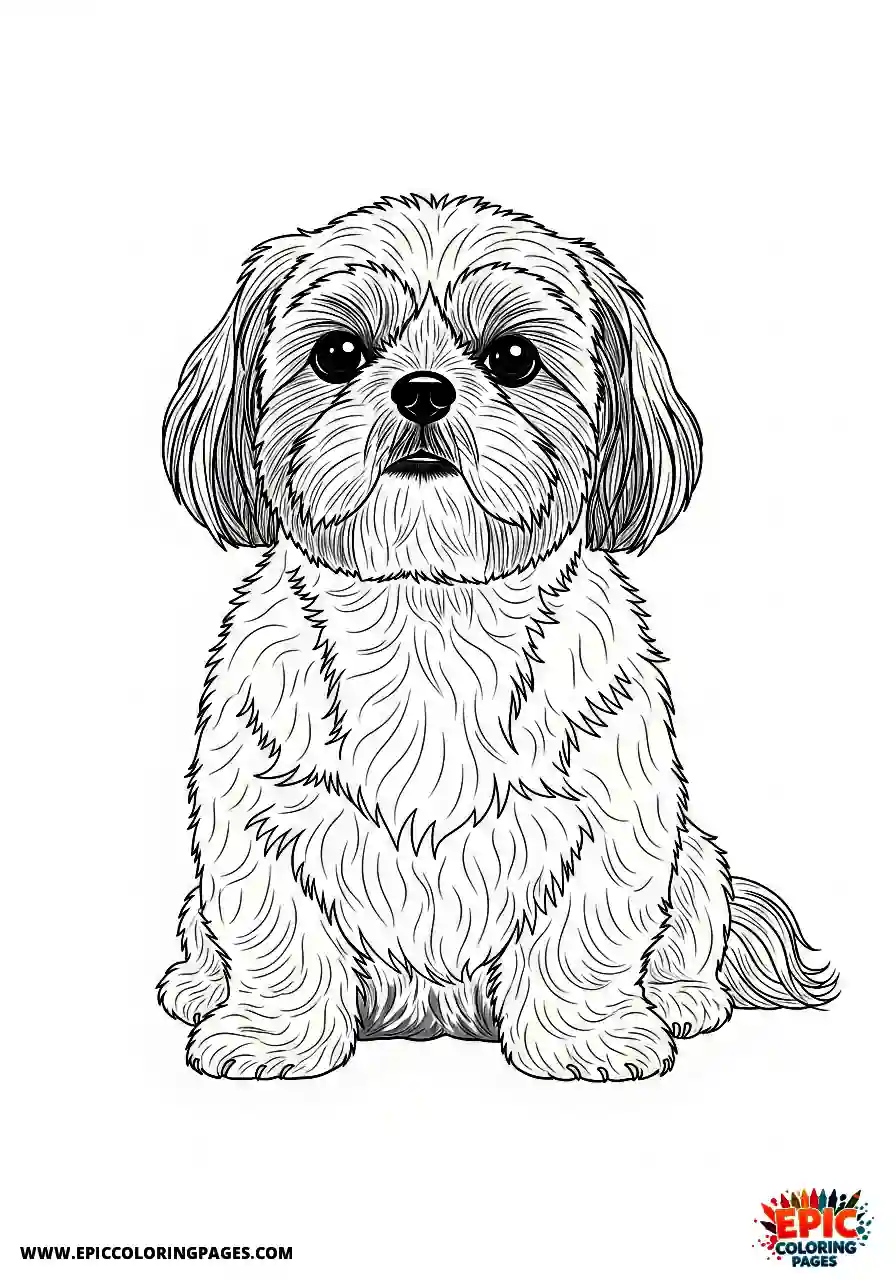
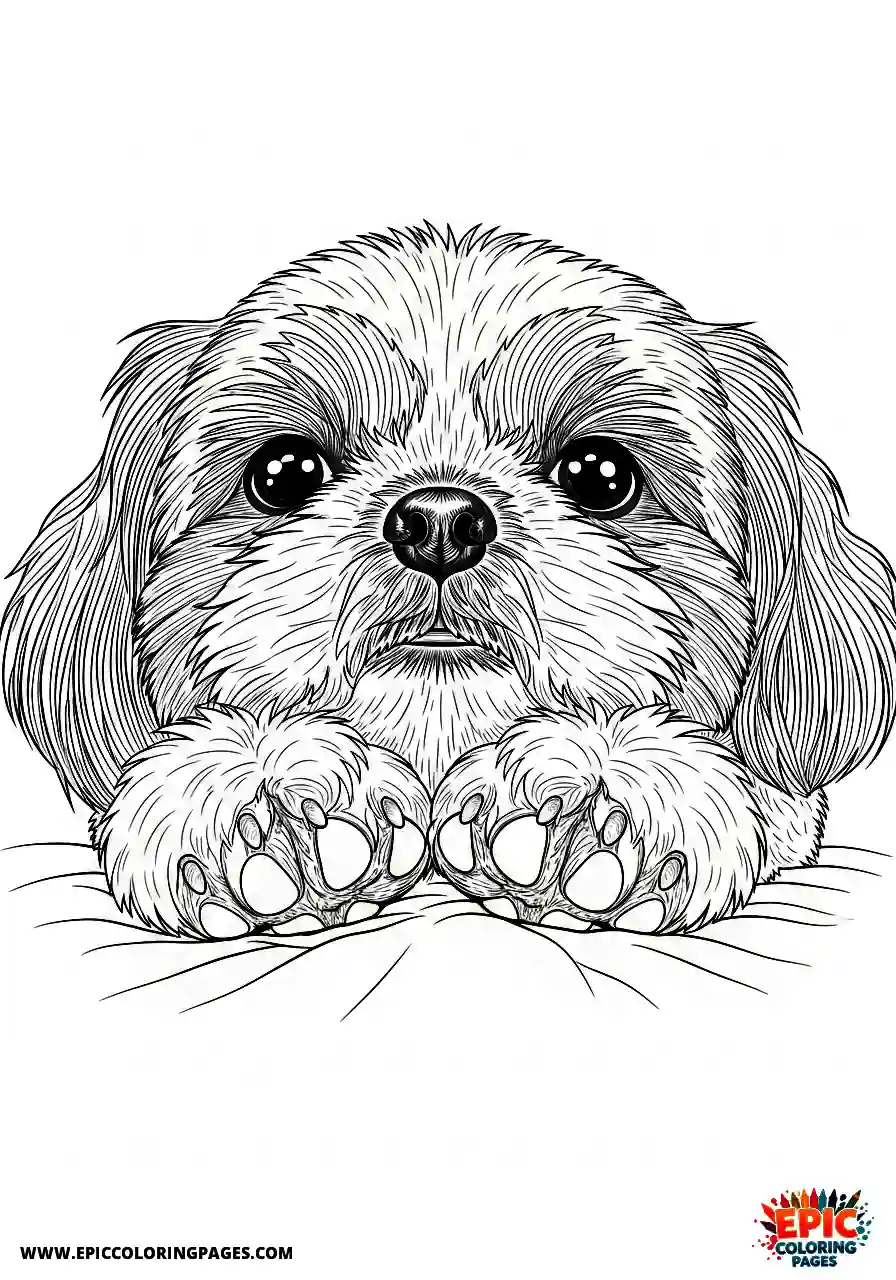
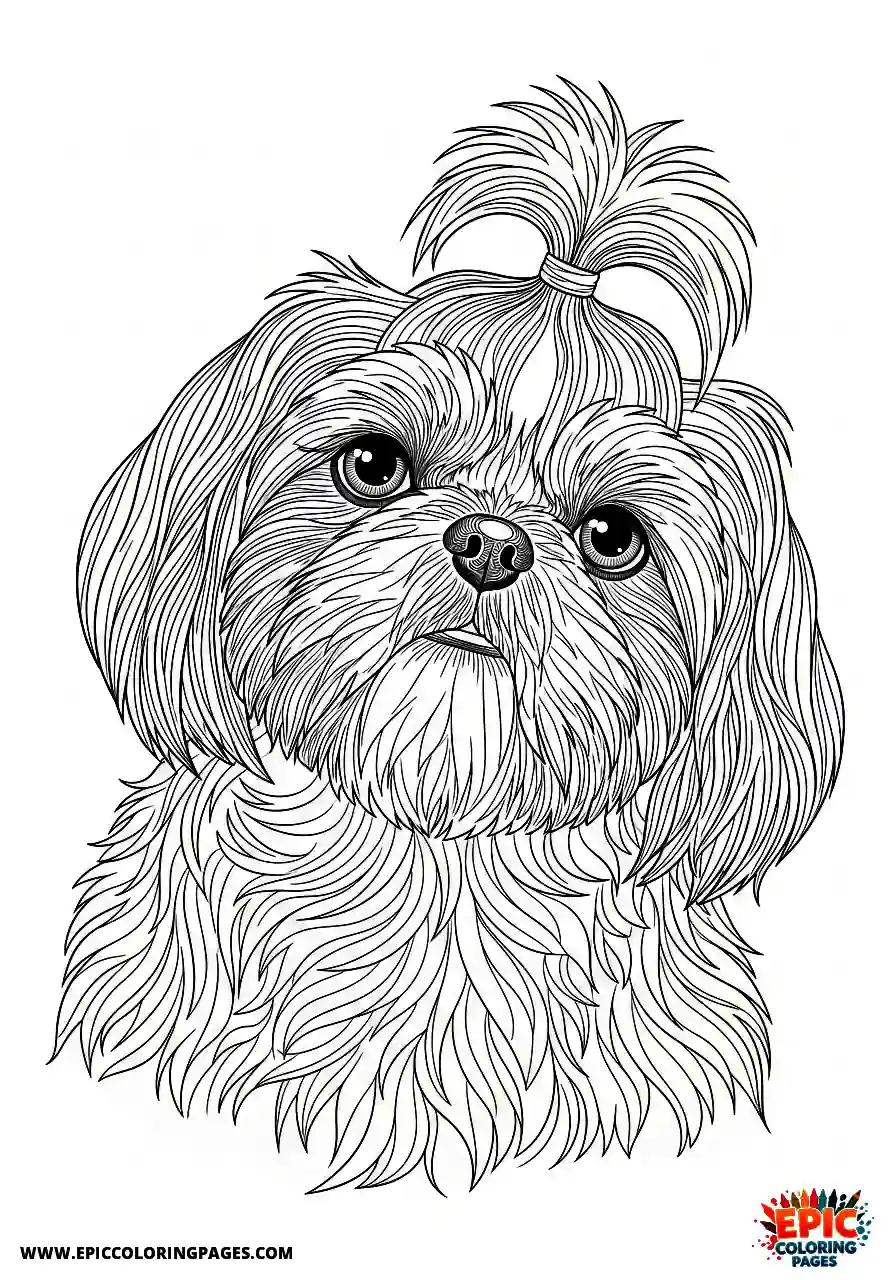
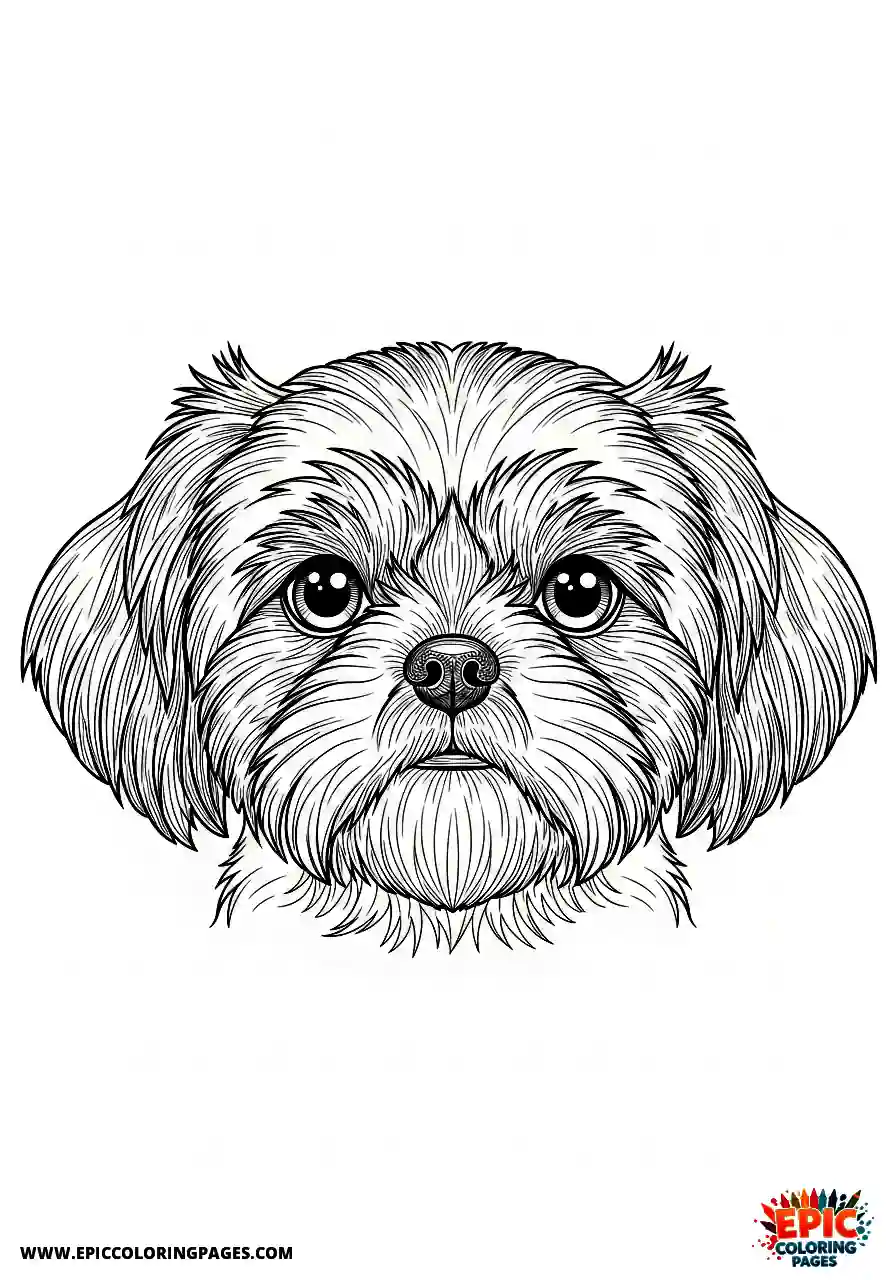
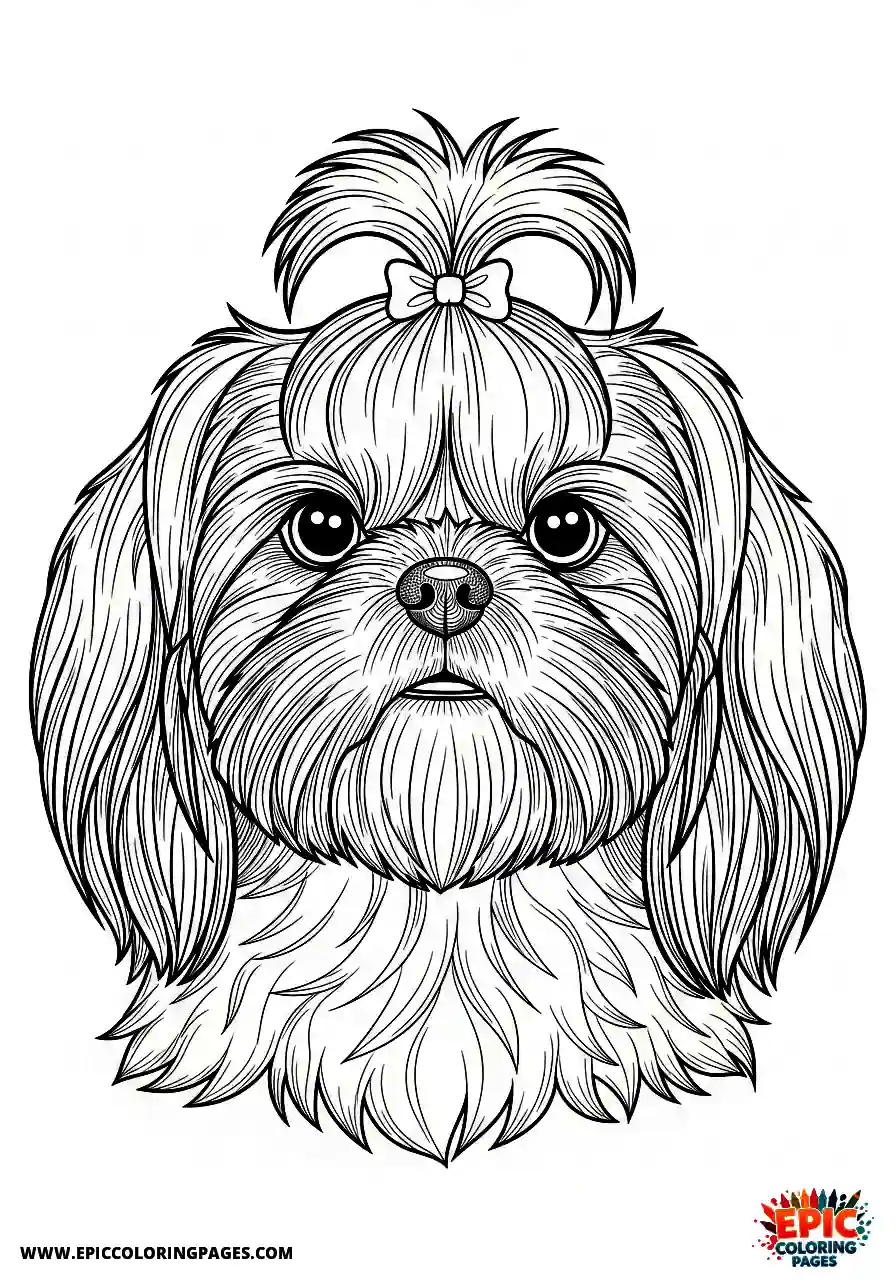
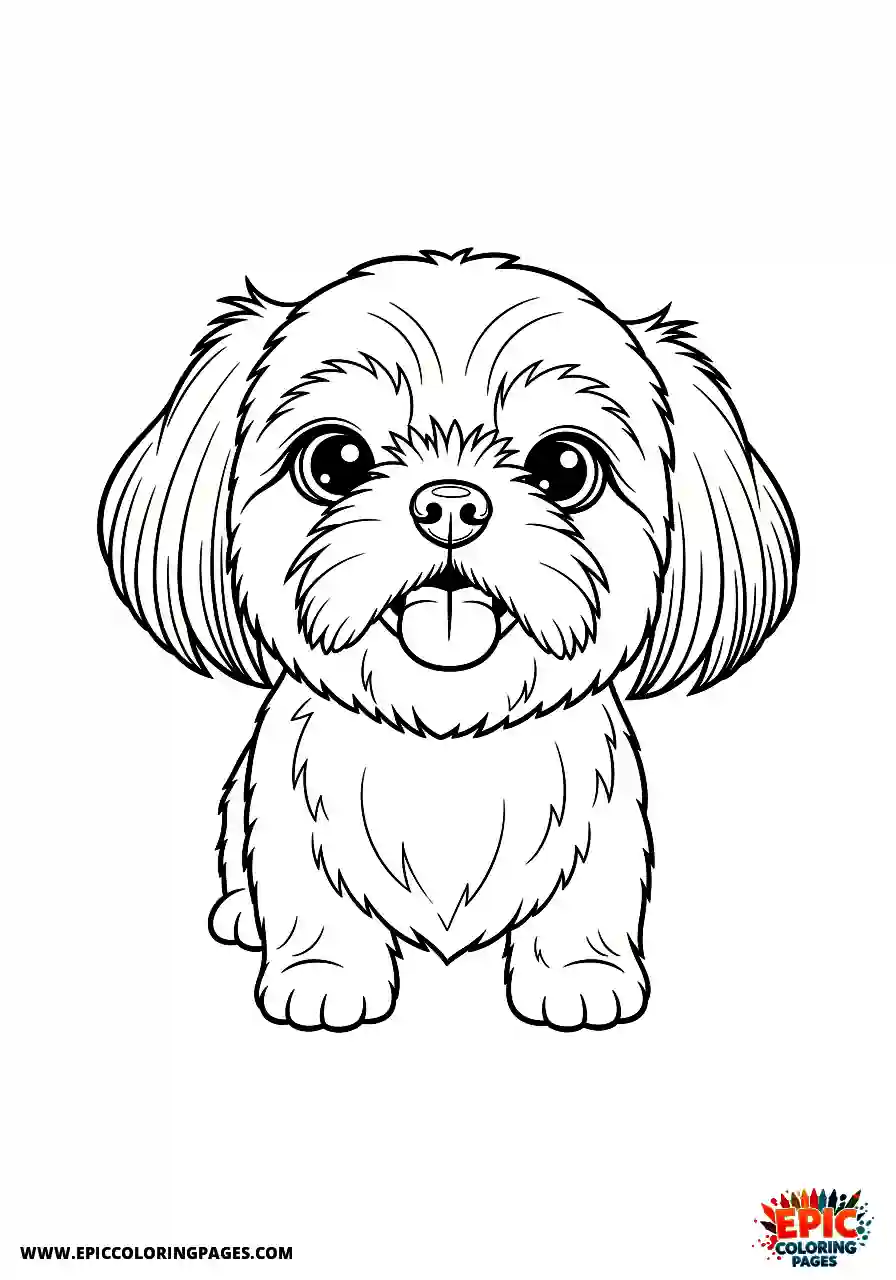
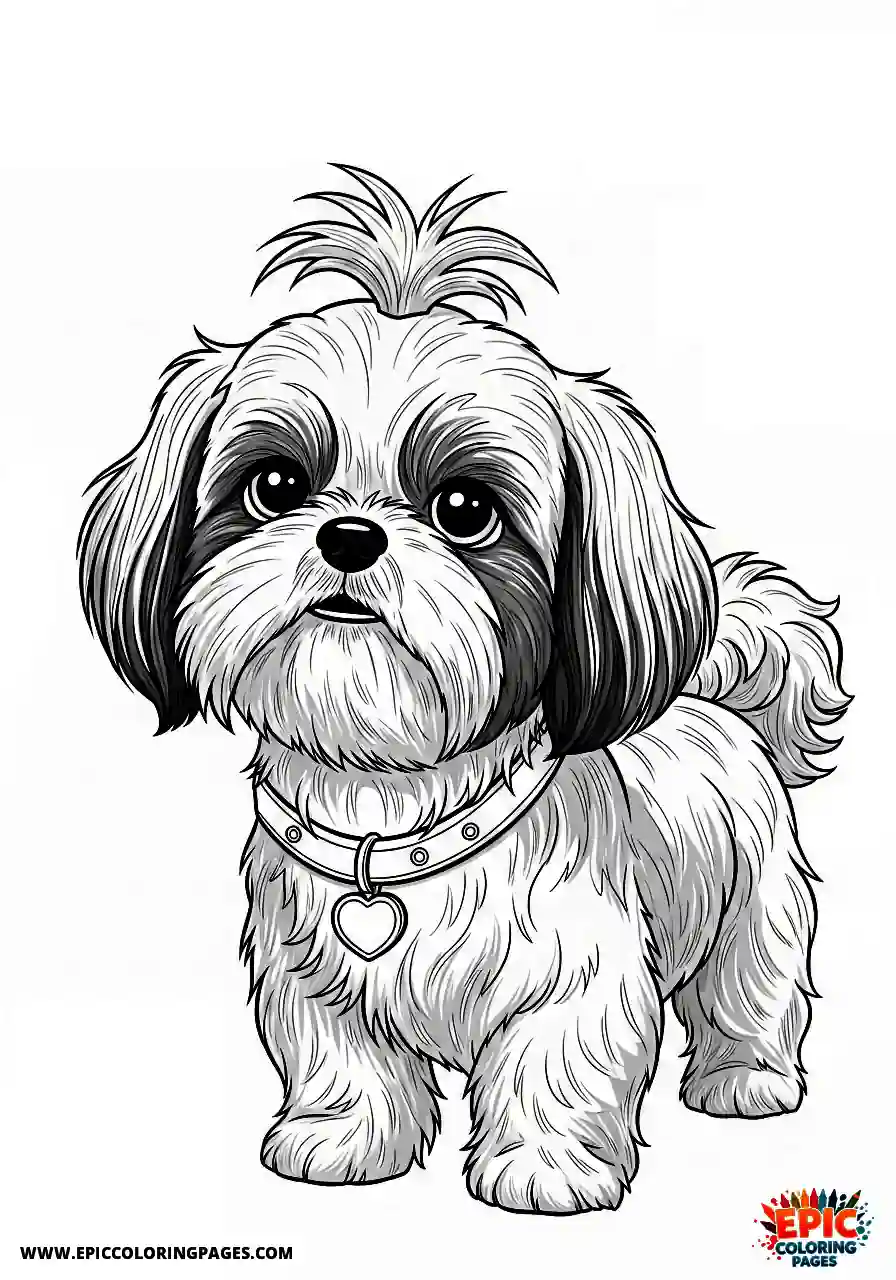
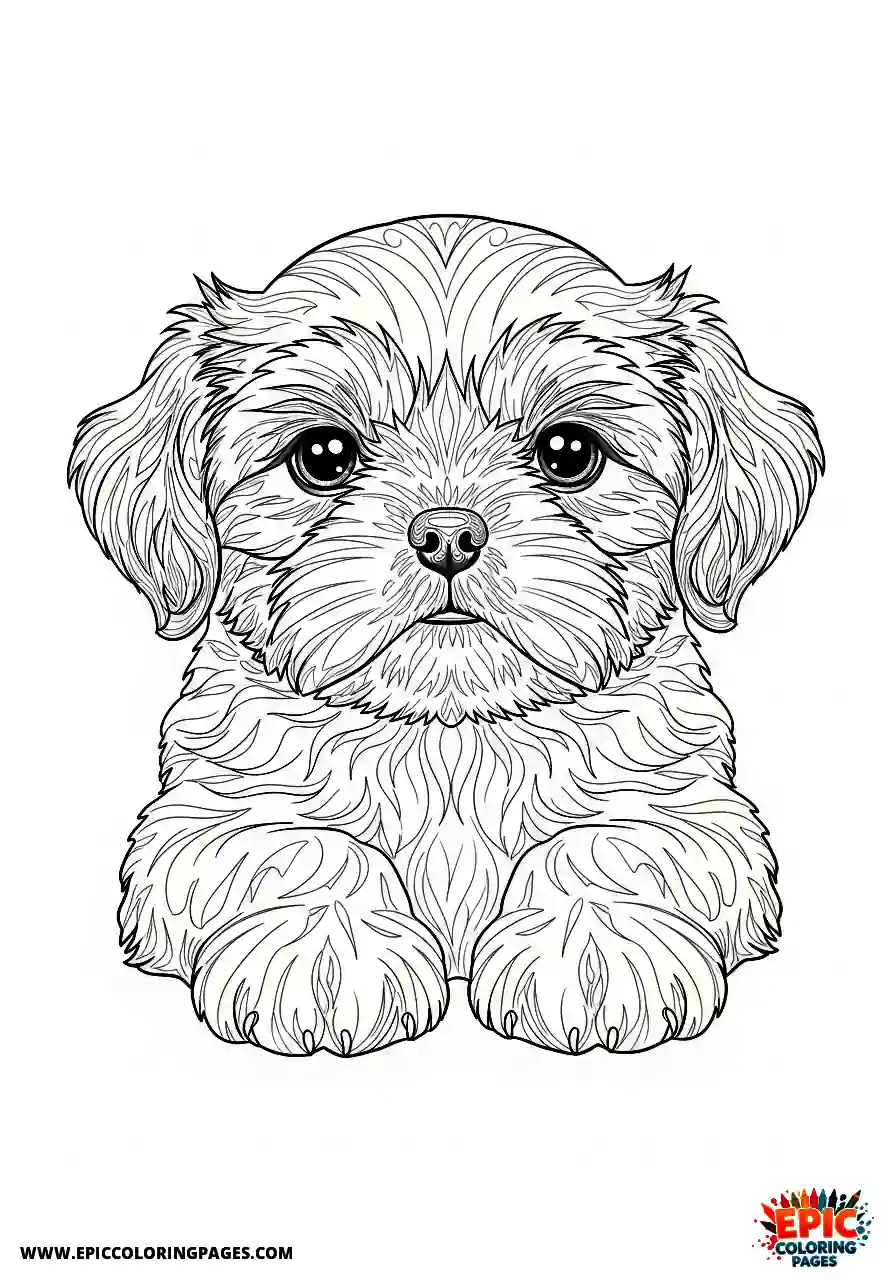
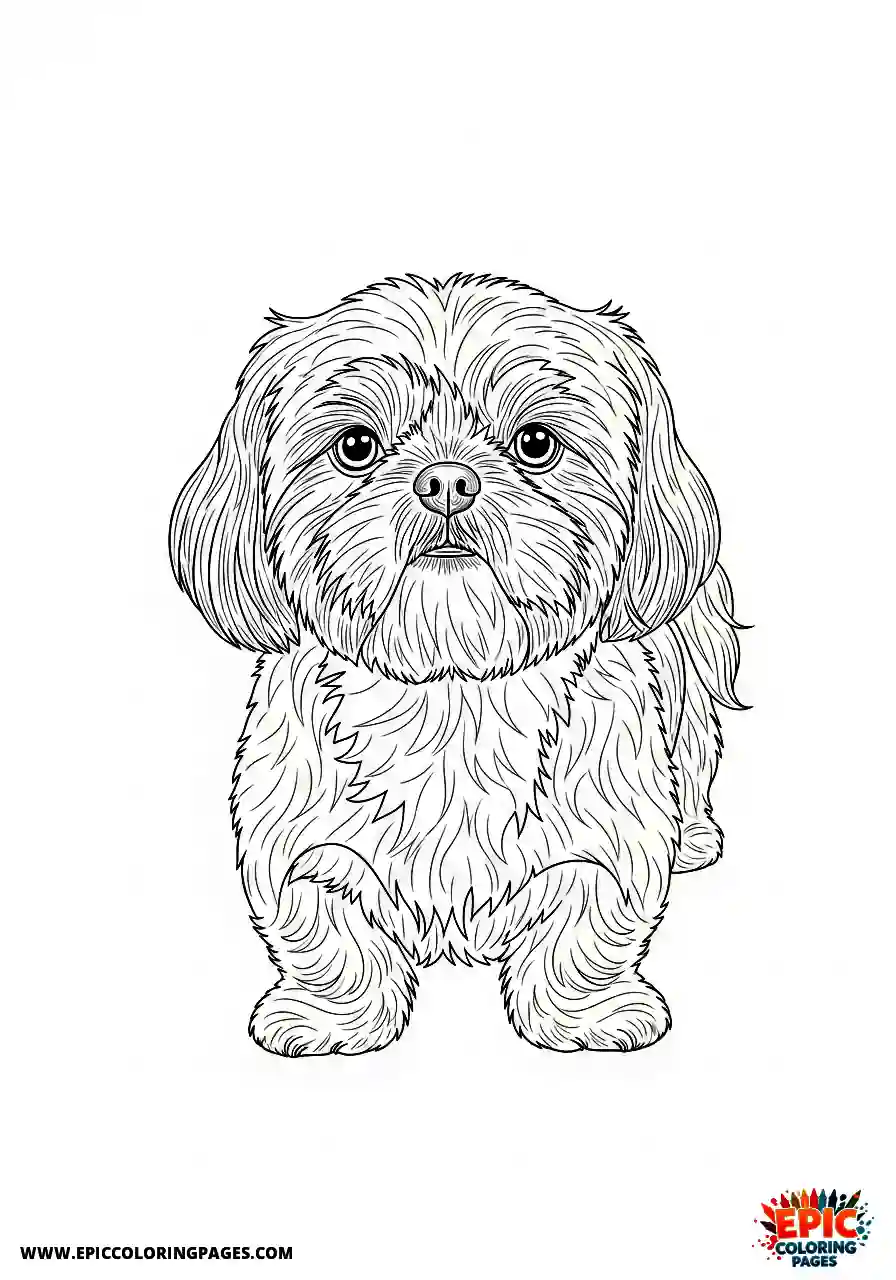
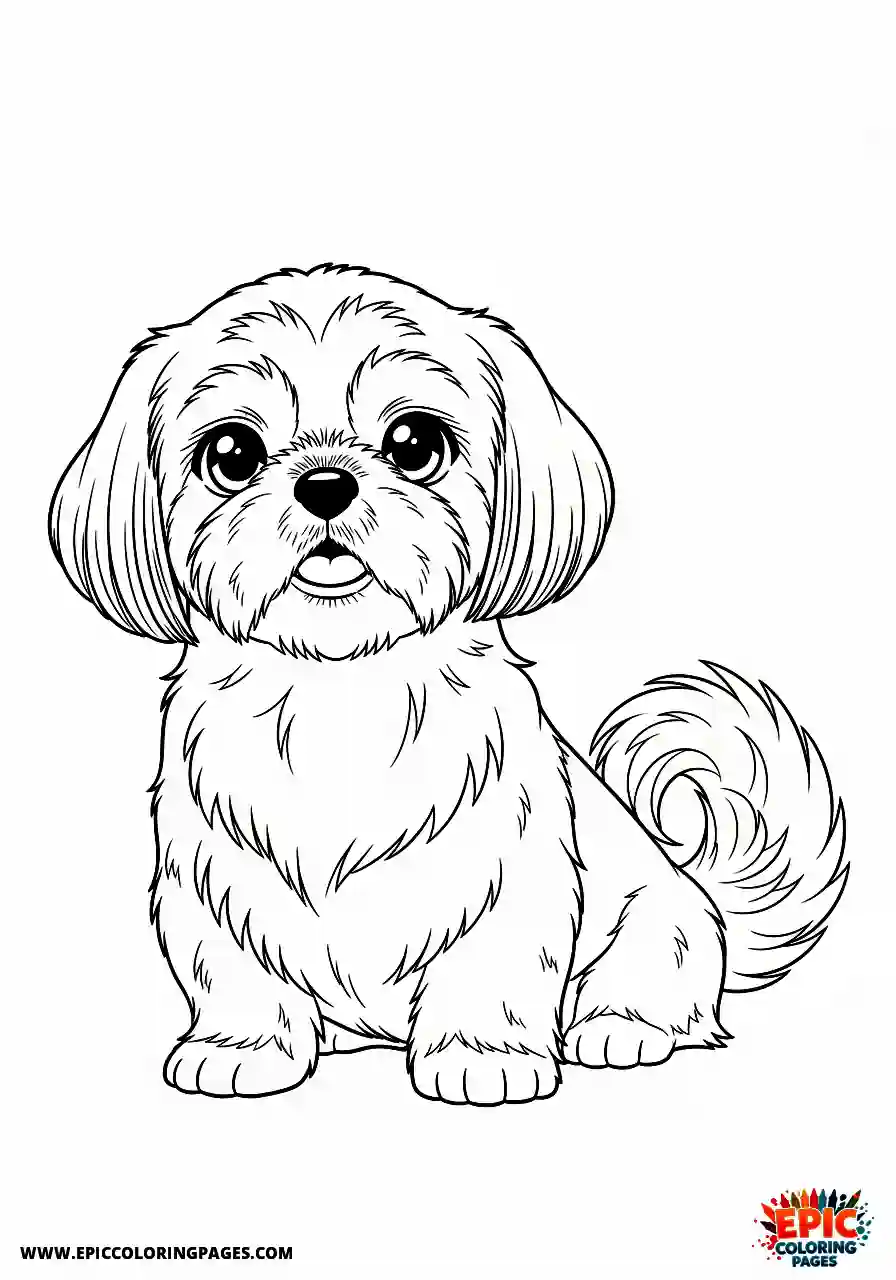
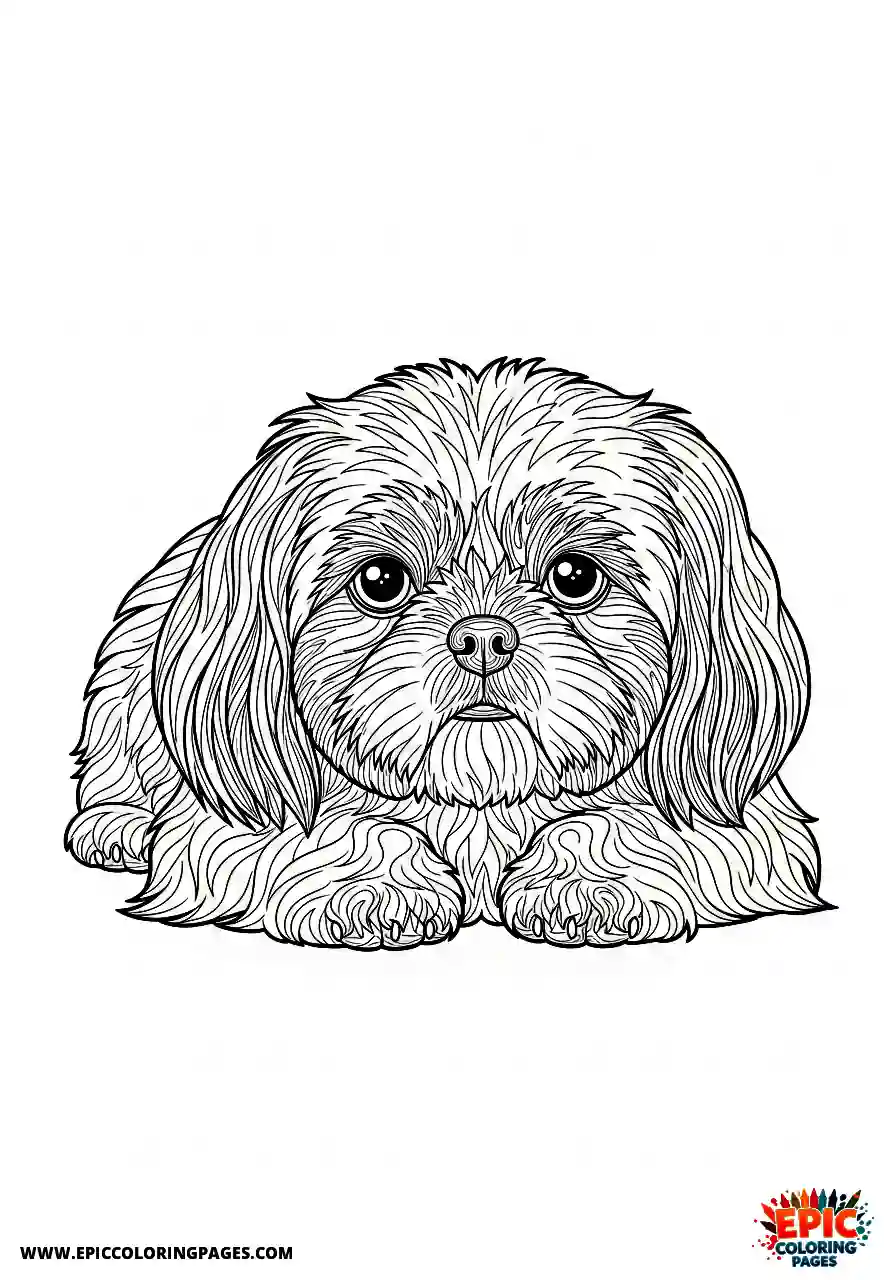
Their facial hair grows in very specific directions. From the nose, it radiates outward like a starburst.
Use short strokes that start at the nose and pull away. The hair above the eyes grows upward. The cheek hair sweeps back toward the ears.
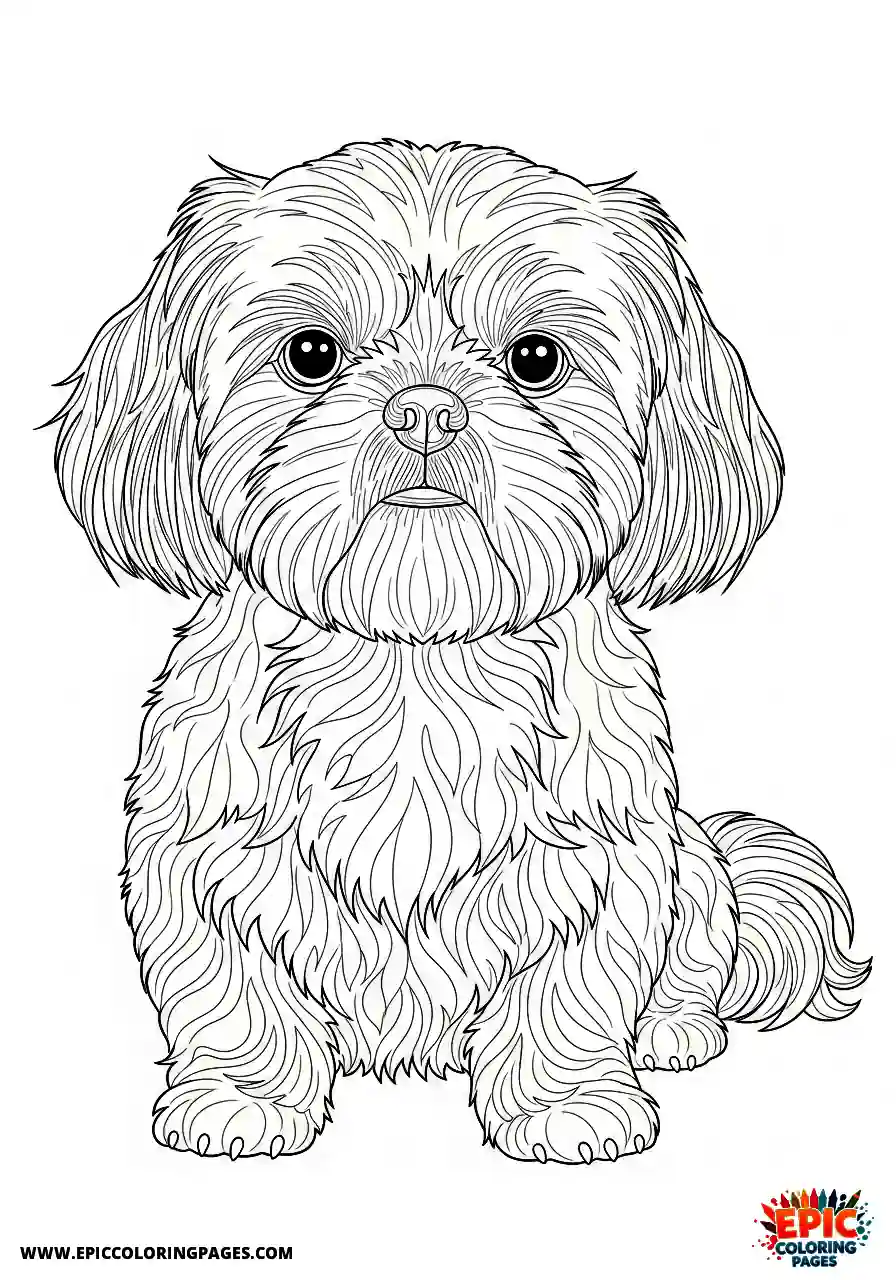
The beard area? That grows downward and slightly forward. Getting these directions right makes your coloring look professional instead of like a fuzzy blob.
Working With White Fur
White isn’t just white on a Shih Tzu. Look closely at a white dog and you’ll see grays, blues, even hints of yellow.
For shadows on white fur, try cool grays or even pale purple. Warm grays work too, especially if your Shih Tzu has warmer coat tones elsewhere.
The trick is subtlety. Press lightly. You can always add more, but you can’t take it away.
Don’t forget the edges where white meets darker colors. A thin line of light gray right at that border makes the colors pop against each other.
Color Combinations That Actually Exist
Shih Tzus come in over a dozen recognized color patterns. Here are the real-deal combos:
Gold and White: The crowd favorite. Rich honey gold with crisp white markings.
Black and White: High contrast and dramatic. The black should be deep and solid, not washed out.
Brindle: Striped pattern mixing dark and light. Think tiger stripes in brown, gold, or gray.
Solid Colors: All black, all gold, all silver. Less common but stunning.
Liver: Chocolate brown with amber or light eyes. The nose matches the coat.
Creating Believable Parti Patterns
“Parti” means two colors in distinct patches. Not blended separate.
The white usually shows up on the chest, paws, tail tip, and facial blaze. The darker color dominates the back, ears, and around the eyes.
Avoid making it too symmetrical. Nature isn’t that precise. Maybe one ear is darker than the other, or the chest marking is slightly off-center.
Texture Techniques for Long Coats
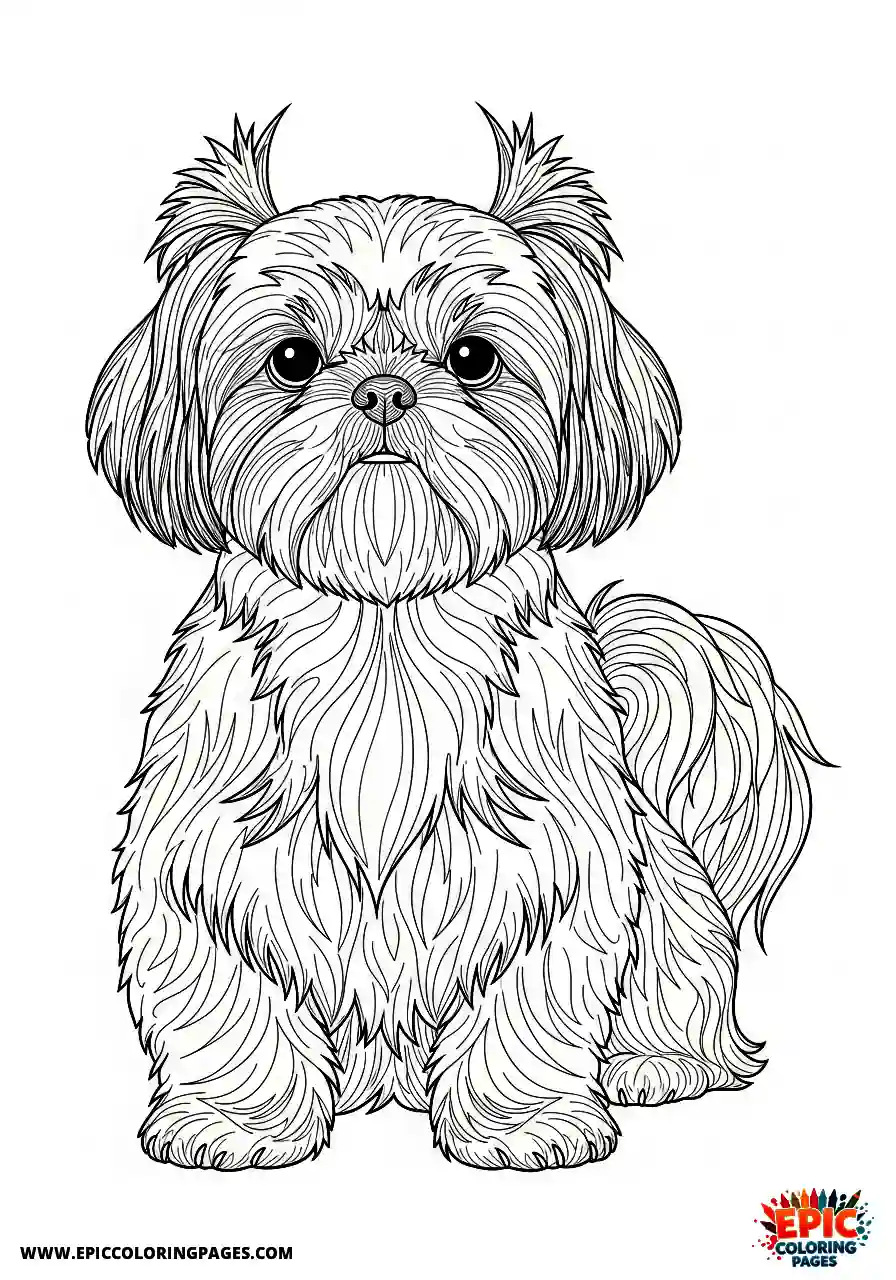
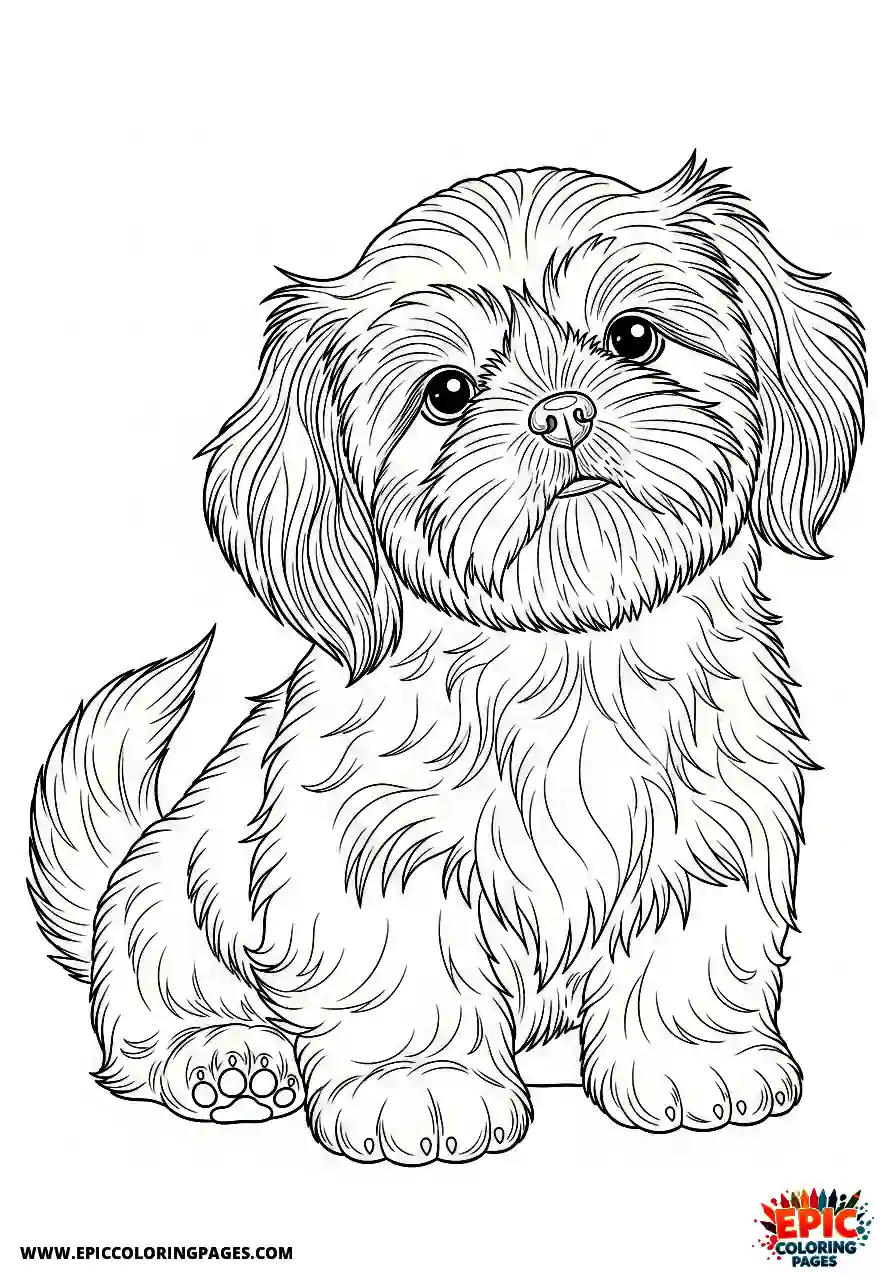
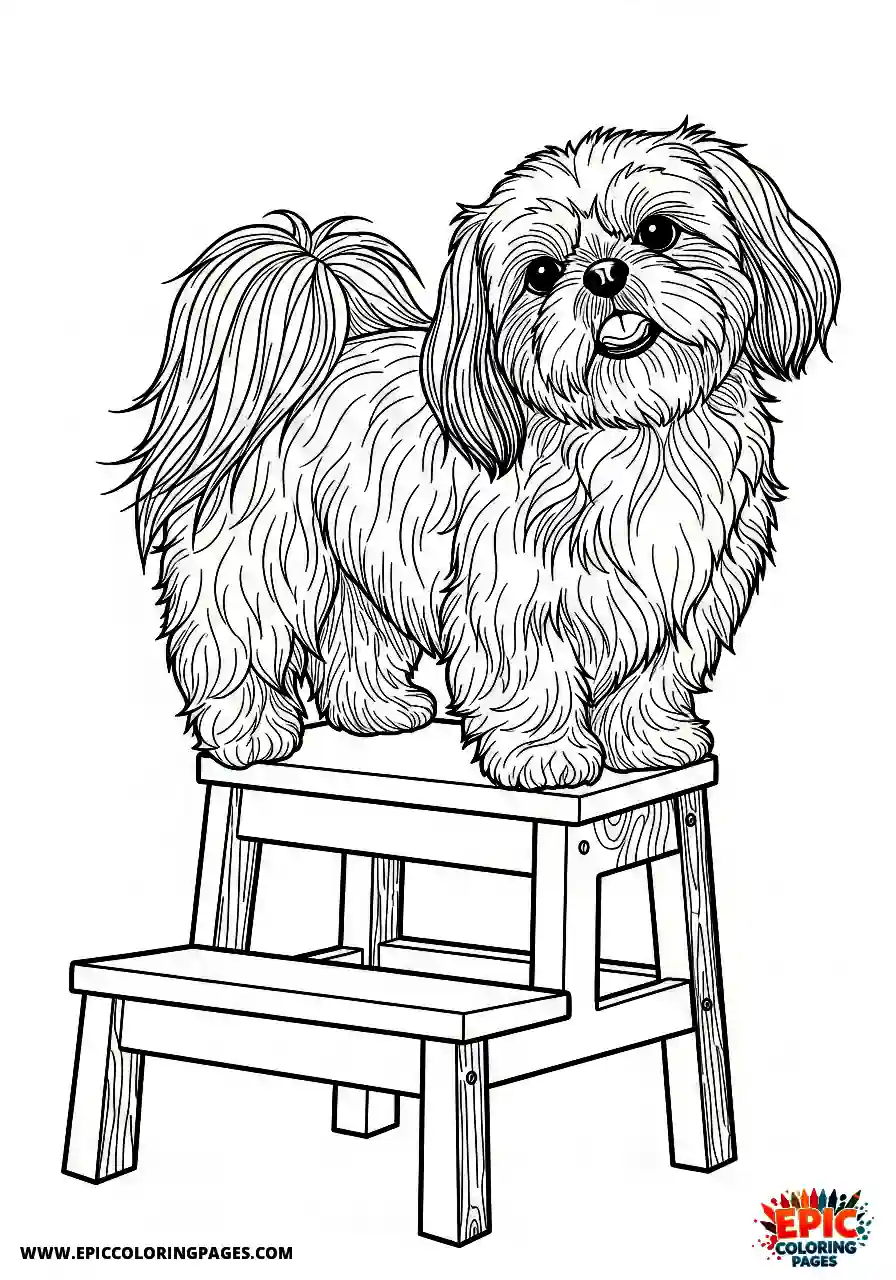
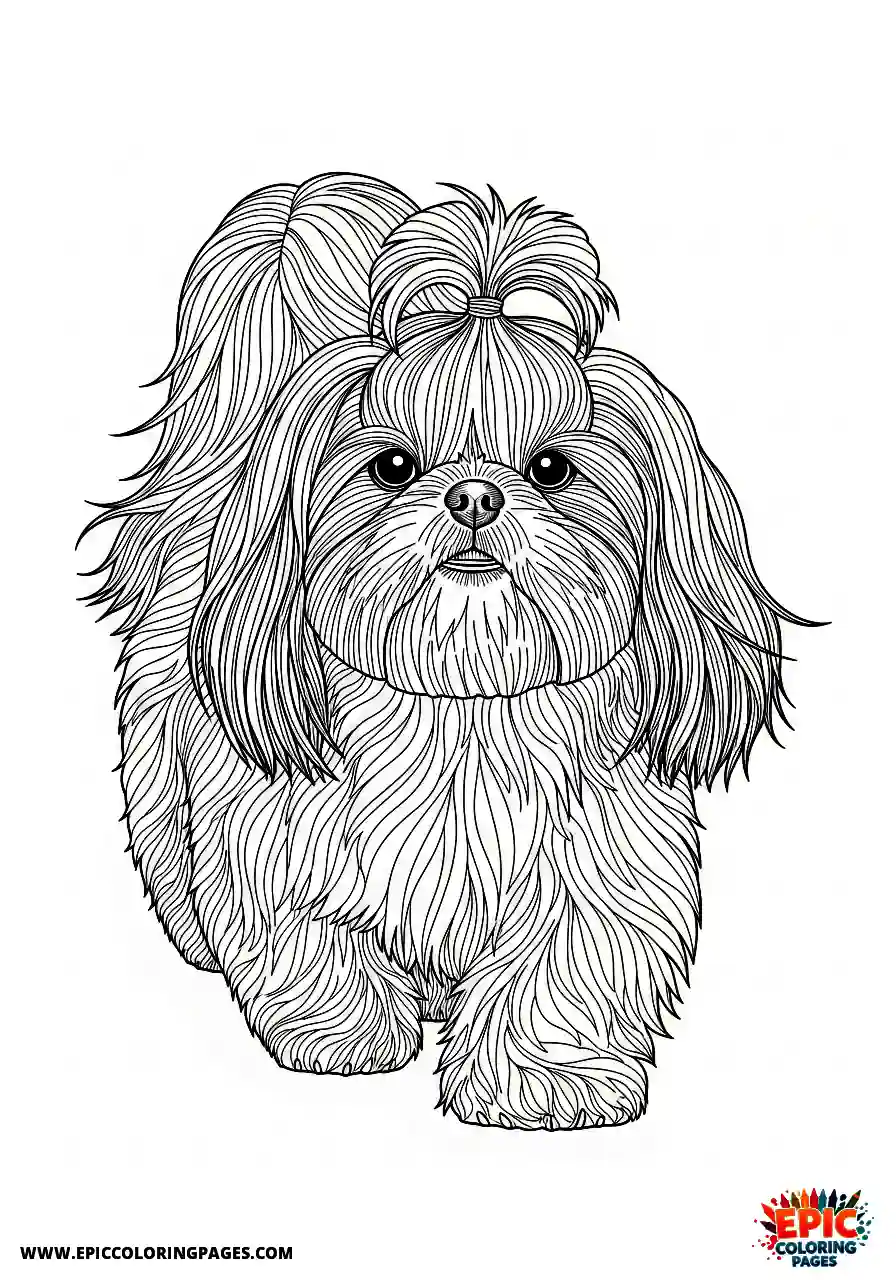
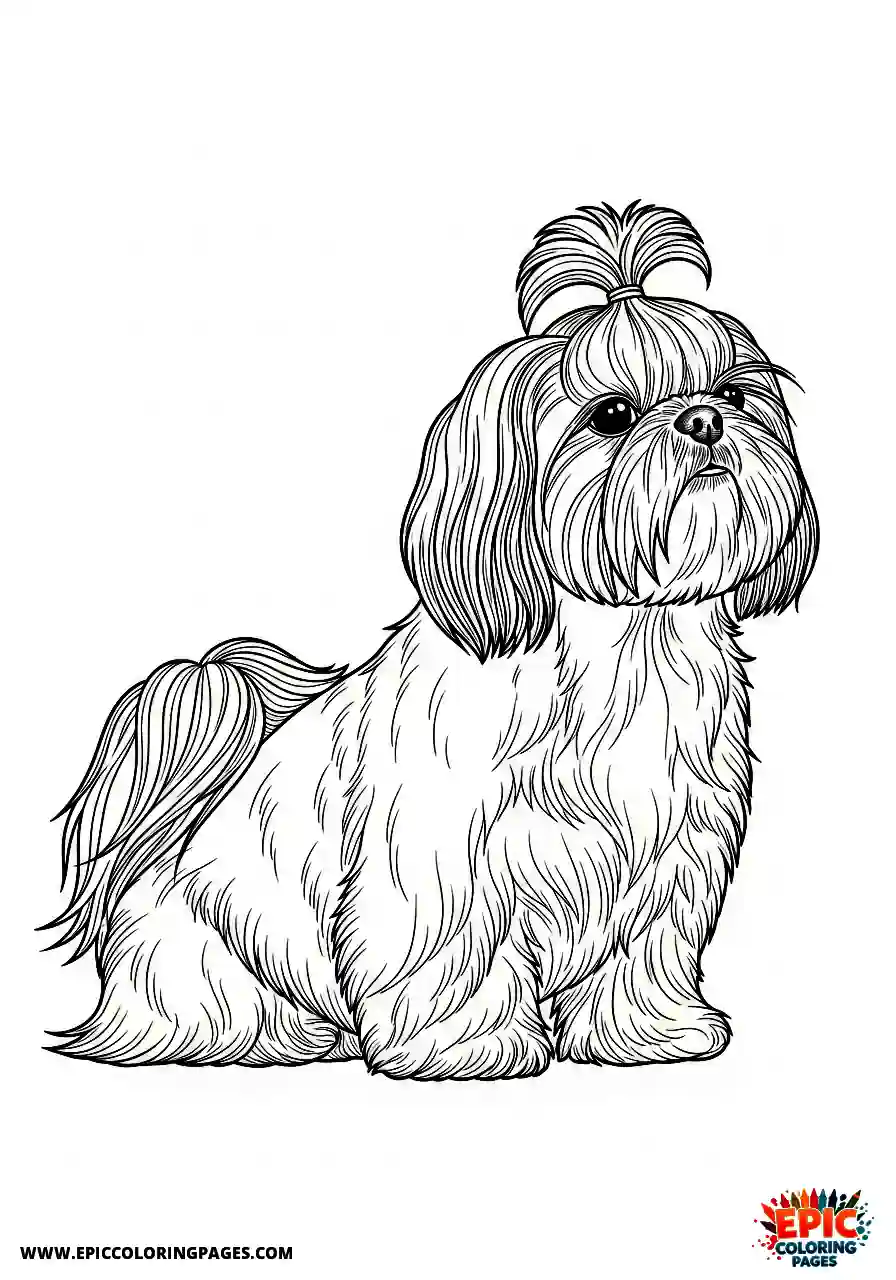
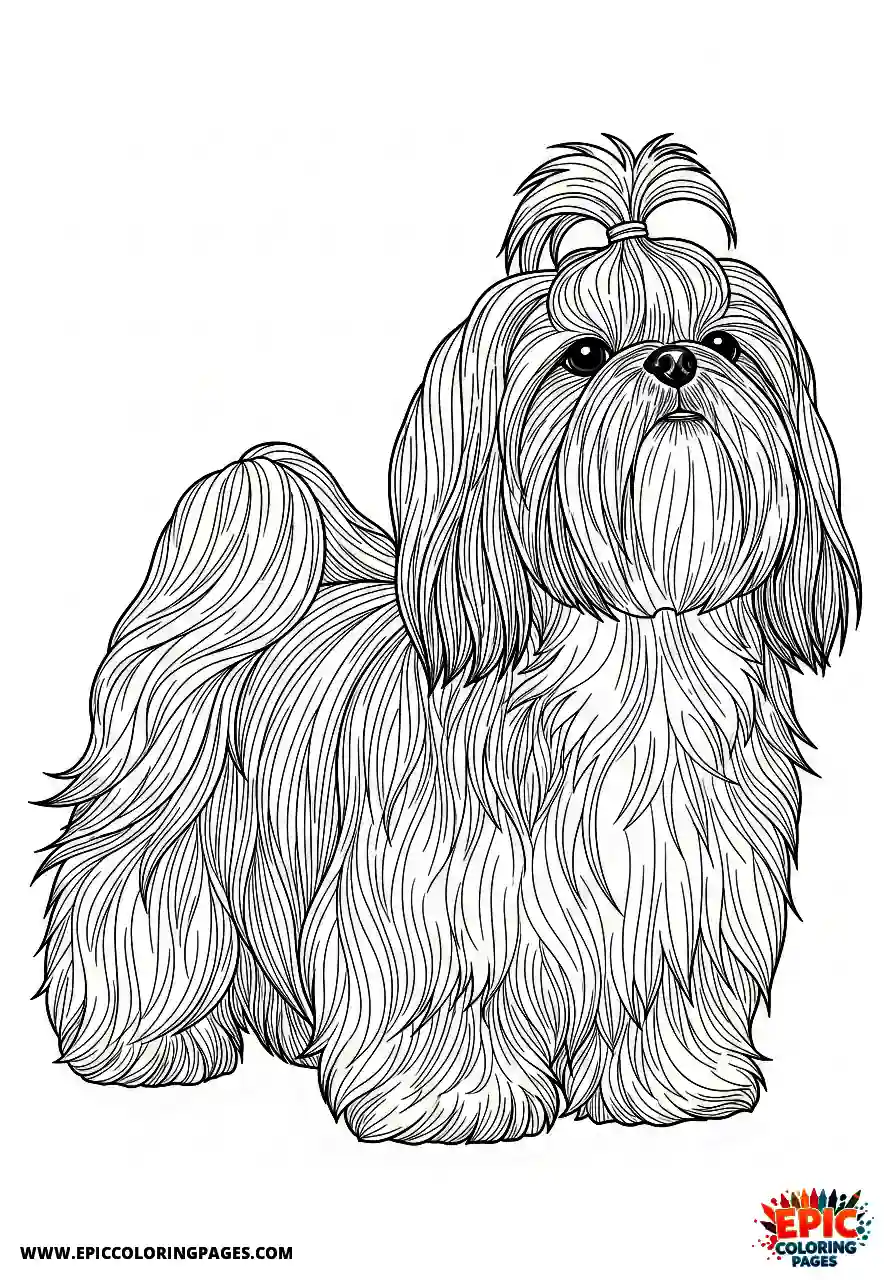
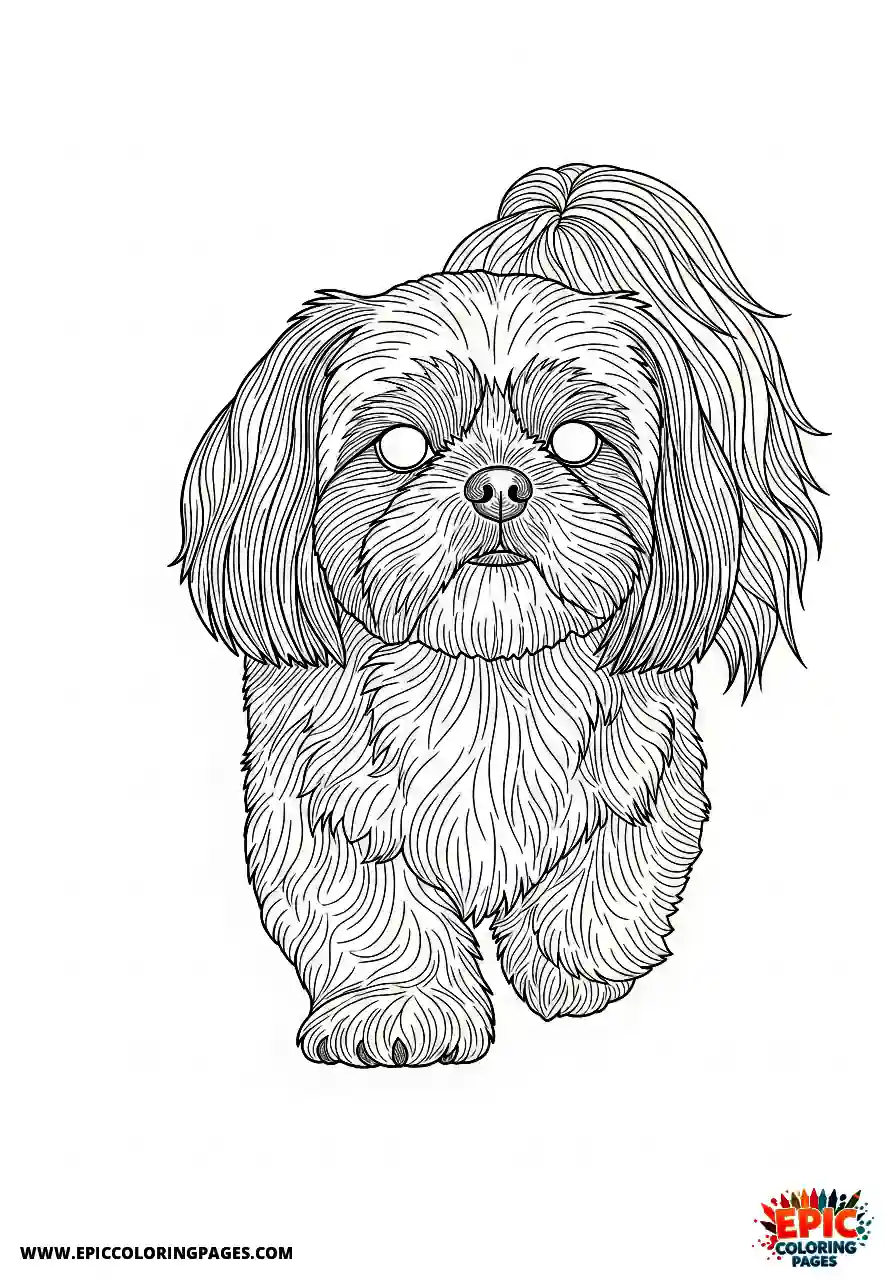
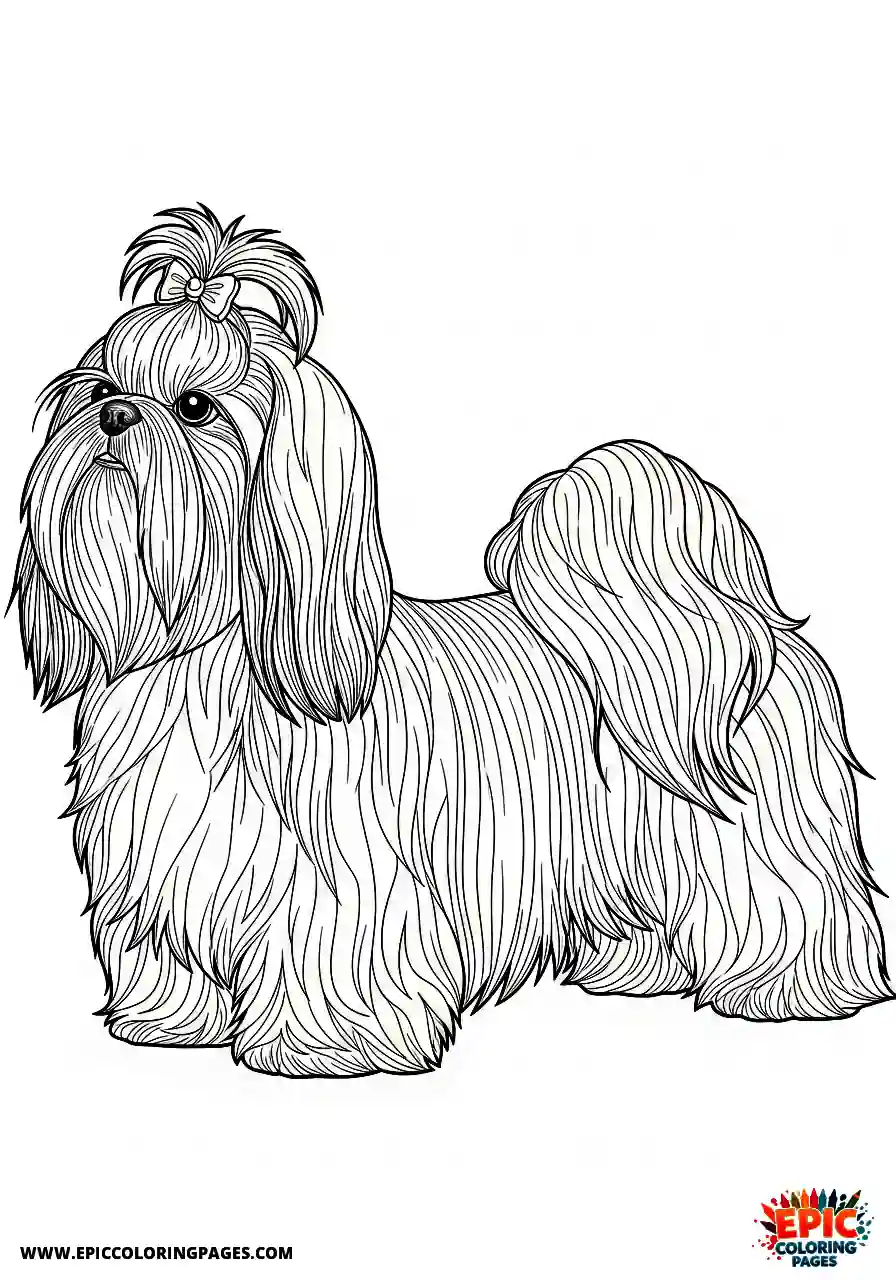
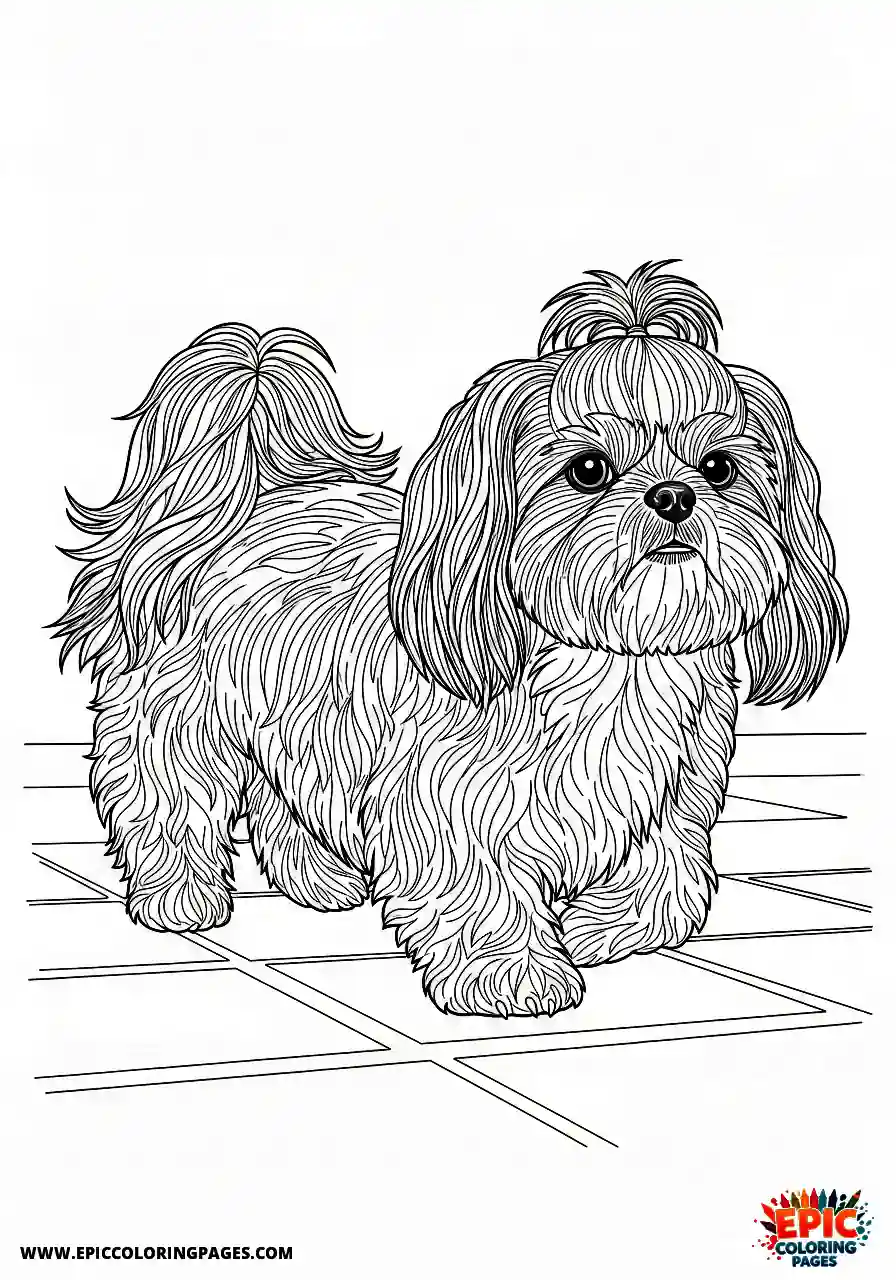
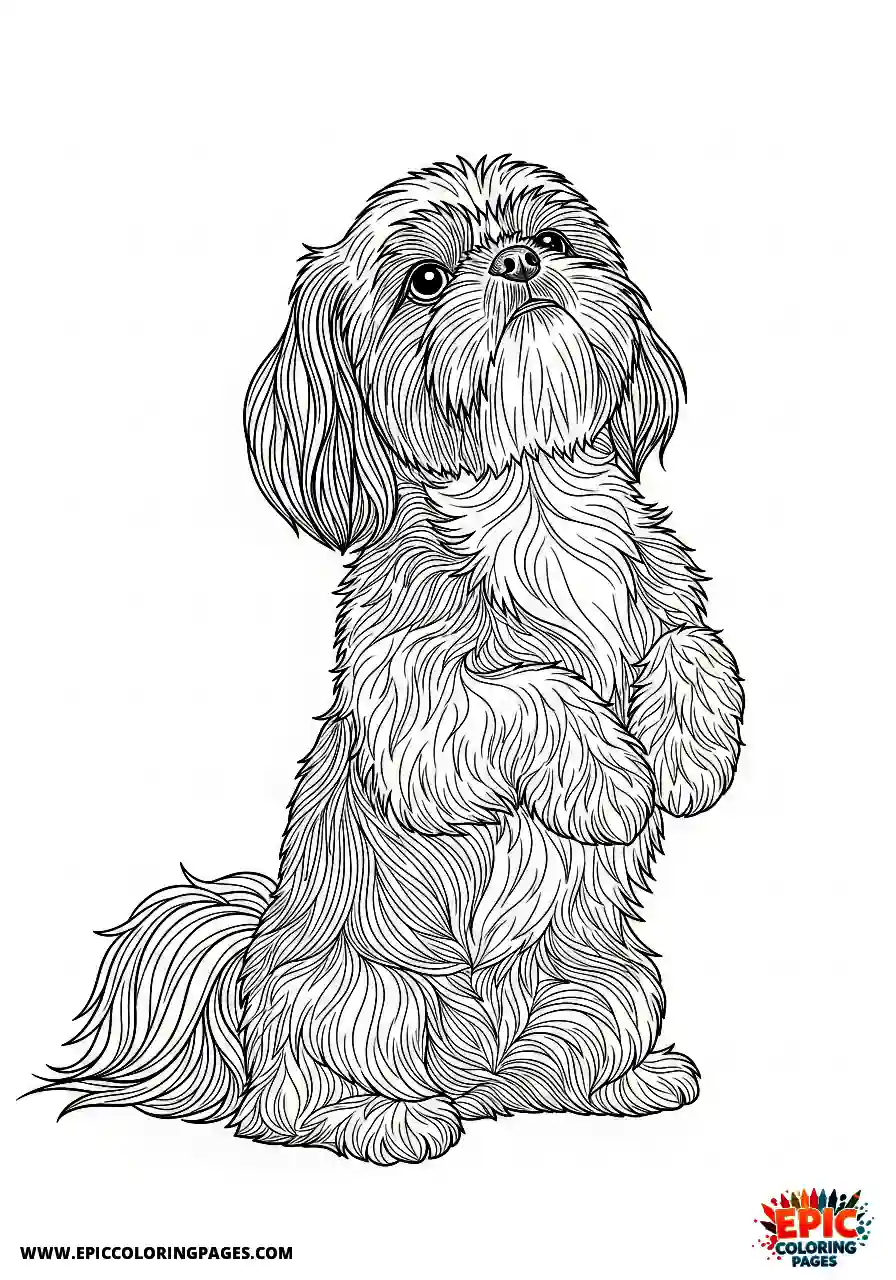
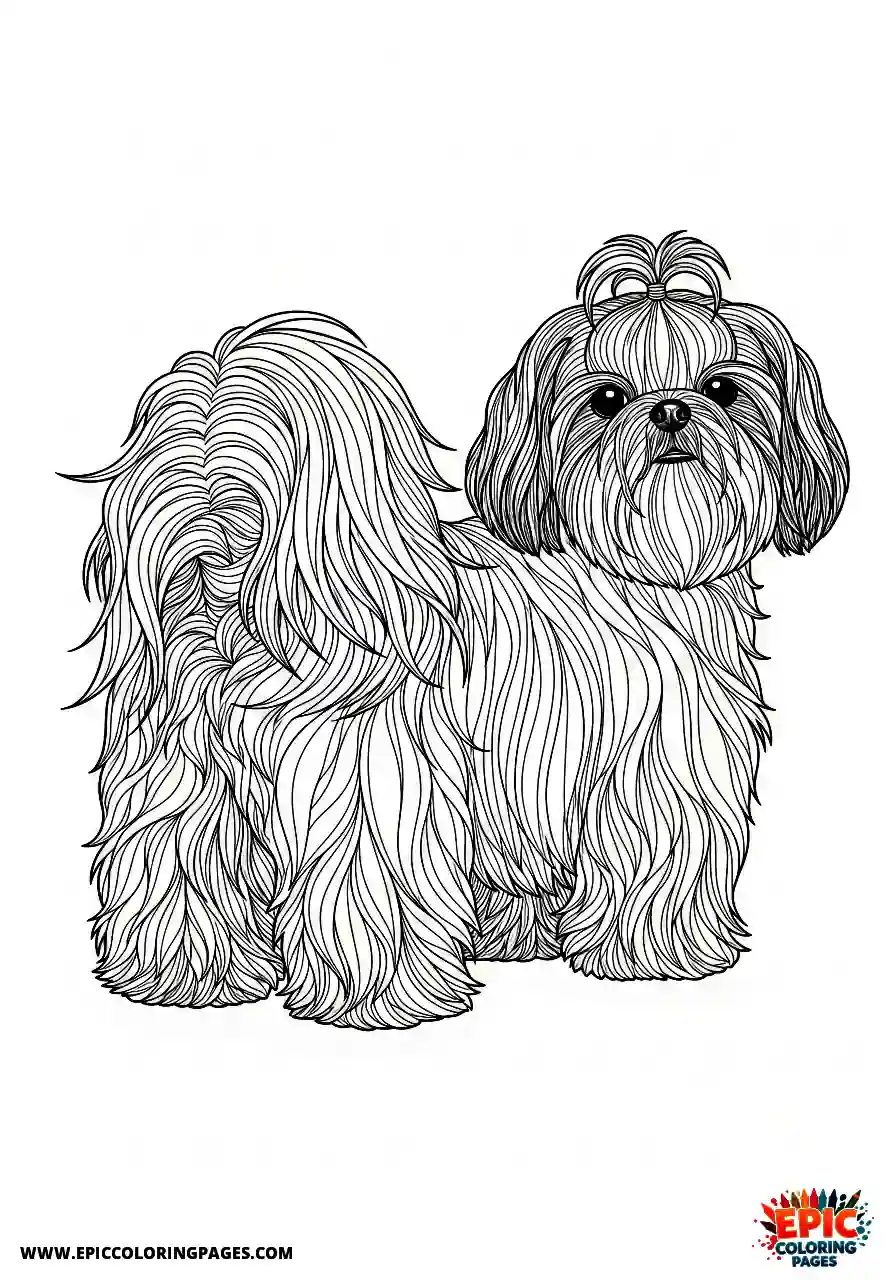
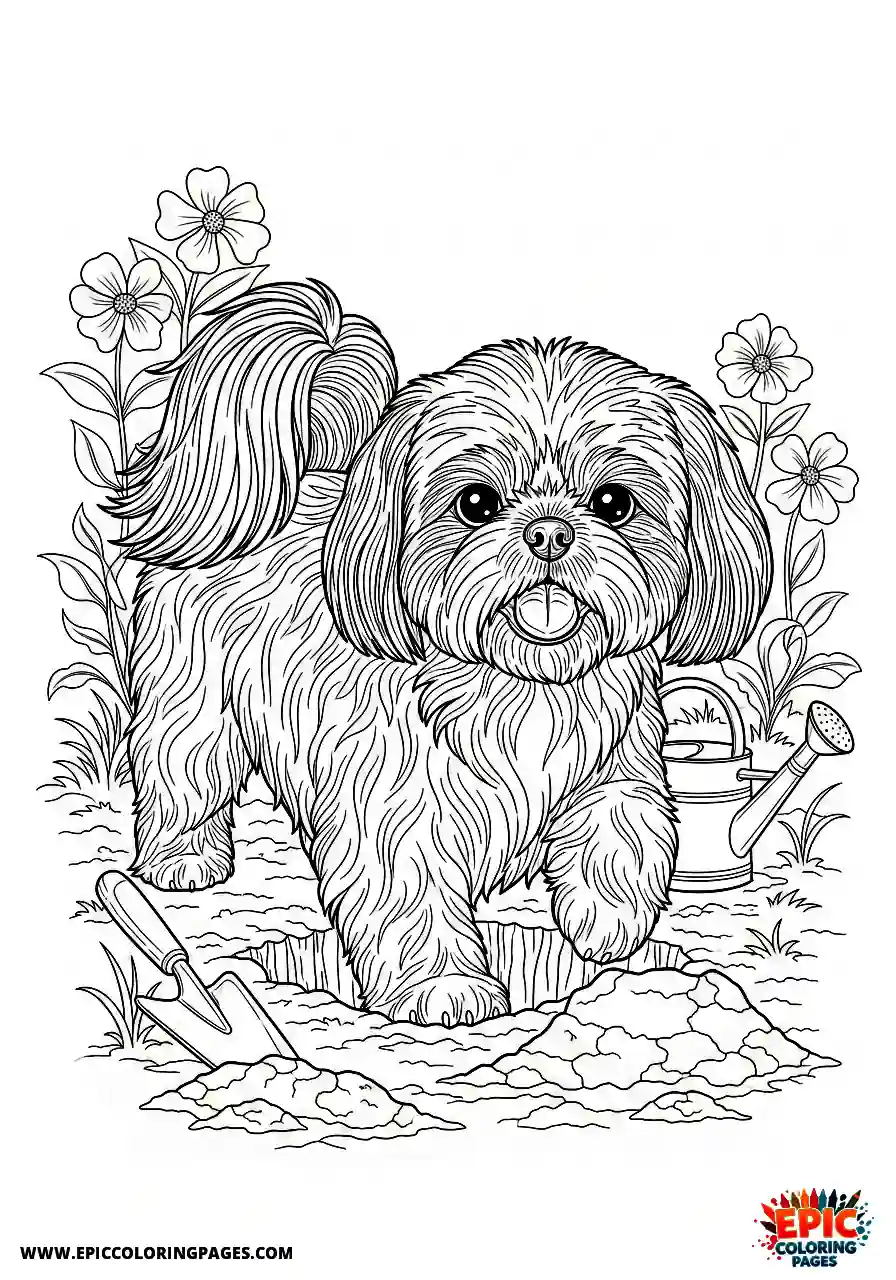
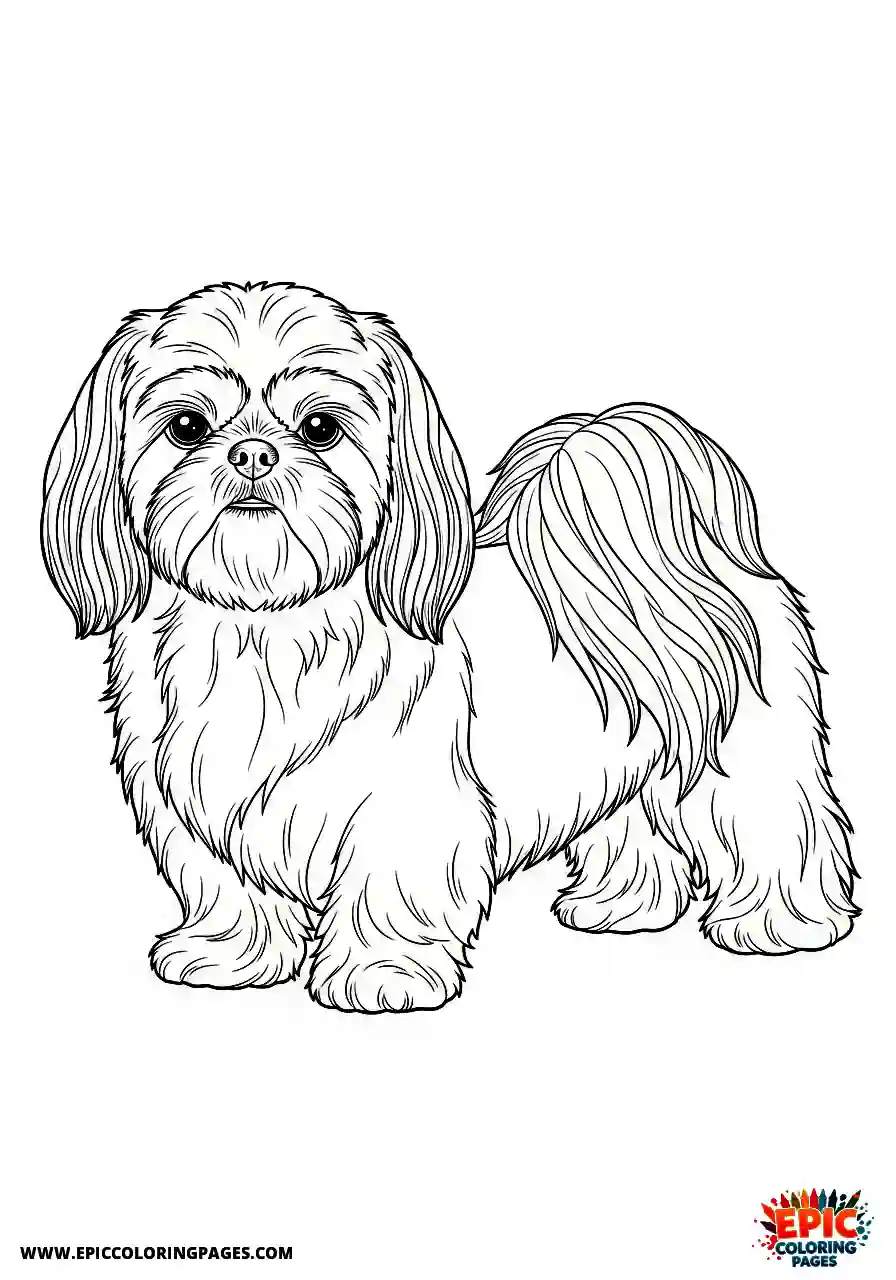
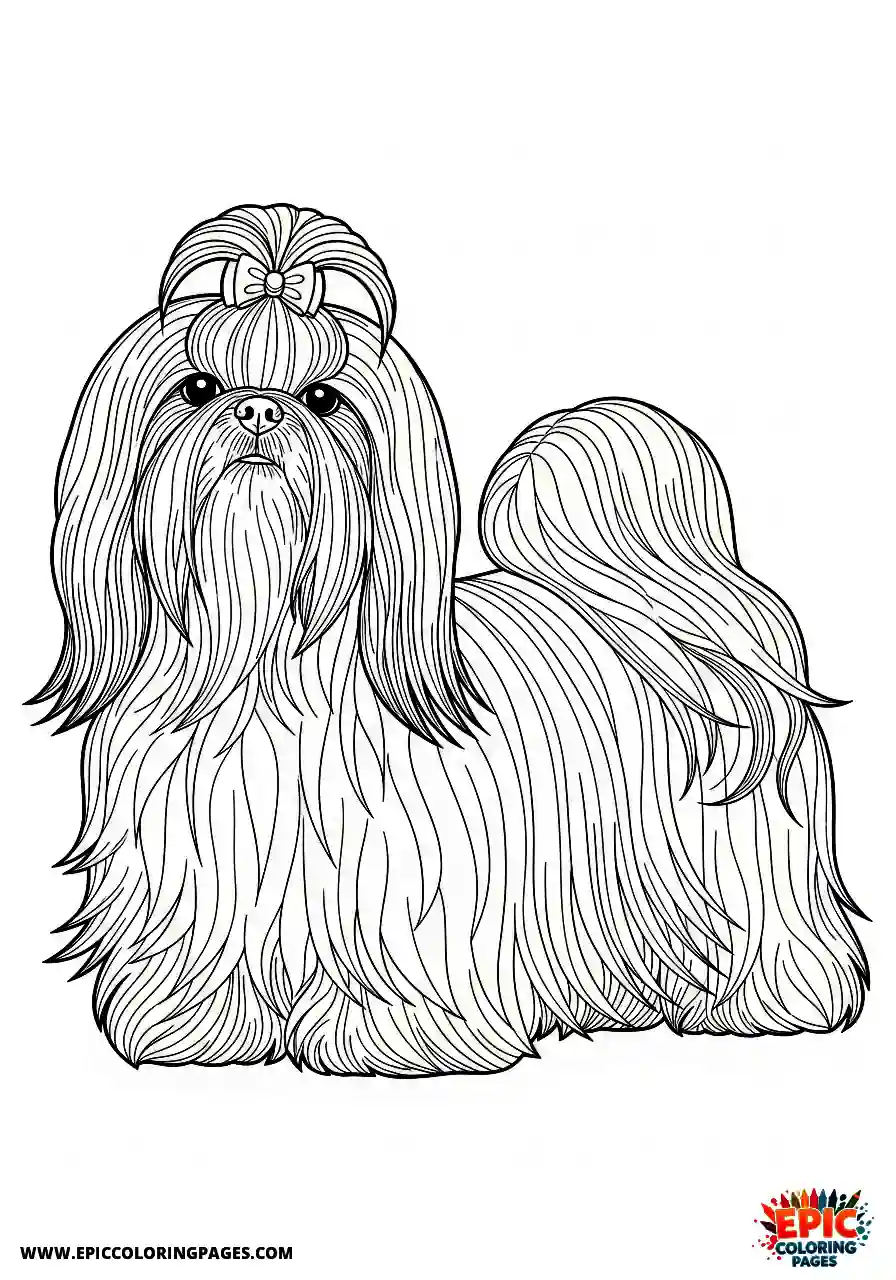
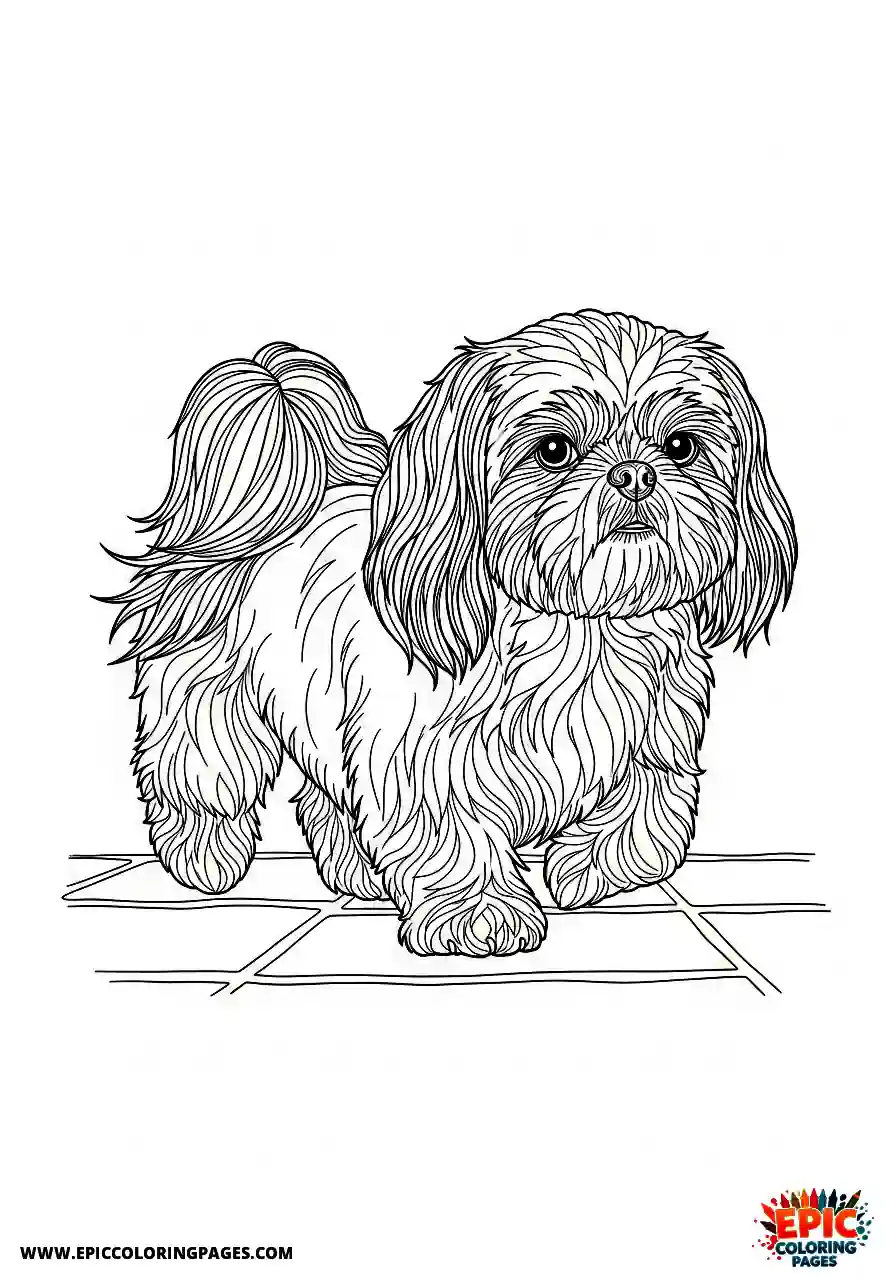
Shih Tzus in show coat can have hair touching the ground. That’s a lot of fur to color convincingly.
Break it into sections. Color the top layer of the back first. Then the sides. Then the chest. Don’t try to do it all at once.
Long fur catches light differently at different lengths. The tips might be lighter (sun-bleached) or darker (getting dirty from the ground).
Use longer strokes for longer hair sections. Short, choppy marks for shorter areas like the face and feet.
Adding Movement and Flow
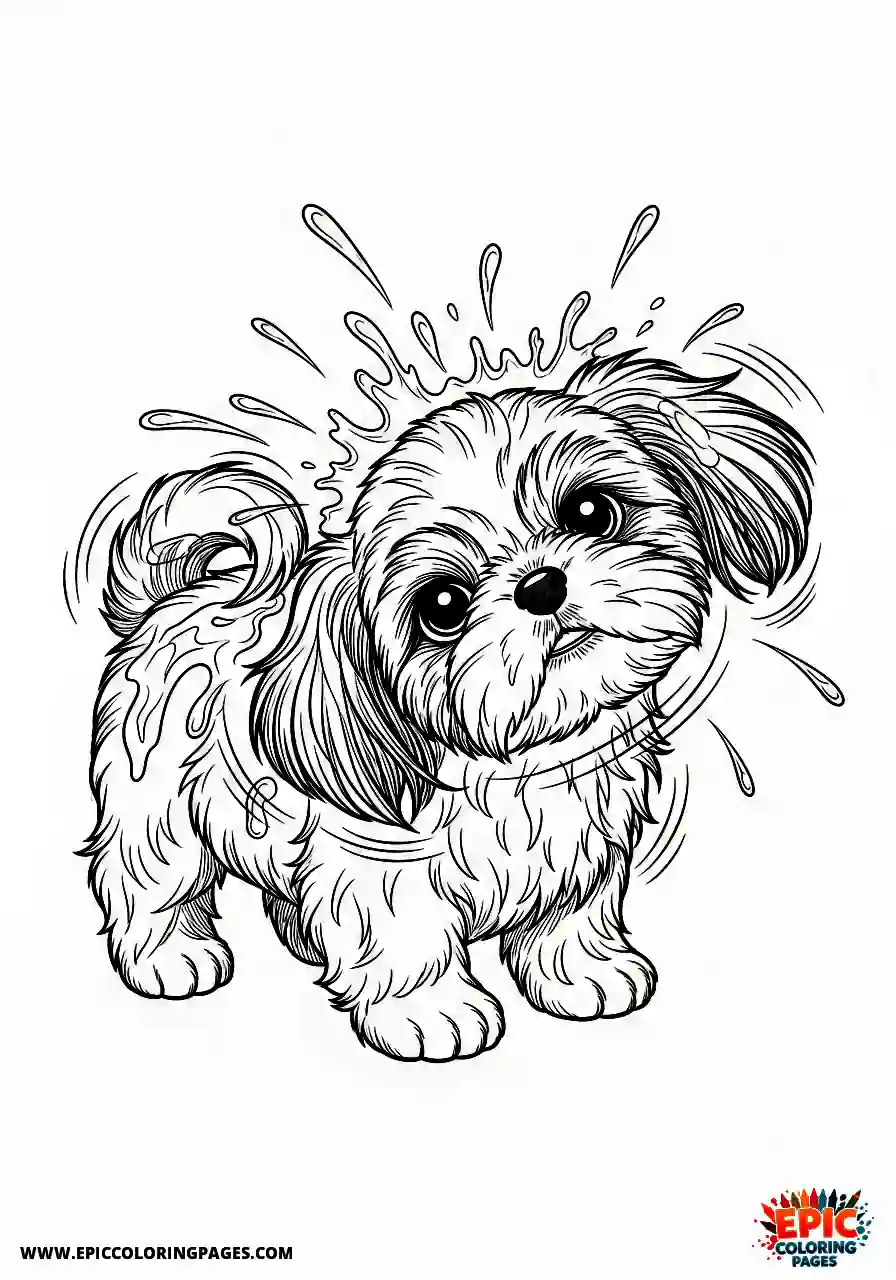
Fur doesn’t sit still. Even in a drawing, you can suggest movement.
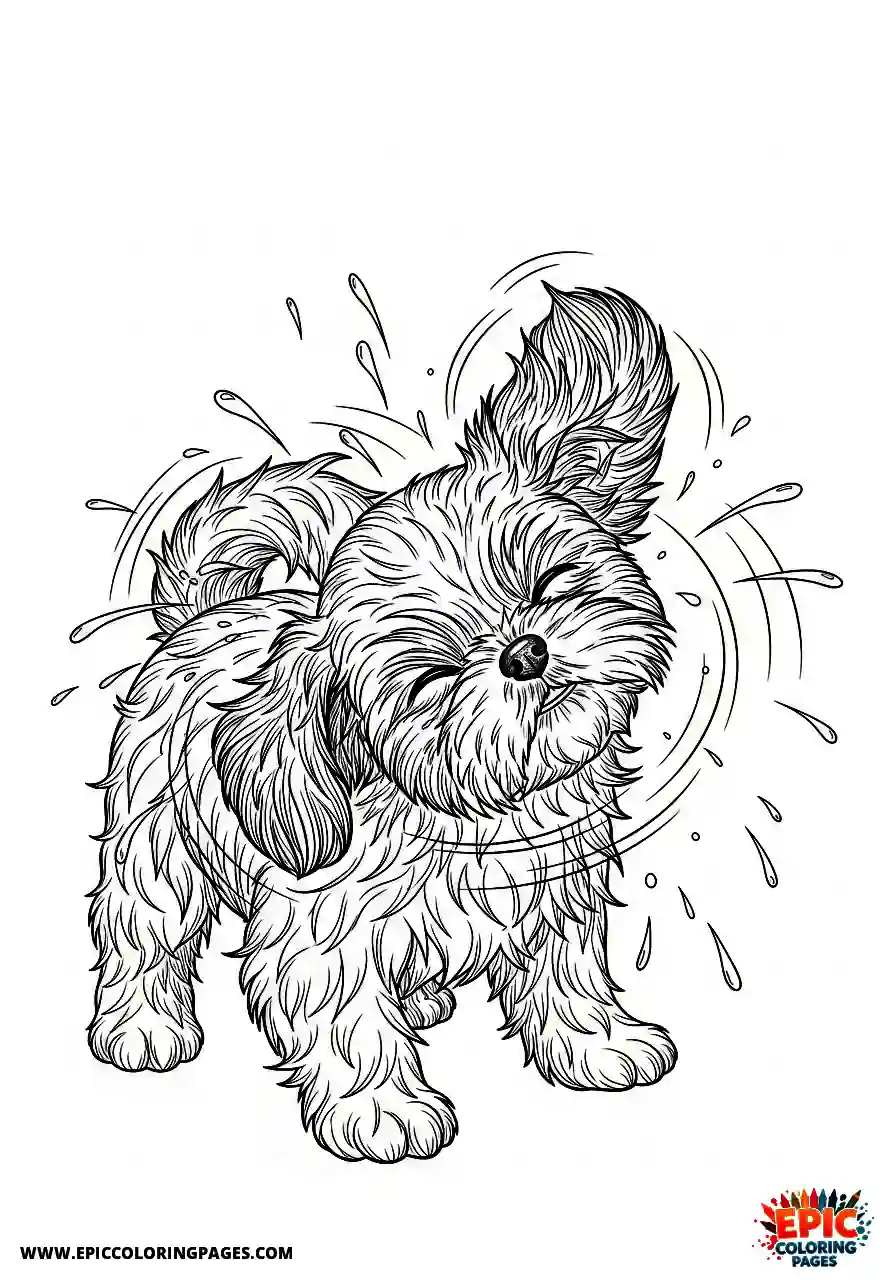
Curve your strokes slightly. Hair falls in gentle S-curves, not straight lines. The coat around the ears might flow backward if there’s a breeze.
Where the legs bend, the fur bunches up. Show this with darker, denser coloring in those spots.
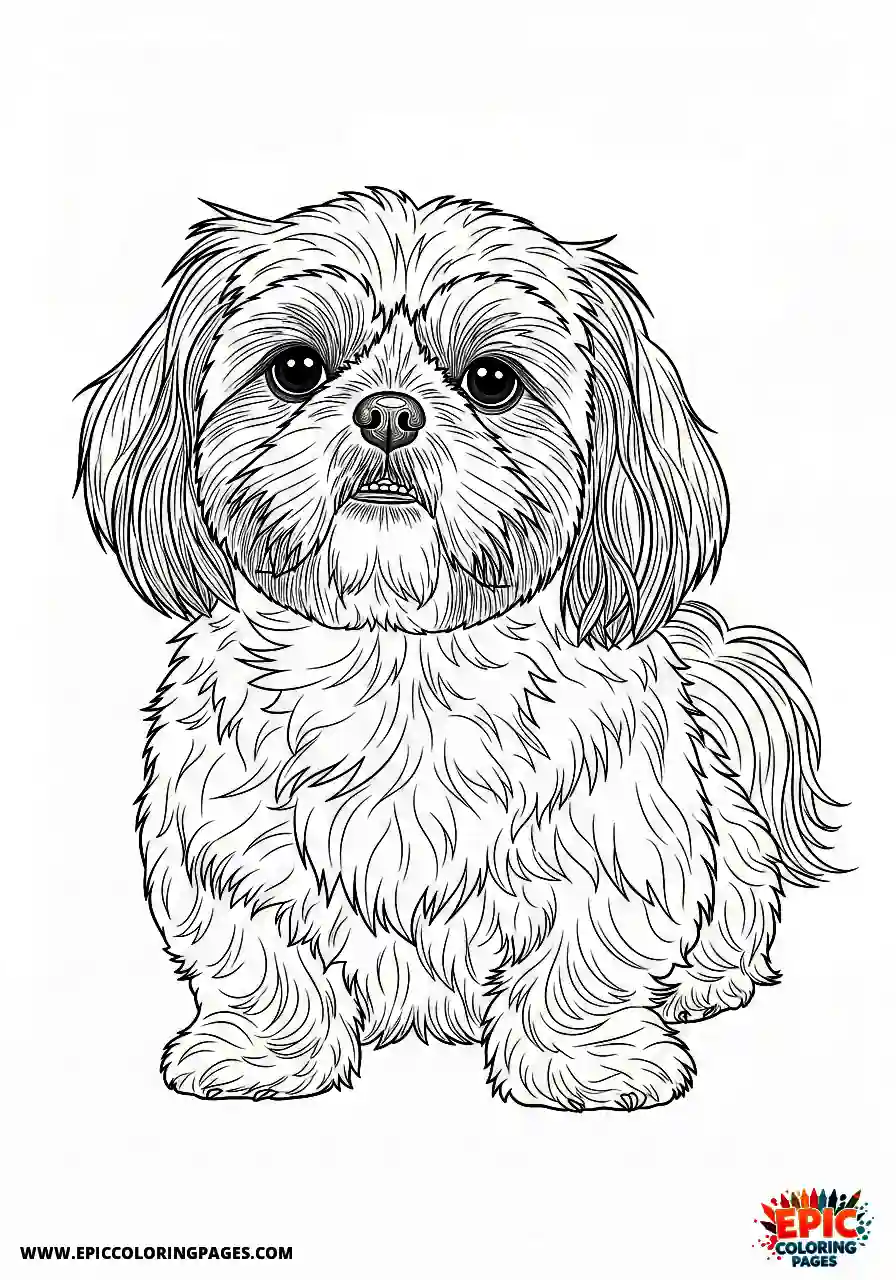
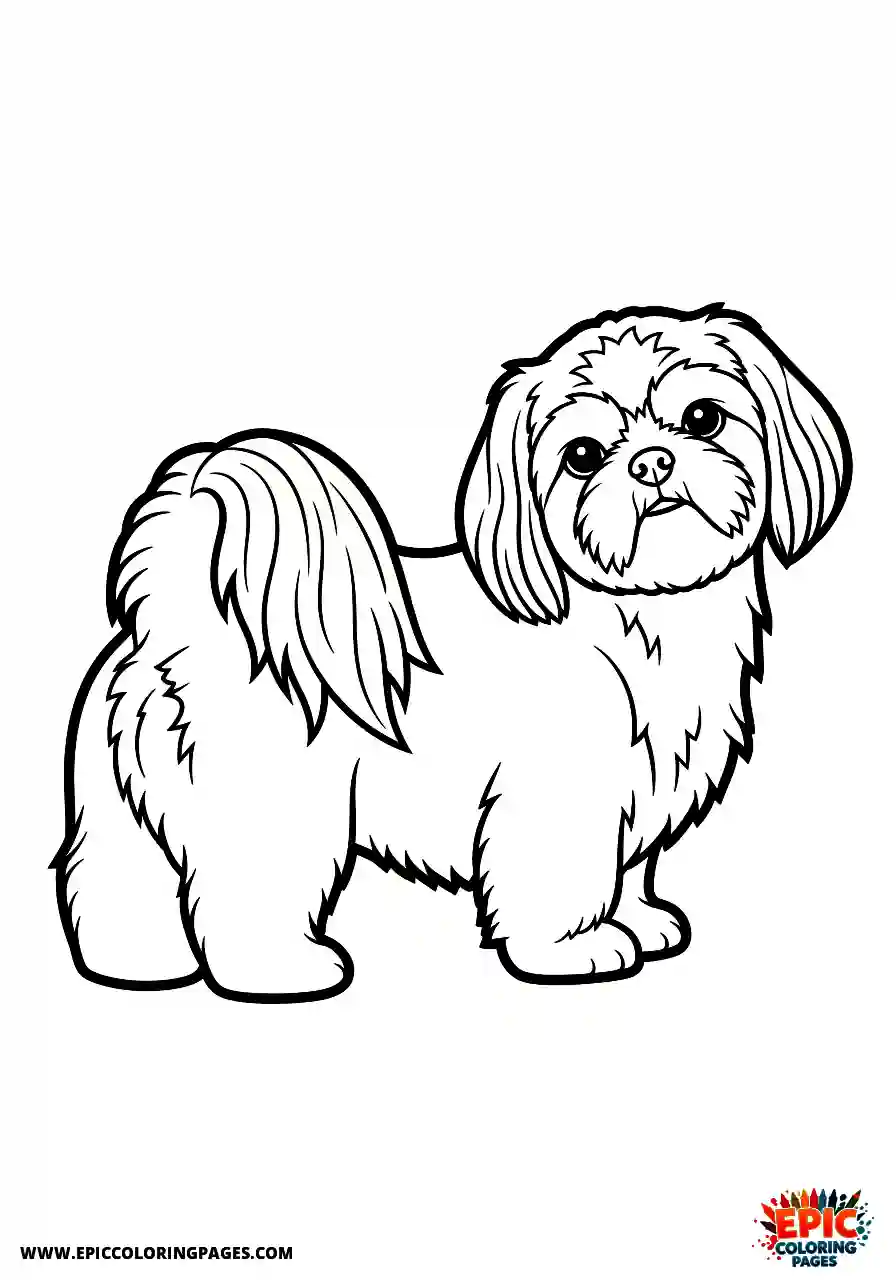
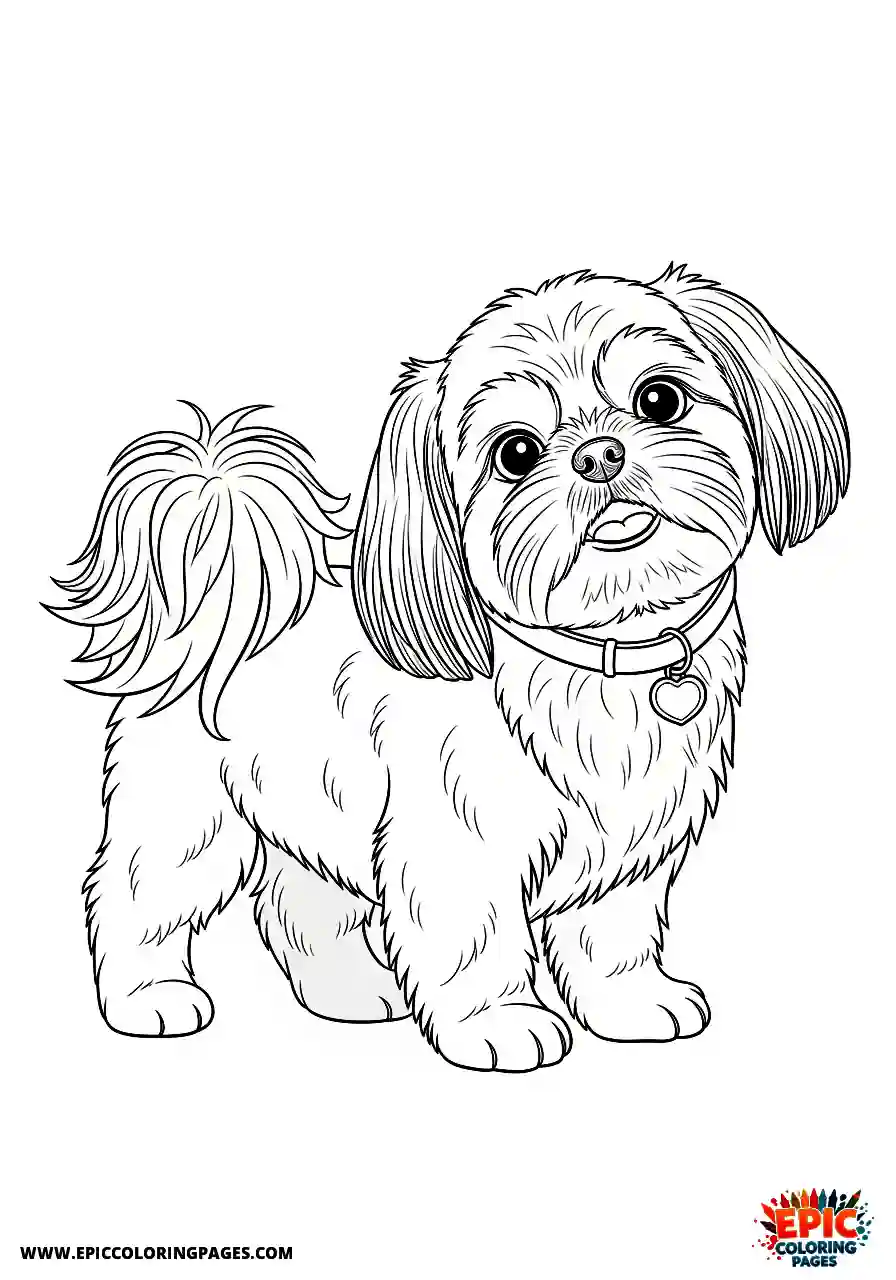
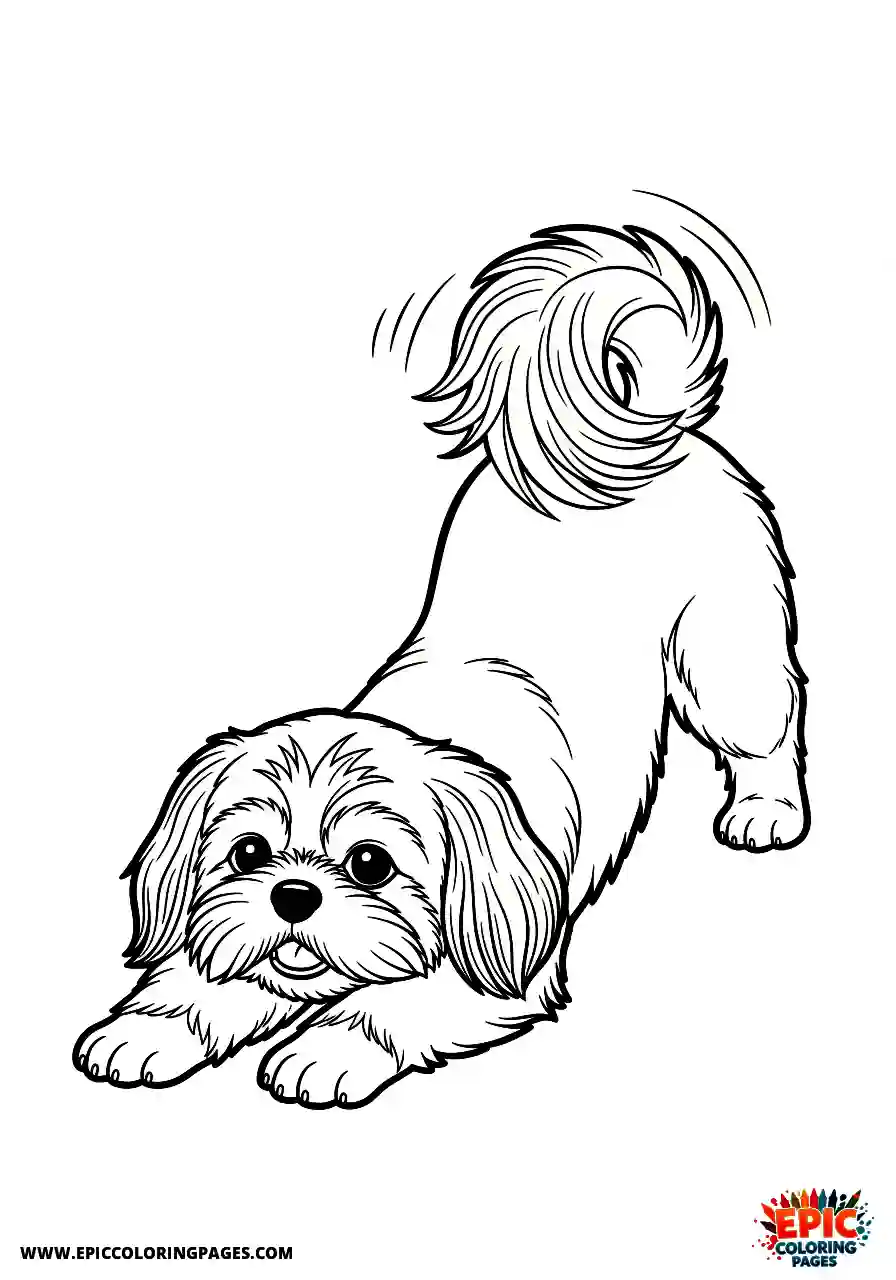
The tail plume should look full and flowing. Radiate your strokes out from the base of the tail, getting lighter toward the tips.
Eyes, Nose, and Expression Details
Dark brown is the standard eye color, but you’ll also see lighter amber eyes on liver-colored dogs.
Build the eye color in layers. Start with a medium brown, then add darker brown at the top of the iris and around the pupil. Leave that catchlight white.
The area around the eyes often has darker pigmentation, like natural eyeliner. A thin dark ring makes the eyes stand out.
The Button Nose
Shih Tzu noses are wide and upturned. They’re not pointed like some breeds.
The nostrils are distinct and comma-shaped. Add a highlight on the bridge of the nose not as bright as the eye catchlight, but definitely lighter than the surrounding area.
If your Shih Tzu has a liver or blue coat, the nose might be liver-colored or blue-gray instead of black.
Background Choices That Complement
Your beautifully colored Shih Tzu deserves a background that doesn’t fight with it.
For gold and warm-toned dogs, try cool backgrounds: soft blues, lavenders, or sage greens. The temperature contrast makes the dog pop.
For black-and-white or silver dogs, warm backgrounds work well: peachy tones, warm grays, or soft yellows.
Keep backgrounds lighter than the darkest parts of your dog. This maintains focus on your main subject.
Simple vs. Detailed Backgrounds
A gradient background dark at the bottom, light at the top adds polish without overwhelming.
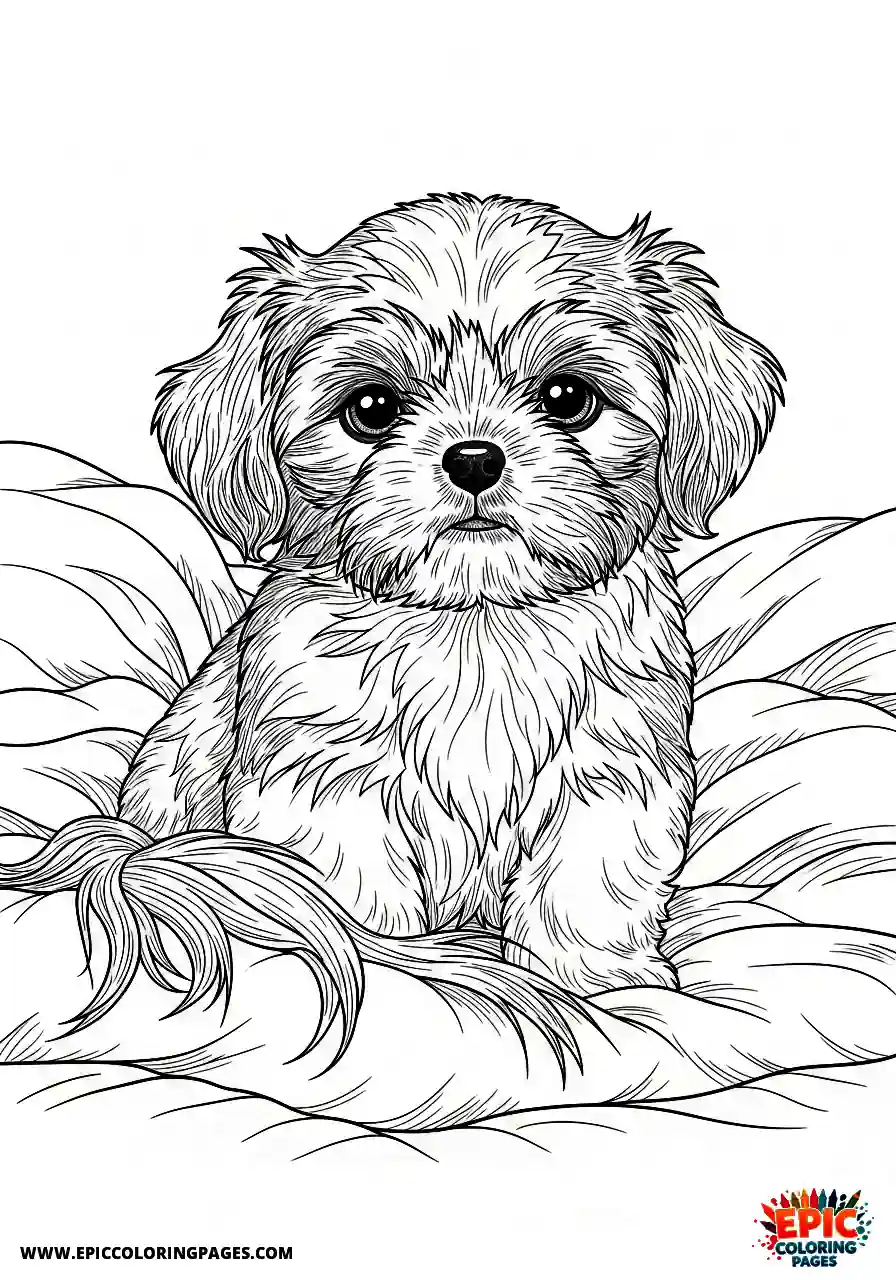
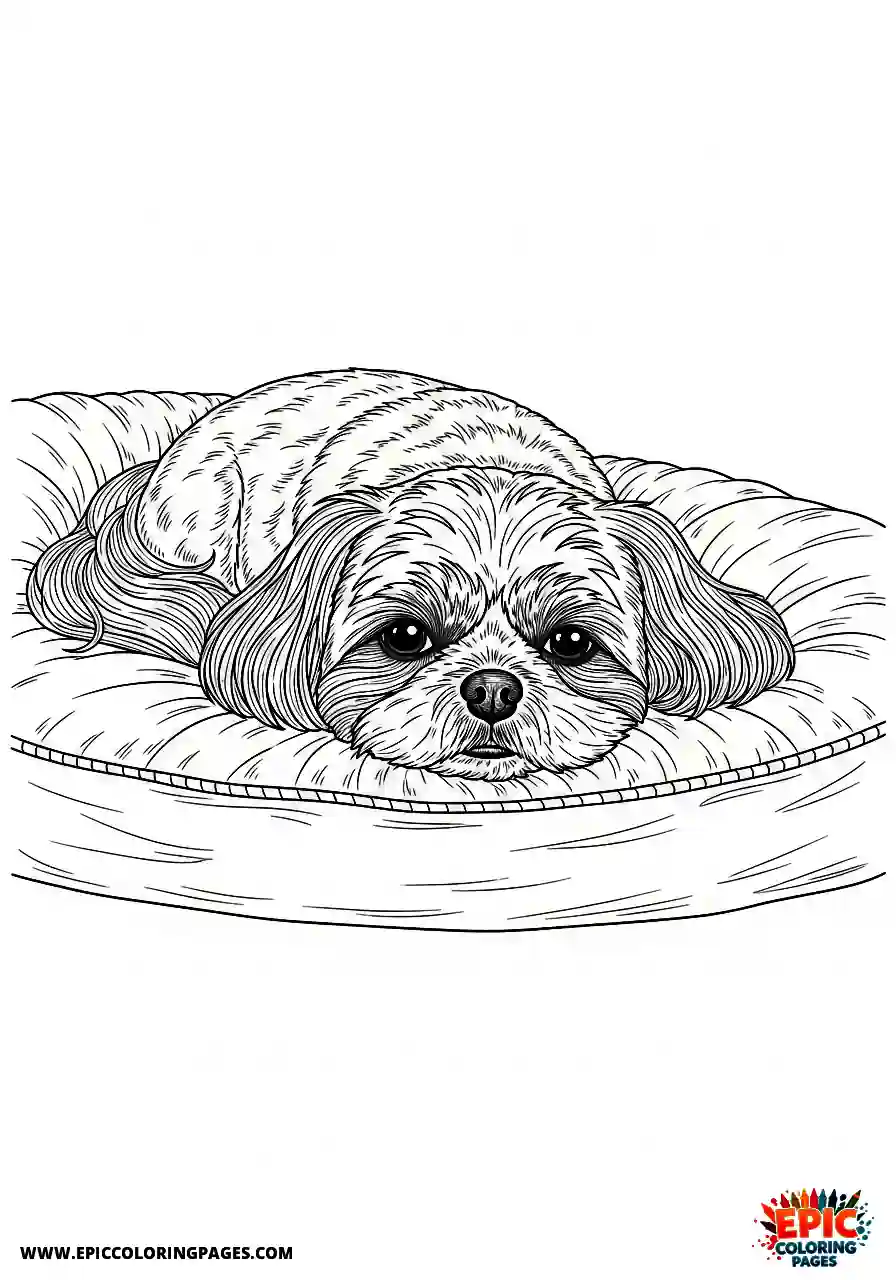
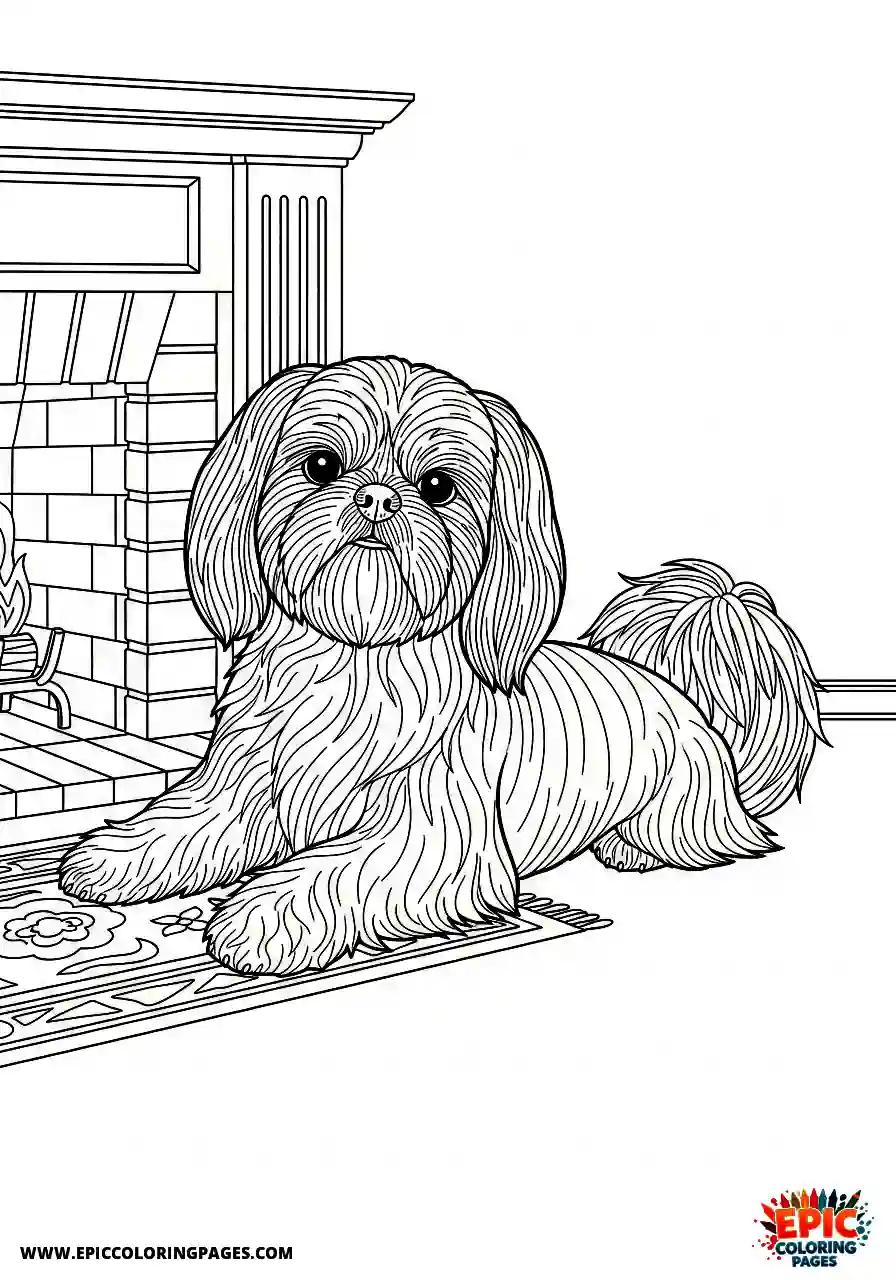
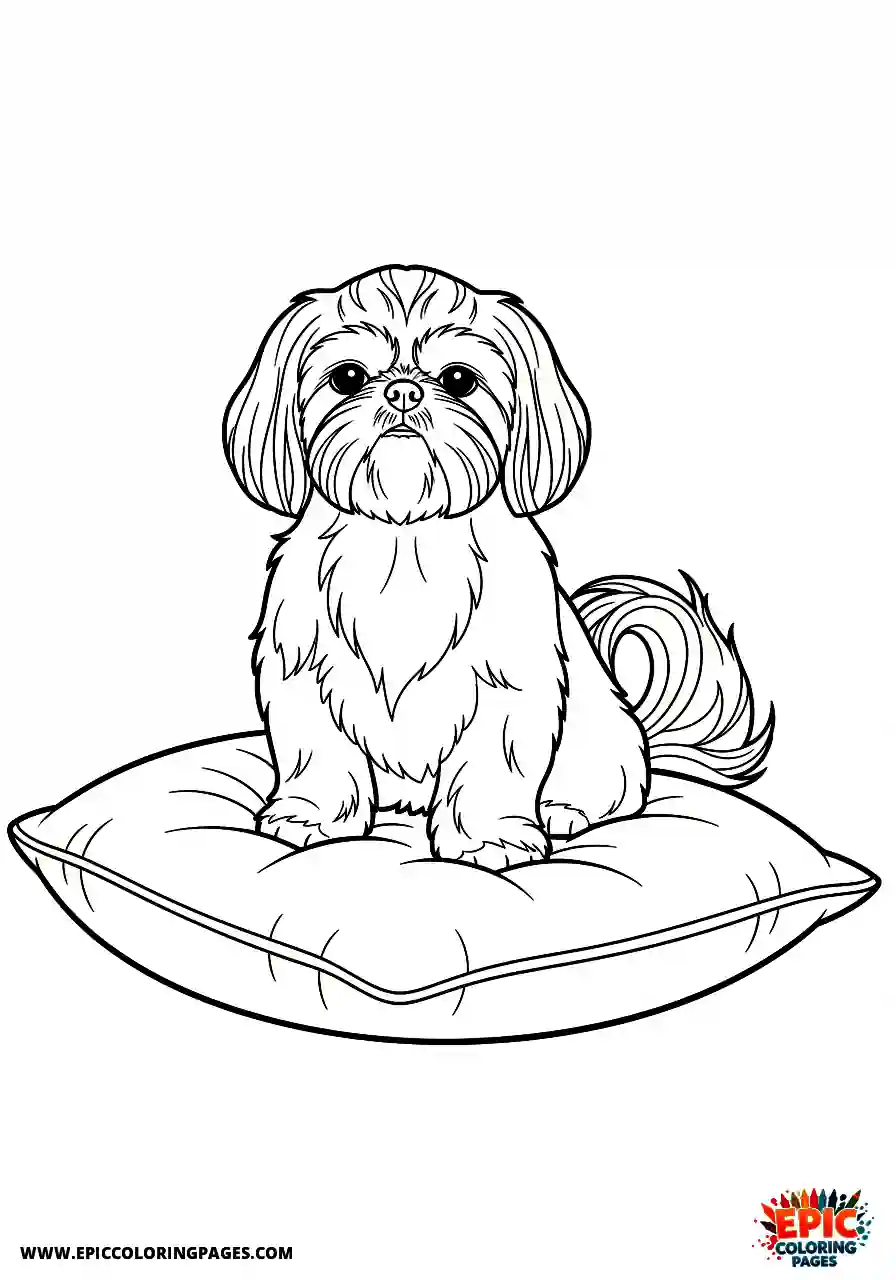
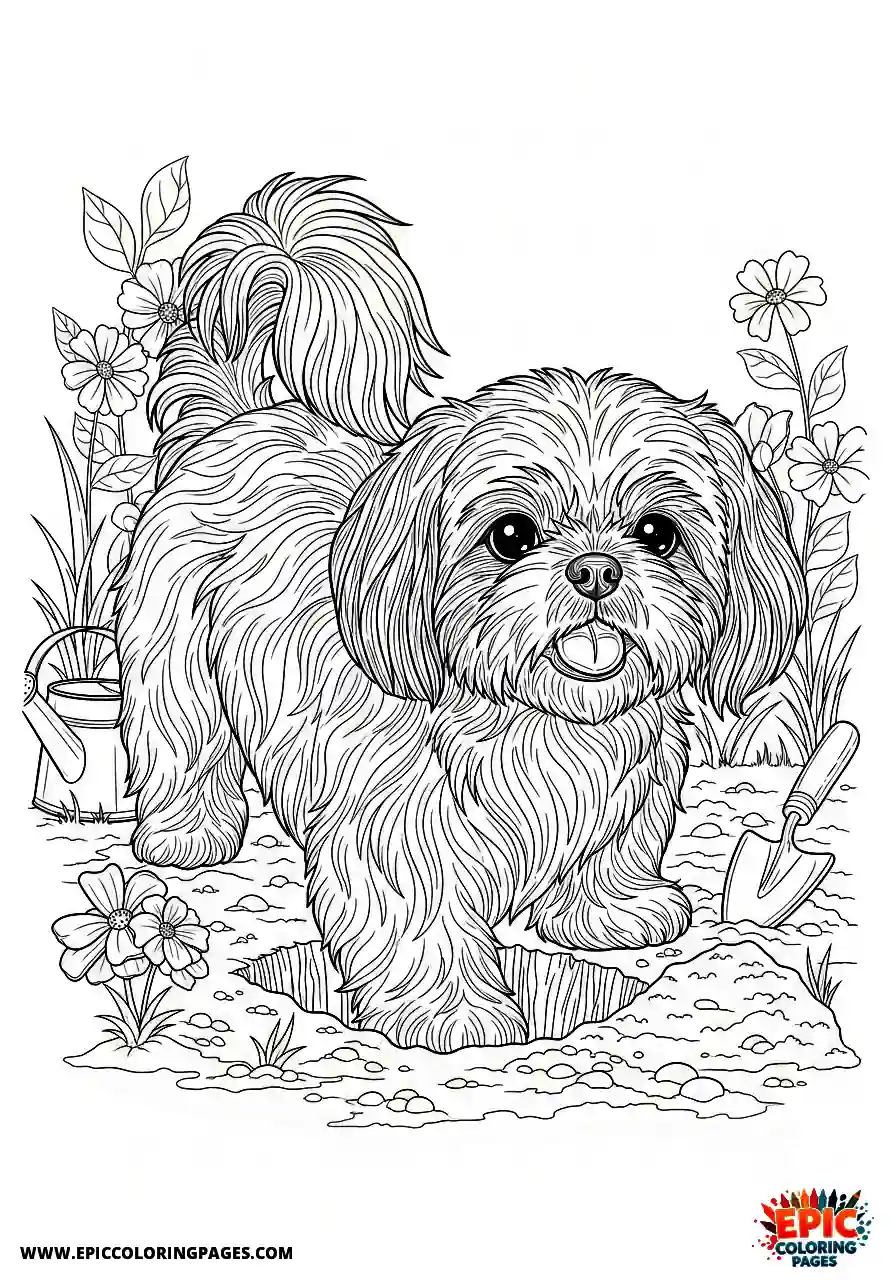
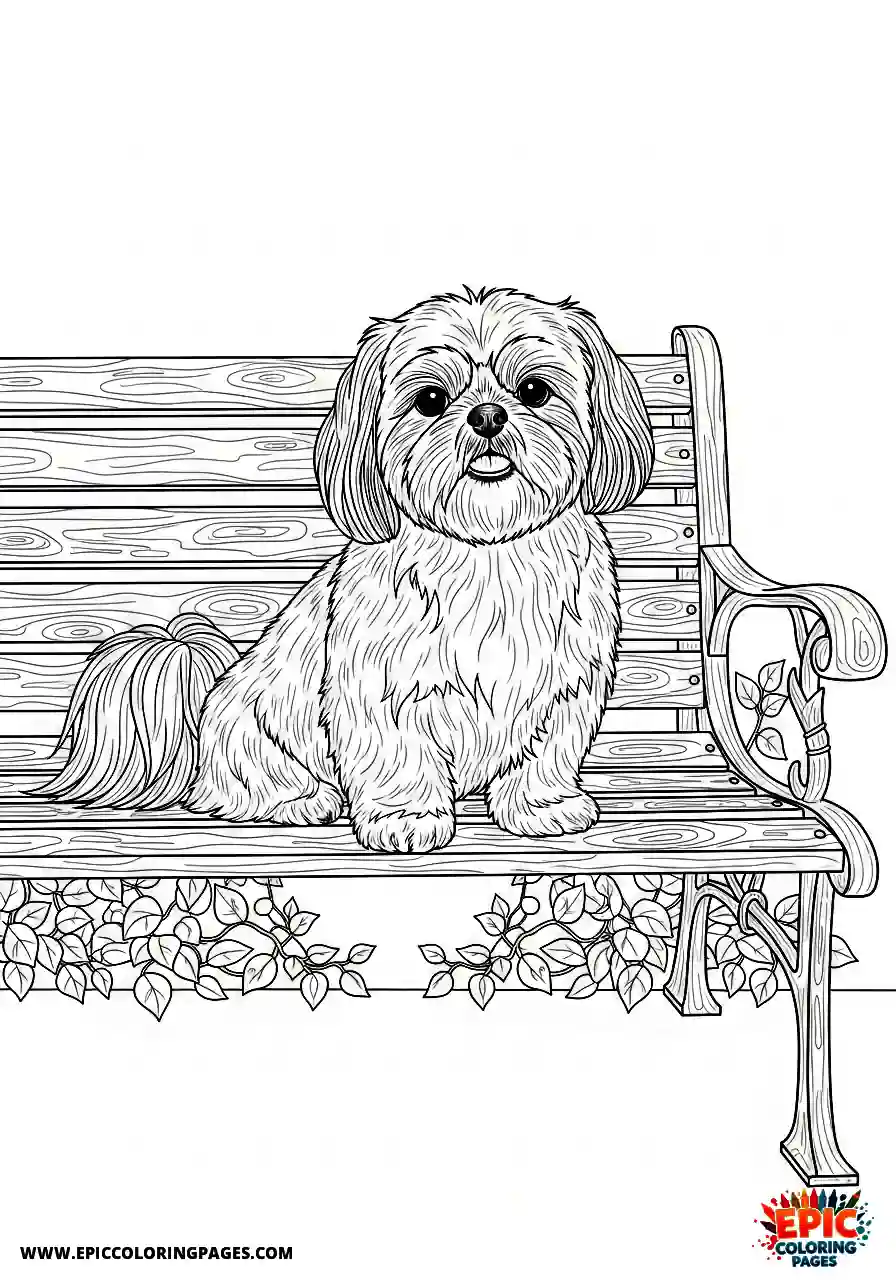
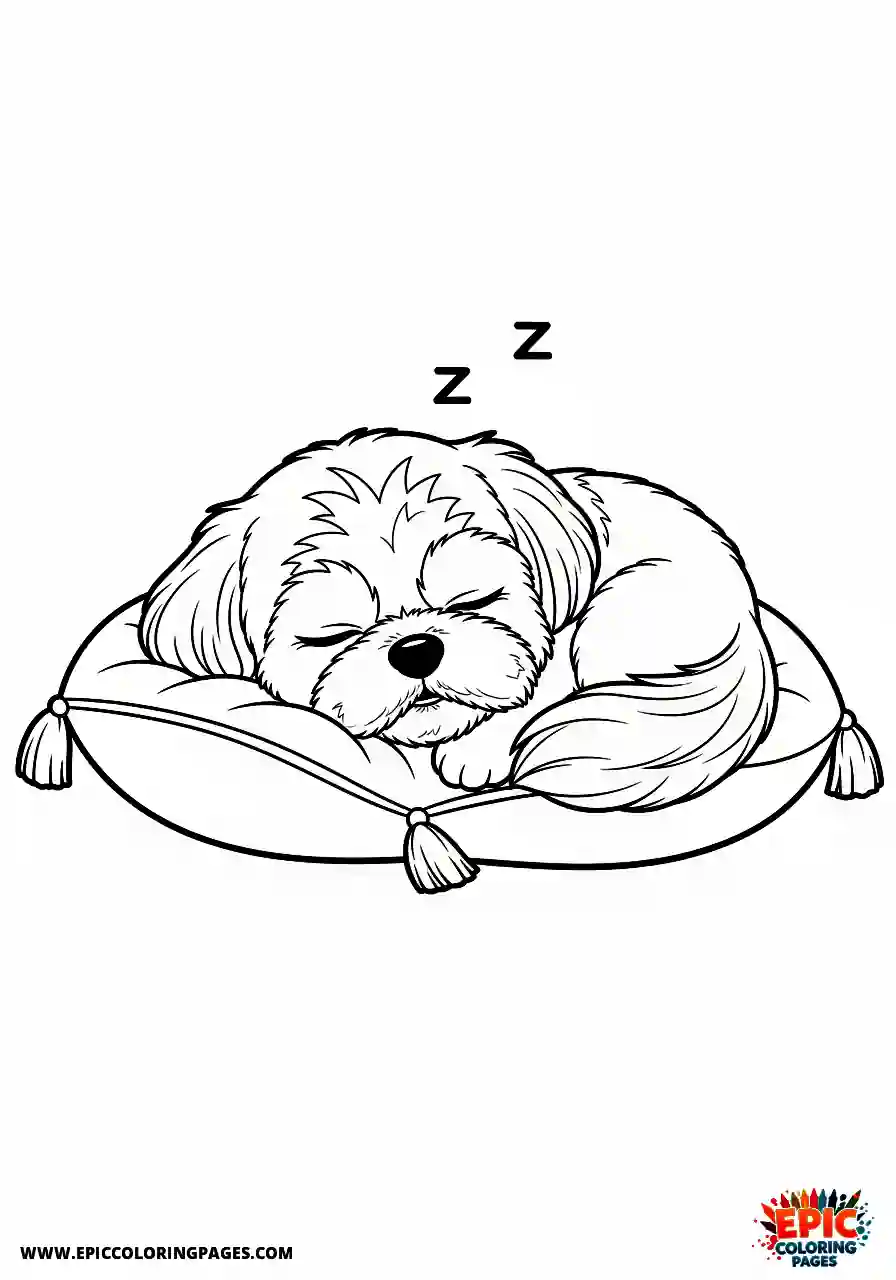
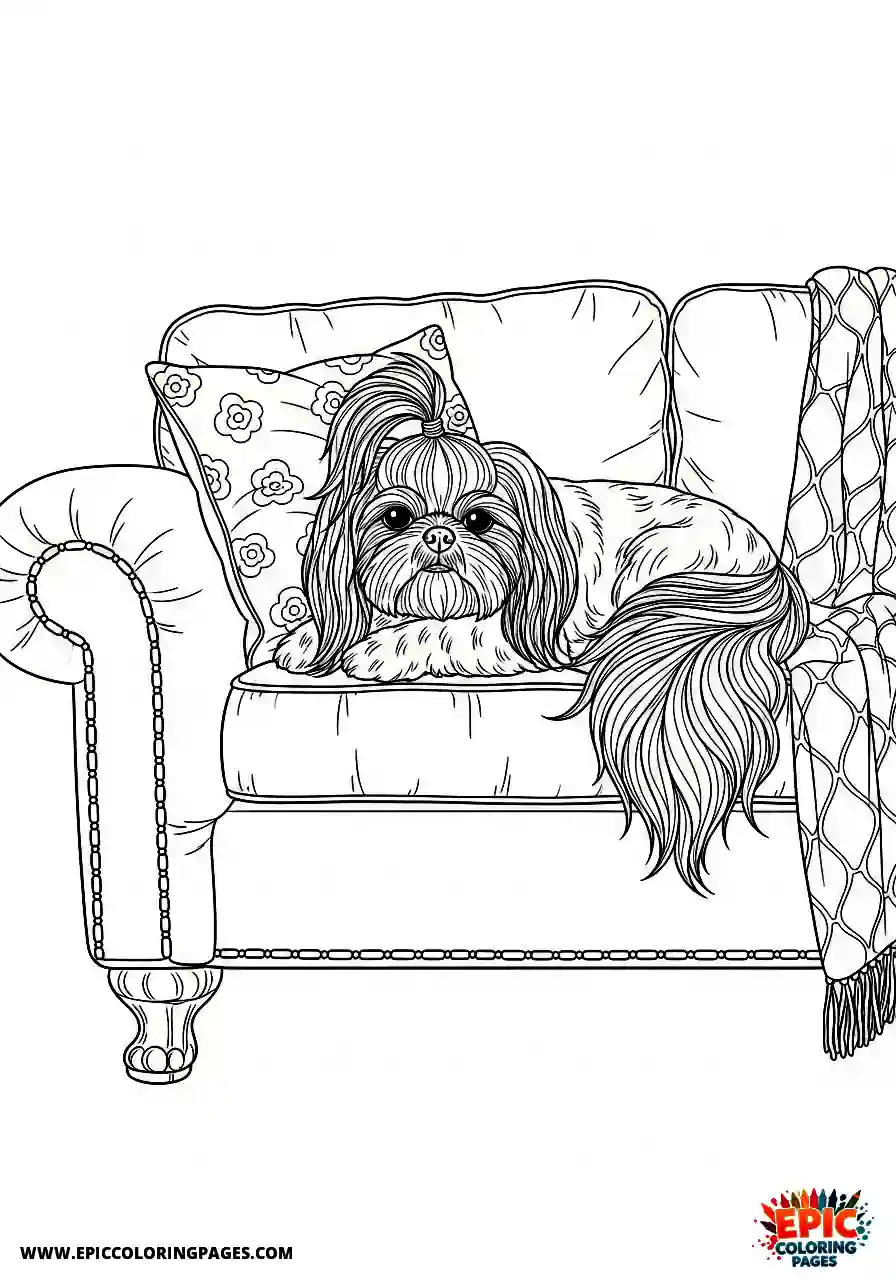
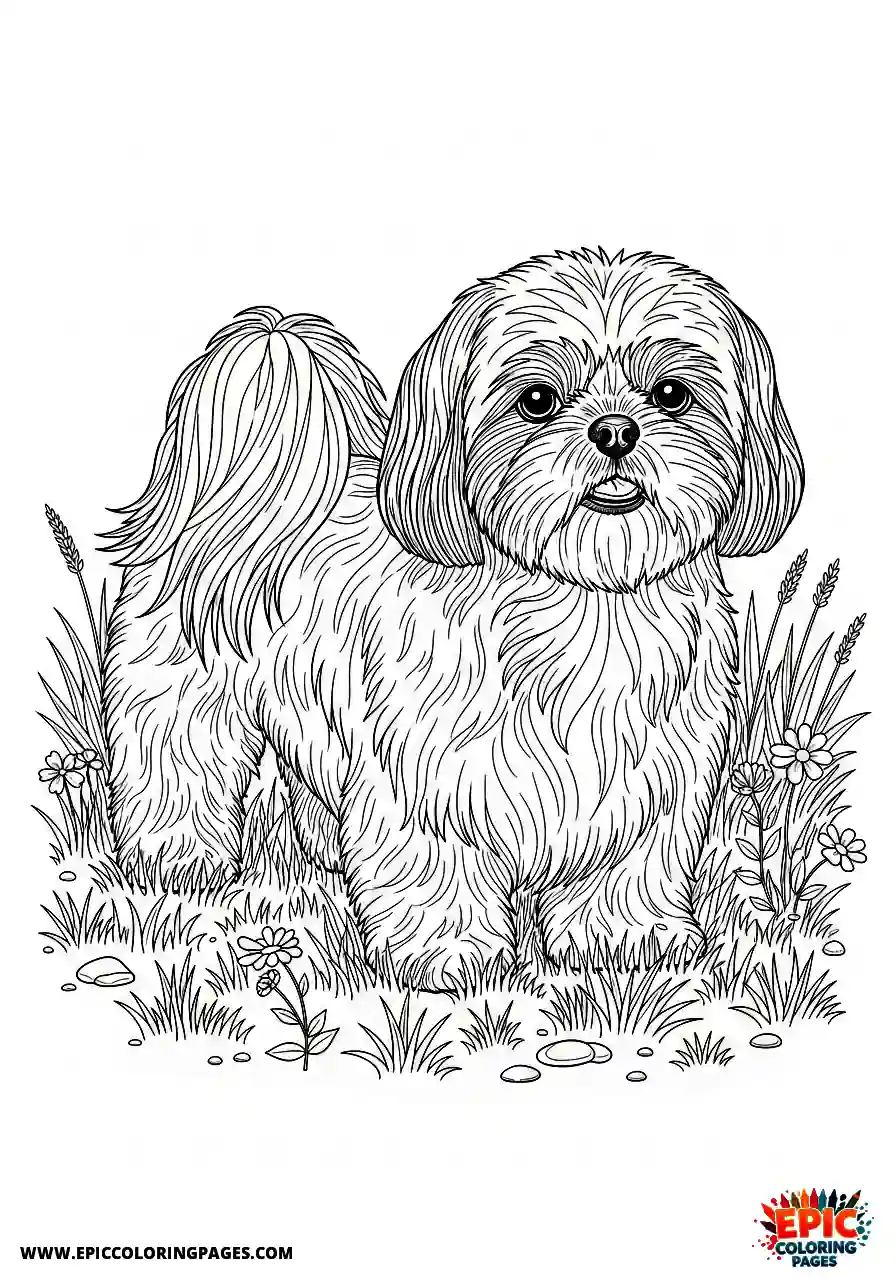
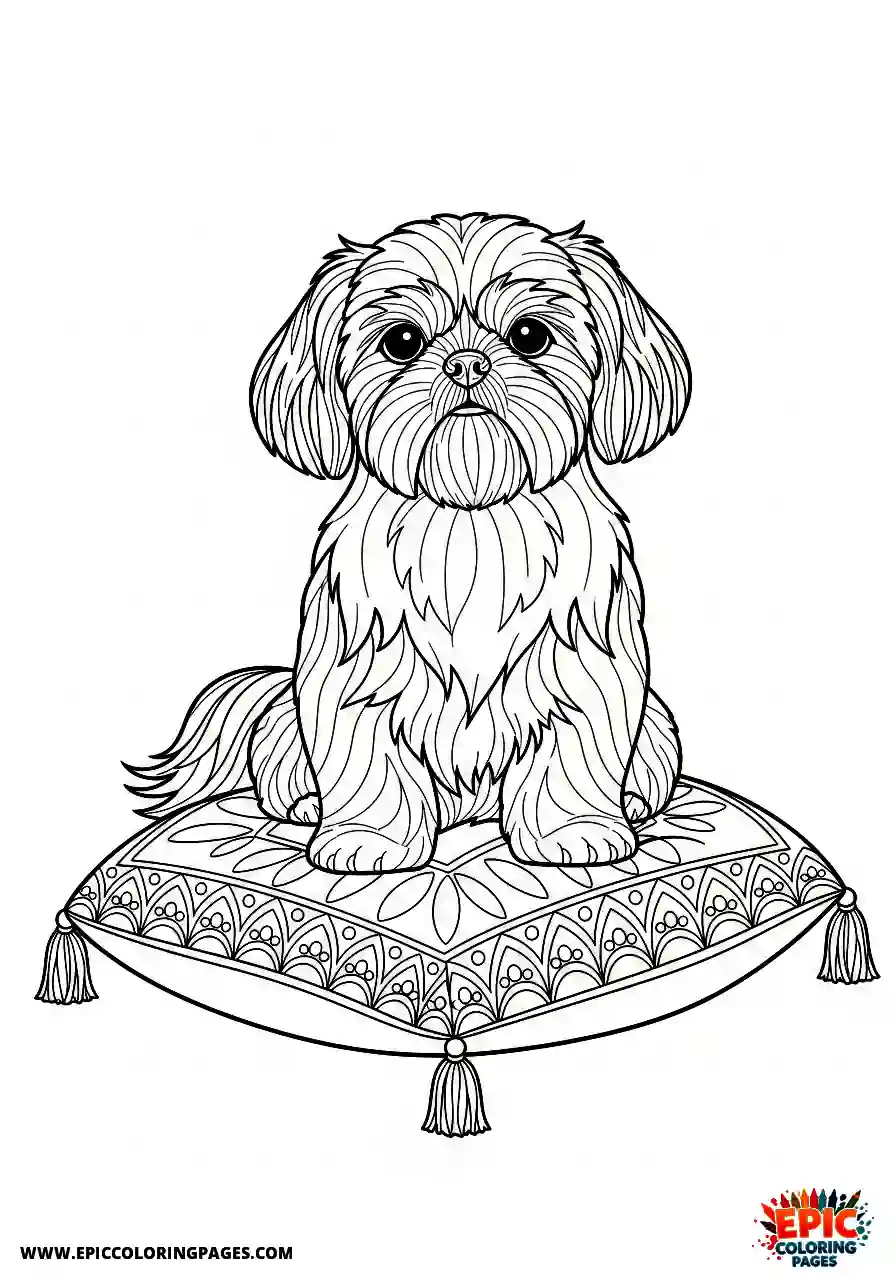
If you want to add elements, think about what makes sense: a fancy cushion, a garden setting, or traditional Chinese decorative patterns (honoring the breed’s heritage).
Whatever you choose, keep it softer and less detailed than the dog. Blur those background edges. Your Shih Tzu is the star.
Common Mistakes to Avoid
Using only one brown: Real fur has variation. Mix at least three shades.
Coloring against the fur direction: Always follow the growth pattern.
Making it too dark: Shih Tzus are often light to medium toned. Resist the urge to press too hard.
Forgetting the undercoat: That fluffy undercoat peeks through in places. Show it with lighter, softer marks beneath the top coat.
Symmetrical coloring: Nature is beautifully imperfect. Embrace slight variations between left and right sides.
Advanced Techniques for Show-Quality Results
Burnishing that’s when you layer colors heavily and then go over them with a light color or colorless blender. It smooths everything together and intensifies the colors.
Try it on the chest or face areas where you want that silky, groomed look.
Creating Groomed vs. Natural Looks
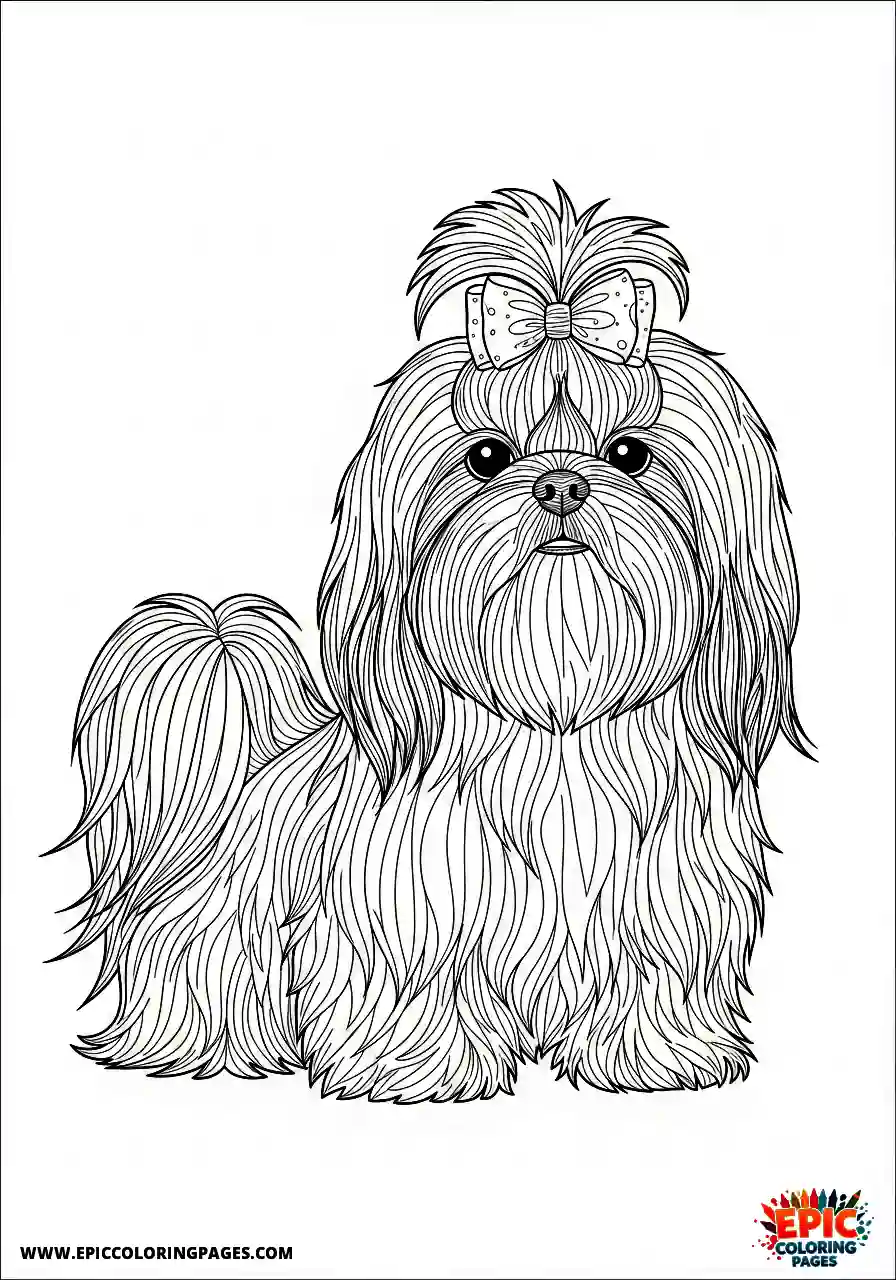
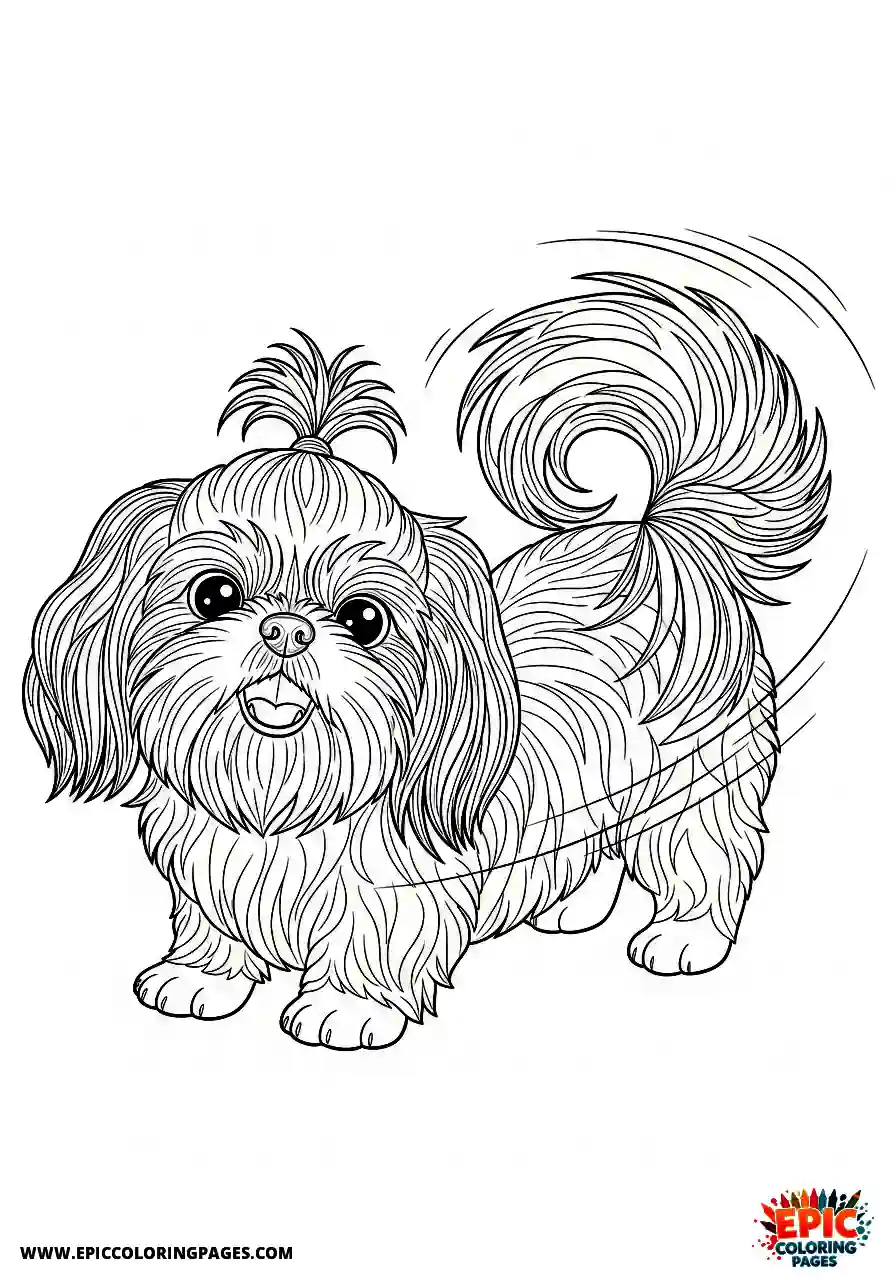
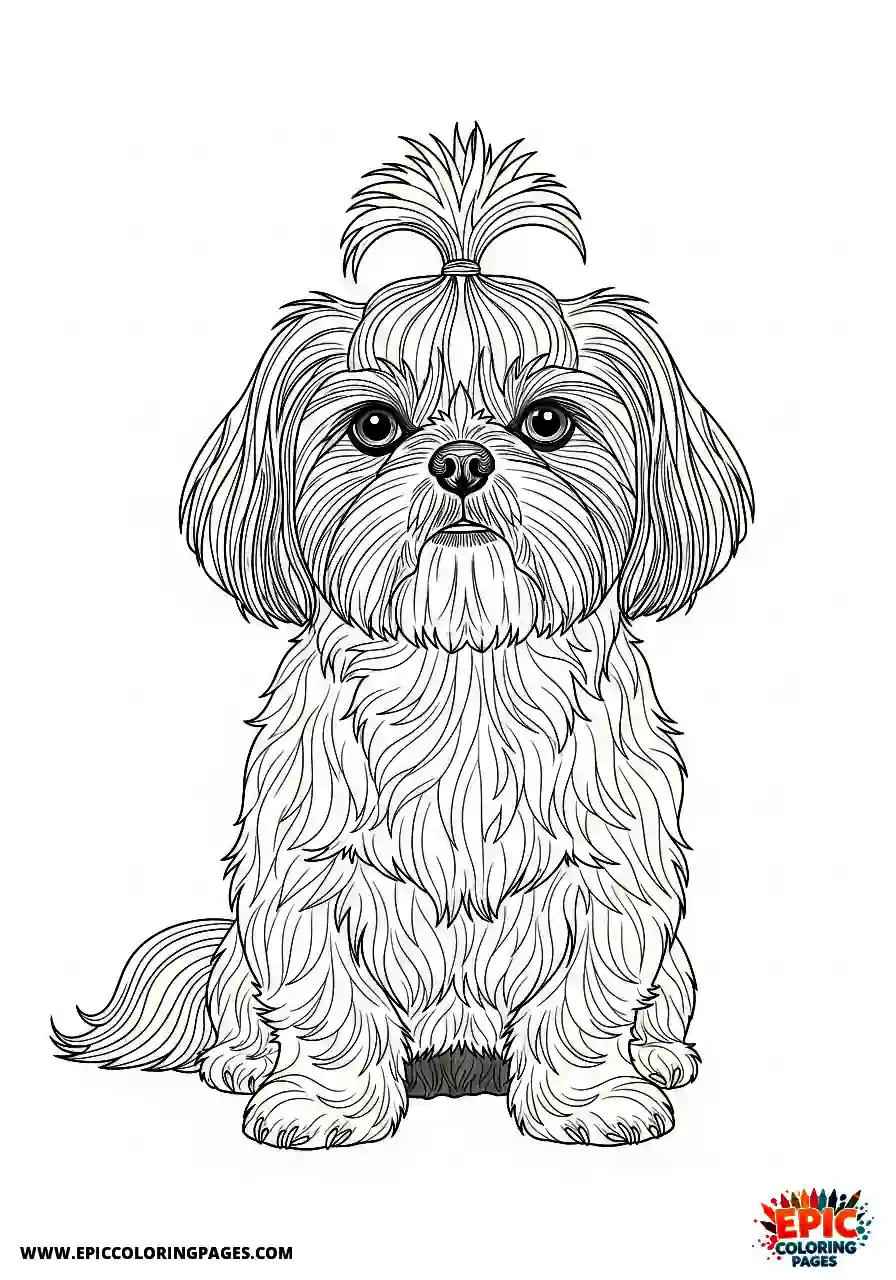
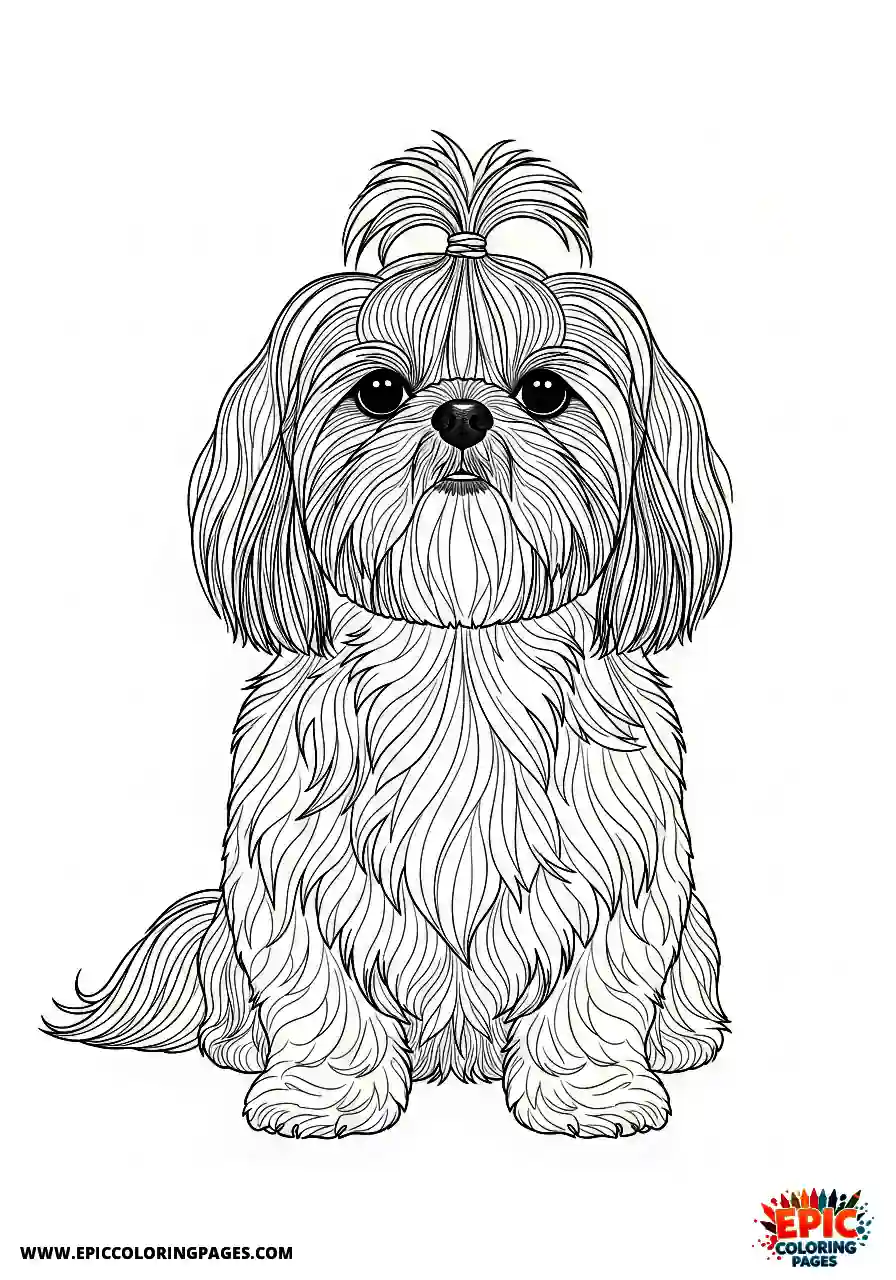
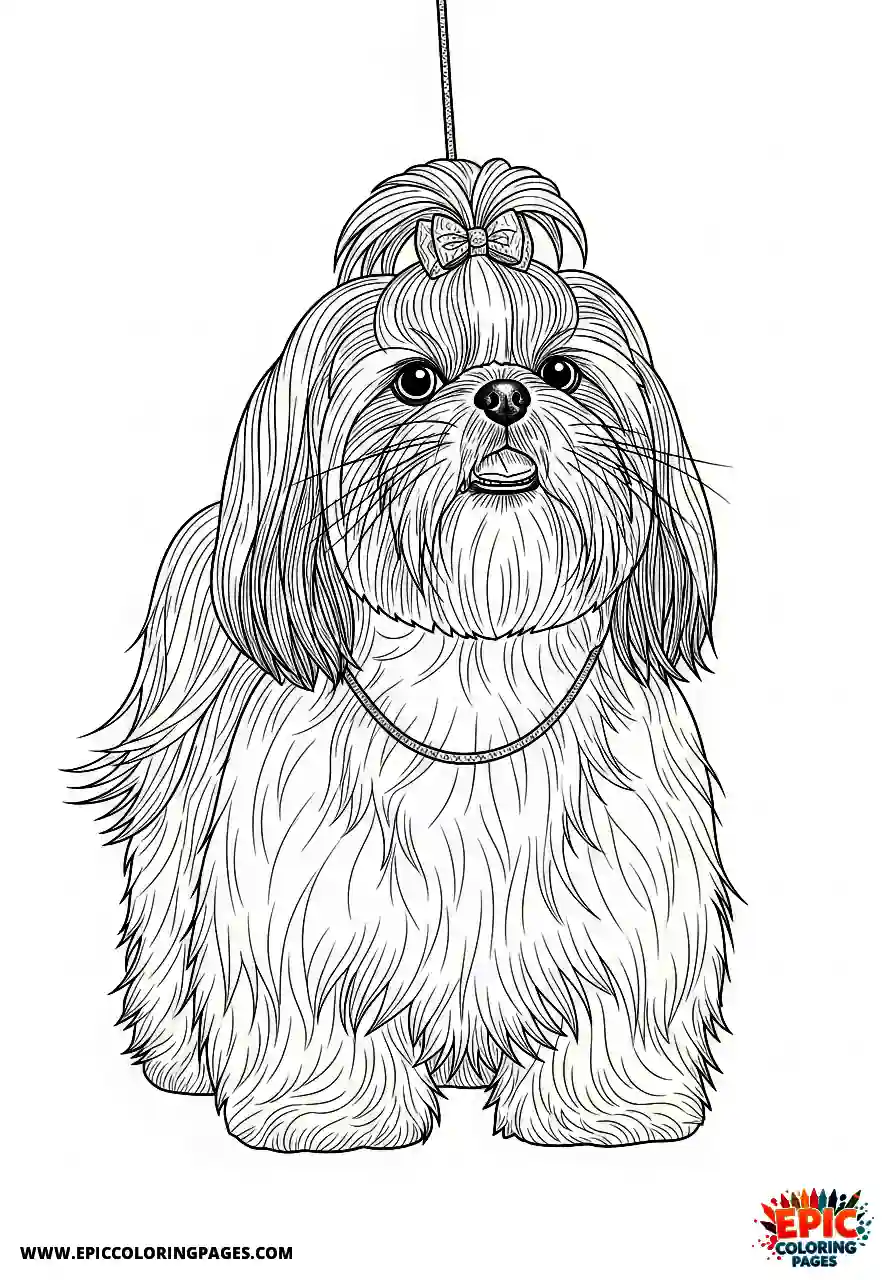
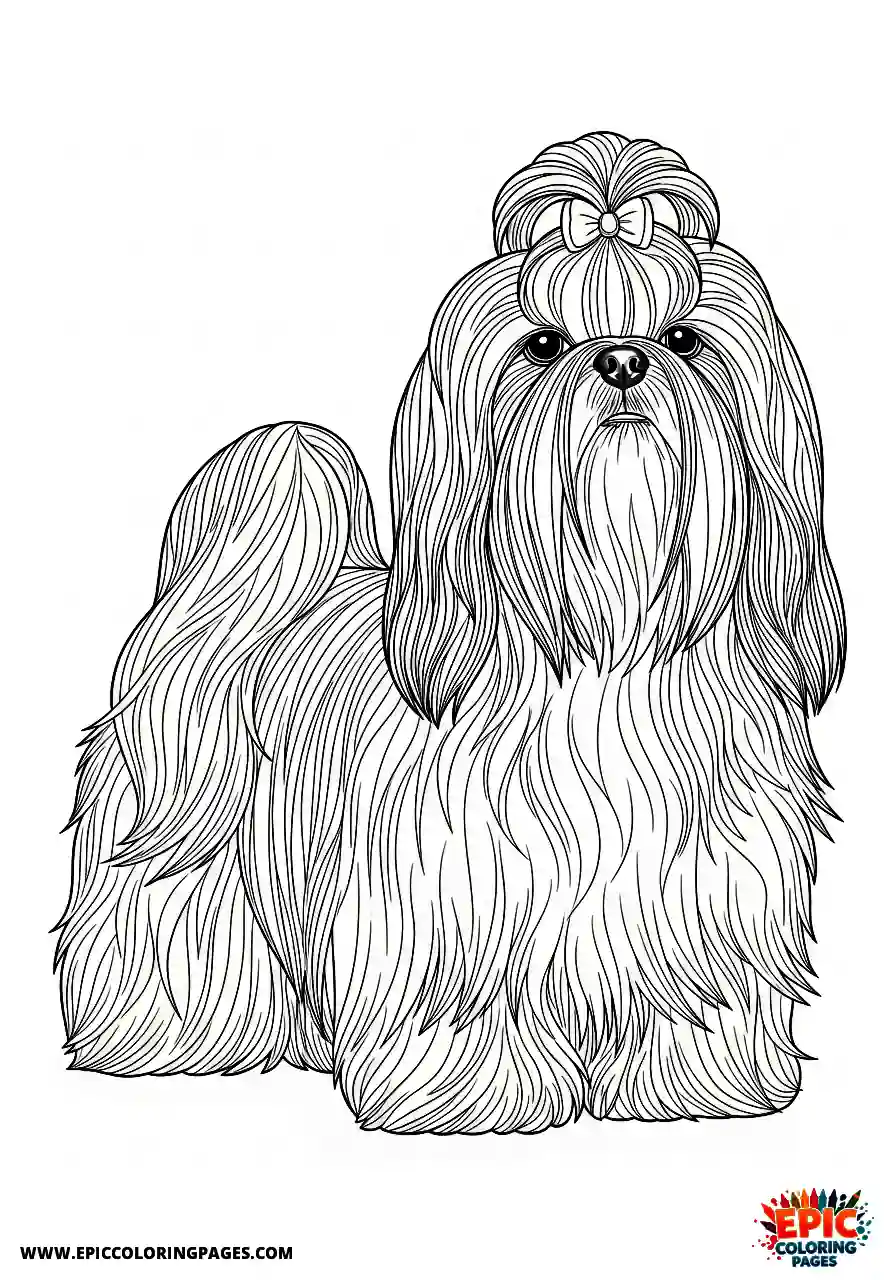
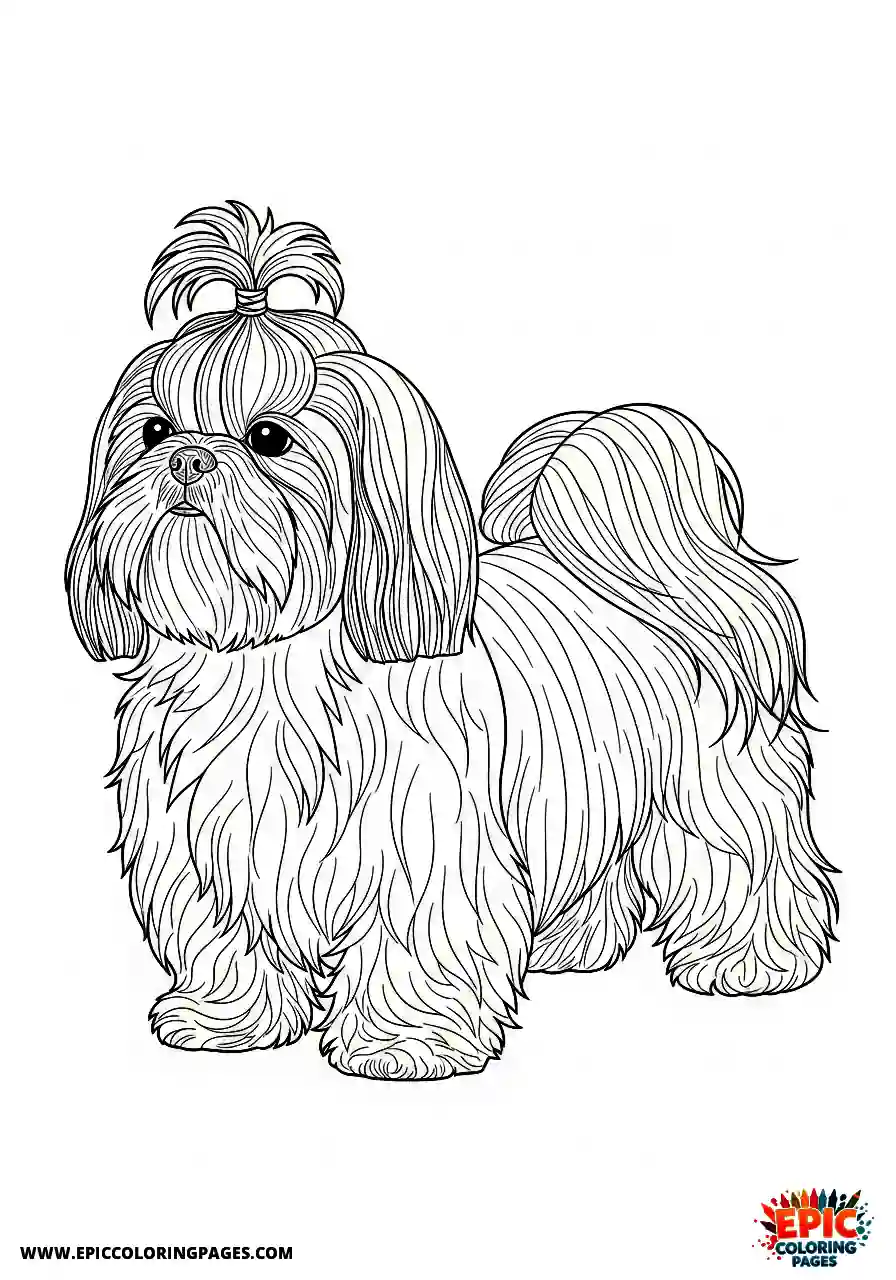
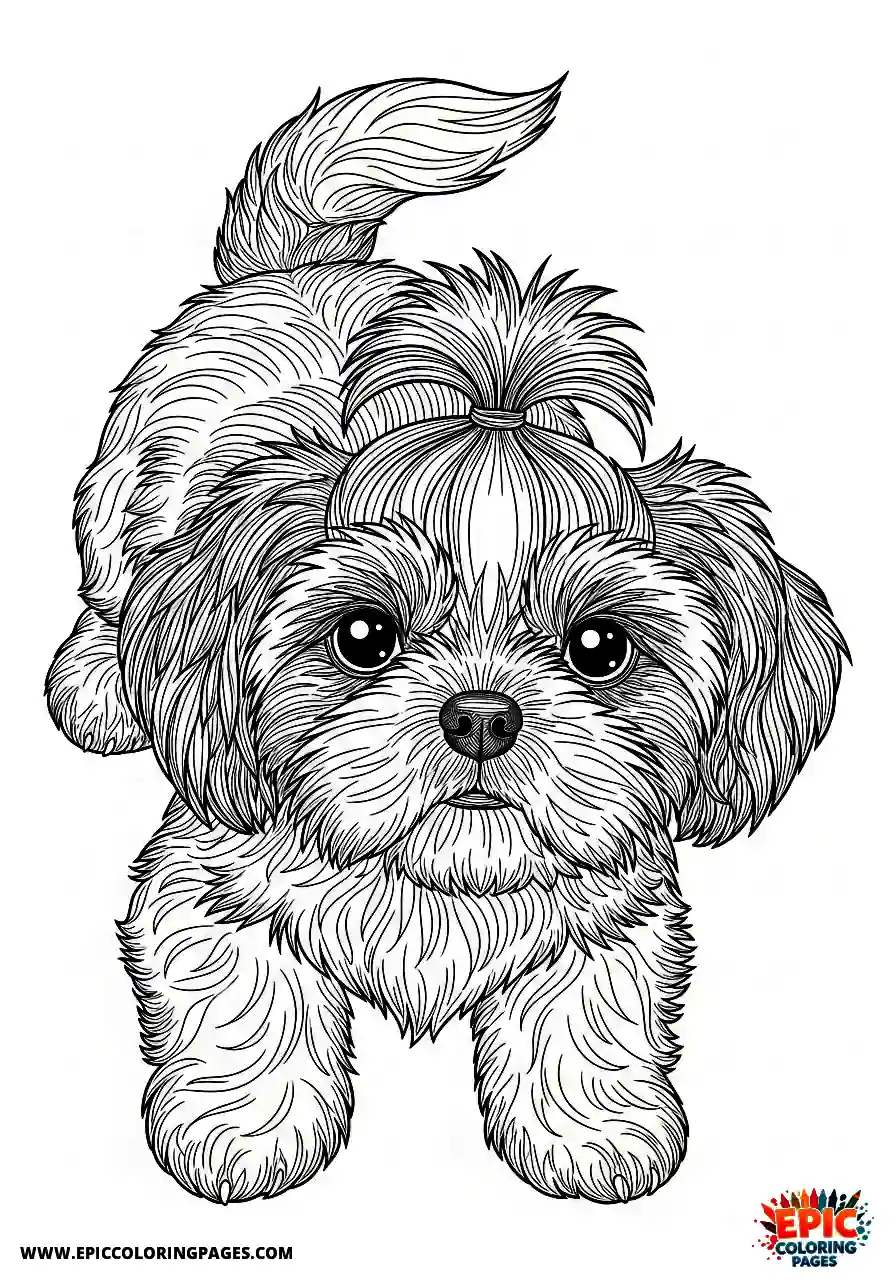
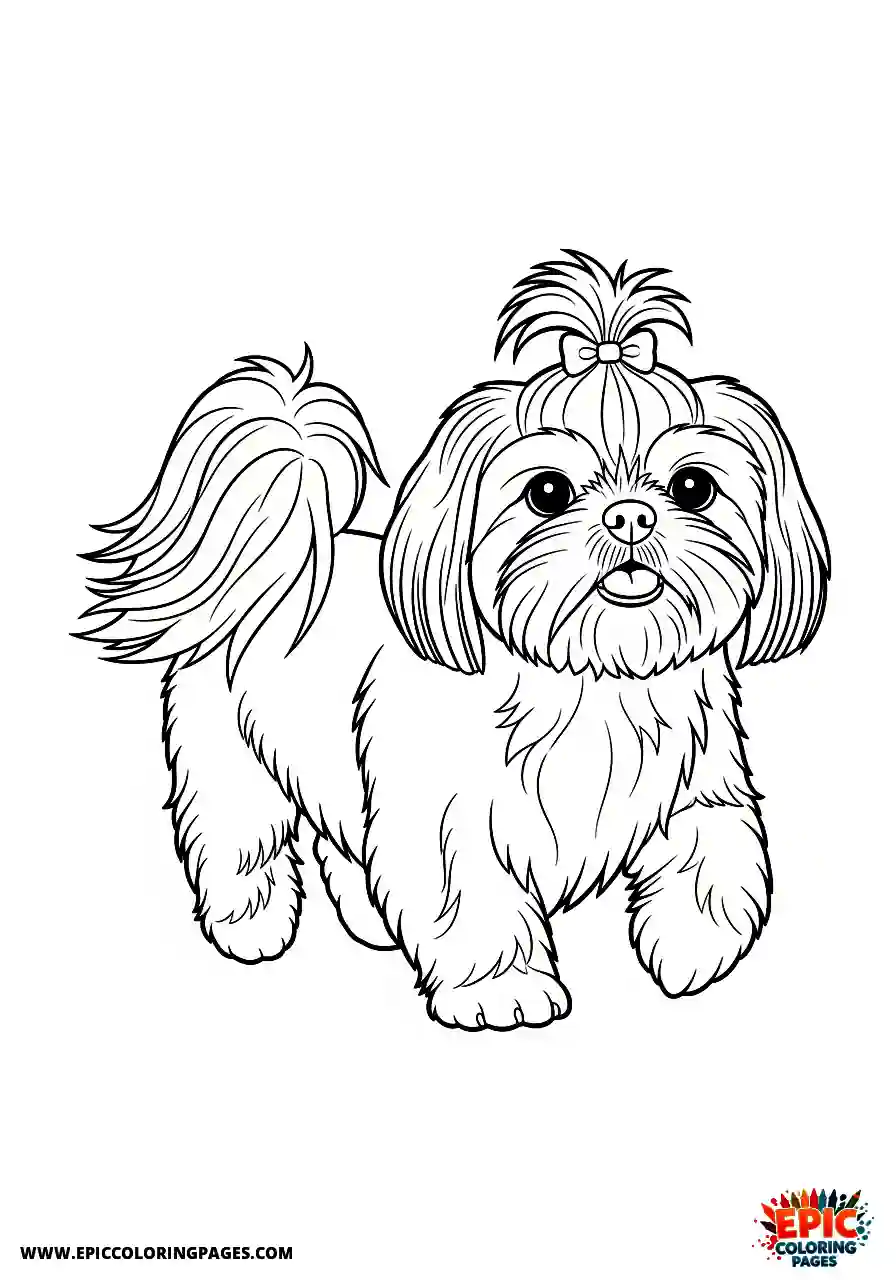
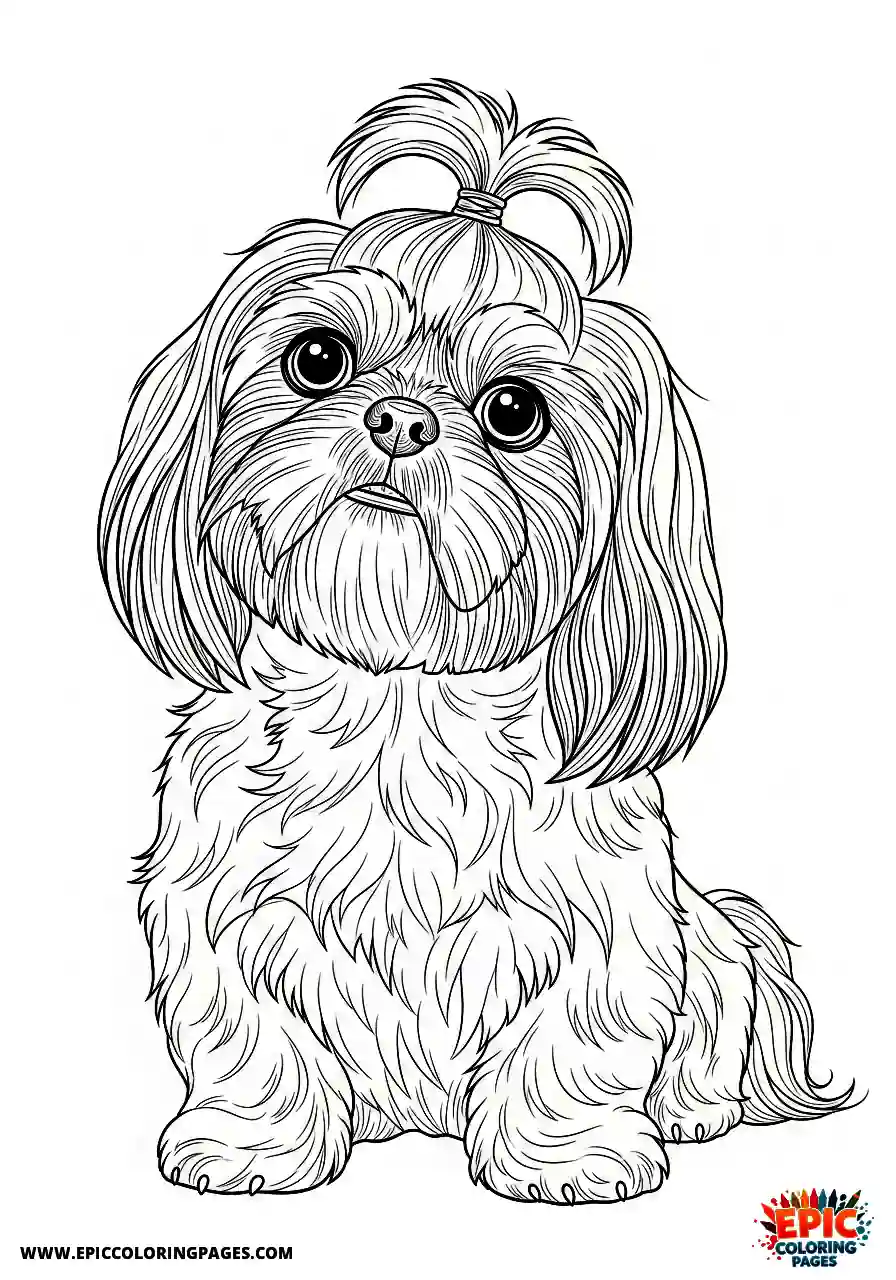
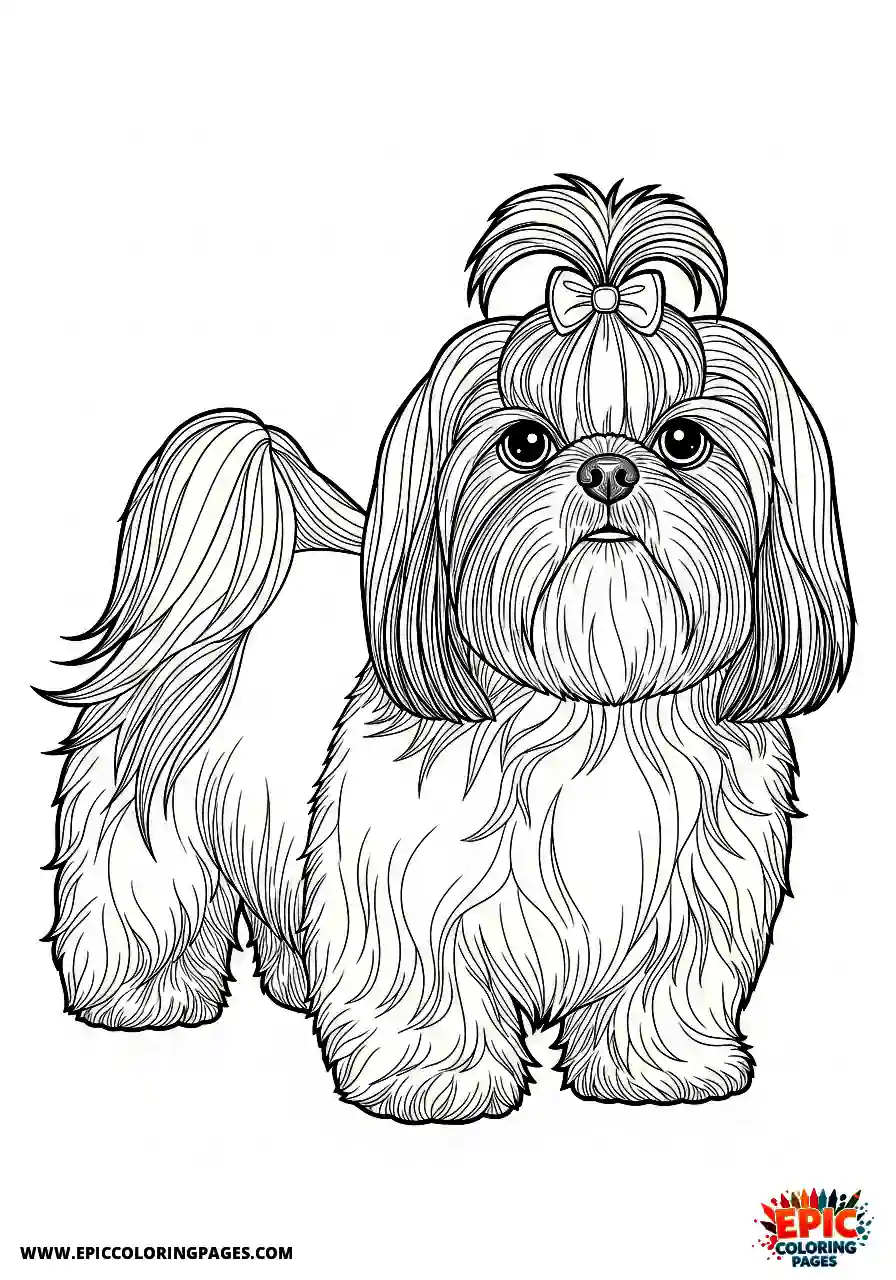
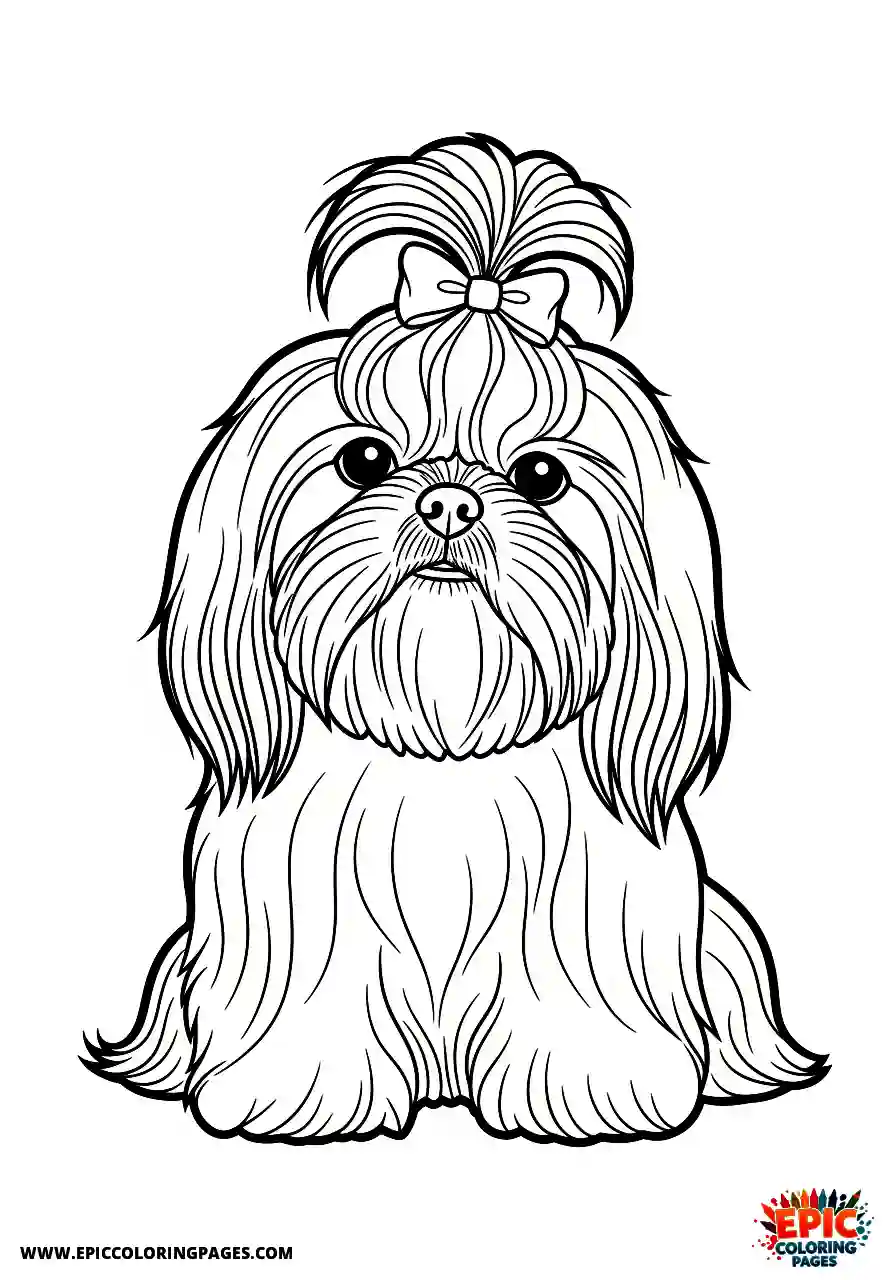
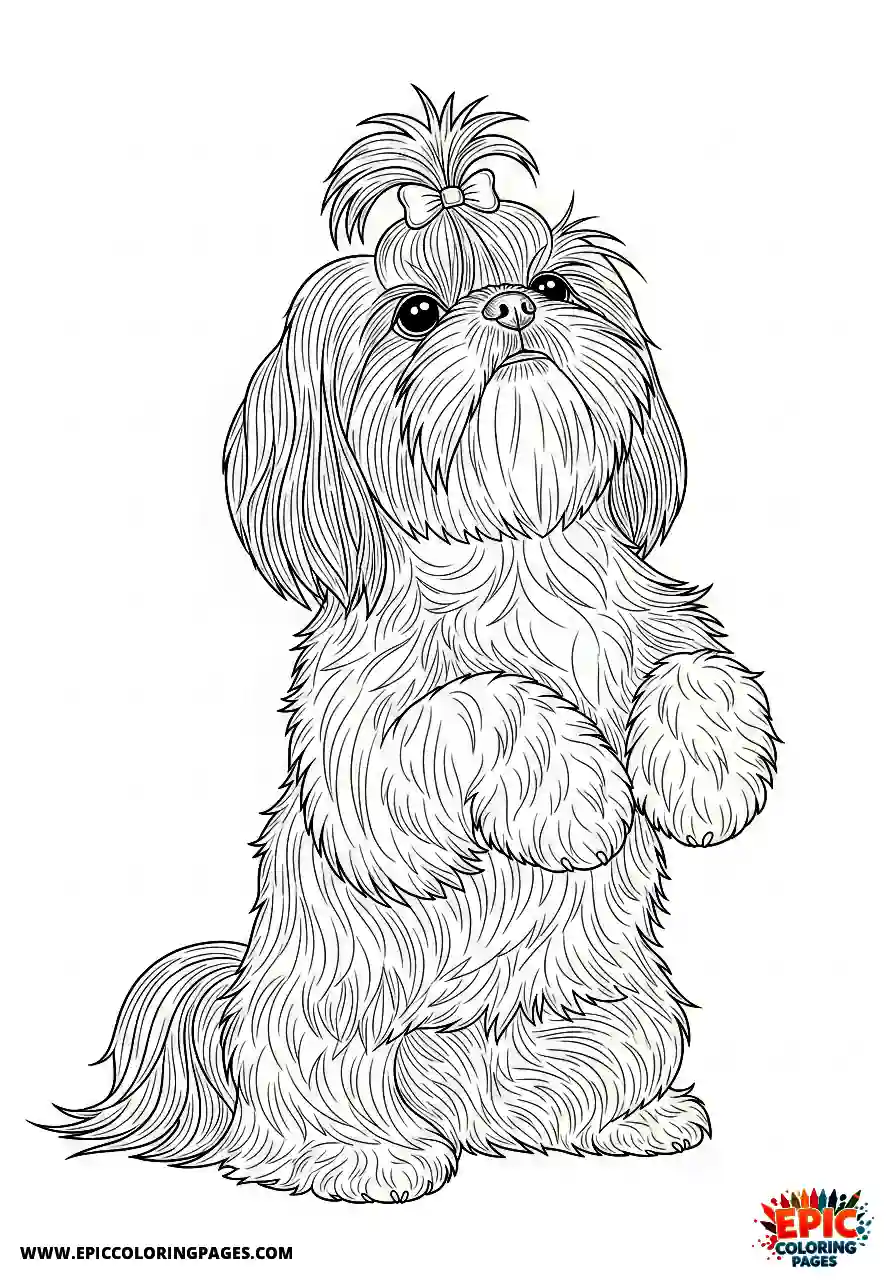
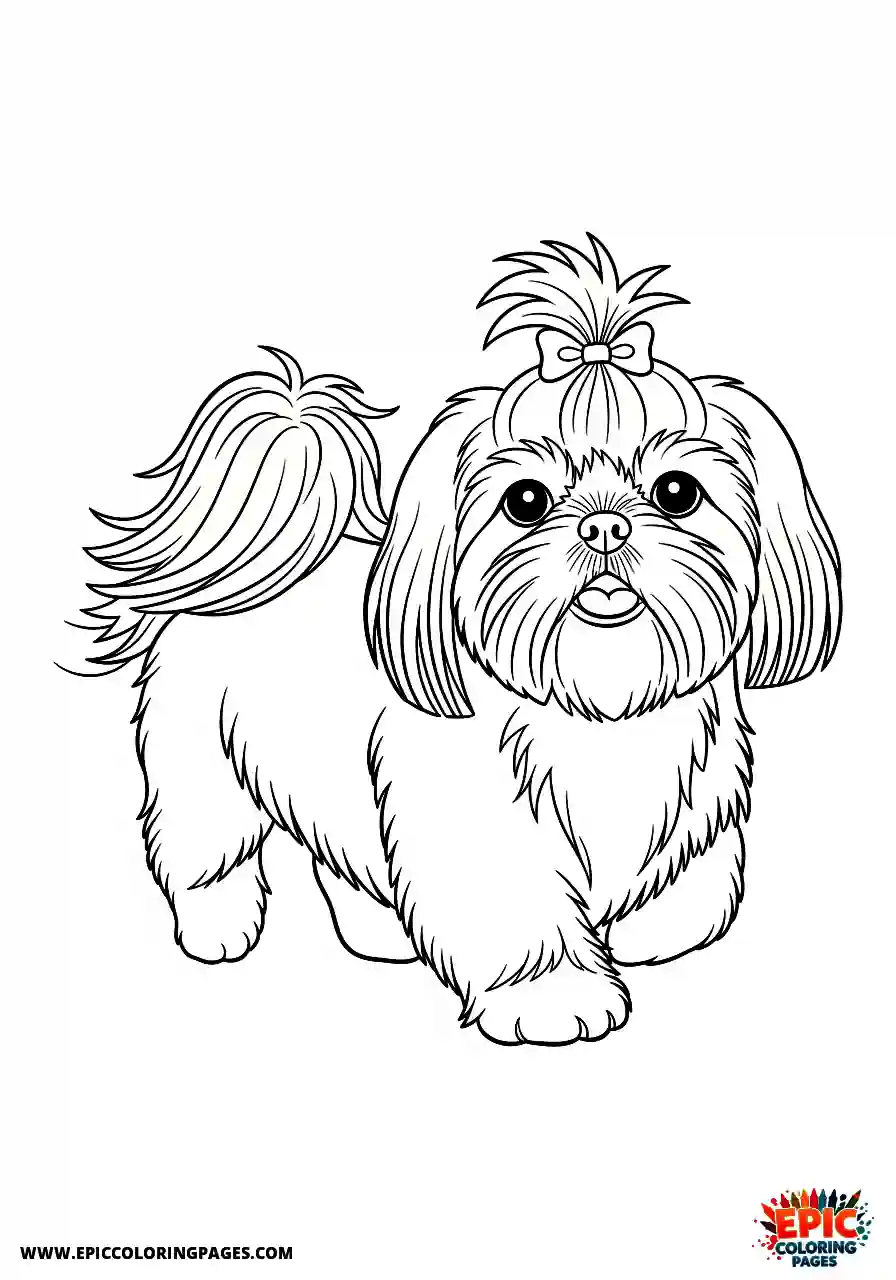
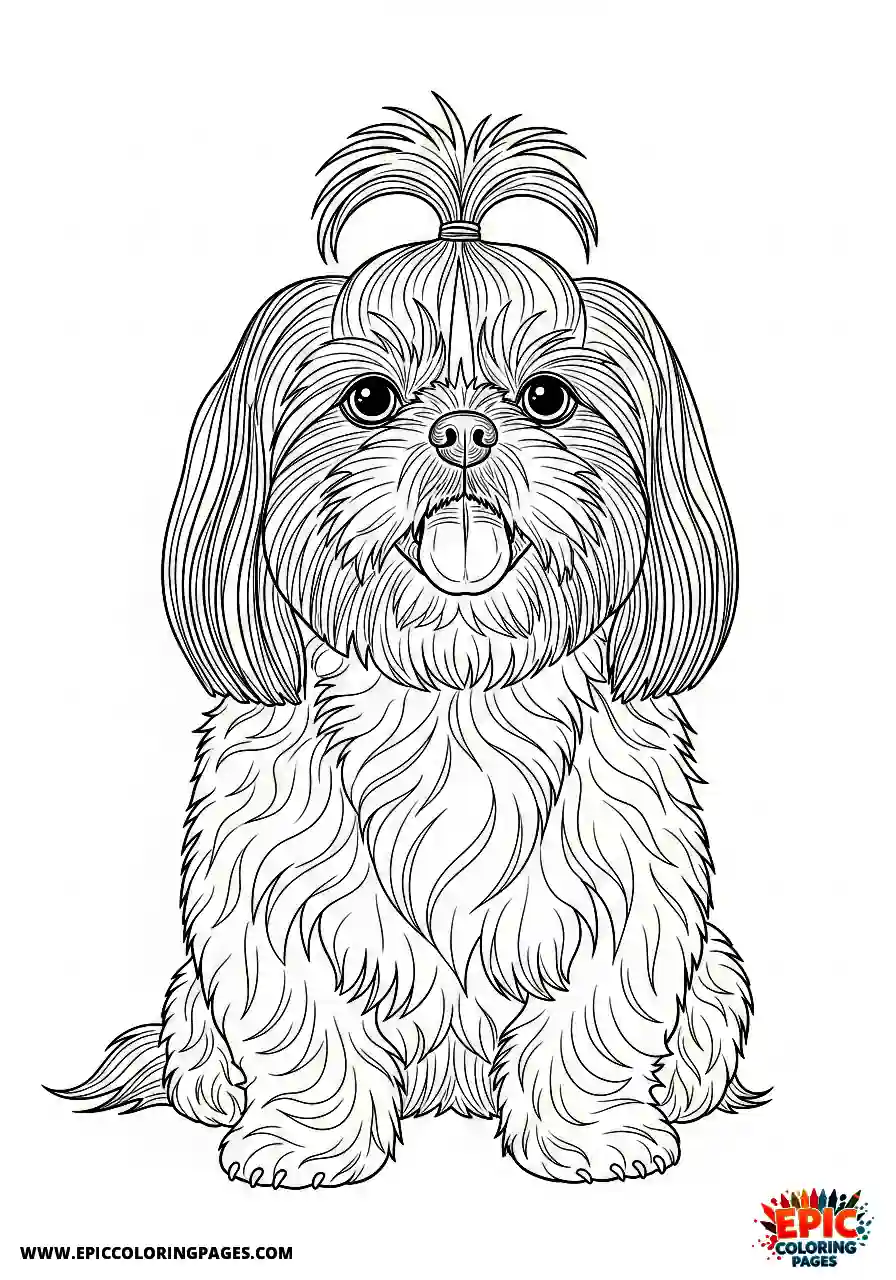
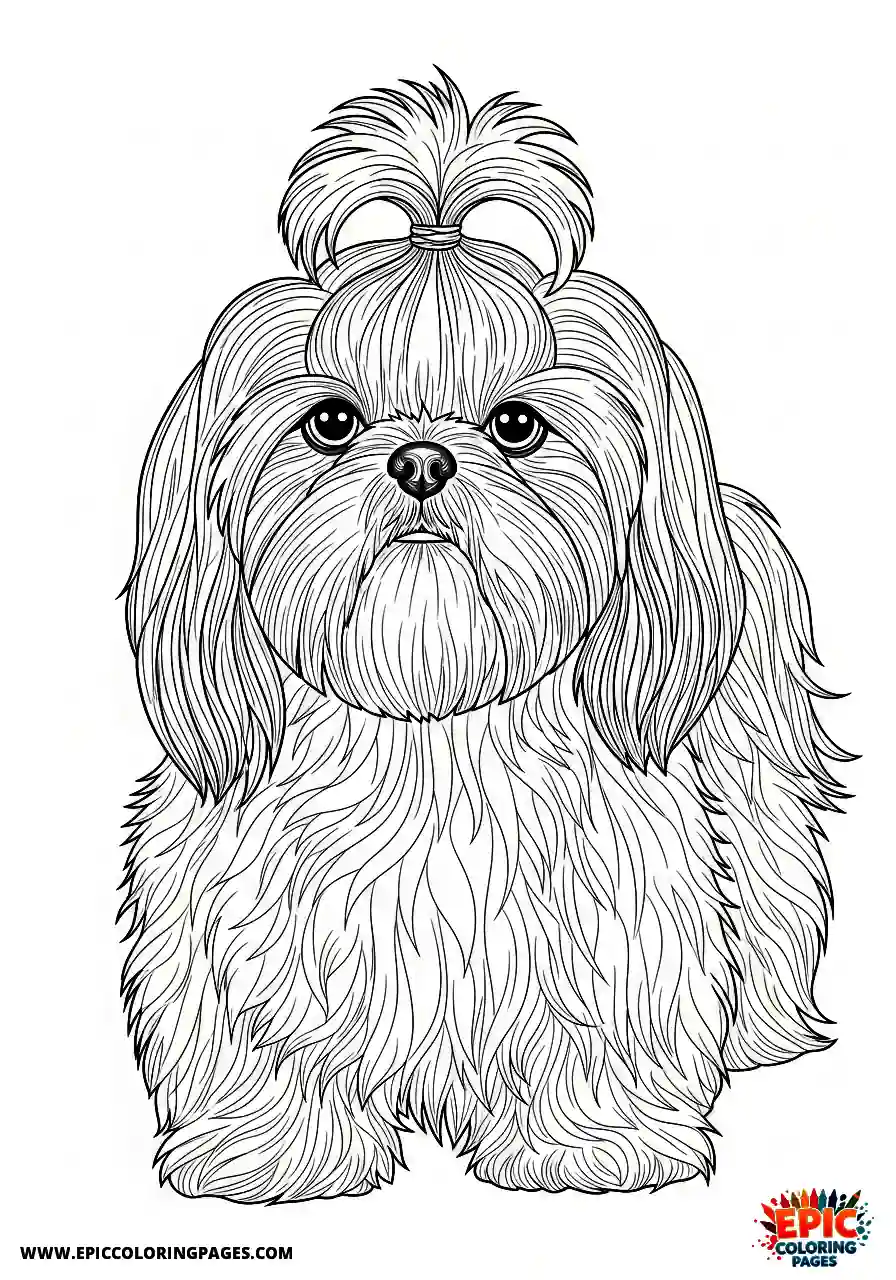
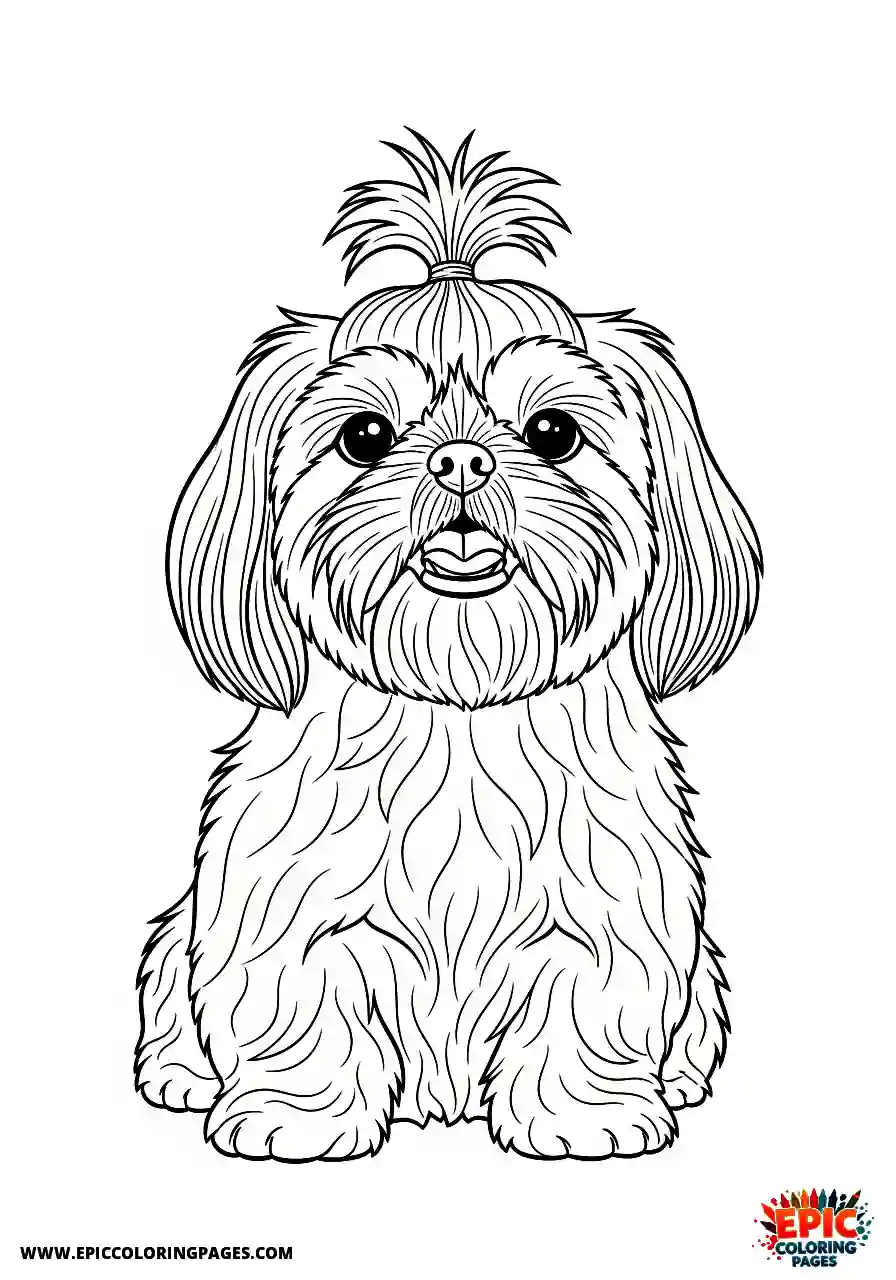
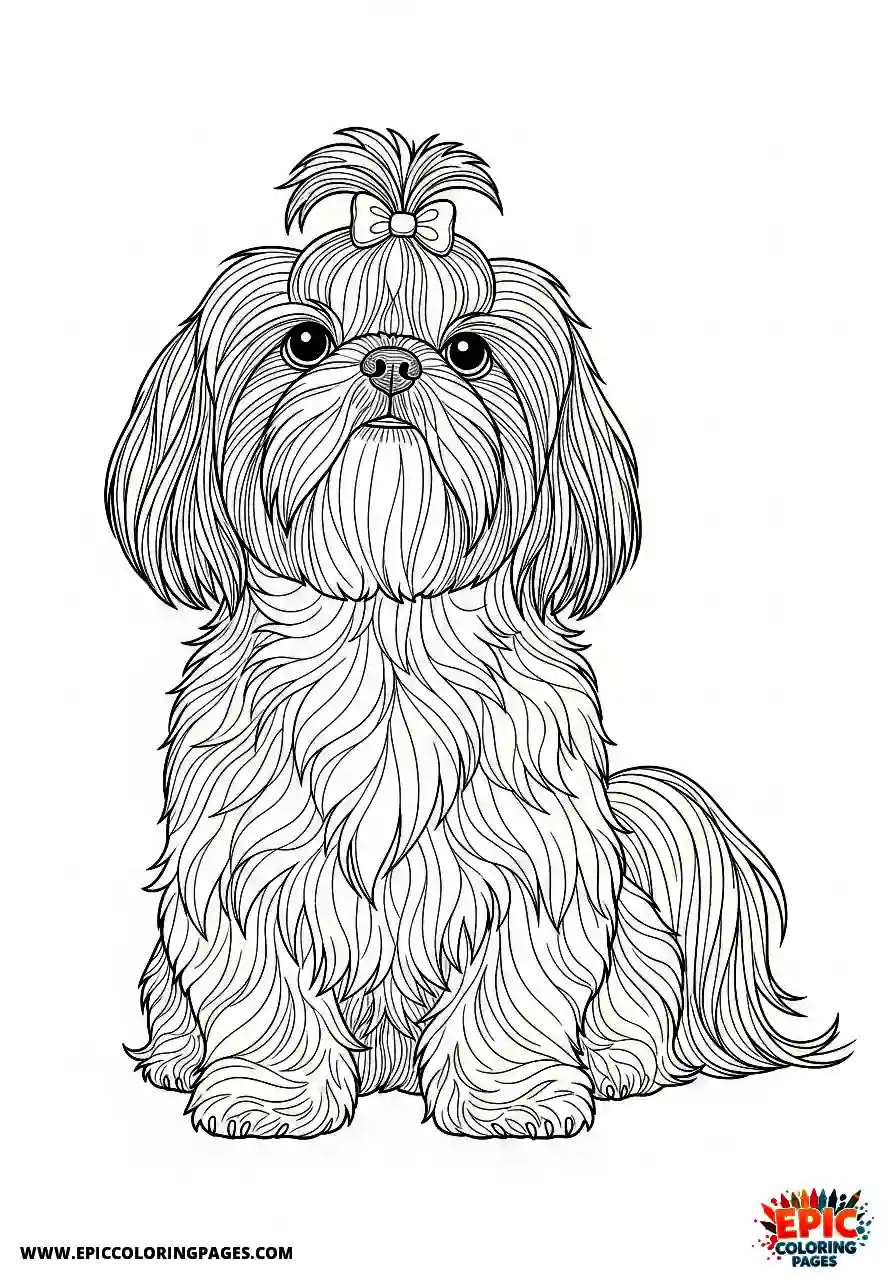
A show-groomed Shih Tzu has neat topknots and perfectly trimmed feet. The coat looks brushed and flowing.
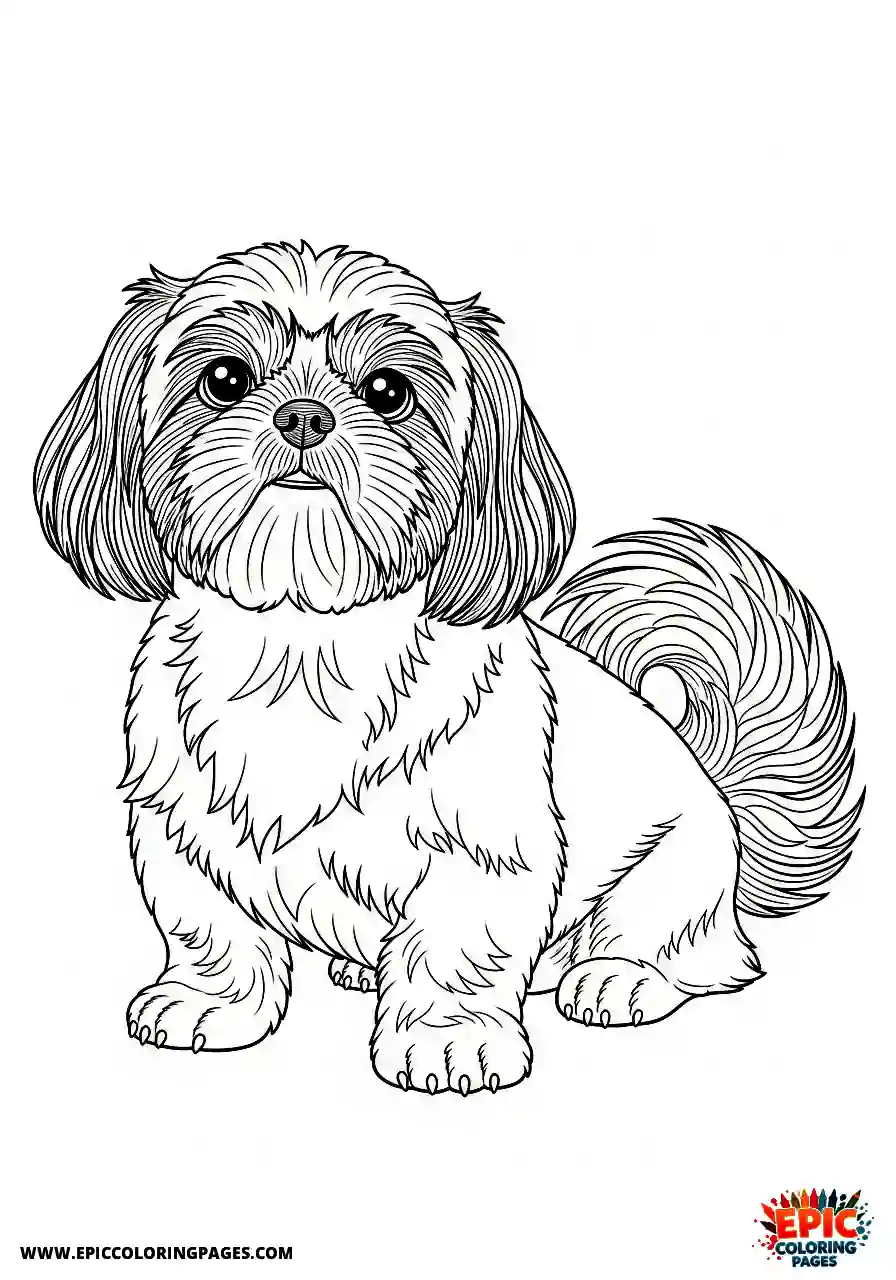
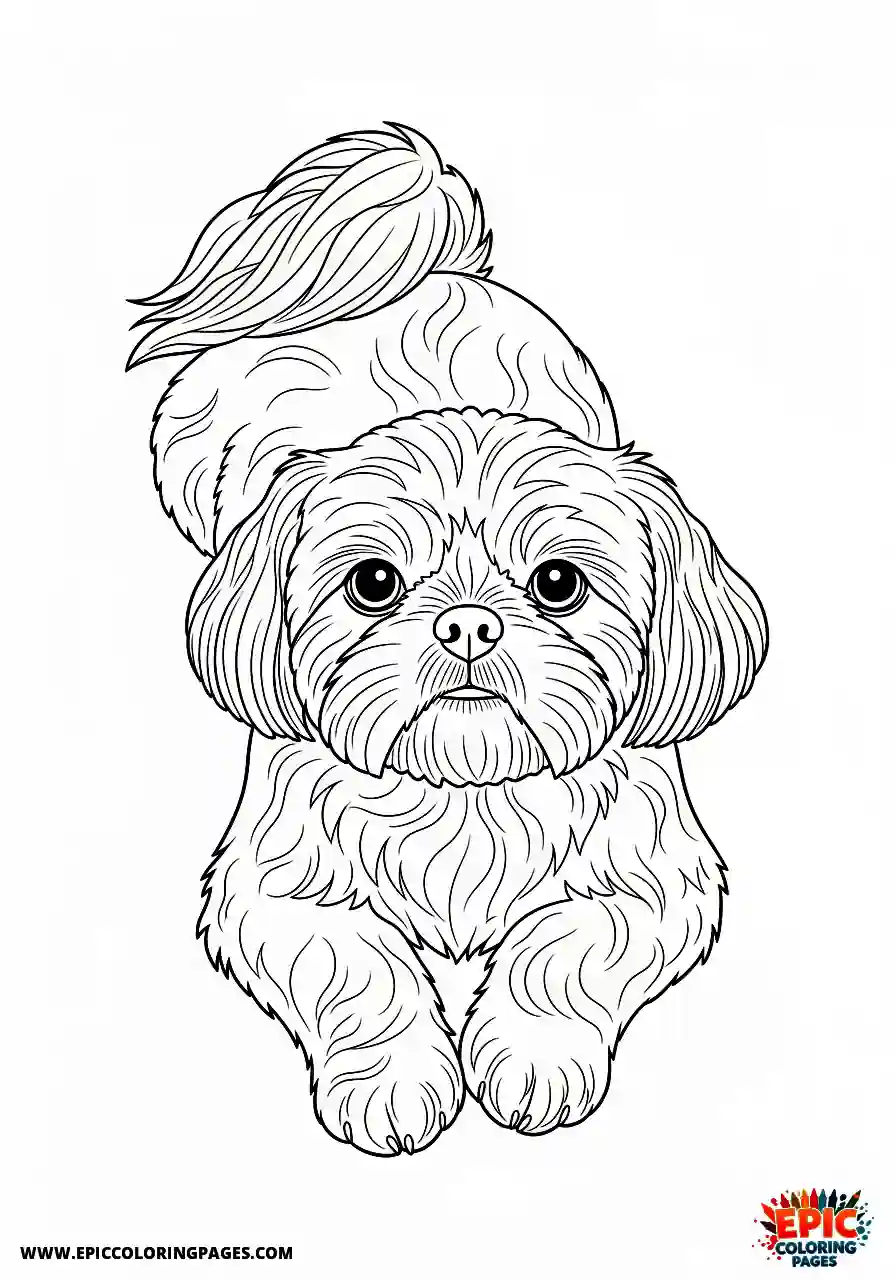
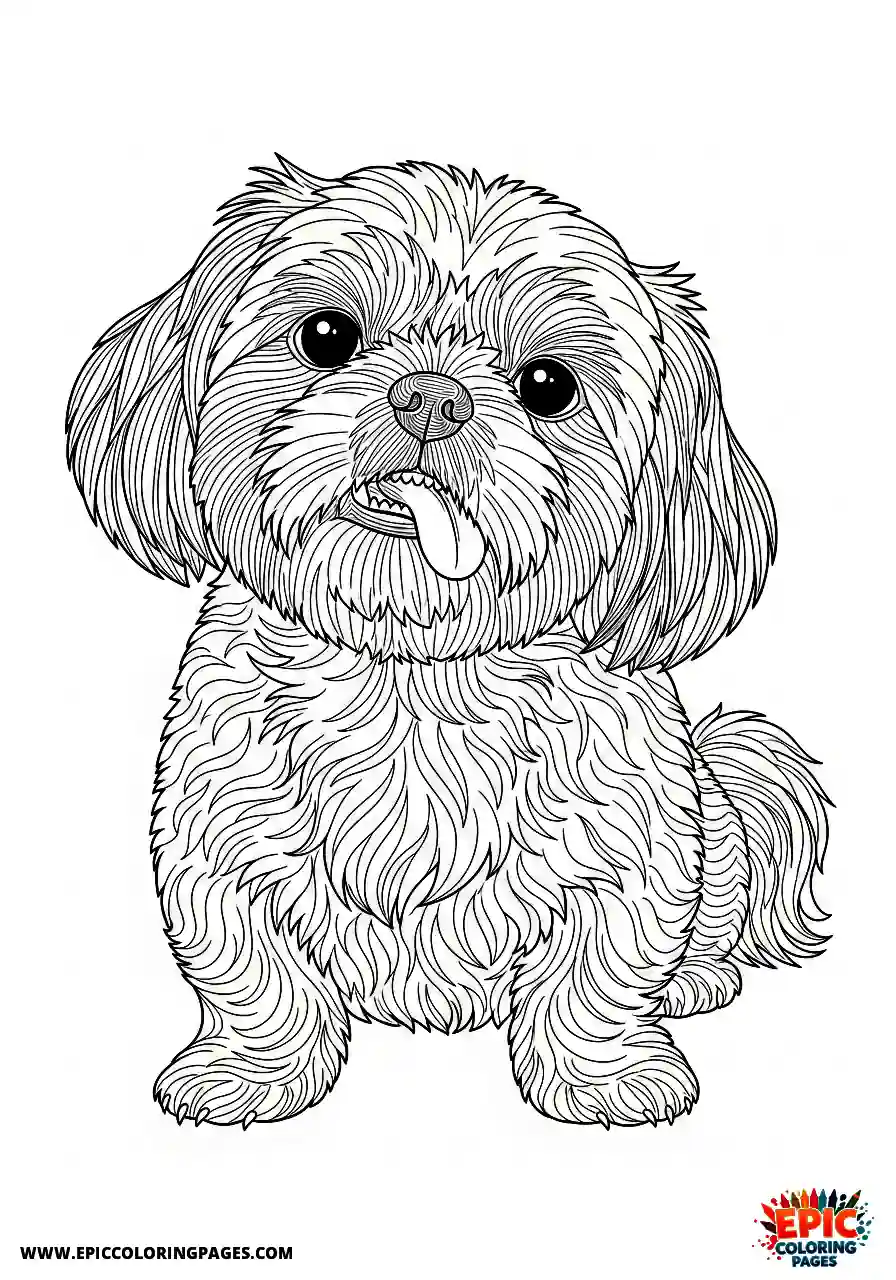
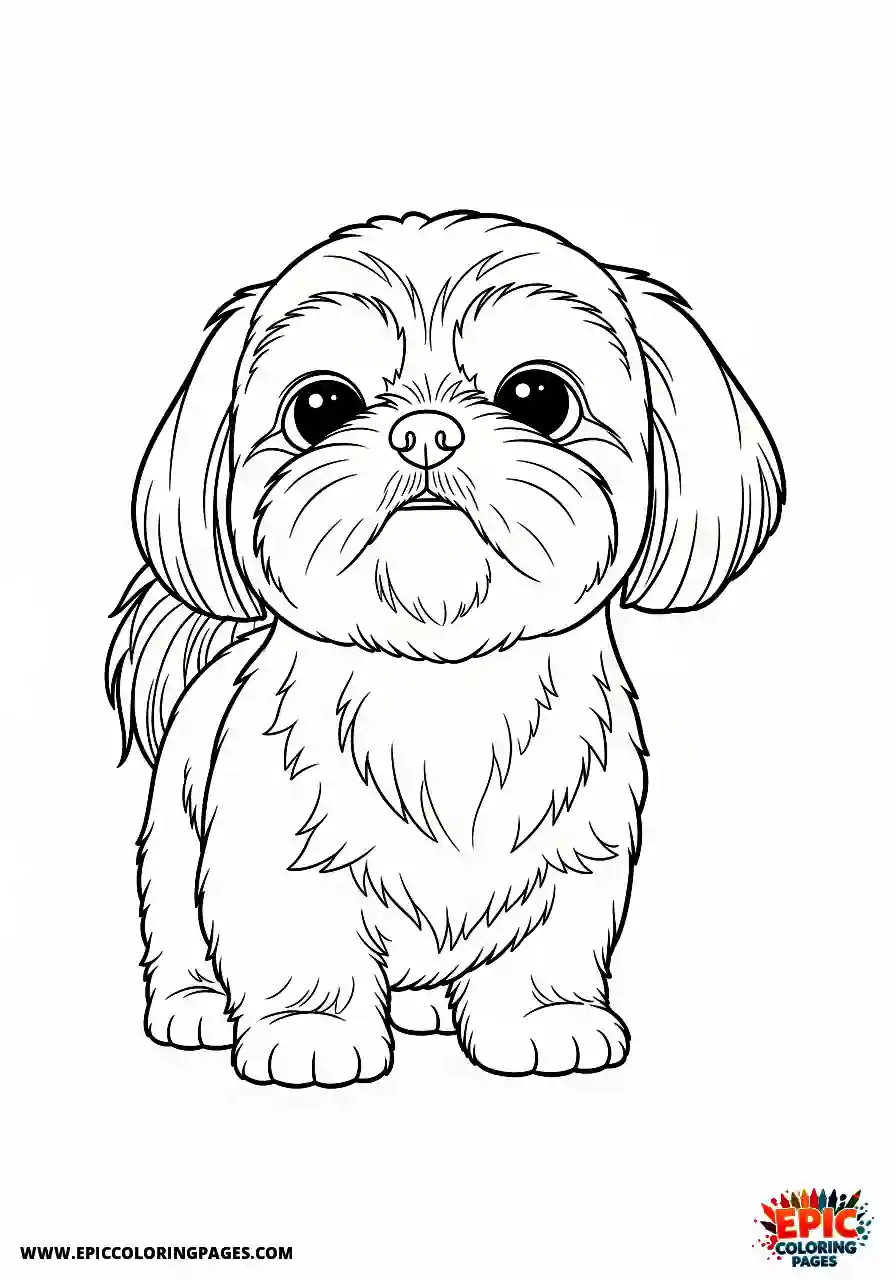
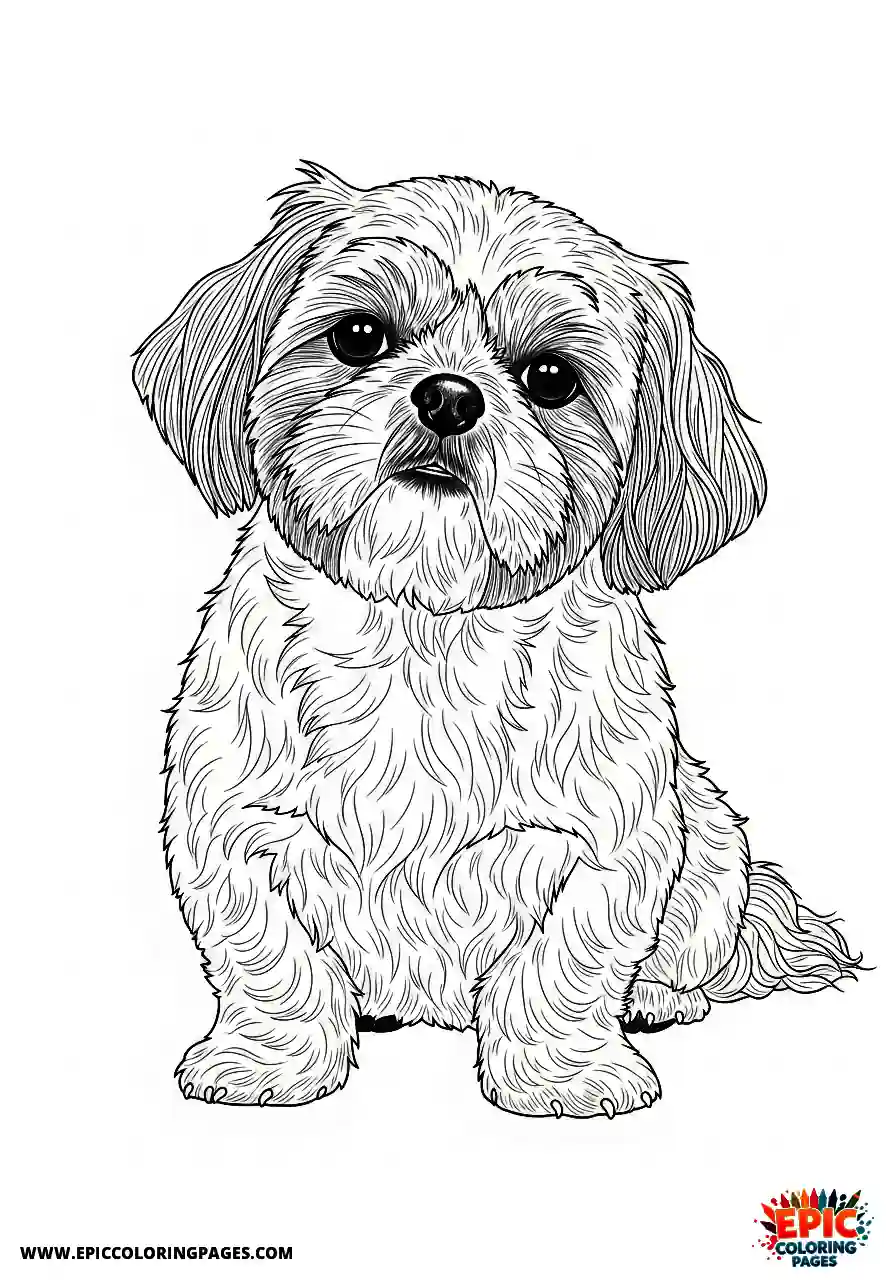
A pet cut Shih Tzu might have shorter, fluffier fur all over. Use shorter, more varied strokes for this casual look.
Both are valid choices. Pick what fits your page’s vibe.
Tools and Materials That Work Best
Colored pencils give you the most control for detailed fur work. Look for soft cores that blend well.
Markers can work for bold, graphic styles, but they’re trickier for realistic fur texture.
If you’re going digital, use brushes with texture. A soft airbrush for base colors, then a detailed fur brush for individual hairs.
Blending Methods
For pencils: overlap your strokes and vary the pressure. Or use a colorless blender pencil.
For markers: work quickly while the ink is still wet, or use a blender marker between colors.
For digital: reduce brush opacity and build up layers. Use layer modes like Multiply for shadows.
Final Touches That Matter
Step back and look at your work. Are there spots that need more contrast? Areas that look flat?
Add your darkest darks and brightest lights last. This is what makes good coloring look great.
Check that the light source is consistent. If light comes from the left, all shadows should fall to the right.
Sign your work. You put effort into this. Own it.
The best Shih Tzu coloring celebrates what makes these dogs special: their flowing coats, sweet expressions, and distinctive personalities. Your color choices bring all of that to life.