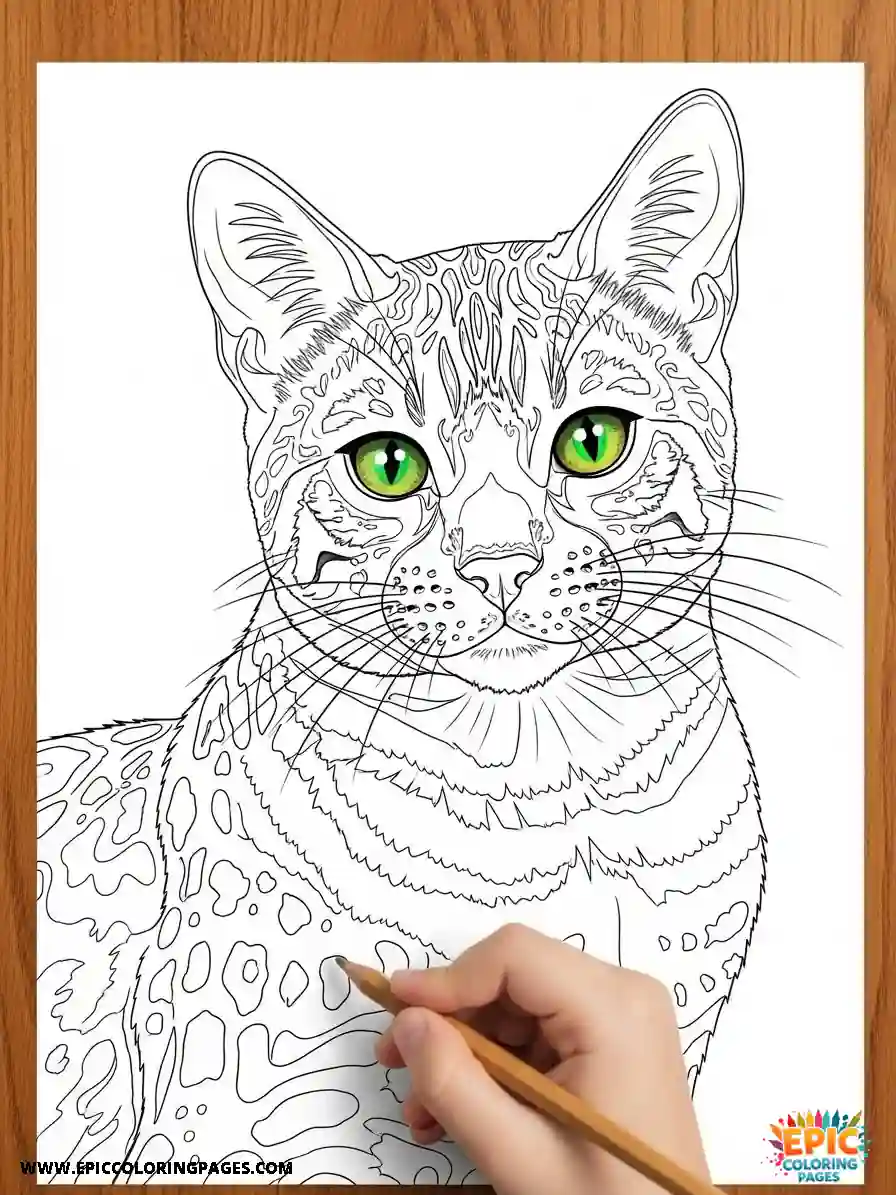
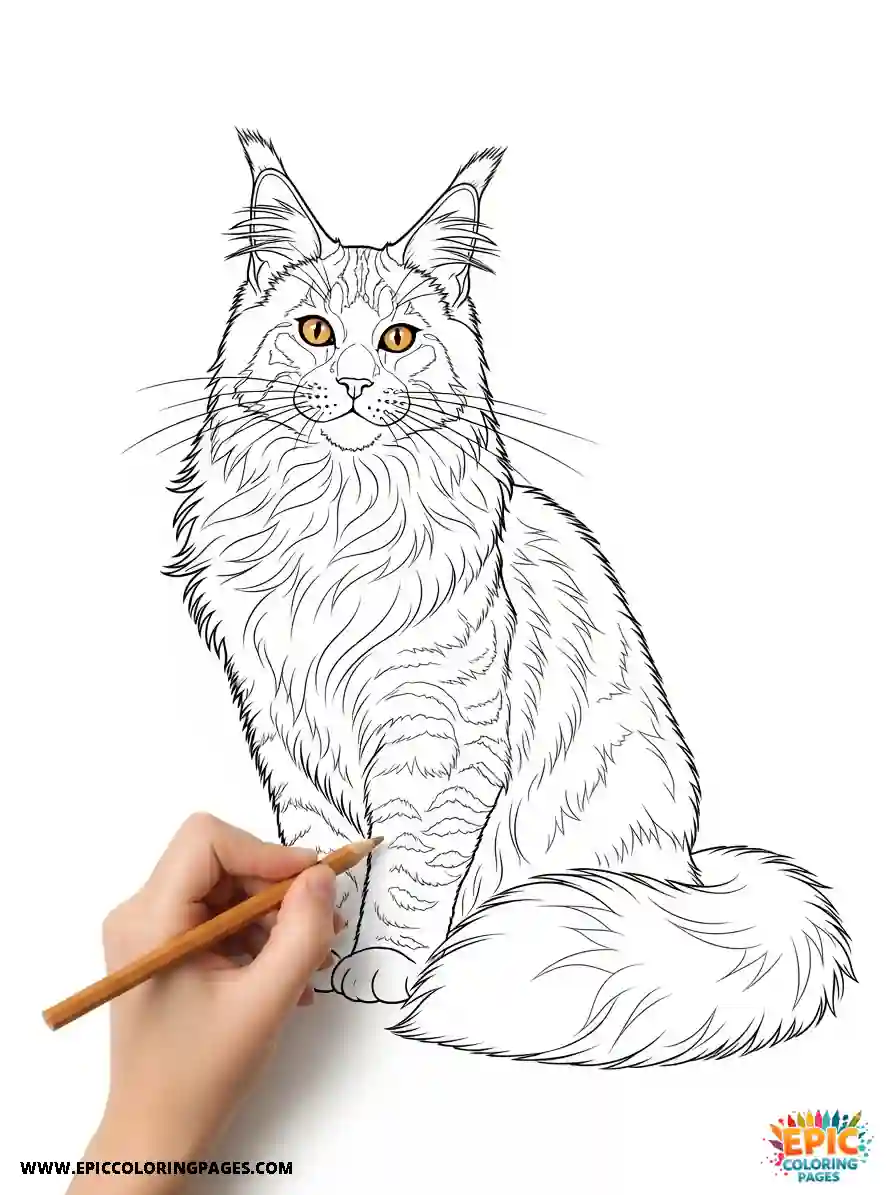
Persian Cat Coloring Pages (317+ Free Printables)
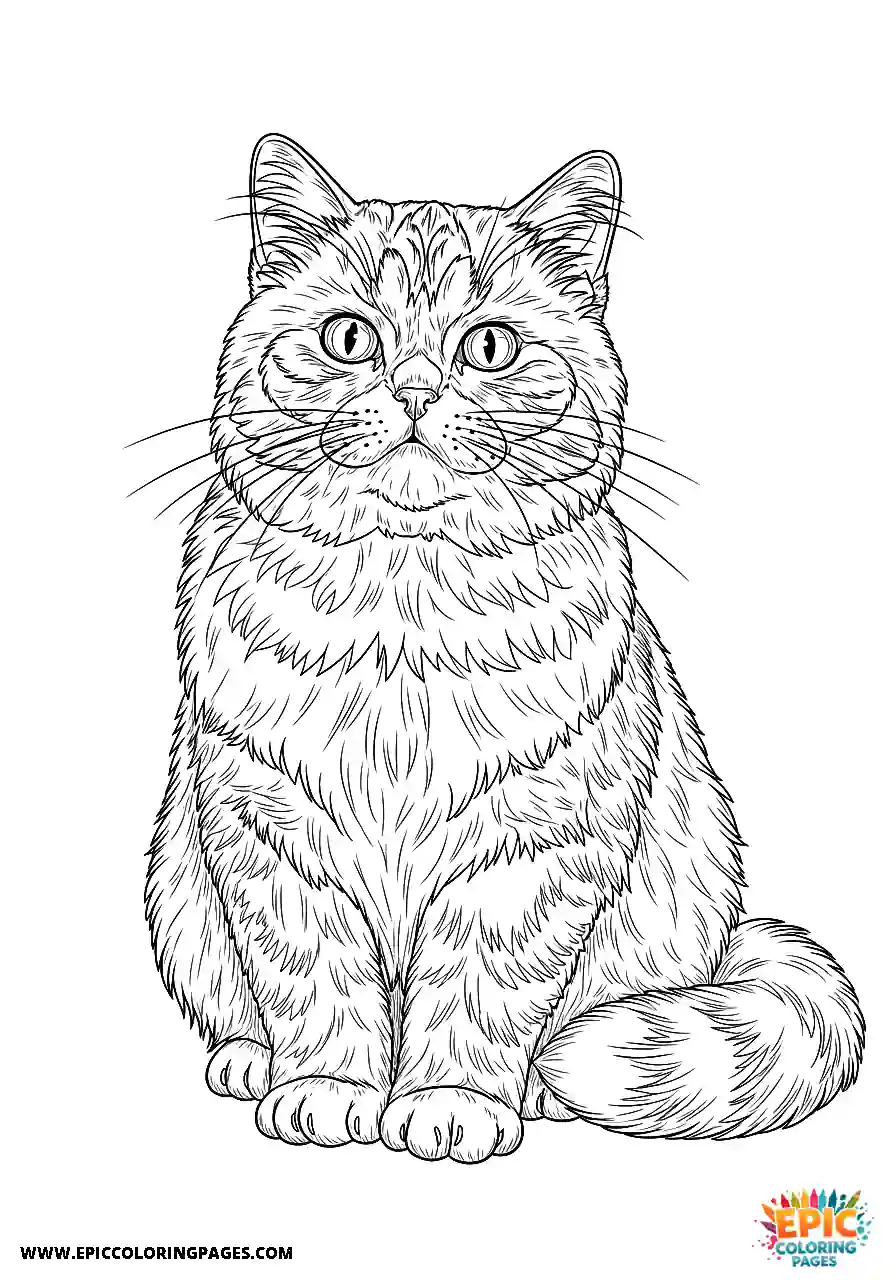
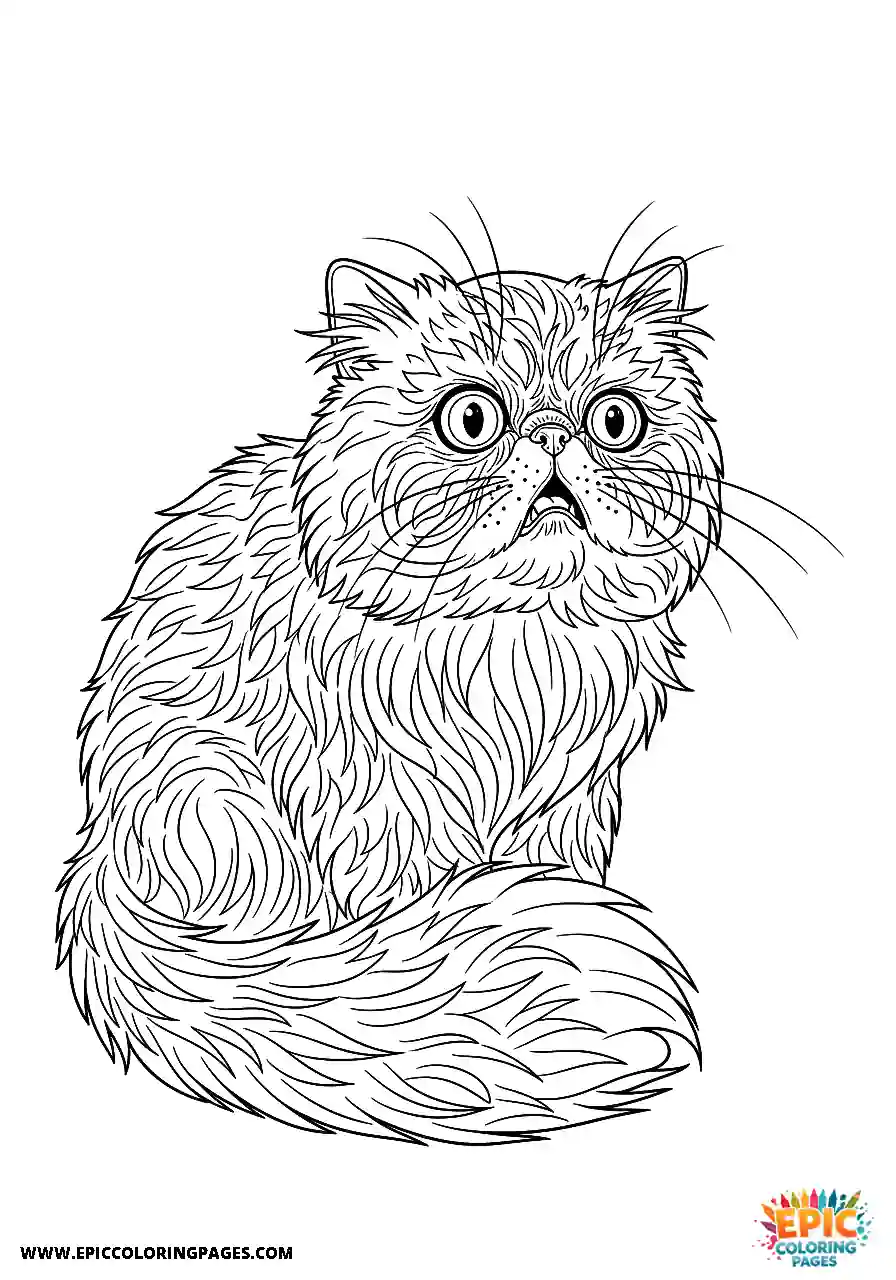
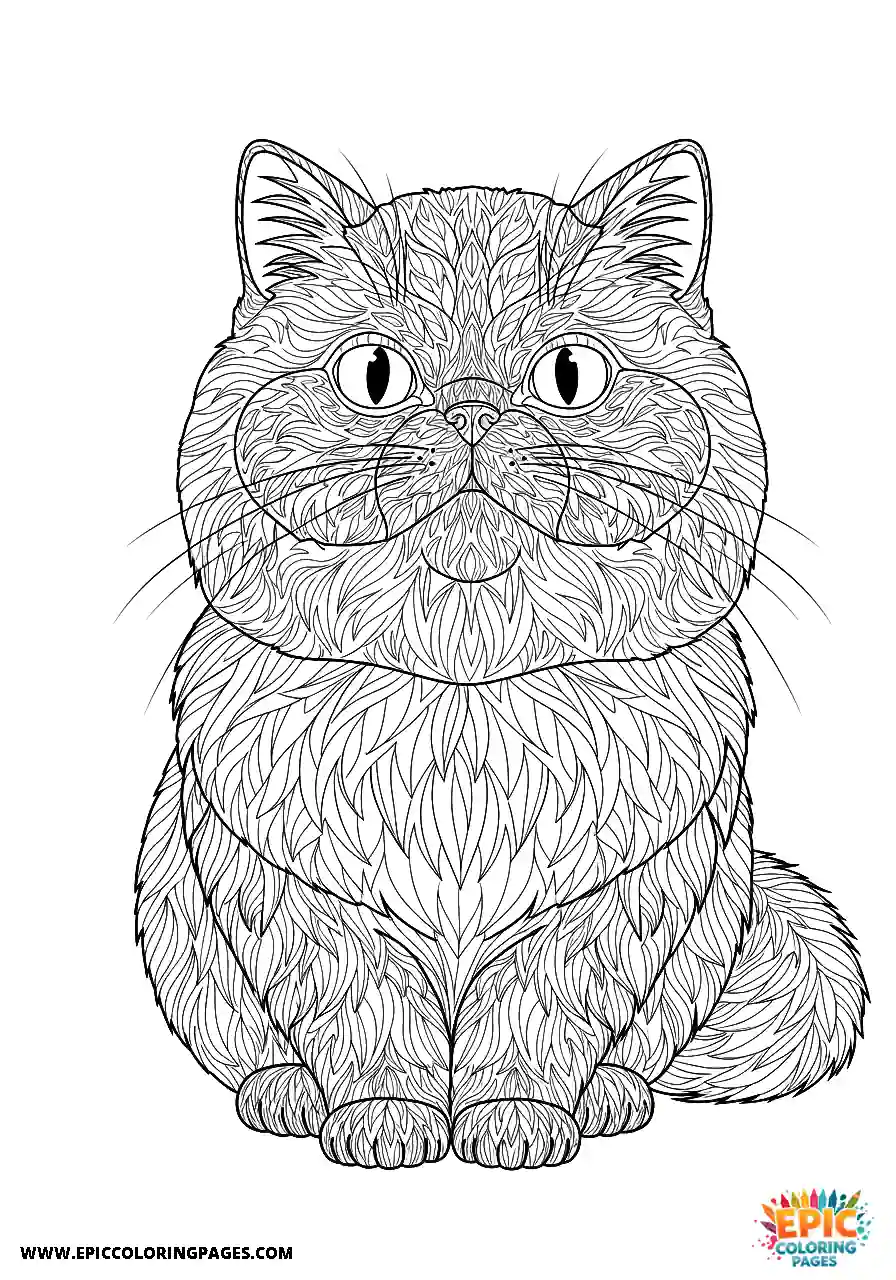
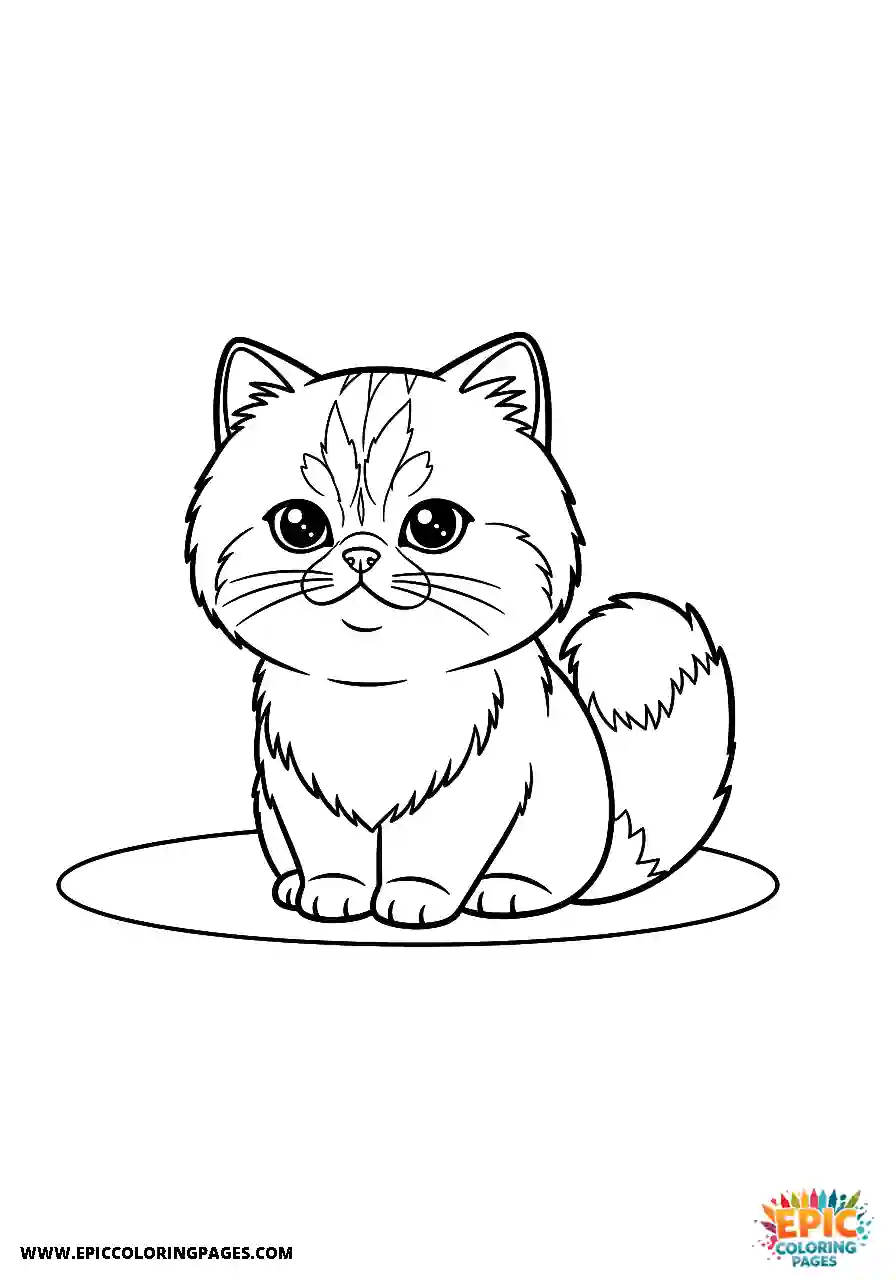
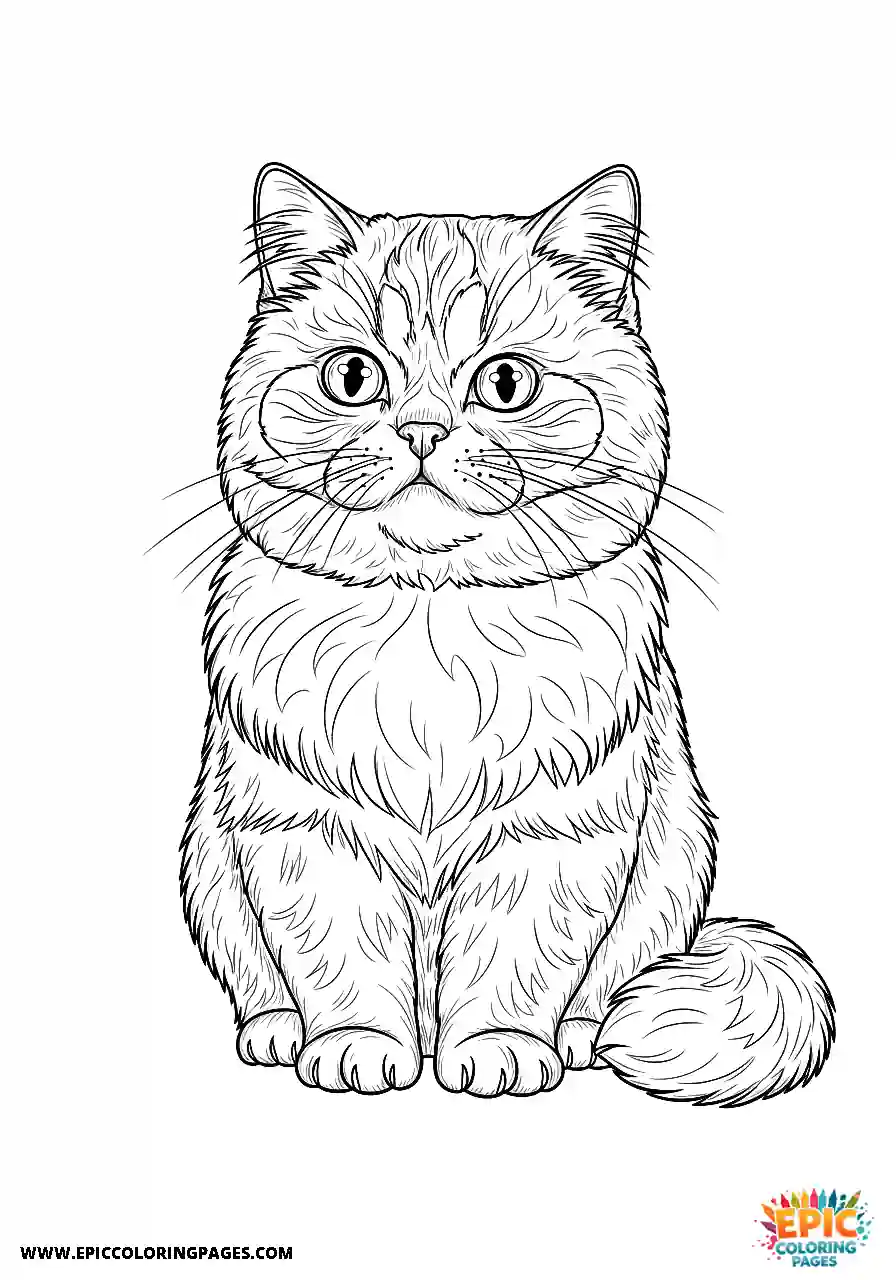
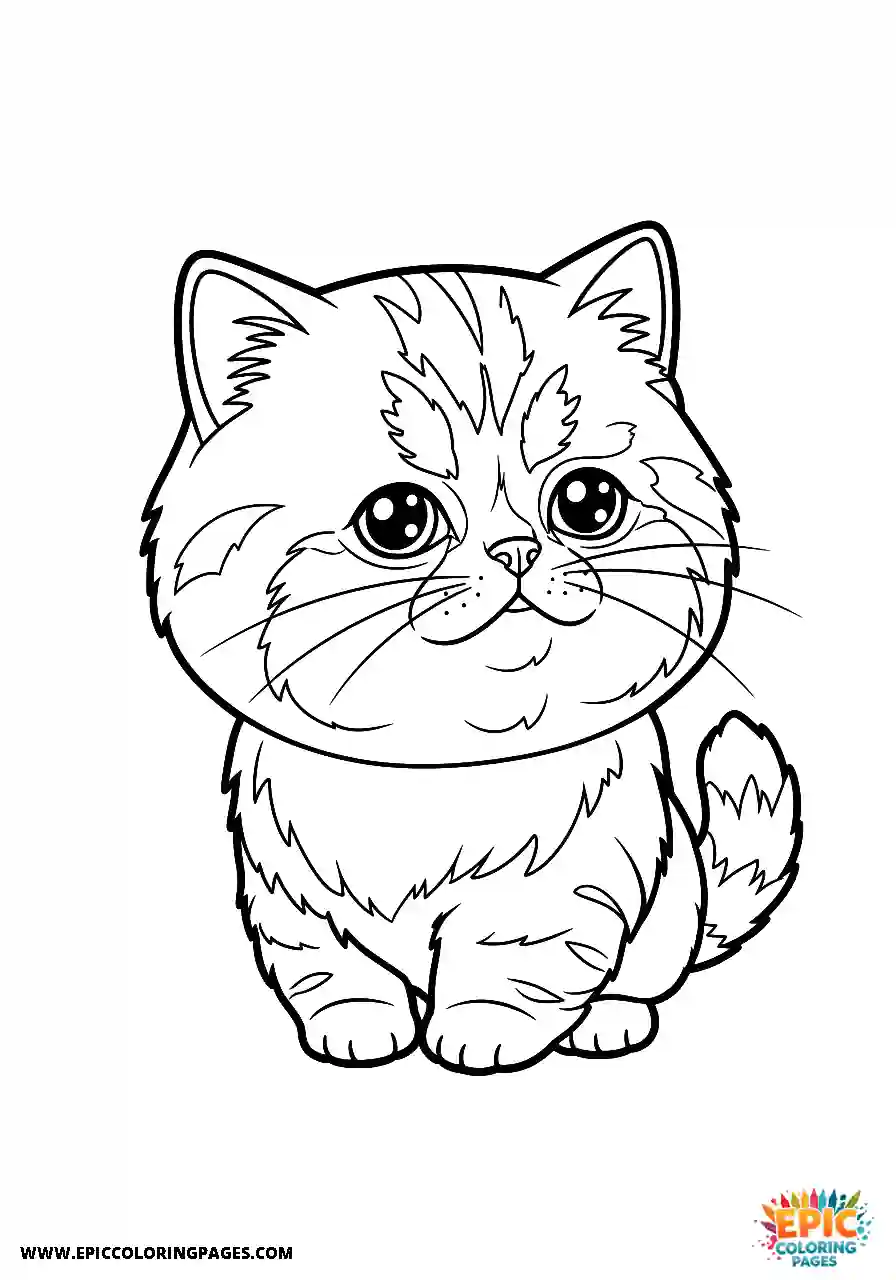
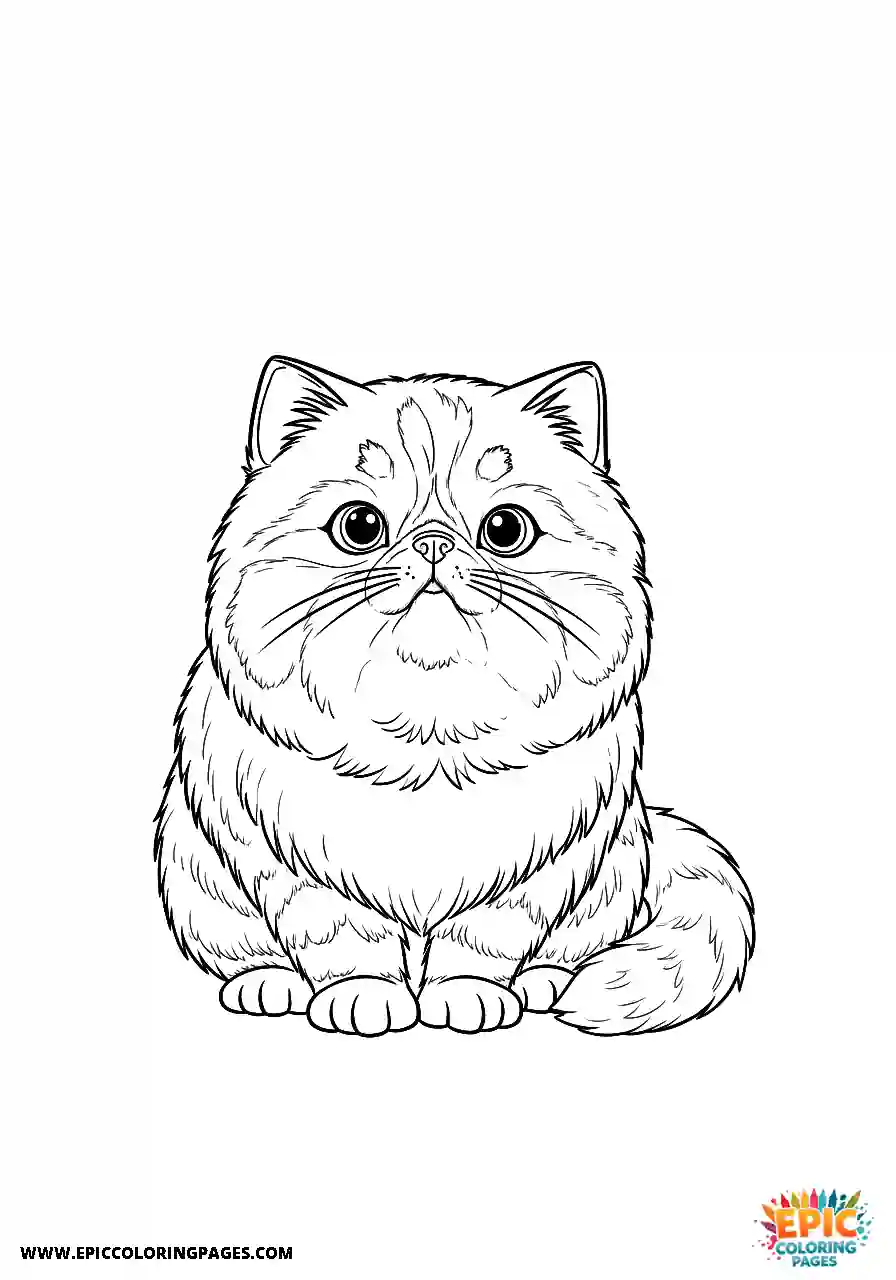
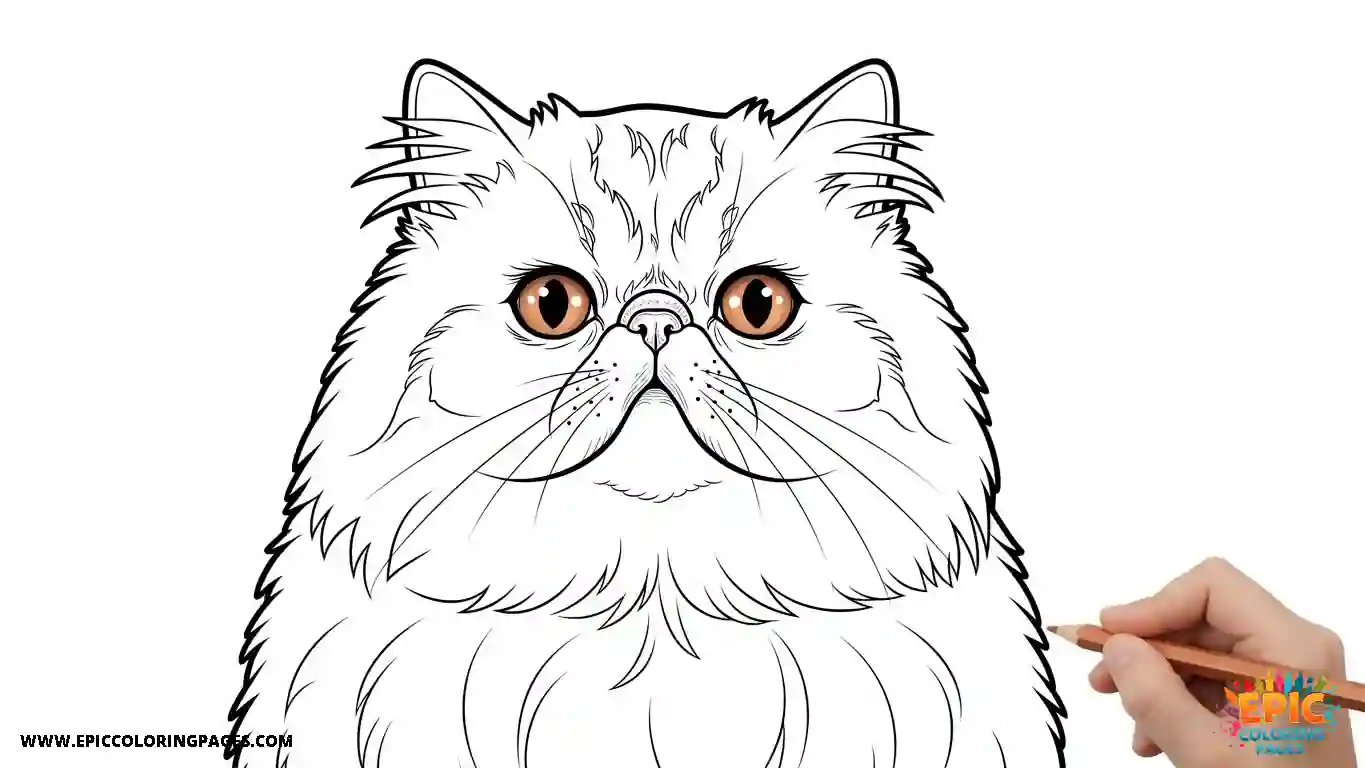
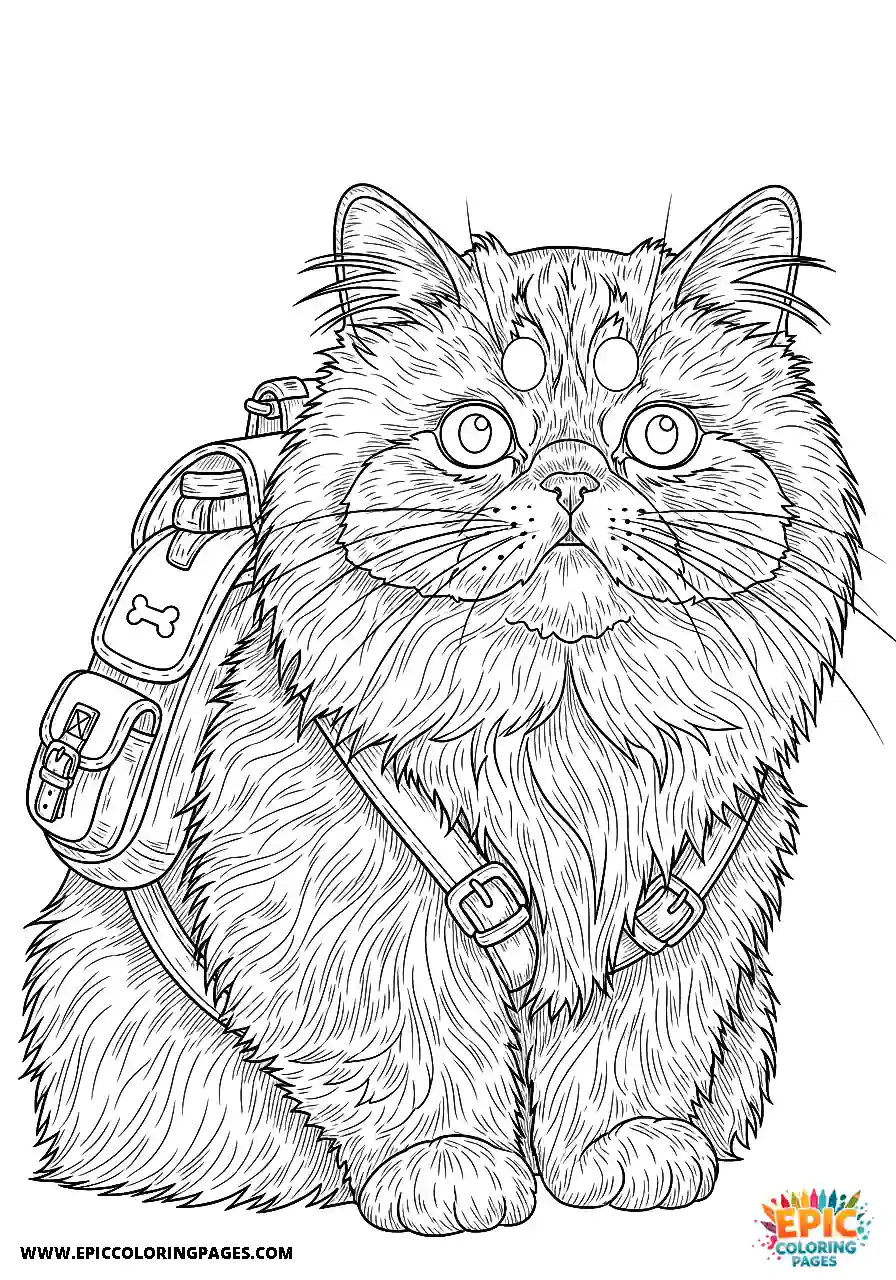
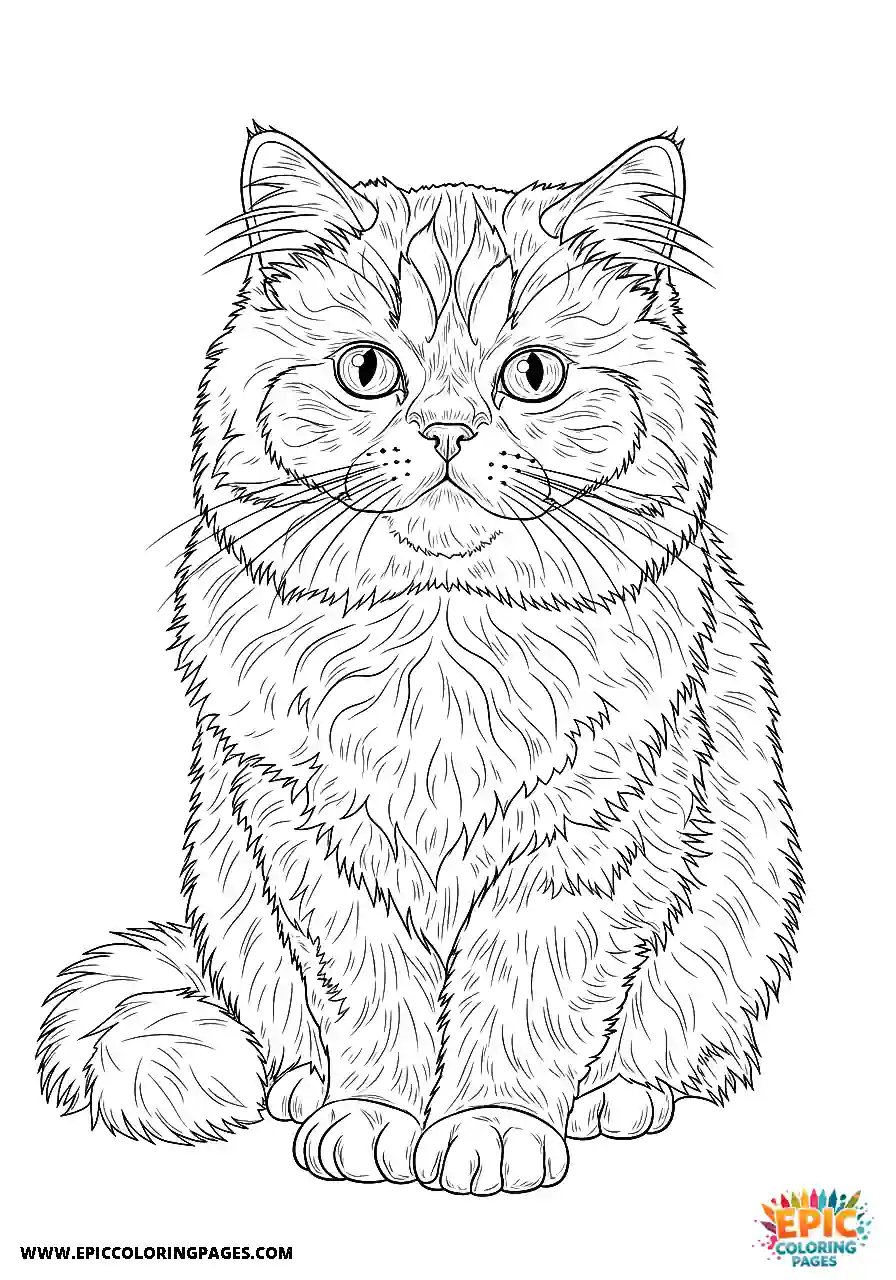
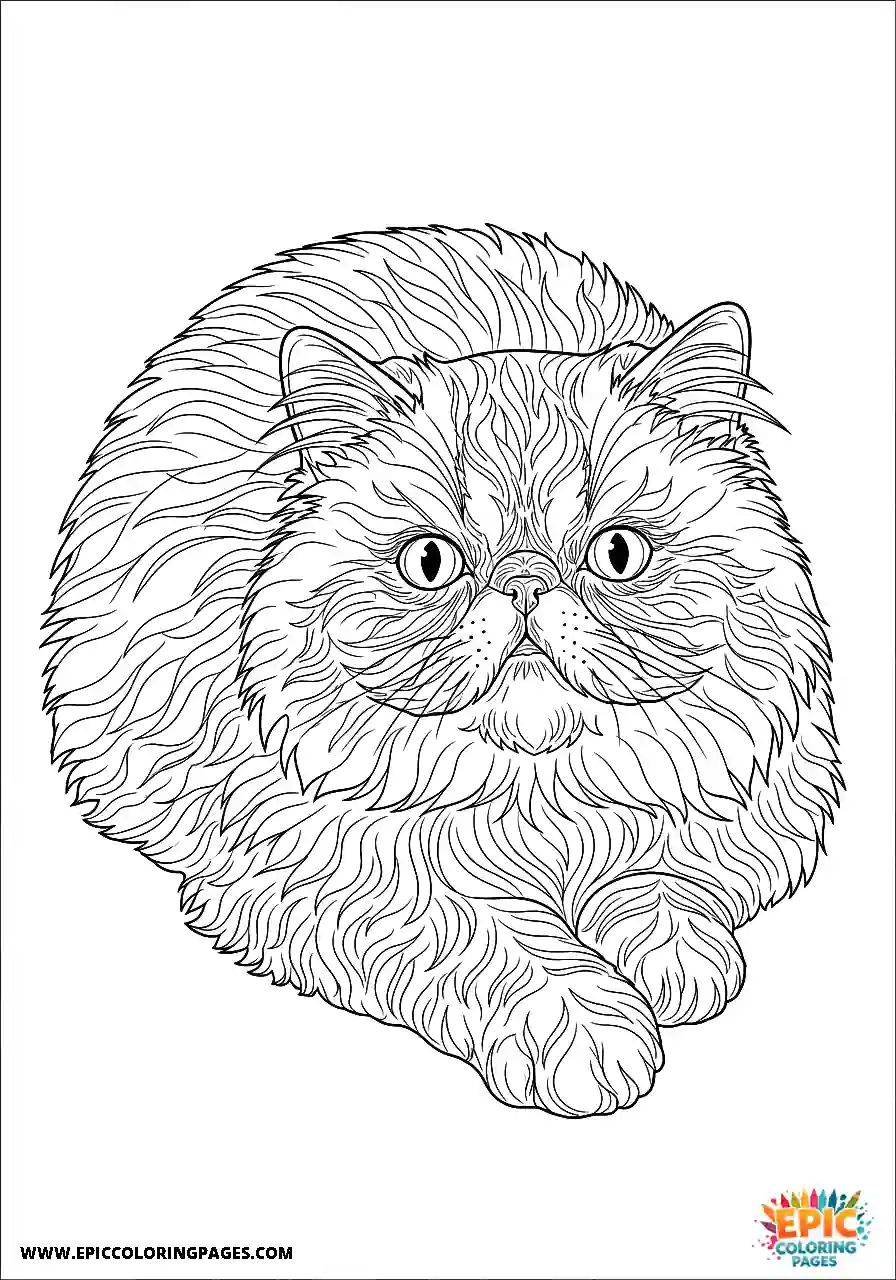
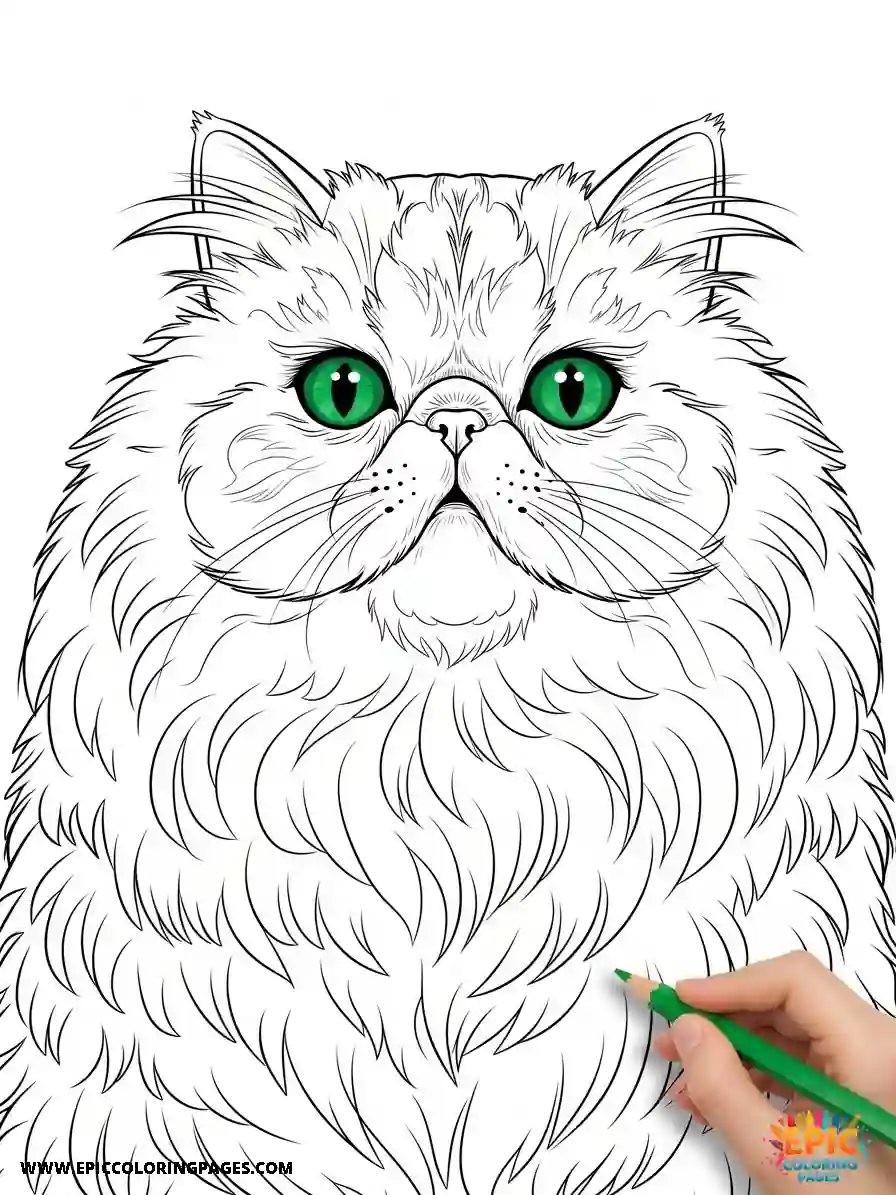
Originating from the high plateaus of Iran (formerly Persia), the Persian cat is one of the oldest and most recognizable breeds in the world. Brought to Europe in the 1600s by Pietro della Valle, these longhaired felines became status symbols of royalty, favored by Queen Victoria for their luxurious coats and regal demeanor. This collection of Persian Cat coloring pages captures the elegance of the “Peke-faced” and “Doll-faced” varieties, offering intricate studies of their flowing fur and expressive, round eyes.
Physically, the Persian is defined by its massive head, short muzzle (brachycephalic), and a dense double coat that can reach up to 8 inches in length. These illustrations challenge colorists to master the texture of long hair, requiring patient layering to create depth in the ruff (neck mane) and the plume-like tail. Whether you are coloring a pristine White Persian or a complex Tortoiseshell, these designs celebrate the breed’s status as the glamour puss of the cat fancy.

๐จ Free Interactive Editor - Customize Your Coloring Pages
Click on any image to open our FREE editor and add personalized text, emojis, zoom in for details, and save in professional 300 DPI quality!
Add Text
11+ fonts
Emojis
500+ items
Zoom
Precision
Save
300 DPI
Click any coloring page to start customizing!
Coloring the "Glamour Puss"
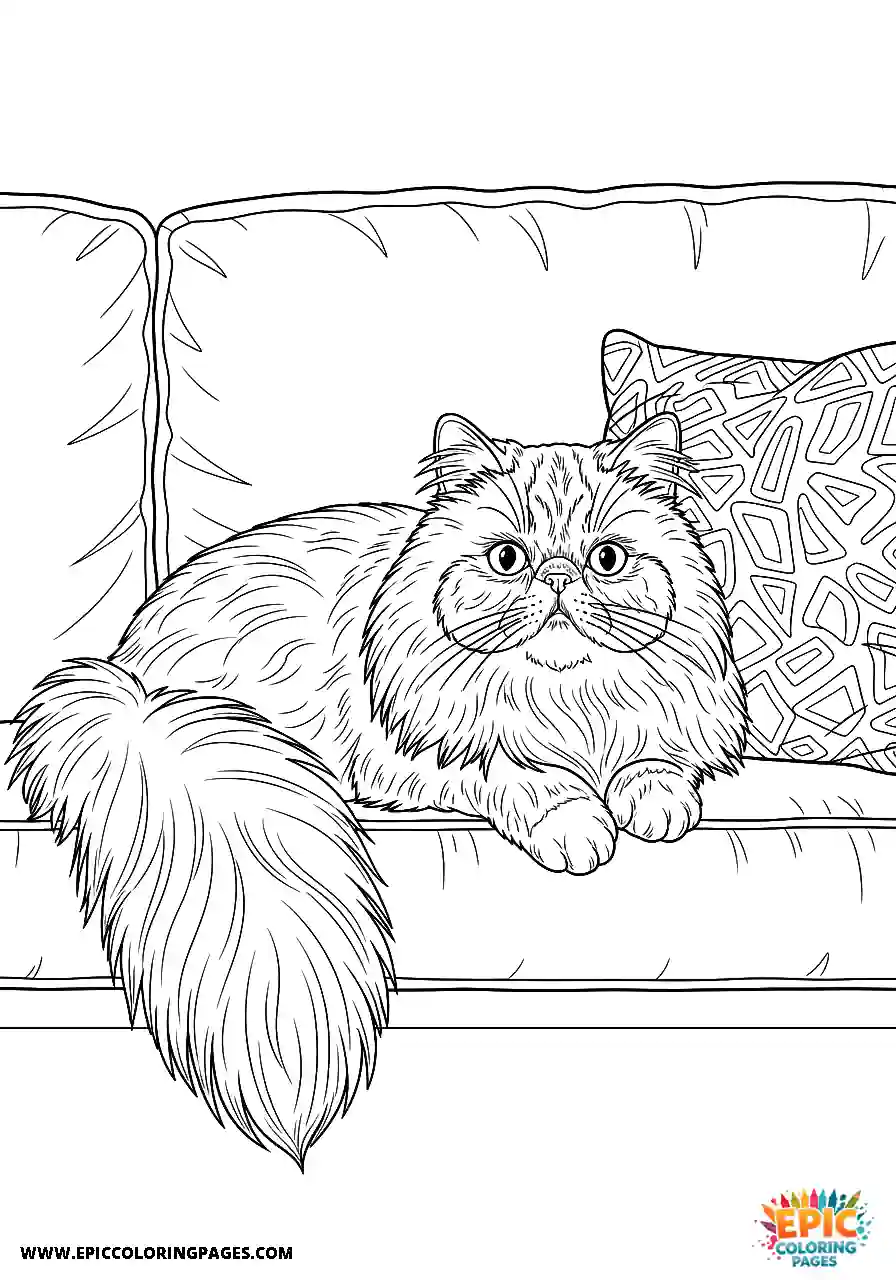
This gallery is designed to help you practice rendering volume and softness. You will find pages that emphasize the deep ruff around the neck and the short, cobby body hidden beneath the fur. Whether you want to color a detailed portrait focusing on their large, copper-colored eyes or a whimsical scene of a Persian resting on a velvet cushion, these designs reflect the breed’s calm and sedentary lifestyle.
Adorable Persian Cat Coloring Sheets
More Cat Coloring Adventures
If you enjoyed these Persian cat illustrations, your artistic journey doesn’t have to end here. We have a vast universe of feline friends waiting for you to add a splash of color to their lives. From playful kittens to other majestic breeds, our library is constantly growing.
Explore our massive collection and keep the creativity flowing. Check out our full page of Cat Coloring Sheets.
Professional Coloring Tips for Persian Cat Pages
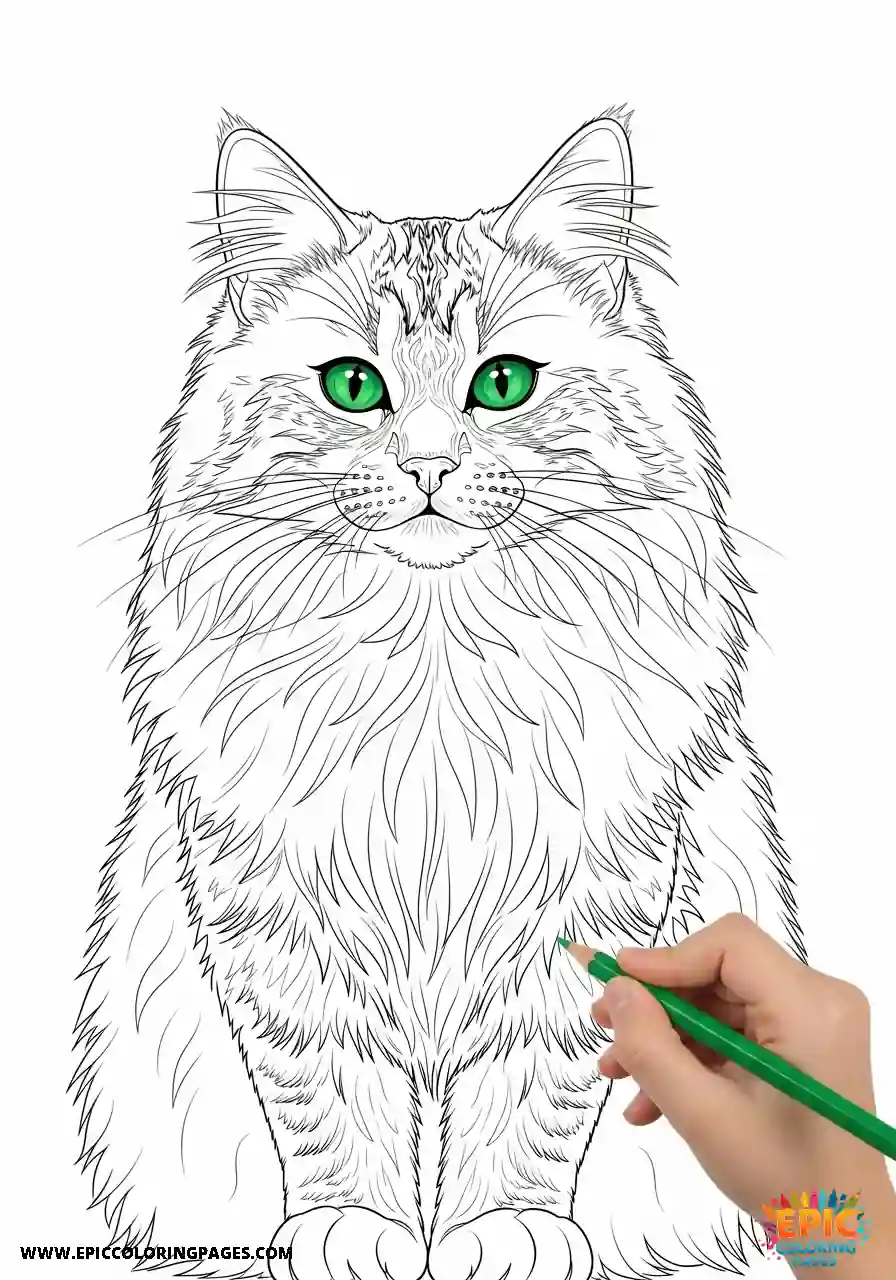
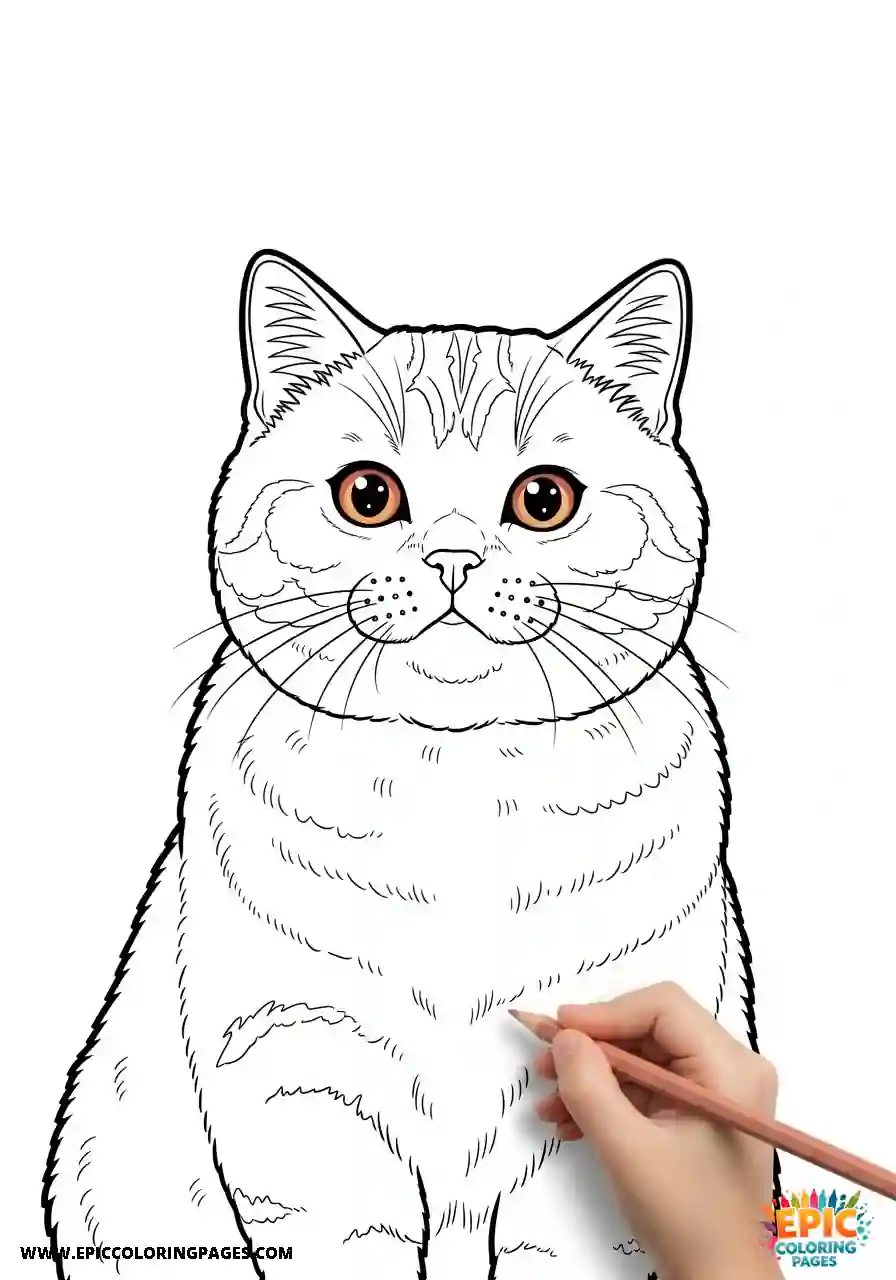
Persian cats have captivated artists and cat lovers for centuries with their luxurious coats, expressive faces, and regal bearing. Whether you’re new to coloring or an experienced artist, bringing these magnificent felines to life on paper offers unique creative opportunities and challenges.
Understanding Persian Cat Features
Before you begin coloring, take a moment to observe what makes Persian cats distinctive. Their most striking feature is their long, flowing coat that can reach up to six inches in length. This fur doesn’t lie flat it has volume, texture, and movement that catches light in beautiful ways. Their faces are characterized by a flat profile, large round eyes set wide apart, and small ears that sit low on the head. Understanding these anatomical details will help you make informed decisions about shading, color placement, and emphasis.
Choosing Your Color Palette
Persian cats come in an astonishing variety of colors and patterns. The traditional “white Persian” that many people envision is just one of over 80 recognized color variations. You might color a solid cat in cream, blue-gray, black, or red. Bi-color Persians combine white with another color in distinctive patterns. Tabby Persians feature stripes, swirls, or spots. Himalayan-patterned Persians have darker points on their ears, face, paws, and tail.
For beginners, starting with a monochromatic or limited palette helps you focus on value and shading rather than juggling multiple hues. Try using three to five shades of the same color family perhaps light cream, medium beige, warm tan, soft brown, and deep chocolate for a cream Persian.
Advanced colorists might explore more complex approaches. Consider a split-complementary scheme for a calico Persian, or use analogous colors to create subtle variations in a solid-colored cat’s coat. Remember that even “solid” colored cats have tonal variations where light hits the fur differently.
Creating Realistic Fur Texture
The Persian’s coat is perhaps the most rewarding and challenging aspect to color. Real Persian fur has depth it’s not a flat surface but layers of hair that create shadows and highlights throughout.
Start by establishing your light source. Decide where light is coming from in your image, as this determines where highlights and shadows fall. For a natural look, imagine sunlight from a window or soft indoor lighting from above and slightly to one side.
Layer your colors gradually rather than pressing hard immediately. With colored pencils, use light pressure and build up pigment slowly. This gives you control and allows you to create subtle gradations. Apply your lightest color first across the entire fur area, then add medium tones in shadowed regions, and finally deepen the darkest areas.
The direction of your strokes matters enormously. Follow the natural direction of fur growth outward from the face, down the body, and flowing along the tail. Varying your stroke length creates more realistic texture. Mix short, quick strokes with longer, flowing ones. The fur around a Persian’s face is shorter and denser, while the ruff (the full fur around the neck and chest) and tail fur flows in longer sections.
For markers, which are less forgiving than pencils, work in small sections and blend while the ink is still slightly wet. Use the lighter color first, then add the darker shade and blend where they meet using small circular motions or light flicking strokes that mimic fur.
Eyes That Come Alive
Persian cats are famous for their large, expressive eyes, typically in shades of copper, blue, green, or odd-eyed (one of each color). The eyes often become the focal point of your coloring page, so give them special attention.
Eyes are spherical, not flat circles. This means they need highlights and shadows to appear three-dimensional. Leave a small area white or very light for the highlight this is light reflecting off the wet surface of the eye. Position this highlight consistently with your light source. The top of the iris is often slightly darker because the eyelid casts a subtle shadow.
The iris itself isn’t a single solid color. Real cat eyes have radiating lines from the pupil outward, color variations throughout, and often a ring of different color around the pupil. Build these details with fine strokes radiating outward. The bottom of the iris can be slightly lighter where light passes through from below.
Don’t forget the pupil in normal indoor lighting, a cat’s pupils are typically vertical slits, though they can be round in dim light. Color the pupil the darkest black available to create maximum contrast with the iris.
Working With Different Mediums
Colored pencils offer the most control for detailed work. They excel at creating fine fur texture and allow easy layering and blending. Use a light touch and work in layers. Burnishing (pressing hard to blend colors together into a smooth surface) works beautifully for the eyes and nose but can flatten the fur texture, so use this technique selectively.
Markers create vibrant, saturated colors quickly but require confidence since they’re harder to correct. Alcohol-based markers blend more smoothly than water-based ones. Work quickly to blend colors before they dry, and use the lighter color to pull the darker color into areas where they should merge.
Gel pens can add finishing touches white gel pen highlights in the eyes, on the nose, and along the edges of fur where light catches it. These small details elevate the entire piece.
Watercolors or watercolor pencils create soft, flowing effects perfect for Persian cats’ gentle appearance. Work wet-on-dry for controlled areas or wet-on-wet for soft blending in the fur. Let layers dry completely between applications to build depth without muddying colors.
Adding Depth Through Shading
Shading transforms a flat outline into a three-dimensional subject. Identify the areas that would naturally fall into shadow: under the chin, beneath the body, in the folds of the ruff, under the tail, and on the side of the body away from your light source.
The space where the cat meets the surface it’s sitting on needs the darkest shadow this grounds the figure and makes it appear to have weight. This shadow is called a cast shadow, and it’s typically quite dark and defined near the cat, becoming lighter and softer as it extends outward.
Core shadows appear on the cat itself where light doesn’t reach directly. These are softer and more graduated than cast shadows. On a white or light-colored Persian, use very light gray or blue-gray for shadows rather than black, which can look harsh and dirty. For darker colored cats, deepen the existing color rather than adding black.
Background Considerations
While your focus is the Persian cat, don’t overlook the background. Even simple backgrounds can enhance your subject. A subtle gradient from light to dark draws attention to the cat without competing with it. If the cat is light colored, a slightly darker background makes it pop; conversely, a darker cat looks striking against a lighter background.
For more elaborate scenes, consider settings that suit a Persian cat’s personality perhaps lounging on a cushion, sitting on a window sill with curtains, or amid Persian-style decorative elements. Keep background details less saturated and less detailed than the cat itself so the cat remains the clear focal point.
Common Challenges and Solutions
White or very light-colored Persians can seem intimidating because you might think white shouldn’t be shaded. In reality, white cats show beautiful subtle colors in their shadows hints of blue, purple, or warm gray depending on the lighting. These shadows define the form and bring the cat to life.
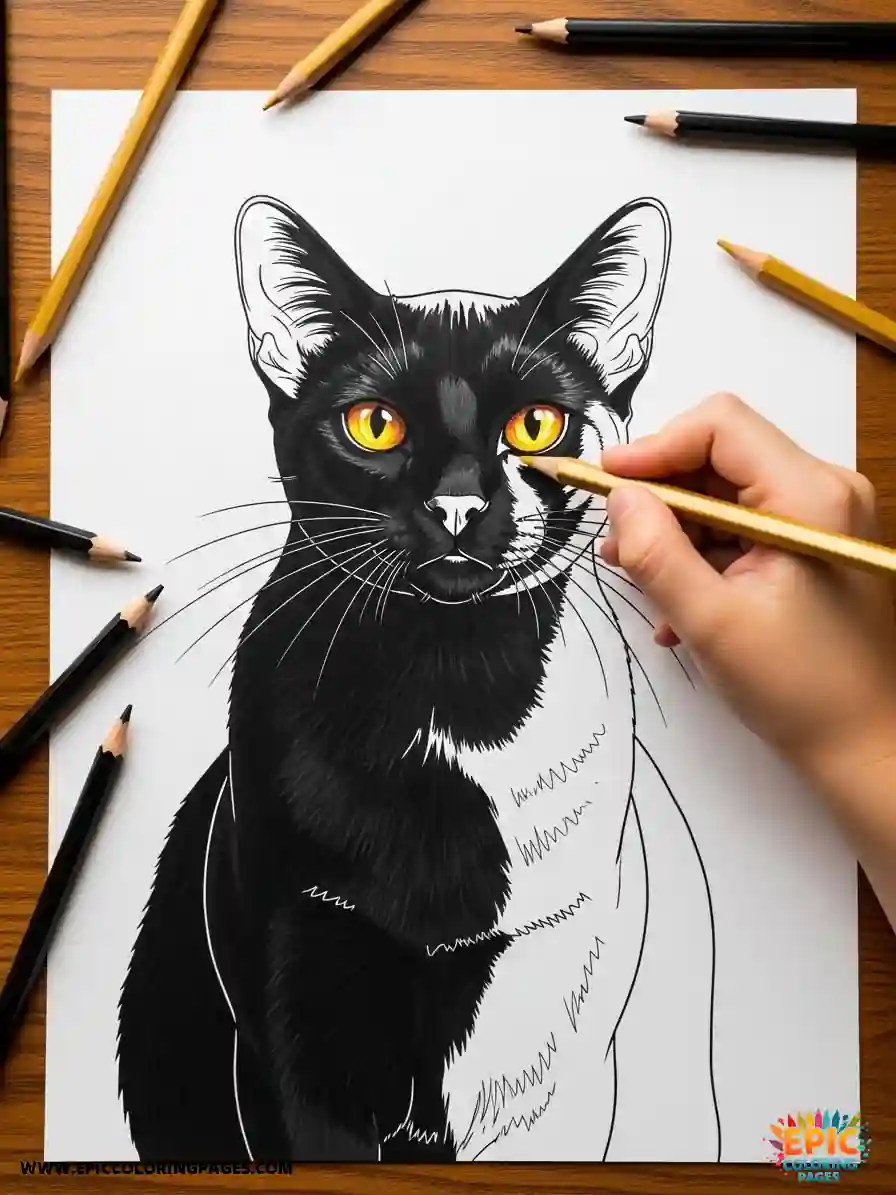
Very dark cats present the opposite challenge. The key is using an even darker shade for the deepest shadows while preserving some lighter areas where light hits the fur. Leaving strategic highlights prevents the cat from becoming a dark blob.
If your colors look muddy, you may be blending too many different hues or pressing too hard too soon. Step back to fewer colors and lighter pressure, building up gradually.
Practice and Experimentation
Every coloring page is an opportunity to try something new. Perhaps experiment with unusual but realistic color combinations a silver tabby with green eyes, a chocolate Persian with copper eyes, or a blue-cream bi-color. Reference photographs of real Persian cats to see how their coloring actually appears, noting how light interacts with different colored coats.
Keep your finished pieces and date them. Looking back over time, you’ll see your progress and identify which techniques work best for your personal style and preferred mediums.
Final Touches
Before you consider a piece finished, step back and evaluate it from a distance. This perspective often reveals areas that need more contrast, spots where highlights would add sparkle, or sections that have become overworked. Sometimes a piece benefits from a few bold final touches deepening the darkest shadows, adding bright highlights, or refining small details like whiskers and the fine fur inside the ears.
Coloring Persian cats offers endless variety and the satisfaction of bringing these beautiful creatures to life through your artistic choices. Whether you aim for photorealism or prefer a more stylized approach, understanding the fundamentals of color theory, light and shadow, and Persian cat anatomy will enhance every piece you create. Most importantly, enjoy the meditative, creative process there’s no single “correct” way to color, only the way that brings you satisfaction and joy.
Frequently asked questions and interesting facts about Persian Cat
Here, we answer the most common questions about this luxurious breed. Whether you are coloring them or considering adopting one, these facts provide great context about the Persian cat’s life, care, and history.
How much does a Persian cat cost?
Persian cats typically cost between $500 to $5,000, with the price varying significantly based on several factors. Pet-quality Persian kittens from reputable breeders usually range from $1,200 to $2,000, while show-quality cats with exceptional pedigrees can command prices of $3,000 to $5,000 or more. The cost depends on the cat’s lineage, coat color (rare colors like chocolate or lilac are more expensive), breeder reputation, geographic location, and whether the cat comes with breeding rights. Adoption from shelters or rescue organizations offers a more affordable option, typically ranging from $75 to $200, though purebred Persians are less common in rescue situations. Beyond the initial purchase price, prospective owners should budget for ongoing expenses including premium food, regular grooming (professional grooming every 4-6 weeks can cost $50-$100), veterinary care, and supplies, which can total $1,000-$2,000 annually.
Are Persian cats hypoallergenic?
No, Persian cats are not hypoallergenic and are actually considered one of the breeds more likely to trigger allergies in sensitive individuals. Persian cats produce the Fel d 1 protein found in their saliva, skin, and dander, which is the primary cause of cat allergies in humans. Their long, thick coats trap more dander and require frequent grooming, which can increase allergen distribution in the home environment. Additionally, Persians shed considerably throughout the year, releasing hair and dander into the air and onto surfaces. People with cat allergies who are determined to own a Persian can minimize reactions through diligent daily grooming and brushing (preferably done outdoors by a non-allergic family member), frequent vacuuming with HEPA filters, using air purifiers, regularly washing bedding and fabrics, keeping the cat out of bedrooms, and maintaining excellent ventilation. However, those with severe allergies should consider truly hypoallergenic breeds like the Sphynx, Russian Blue, or Balinese instead.
How long do Persian cats live?
Persian cats typically live between 12 to 17 years, with many reaching their mid-teens when provided with excellent care. The average lifespan is around 13.5 to 15 years, though some exceptionally healthy Persians have been known to live into their early twenties. Longevity in Persian cats depends heavily on several factors including genetics, diet quality, regular veterinary care, indoor versus outdoor lifestyle, and management of breed-specific health concerns. Persians are predisposed to certain health conditions that can affect lifespan, including polycystic kidney disease (PKD), hypertrophic cardiomyopathy, breathing difficulties due to their flat faces (brachycephalic syndrome), dental issues, and eye problems. Responsible breeders screen for genetic diseases, which improves the health outlook for their kittens. Owners can maximize their Persian’s lifespan by providing high-quality nutrition, maintaining a healthy weight, ensuring daily grooming to prevent hairballs and matting, scheduling regular veterinary check-ups, keeping them indoors to avoid accidents and diseases, and promptly addressing any health concerns.
Do Persian cats shed?
Yes, Persian cats shed heavily and are considered one of the highest-shedding cat breeds due to their luxurious double coat. Their long, dense fur consists of a soft undercoat and flowing outer coat that sheds year-round, with increased shedding during seasonal changes in spring and fall. Daily brushing is absolutely essential for Persian cats not only to manage the constant shedding but also to prevent painful mats and tangles from forming in their coat. Without regular grooming, loose hair can quickly become matted, potentially requiring professional grooming or even shaving to resolve. Persian owners should expect to find cat hair on furniture, clothing, and throughout their home despite best efforts. Managing Persian cat shedding requires commitment to a daily grooming routine using appropriate tools like metal combs and slicker brushes, regular bathing every 4-6 weeks, providing high-quality nutrition that promotes coat health, using de-shedding tools during peak shedding seasons, and maintaining a clean home environment with frequent vacuuming. Prospective owners who dislike dealing with pet hair or have limited time for grooming should seriously consider whether a Persian is the right choice for their lifestyle.
How long does a Persian cat live?
Persian cats generally enjoy a lifespan of 12 to 17 years, with proper care and attention to their unique health needs. The typical life expectancy centers around 14 to 15 years for well-cared-for indoor Persian cats. Several factors influence how long an individual Persian will live, including genetic background from responsible breeding programs, quality of daily care and nutrition, prevention and management of common Persian health issues, living environment (indoor cats live significantly longer), and access to regular veterinary care. Persian cats face specific health challenges that conscientious owners must address to ensure longevity: their flat facial structure can cause breathing difficulties and eye drainage issues, they’re prone to polycystic kidney disease which can be detected through genetic testing, dental problems are common due to jaw structure, and their long coat requires maintenance to prevent skin issues and hairballs. Owners committed to maximizing their Persian’s lifespan should work with veterinarians familiar with the breed, maintain meticulous grooming schedules, provide dental care, monitor for signs of kidney disease, ensure a stress-free indoor environment, and offer mental stimulation and gentle exercise appropriate for this relatively sedentary breed.
Are Persian cats friendly?
Yes, Persian cats are generally very friendly, gentle, and affectionate companions known for their sweet, calm temperament. These cats typically form strong bonds with their human family members and enjoy a quiet, predictable household where they can observe activities from comfortable perches. Persians are not typically demanding or overly vocal; instead, they express affection through soft purring, gentle headbutts, and simply being near their favorite people. They tend to be excellent lap cats who appreciate being petted and brushed, making them wonderful companions for seniors, singles, and families with older, respectful children. Unlike more energetic breeds, Persians prefer peaceful environments and may become stressed in chaotic households with loud noises or very young, boisterous children. They’re generally tolerant and patient but appreciate having quiet spaces to retreat to when they need alone time. Persian cats can coexist peacefully with other pets when properly introduced, though they prefer calm animal companions rather than hyperactive dogs or cats. Their friendly nature combined with low activity levels makes them ideal apartment cats and perfect for people seeking a serene, devoted companion who offers unconditional love without excessive demands for attention or play.
Where to buy a Persian cat?
Persian cats can be purchased from several sources, each with distinct advantages and considerations. Reputable breeders registered with organizations like The Cat Fanciers’ Association (CFA) or The International Cat Association (TICA) are the best source for healthy, well-socialized purebred Persian kittens with documented pedigrees and health screenings. These breeders invest in genetic testing for common Persian health issues, provide proper veterinary care and vaccinations, socialize kittens appropriately, and offer health guarantees and ongoing support. You can find reputable breeders through CFA or TICA breeder directories, cat shows where you can meet breeders in person, breed-specific rescue organizations, and referrals from veterinarians or Persian cat clubs. Breed-specific rescues and general animal shelters occasionally have Persian cats or Persian mixes available for adoption at much lower costs, providing wonderful opportunities to give a cat a second chance. When searching for a Persian, avoid pet stores that source from kitten mills, online classifieds with suspiciously low prices or sellers unwilling to show you the breeding environment, and any seller who cannot provide health records or allows kittens to leave before 12 weeks of age. A responsible source will welcome your questions, allow you to visit their facility, show you the kitten’s parents, provide health documentation, and demonstrate genuine concern for their cats’ welfare and proper placement.
Where do Persian cats come from?
Persian cats originate from Persia, the region now known as modern-day Iran, though their exact origins remain somewhat mysterious and subject to historical debate. These longhaired cats are one of the oldest cat breeds, with references to longhaired cats from Persia dating back to the 1600s when they were first brought to Europe by travelers and traders along ancient trade routes. Italian nobleman Pietro della Valle is often credited with introducing Persian cats to the Western world around 1620 after encountering them during his travels through Persia and Turkey. The breed gained tremendous popularity in Victorian England during the 1800s, where selective breeding programs began refining their appearance and establishing breed standards. Queen Victoria herself was an enthusiastic Persian cat owner, which significantly boosted the breed’s prestige and popularity among British aristocracy. The Persian cats we recognize today with their extremely flat faces (known as “peke-faced” after Pekingese dogs) are actually quite different from the original Persian cats, which had more moderate facial features and longer noses. Modern Persians are the result of extensive selective breeding primarily in Britain and the United States throughout the 20th century. The breed was among the first to be recognized when cat fancy began in the late 1800s and remains one of the most popular pedigreed cat breeds worldwide, prized for their stunning appearance, luxurious coats, and gentle personalities.