Professional Coloring Tips & Techniques
French Bulldogs have captured hearts worldwide with their distinctive bat ears, wrinkled faces, and compact, muscular bodies. Whether you’re coloring these charming companions for relaxation or artistic development, understanding their unique features will help you create stunning, lifelike artwork.
Understanding French Bulldog Anatomy for Better Coloring
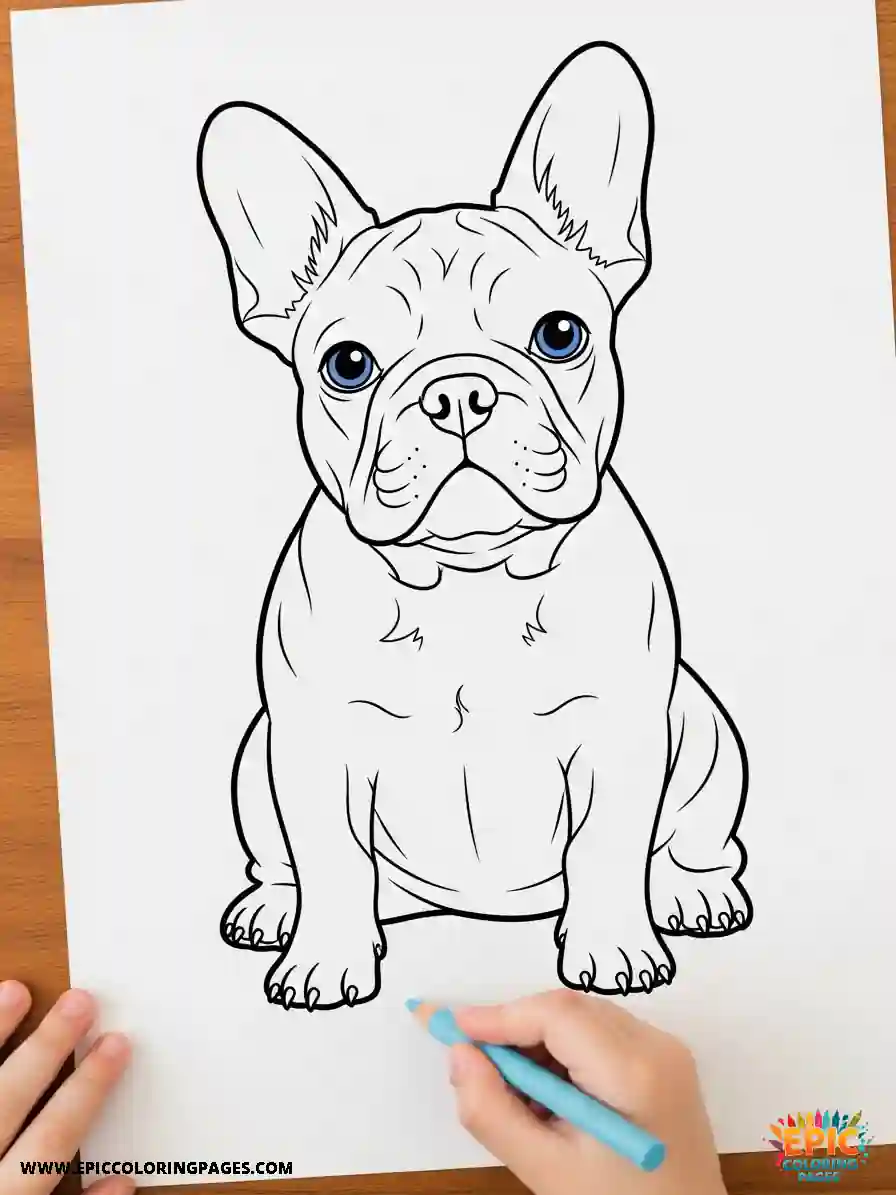
Before picking up your coloring tools, take a moment to observe what makes French Bulldogs so distinctive. Their broad, square head features a short muzzle with characteristic wrinkles that radiate from the nose. The large, rounded “bat ears” stand erect and are set high on the head. Their compact body is surprisingly muscular, with a broad chest and sturdy legs. The tail is naturally short either straight or screwed never cropped.
Pay attention to proportions. French Bulldogs have a somewhat top-heavy appearance, with their head and chest being quite substantial compared to their hindquarters. This unique silhouette is part of their charm and should be emphasized rather than corrected in your coloring.
Color Palette Selection
French Bulldogs come in several recognized colors, each offering different artistic opportunities. The most common include fawn (ranging from light tan to deep red-fawn), brindle (tiger-striped patterns mixing dark and light hairs), cream, white, and various pied patterns (white with patches of color).
For realistic coloring, consider these authentic color combinations. Fawn French Bulldogs often have a black mask on their face, with darker coloring around the muzzle, nose, and ears. Brindle patterns require patience they’re essentially layers of black or dark brown stripes over a lighter base color. Pied patterns typically feature asymmetrical color patches, giving each dog a unique appearance.
If you’re working with colored pencils, build your colors gradually. Start with a light base layer in your primary color, then add depth with slightly darker shades in the wrinkles, under the chest, and around the legs. For fawn dogs, warm browns, peach tones, and touches of ochre create realistic fur. Brindle coats benefit from alternating pressure with dark browns or blacks over your base layer.
Bringing Facial Features to Life
The French Bulldog’s face is where personality truly shines through. The eyes are typically dark, round, and set wide apart with an alert, curious expression. When coloring eyes, leave a small white highlight to create that spark of life. The surrounding area often has slightly looser skin, creating soft shadows worth capturing with gentle shading.
Those adorable wrinkles deserve special attention. They’re not random they follow natural skin fold patterns. The rope wrinkle above the nose is the most prominent, with additional folds radiating outward. Use your darkest values deep within the wrinkles and gradually lighten as you move toward the raised areas of skin. This creates dimension and prevents a flat appearance.
The nose should be solid black or dark brown with a subtle shine. Leave a tiny highlight on one side to suggest moisture and three-dimensionality. The muzzle’s short, pushed-in appearance creates natural shadows beneath the nose and in the corners of the mouth.
Mastering the Bat Ears
Those iconic ears are large, broad at the base, and rounded at the top. The interior of the ear is typically lighter than the outer ear and may show delicate pinkish tones. Create depth by making the ear canal area quite dark, then gradually lightening as you move toward the outer edges. The back of the ears often catches light and should be slightly lighter than the head’s overall color.
Notice how the ears’ position affects expression. Forward-tilting ears suggest alertness or curiosity, while relaxed ears sit more neutrally upright. This subtle detail can completely change your coloring page’s emotional impact.
Texture Techniques for Short Coats
French Bulldogs have short, smooth coats that lie close to the body. This doesn’t mean coloring should be flat or uniform. Short fur still has direction, shine, and variation in color density.
For colored pencils or markers, use short, directional strokes that follow the fur’s natural growth pattern. On the head, fur radiates outward from the nose. On the body, it generally flows backward from head to tail and downward on the legs. Varying your pressure creates natural-looking highlights and shadows.
The coat’s natural sheen can be suggested by leaving subtle highlights along the top of the head, spine, and shoulders areas where light naturally hits. These highlights should be soft and organic, not harsh white lines.
Creating Dimension Through Shading
Even a simple coloring page benefits from thoughtful shading. French Bulldogs’ muscular build means there are natural contours to emphasize. The chest is broad and prominent, creating shadows underneath. The legs are sturdy with visible muscle definition, especially in the thighs.
Common shadow areas include under the chin, beneath the body, behind the front legs, and underneath the tail. Use cooler, darker versions of your base color for shadows rather than black, which can appear harsh. For example, if coloring a fawn French Bulldog, use deeper browns or even subtle purples for the deepest shadows.
The wrinkles on the face cast subtle shadows, as do the skin folds around the neck and shoulders. These stocky dogs often have a slightly thick-set appearance with skin that’s just a bit loose, creating natural areas of light and shadow.
Background Considerations
Your French Bulldog doesn’t exist in a vacuum. Consider what environment best suits your artistic vision. A simple shadow beneath the dog grounds the figure and adds professionalism to your work. This shadow should be darkest directly under the body and fade as it extends outward.
If adding a more complex background, consider the French Bulldog’s lifestyle. These companion dogs are often found lounging on sofas, playing in parks, or posing against urban settings. Keep backgrounds somewhat subdued so they don’t compete with your main subject. Soft focus effects using lighter colors and less detail as you move away from the dog create natural depth.
Tools and Materials
Different coloring tools offer distinct advantages. Colored pencils provide excellent control for building subtle gradations and fine details like individual wrinkles or fur texture. Premium pencils with soft, blendable cores work best for realistic rendering.
Markers offer vibrant, bold color but require a planned approach since they’re less forgiving than pencils. Use lighter colors first, building to darker tones. Alcohol-based markers blend beautifully but can bleed through paper, so use appropriate paper weight.
Gel pens excel at adding final details highlights in the eyes, individual whiskers, or accent marks that make your work pop. White gel pens are particularly useful for adding highlights over darker colors.
For those exploring watercolor pencils or actual watercolors, French Bulldogs’ compact form lends itself well to this medium. The short coat’s natural sheen translates beautifully with watercolor’s fluid quality. Just be mindful that wrinkles and facial features require a lighter touch to maintain their definition.
Common Mistakes to Avoid
Many colorists make the face too flat by not adequately rendering the wrinkles’ depth. Remember that French Bulldogs have pronounced facial features requiring strong value contrast to appear dimensional.
Another frequent issue is making the body too uniform in color. Even solid-colored dogs have tonal variation from lighting, muscle structure, and subtle coat color changes. Build variety into your work.
Oversized or incorrectly shaped ears can throw off the entire portrait. Reference the breed’s characteristic bat ear shape broad at the base, rounded at the top, set high on the head.
Neglecting the cast shadow under the dog makes it appear to float. Even a simple shadow adds grounding and polish.
Developing Your Personal Style
While realistic coloring has its place, don’t be afraid to experiment. French Bulldogs’ expressive faces and distinctive silhouettes make them perfect subjects for stylized approaches. Try unexpected color combinations, pattern variations, or decorative elements that reflect your creativity.
Consider themed approaches: seasonal decorations, fantasy elements like wings or superhero capes, or pattern fills within the outline. The breed’s sturdy, friendly appearance adapts well to both cute, cartoonish treatments and sophisticated, realistic renderings.
Practice Makes Progress
Like any artistic skill, coloring improves with practice. Start with simpler poses and gradually work toward more complex positions. Study reference photos of real French Bulldogs to understand how light, color, and form interact.
Keep your finished pieces not to judge yourself harshly, but to track your progress. You’ll be amazed how quickly your skills develop with consistent practice and attention to technique.
The joy of coloring French Bulldogs lies not just in the finished product but in the meditative process of bringing these lovable characters to life, one stroke at a time. Whether you’re seeking relaxation, artistic development, or simply celebrating your love for this wonderful breed, each coloring session offers an opportunity to refine your skills and express your creativity.