Professional Coloring Tips & Techniques
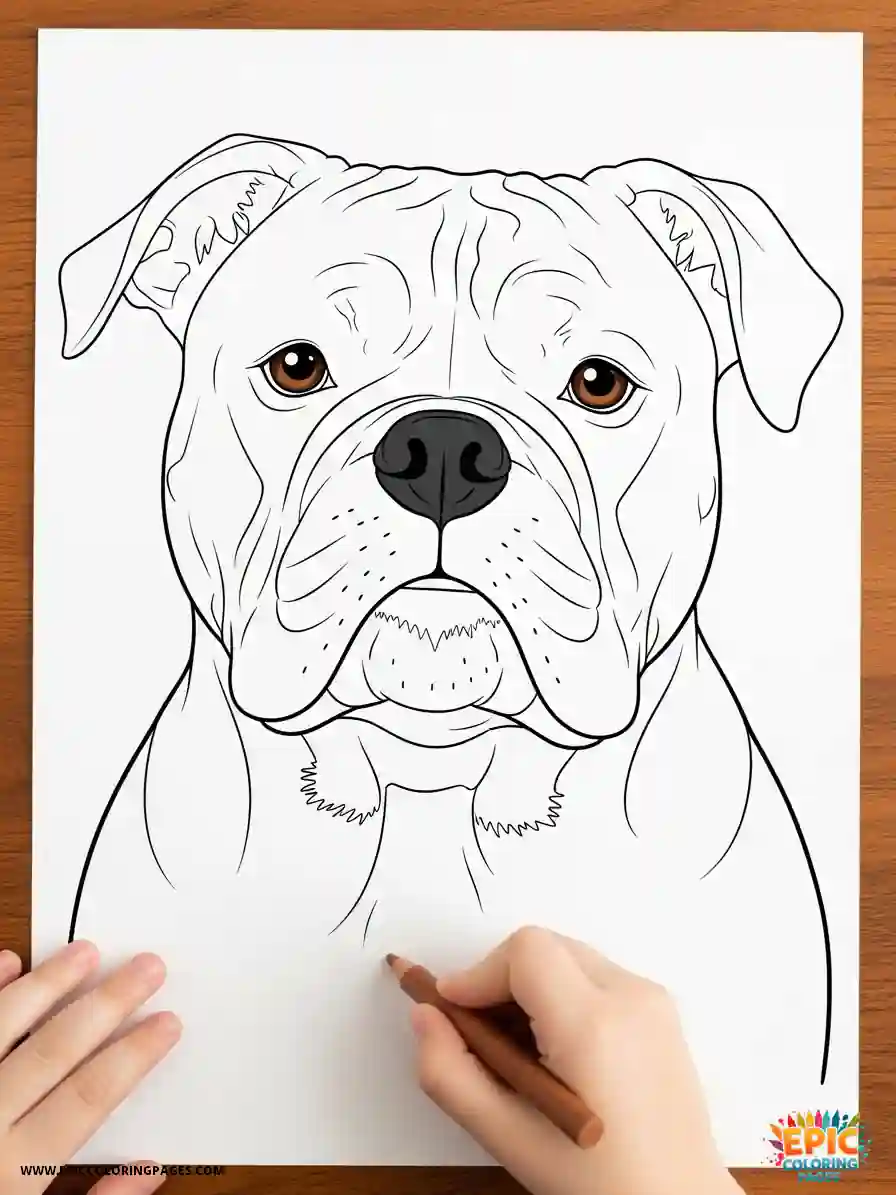
Coloring an American Bulldog presents a wonderful opportunity to capture the strength, loyalty, and gentle nature of this iconic breed. Whether you’re working with colored pencils, markers, or digital tools, understanding the breed’s unique characteristics will help you create realistic and expressive artwork.
Understanding American Bulldog Anatomy for Better Coloring
The American Bulldog is a muscular, stocky breed with distinctive features that set it apart from other bully breeds. Their broad chest, powerful shoulders, and athletic build require careful attention to shading and proportion. Notice how their muscles create natural shadows the chest should appear rounded and substantial, while the hindquarters show defined musculature that suggests power and agility.
Their heads are characteristically large and box-shaped, with a pronounced stop (the indent between the forehead and muzzle). The muzzle itself is broad and square, often shorter than other breeds. When coloring, pay attention to how light falls on these planes the flat surfaces of the head catch light differently than the rounded body.
Capturing the American Bulldog's Coat
American Bulldogs typically have short, smooth coats that come in several color variations. The most common patterns include pure white, white with patches of brindle, brown, red, or black. Some have a distinctive “tuxedo” pattern with colored markings on a white base.
For white coats, resist the urge to leave the paper completely blank. True white fur contains subtle shadows and variations. Use light grays, pale blues, or even soft lavenders in shadow areas to create dimension. The underside of the body, beneath the jaw, and between the legs naturally fall into shadow and need these cooler tones.
If you’re coloring a brindle pattern (tiger-striped markings), layer your colors gradually. Start with a base tan or fawn color, then add darker brown strokes in irregular vertical patterns. Brindle isn’t uniform it’s denser in some areas and lighter in others. Study reference photos to see how these stripes follow the contours of the body, wrapping around muscles and changing direction with the dog’s form.
For patches of color, remember that where colored fur meets white, there’s often a subtle transition rather than a harsh line. Soften these edges slightly for a more natural appearance.
Bringing Expression to the Eyes
American Bulldogs have alert, intelligent eyes that convey their loyal and protective nature. Eye color typically ranges from dark brown to amber, occasionally with lighter hazel or even blue in certain lines.
Start with a medium base tone for the iris, then add a darker ring around the outer edge. Leave a small highlight dot to create that characteristic “spark of life” position it consistently as if light is coming from one direction. The area around the eyes should have subtle shading; there’s a natural socket that creates shadow above the eye and sometimes beneath it.
The whites of the eyes (sclera) are rarely pure white. Use a very pale cream or add the tiniest touch of pink in the corners where blood vessels show through. This small detail makes an enormous difference in realism.
Mastering the Nose and Mouth
The American Bulldog’s nose is typically black or dark brown, large and prominent. Noses have a naturally moist, slightly reflective surface. To capture this, use your darkest tones but leave small irregular highlights that suggest the textured, slightly wet surface. The nostrils themselves are the darkest points.
The mouth and jowls are characteristic features. American Bulldogs often have slightly loose lips, creating natural folds and shadows. These shadows are important they give the face dimension and character. Use medium to dark tones in the creases where the lips meet and where jowls fold.
If the mouth is open, showing teeth, remember that teeth aren’t bright white. Use an off-white or cream color, with slightly darker tones near the gum line. The tongue can range from pale pink to darker rose, with a slightly mottled texture in some dogs.
Creating Realistic Texture and Fur Direction
Even though American Bulldogs have short fur, understanding hair direction is crucial for realism. The fur grows in predictable patterns: down from the top of the head, forward on the muzzle, radiating outward from the shoulder, and back along the body toward the tail.
When adding texture, use short, light strokes that follow these growth patterns. You don’t need to draw every hair suggesting texture in key areas while leaving other areas smoother creates a more sophisticated result. Focus texture work on areas where fur naturally shows more definition: along the edges of the body outline, where light transitions to shadow, and around facial features.
Shading Techniques for Muscular Definition
The American Bulldog’s athletic build requires thoughtful shading to convey their powerful physique without making them look stiff or cartoonish. Muscles create gentle curves and valleys that catch light on the highest points while shadow pools in the recesses.
Study where shadows naturally fall: under the chin, along the underside of the chest and belly, in the “armpit” area where the front legs meet the body, behind the front legs, and along the inner thighs. These shadows should be gradual transitions, not harsh lines.
The chest is particularly important it’s broad and barrel-shaped. Use curved shading strokes that follow the rounded form, with the lightest area typically at the center top where light would hit directly. The sides gradually darken as they curve away from the light source.
Working With Different Mediums
Colored Pencils work beautifully for American Bulldogs because you can build up layers gradually. Start light and increase pressure for darker areas. For white fur, use your lightest grays and blues first, adding depth slowly. Burnishing (heavy pressure with a light color over darker layers) can create the smooth, almost glossy appearance of their short coat.
Markers require more planning since they’re harder to layer. Start with your lightest colors and work toward darker tones. For white dogs, a warm gray 10-20% marker can establish basic shadows without going too dark too quickly. Blending markers by working wet-into-wet while the ink is still damp creates smoother transitions.
Watercolor can be challenging for white dogs but rewarding. Work with very diluted paint for initial layers, preserving the white of the paper for your brightest highlights. Let layers dry completely between applications to avoid muddy colors. Wet-on-dry technique gives you more control for defined muscles and features.
Digital Coloring offers unlimited flexibility. Work in layers, with shadows on separate layers from base colors. Use soft brushes with low opacity for gradual shading, and experiment with blend modes. A subtle texture overlay can simulate the look of traditional media.
Color Harmony and Background Considerations
Your American Bulldog doesn’t exist in a vacuum. Consider how your color choices interact with the background. A white dog benefits from a medium-toned background that provides contrast too light and the dog disappears, too dark and it can look stark.
If your page includes environmental elements like grass, a porch, or toys, ensure your color palette is cohesive. Warm-toned dogs (with brown or red patches) pair beautifully with cool background colors (blues, greens, purples) and vice versa. This color theory principle, called complementary colors, makes both the subject and background more vibrant.
Common Mistakes to Avoid
Don’t outline everything in black. In nature, edges are defined by value changes (light against dark) rather than lines. Use dark shading at edges where needed, but let some edges be soft, especially where light-colored fur meets light backgrounds.
Avoid perfectly symmetrical markings unless your reference shows them. Natural patterns have organic variation one ear patch might be slightly larger, or brindle stripes might be denser on one side.
Don’t neglect cast shadows. If your dog is standing, there should be a shadow on the ground. If sitting, the shadow pools around and beneath them. These anchoring shadows make your subject feel grounded rather than floating.
Advanced Tips for Expressive Portraits
To capture personality, consider the dog’s posture and expression. American Bulldogs are confident and alert, but also have a softer, family-oriented side. A slightly tilted head suggests curiosity and friendliness. Relaxed ears show contentment, while forward-pricked ears indicate alertness.
The tension or relaxation in the body tells a story. A play bow (front legs extended, rear up) shows their fun-loving nature. A dignified sit with chest out displays their confident guardian side.
Small details amplify expression: a slightly open mouth suggests a panting smile, wrinkles on the forehead can show concentration or concern, and the angle of the eyebrows (yes, dogs have them) dramatically changes the emotional read of the face.
Practice and Patience
Realistic coloring takes time and practice. Start with simpler poses and work toward more complex compositions. Keep reference photos nearby even experienced artists use references to check proportions, color accuracy, and how light behaves.
Don’t be afraid to make mistakes. Each coloring page is a learning opportunity. Try different color combinations, experiment with new techniques, and most importantly, enjoy the process. The American Bulldog’s loyal, determined spirit is something worth celebrating through your art, whether you’re creating something photorealistic or stylized and expressive.
Remember that coloring is both a skill and a relaxing activity. Some days you’ll focus intensely on perfecting every detail; other times you’ll simply enjoy putting color on paper. Both approaches are valuable, and both help you grow as an artist.