Professional Coloring Tips for Alaskan Klee Kai Dog
The Alaskan Klee Kai is a stunning miniature breed that captures the wild beauty of northern sled dogs in a compact package. With their striking facial markings, plush double coat, and expressive almond-shaped eyes, these dogs present wonderful opportunities for colorists to explore texture, contrast, and the subtle nuances of canine features.
Understanding the Alaskan Klee Kai's Distinctive Features
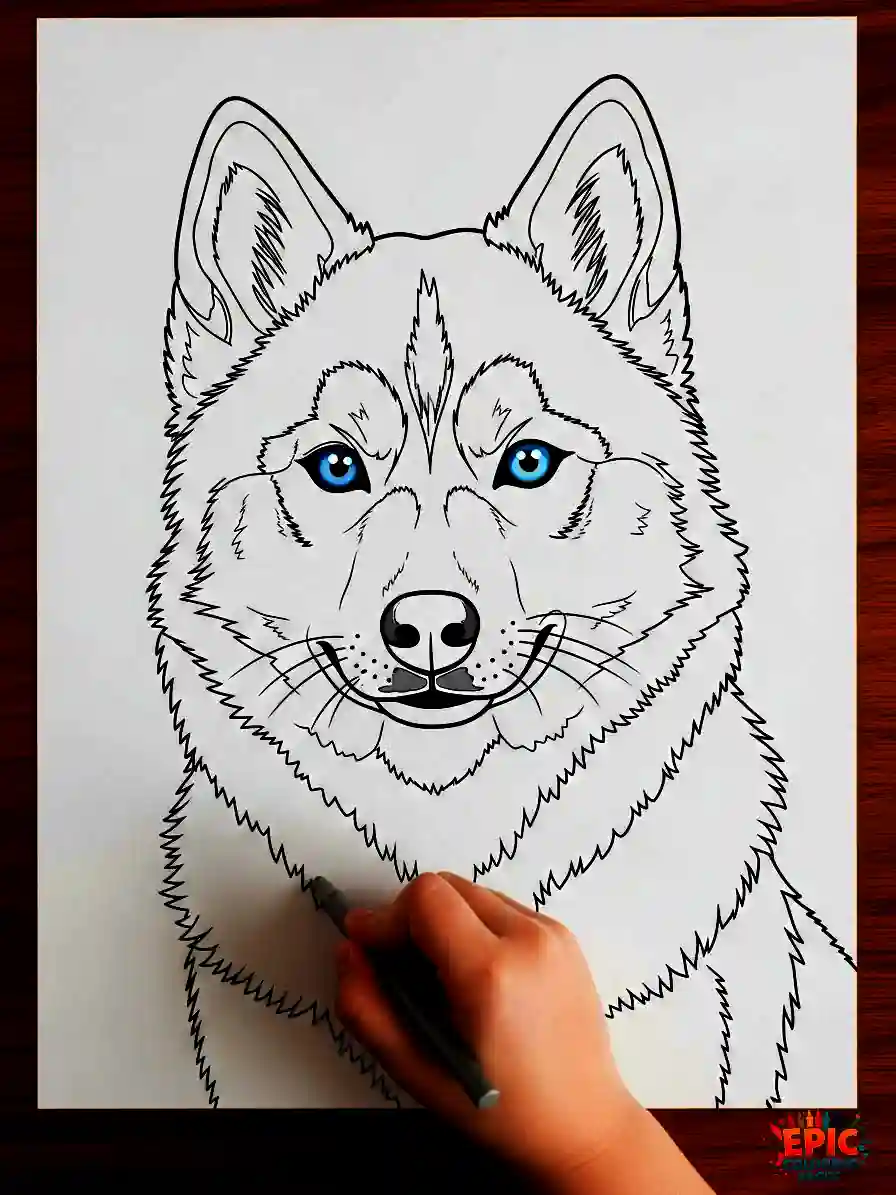
Before you begin coloring, take a moment to familiarize yourself with what makes this breed unique. The Alaskan Klee Kai comes in three recognized color patterns: black and white, gray and white, and red and white. Each variety features dramatic facial masks, spectacles around the eyes, and a distinctive blaze or stripe running down the face. Their coats are dense and plush, with guard hairs that catch light differently than the softer undercoat beneath.
The breed’s eyes are particularly captivating and can be brown, blue, or even one of each color. This heterochromia is a signature trait worth highlighting in your coloring work. Their ears stand erect and alert, triangular in shape, giving them that perpetually curious expression that endears them to so many.
Color Selection and Layering Techniques
When working with traditional colored pencils, start by identifying your light source. The Alaskan Klee Kai’s thick coat creates natural shadows and highlights that bring dimension to your page. For black and white Klee Kais, resist the urge to use pure black immediately. Instead, build up layers starting with cool grays or even blues in the darkest areas. This creates depth and prevents that flat, one-dimensional look that can plague beginner colorists.
For the white portions of the coat, many assume leaving the paper blank is sufficient, but this misses an opportunity for realism. Use very light blues, lavenders, or warm grays to suggest shadows and the roundness of the body. The lightest areas where light hits directly can remain paper-white, creating that eye-catching contrast.
If you’re working with a gray and white Klee Kai, consider the temperature of your grays. Cooler grays with blue undertones work beautifully for the main body, while slightly warmer grays near the face can suggest the warmth of the skin beneath the fur. Layer different gray tones to create the illusion of individual hairs and coat texture.
The red and white variety offers the most vibrant color opportunity. These dogs display colors ranging from cinnamon to deep copper. Start with a base of light orange or peach, then build up with burnt sienna, terra cotta, and touches of brown in the deepest areas. Adding tiny strokes of yellow in the lightest areas where sun hits the coat can make it seem to glow with life.
Creating Realistic Fur Texture
Fur texture separates a good coloring page from an exceptional one. The Alaskan Klee Kai’s double coat has both direction and variation. On the face, fur grows outward from the nose in all directions. On the body, it follows the contours, lying flatter on the back and becoming fluffier on the chest, haunches, and that magnificent plumed tail.
Use short, quick strokes following the natural growth direction of the fur. Vary your pressure as you work, lighter strokes suggest the soft undercoat while firmer strokes define the longer guard hairs. Don’t make every stroke the same length or darkness; real fur has natural variation that makes it interesting to the eye.
For colored pencil users, keep your pencils sharp. A dull point creates muddy, undefined areas, while a sharp point allows you to create the illusion of individual hairs. Rotate your pencil occasionally as you work to maintain that point without constant sharpening.
If you’re working with markers, which can be trickier for fur effects, try using the brush tip in short flicking motions. Start from the darker base color and flick outward, gradually using lighter colors for the tips of the fur. This takes practice but creates beautiful results. Alcohol-based markers blend more smoothly than water-based ones for this technique.
The Eyes: Windows to a Spirited Soul
Alaskan Klee Kais are known for their intelligent, alert expressions, and much of this personality comes through in the eyes. Whether you’re depicting brown or blue eyes, start by establishing where the light source hits the eye. Leave a small dot or crescent of white paper for the catch light this tiny detail brings the entire eye to life.
For brown eyes, layer from light to dark. Start with ochre or golden yellow in the lightest areas, building up through burnt sienna to dark brown or black in the pupil and the darkest areas. Blue eyes require more subtlety. Begin with white or a very pale blue, then add layers of cerulean, azure, or even touches of turquoise. The deepest areas near the pupil might include navy or dark blue-gray. Add a thin ring of slightly darker color around the iris edge to define the eye’s shape.
Don’t forget the area around the eyes. The distinctive “spectacles” of lighter or darker fur around the eyes give the Alaskan Klee Kai much of its characteristic expression. These should be rendered with attention to how they frame and enhance the eyes themselves.
Nose and Facial Details
The nose of an Alaskan Klee Kai is typically black, but even black noses aren’t uniformly dark. There’s usually a slightly shinier area on top where light reflects, some texture in the middle suggesting the slightly rough surface, and deeper shadows at the nostrils. Build this up with layers, perhaps starting with a dark gray and adding black, leaving tiny highlights to suggest moisture and dimension.
The facial mask is one of the breed’s most dramatic features. This darker coloring around the face and over the top of the head should transition gradually into the lighter areas. Avoid hard lines; instead, use your layering technique to create a soft gradient where the colors meet. This is where studying reference photos really pays off, as each dog’s mask pattern is slightly different.
Background Considerations
While your Alaskan Klee Kai should be the star of your coloring page, don’t completely neglect the background if your page includes one. These dogs originated in Alaska, so wintery scenes with snow, evergreens, or even northern lights can complement your subject beautifully without overwhelming it.
If you include snow in your background, remember that snow is rarely pure white. It picks up colors from the sky and surroundings blues in shadows, warm peachy tones at sunset, even lavenders in deeper drifts. This colored approach to white actually makes your white dog stand out more by contrast than if everything were left blank.
For indoor scenes, consider warm wood tones or cozy textiles that suggest a home environment. The Alaskan Klee Kai, despite its wild appearance, is a companion dog that thrives on human interaction, so domestic settings can be just as appropriate as wilderness backdrops.
Tools and Materials Recommendations
Your choice of coloring medium significantly impacts your final result. Colored pencils offer the most control for detailed fur work and are forgiving since you can build up gradually. Look for brands that offer good layering properties and a wide range of grays and neutrals. Wax-based pencils blend smoothly, while oil-based pencils resist waxy buildup and allow for more layers.
Markers work well for bold, graphic interpretations of the breed but require more planning since they’re difficult to erase or lighten once applied. Test your markers on scrap paper first to see how they blend and whether they bleed through your coloring page paper.
Gel pens and white paint pens are wonderful for adding final highlights those bright sparkles in the eyes, light catching the tips of fur, or tiny whisker details that make your dog seem to leap off the page.
Paper quality matters more than many realize. Thicker paper (at least 80 lb or 120 gsm) handles multiple layers better and prevents buckling or bleeding through to the other side. Slightly textured paper helps colored pencils grip and layer, while smooth paper works better for markers.
Common Mistakes to Avoid
One frequent error is using pure black too early or too heavily. Black can quickly overwhelm a piece and is difficult to lighten once applied. Build your darkest areas with layers of color first, adding black only as a final touch if needed.
Another pitfall is neglecting the direction of fur growth. Random scribbling might fill in an area but won’t create the illusion of a furry coat. Take time to observe how fur flows over the body’s contours.
Many colorists also make white portions too white, losing all dimension and making the dog look flat. Remember that white fur still has shadows, depth, and subtle color variations that bring it to life.
Developing Your Personal Style
While realism is one approach, don’t feel constrained by it. Some artists create stunning interpretations using unexpected color palettes imagine an Alaskan Klee Kai in purples and teals, or with patterned fur incorporating geometric designs. The structure and distinctive features of the breed remain recognizable even with creative color choices.
Experiment with different techniques in different pieces. Try stippling (creating texture with dots) in one piece, smooth gradient blending in another, and bold graphic shapes in a third. Each approach teaches you something new and helps you discover what resonates with your artistic preferences.
Learning from Reference Materials
While coloring pages provide the outline, reference photos of real Alaskan Klee Kais help tremendously with color choices and understanding the breed’s structure. Notice how light plays across their coats in different conditions, how their expressions change, and the variety within the breed standard. This knowledge informs your choices and makes your colored pages more authentic.
Pay attention to seasonal coat changes too. Like many northern breeds, the Alaskan Klee Kai sheds heavily twice a year, and their coat thickness varies with seasons. A summer coat lies flatter and closer to the body, while a winter coat is plusher and fuller, particularly around the neck and hindquarters.
The Joy of the Process
Perhaps the most important tip is to enjoy the meditative, creative process of coloring. There’s no single “correct” way to color an Alaskan Klee Kai page. Each colorist brings their own interpretation, techniques, and personality to the work. Some sessions might be about perfecting realistic fur techniques, while others are simply about relaxation and the pleasure of putting color on paper.
The Alaskan Klee Kai, with its striking appearance and spirited personality, offers endless opportunities for creative expression. Whether you’re aiming for photorealism or stylized interpretation, these dogs provide a rewarding subject that helps you develop your skills while creating something beautiful. Take your time, experiment freely, and most importantly, have fun bringing these magnificent dogs to life in your own unique way.