Russian Blue Cat Coloring Pages (218+ Free Printables)
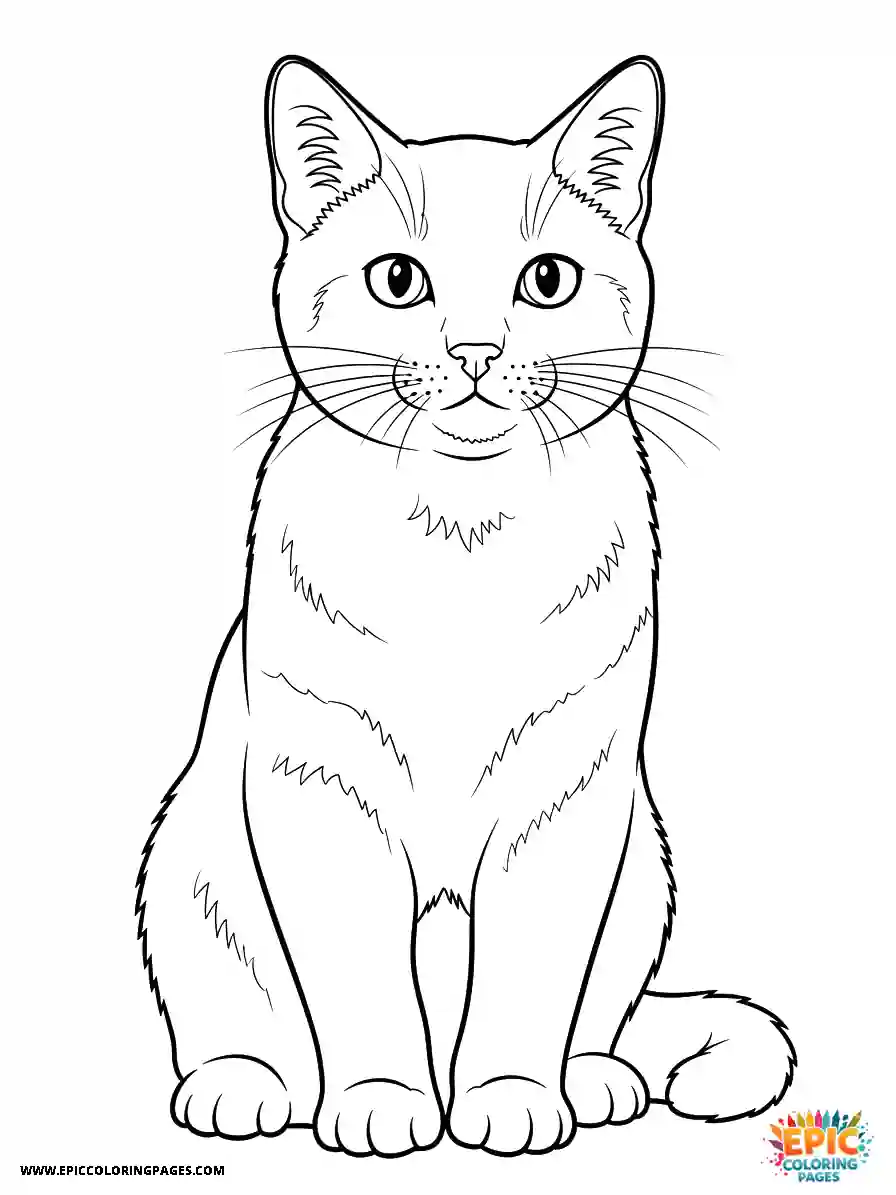
Believed to have originated from the port city of Arkhangelsk in Northern Russia, the Russian Blue is a natural breed that was once known as the Archangel Cat. Legend says these shimmering felines were favored by the Czars and even traveled with Cossacks on their ships due to their keen hunting instincts. This collection of Russian Blue cat coloring pages honors their aristocratic heritage, featuring the graceful posture and muscular elegance that distinguishes them from other gray shorthair breeds.
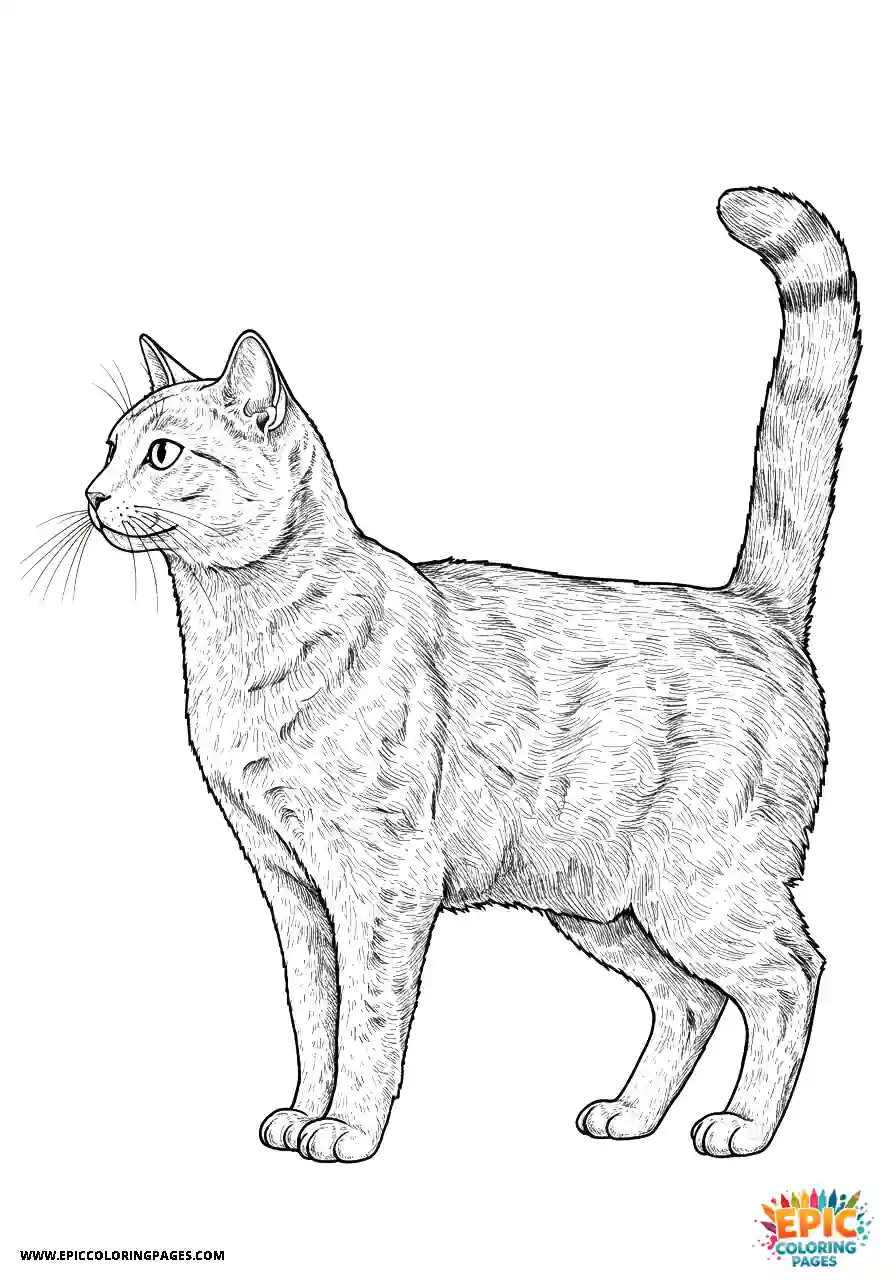
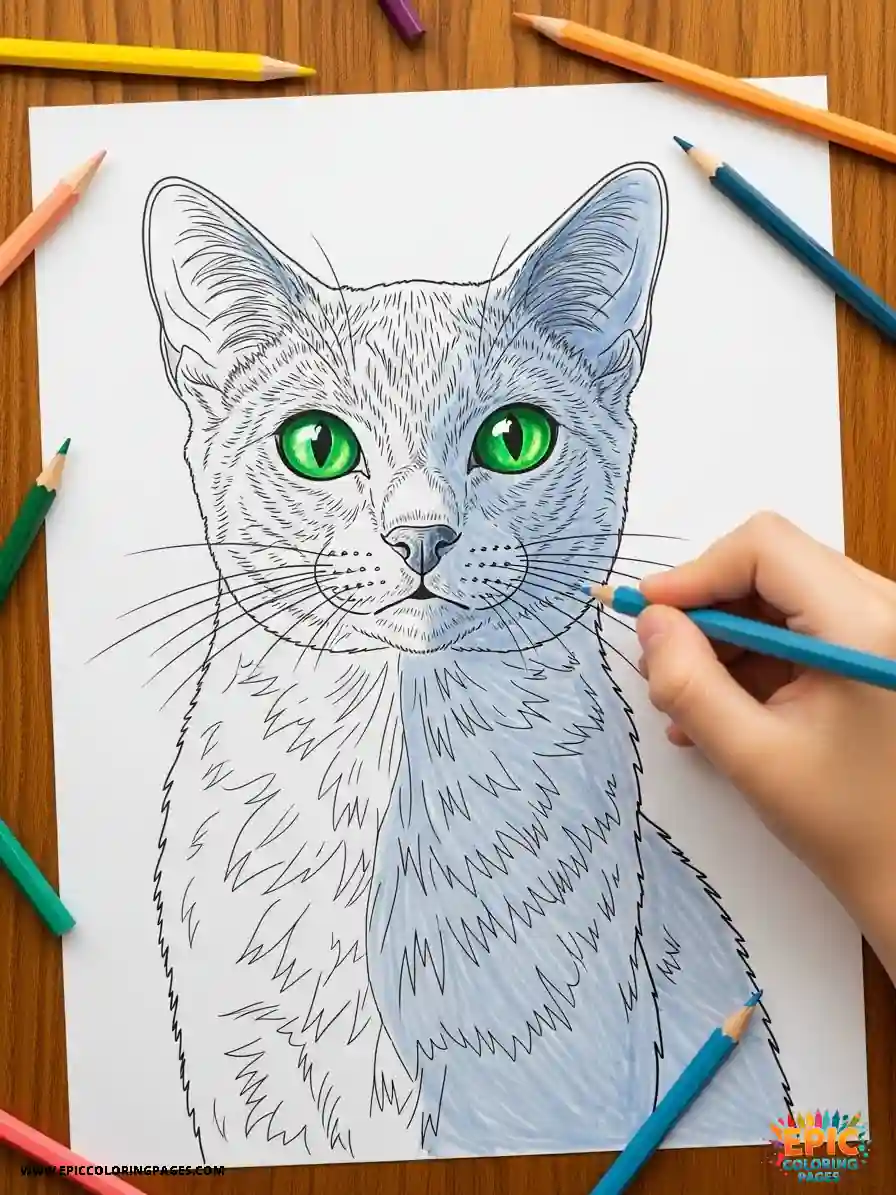
Beyond their history, the Russian Blue is famous for a unique physical trait known as silver tipping. The guard hairs of their coat are tipped with silver, allowing the light to reflect off their fur and creating a lustrous sheen that makes them appear to glow. Unlike common gray cats, their coat is a dense double layer that stands out from the body rather than lying flat. These illustrations capture that plush texture, offering artists the chance to experiment with gradients of slate blue and silver.

๐จ Free Interactive Editor - Customize Your Coloring Pages
Click on any image to open our FREE editor and add personalized text, emojis, zoom in for details, and save in professional 300 DPI quality!
Add Text
11+ fonts
Emojis
500+ items
Zoom
Precision
Save
300 DPI
Click any coloring page to start customizing!
The "Mona Lisa" of the Cat World
Coloring a Russian Blue requires attention to subtle details that are unique to the breed standard. Our gallery highlights specific anatomical features that give this cat its mysterious appearance.
The Enigmatic Smile: One of the most beloved traits of the breed is the slightly upturned corners of the mouth. This natural physical structure gives them a pleasant expression often compared to the Mona Lisa, which we have emphasized in our portrait sketches.
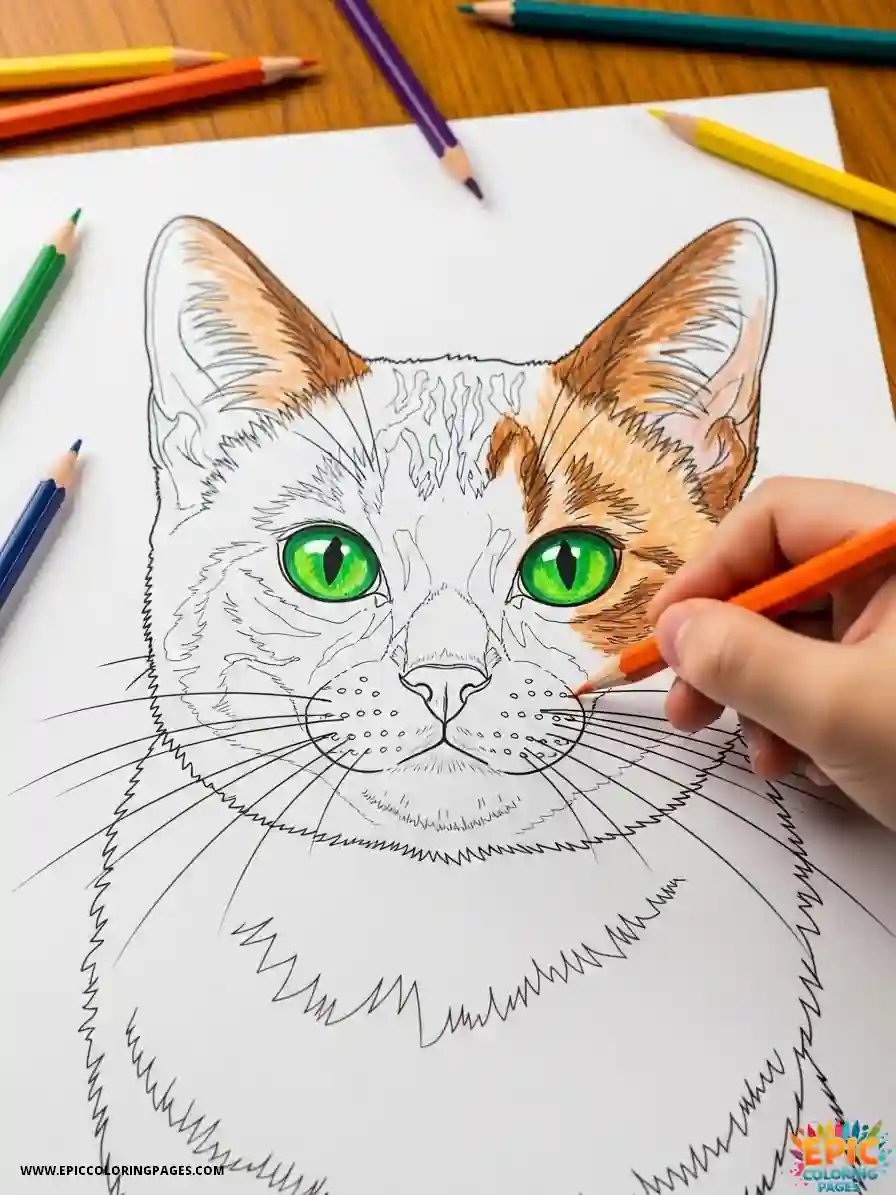
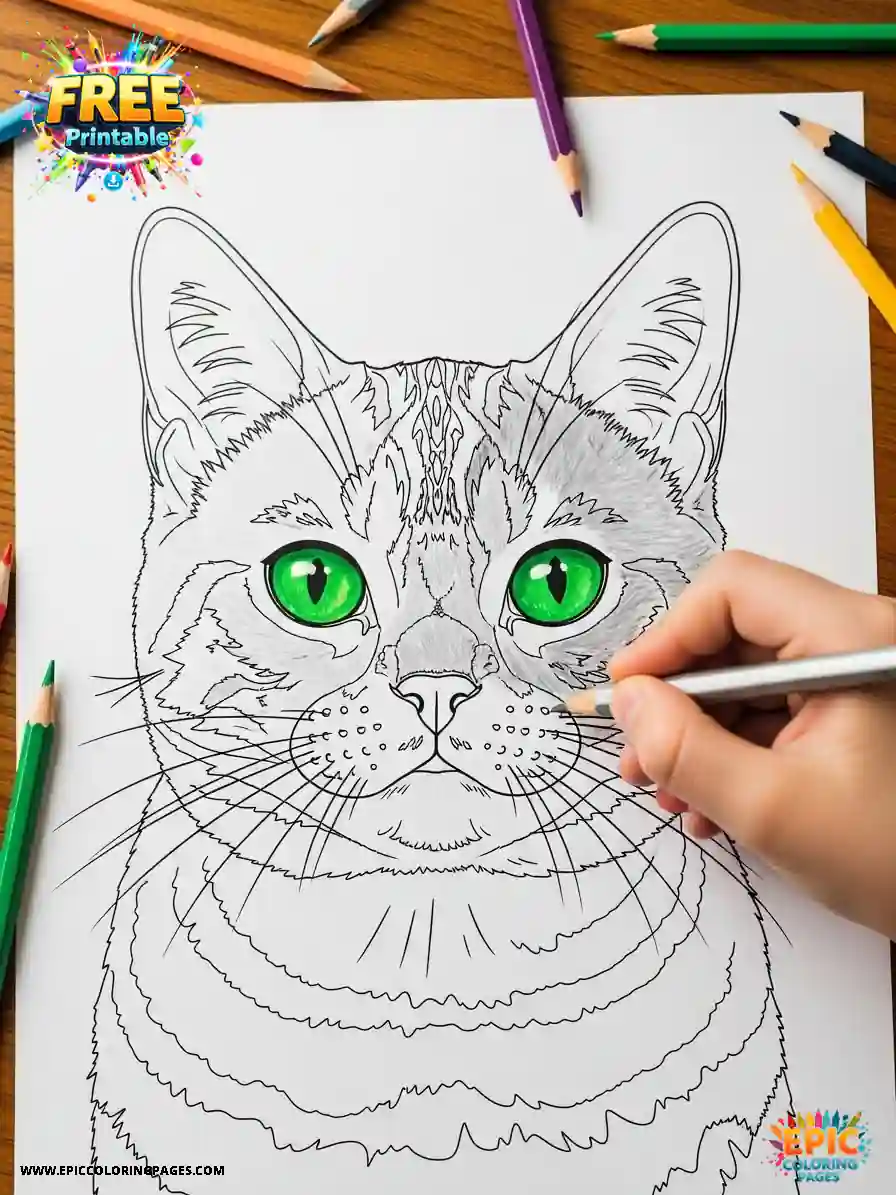
Vivid Green Eyes: While kittens are born with yellow eyes, a true Russian Blue develops deep emerald green eyes as it matures. Our pages provide clear outlines of their wide-set eyes, perfect for creating a sharp contrast against the gray fur.
Mauve Paw Pads: Unlike many other blue cats that have slate-colored pads, the Russian Blue possesses distinct lavender-pink or mauve paw pads. This is a crucial detail for those looking to color realistically.
Browse Our Extensive Russian Blue Coloring Collection
More Feline Fun...
If you loved these designs, don’t stop here! The world of cats is vast and colorful. Be sure to check out our massive pillar page for cat coloring pages to explore dozens of other breeds, fantasy cats, and kittens that are waiting for your creative touch.
Professional Coloring Tips for Russian Blue Cat Pages
Before you pick up your first colored pencil, take a moment to study what makes the Russian Blue cat truly special. These elegant felines are known for their shimmering blue-gray coat that appears almost silver in certain lighting. The key to bringing your coloring page to life lies in capturing this unique quality that luxurious, plush double coat that seems to glow from within.
Their eyes are another striking feature: a vivid emerald green that creates a stunning contrast against their cool-toned fur. This isn’t just any green it’s a deep, jewel-like shade that becomes more intense as the cat matures. When you’re coloring, this eye color will become your focal point, drawing the viewer’s attention and adding personality to your artwork.
Choosing Your Medium: What Works Best
- Colored Pencils remain the most versatile choice for Russian Blue cat coloring pages, especially if you’re aiming for that soft, fur-like texture. Premium brands like Prismacolor, Faber-Castell Polychromos, or Caran d’Ache Luminance offer the color range and blendability you’ll need. The waxy texture allows for smooth layering, which is essential for creating depth in monochromatic subjects.
- Markers can work beautifully, particularly alcohol-based markers like Copics or Ohuhu. They excel at creating smooth gradients and that silky sheen characteristic of the breed. However, they require confidence once the ink is down, there’s limited room for adjustment. I recommend practicing your blending technique on scrap paper first.
- Watercolors or water-based markers offer a different approach entirely. They’re excellent for creating that ethereal, soft-focus quality that can make your Russian Blue appear almost dreamlike. The translucent layers mimic how light interacts with the cat’s coat, though controlling the medium takes practice.
Color Selection: Beyond Basic Gray
Here’s where many colorists make their first mistake reaching for a single gray pencil. The Russian Blue’s coat is far more complex than that. You’ll want to build your palette around these core colors:
- Base layer: Start with cool grays (try mixing blue-grays and neutral grays). Colors labeled “cool gray,” “slate,” or “blue-gray” in your pencil set are your friends here.
- Mid-tones: Introduce subtle blues think powder blue, periwinkle, or even a whisper of lavender. These cool tones give the coat its characteristic “blue” appearance. Layer them lightly over your gray base.
- Shadows: Don’t default to black for shadows. Instead, use deep indigo, Payne’s gray, or dark blue-violet. This maintains the cool color temperature throughout and prevents muddy, lifeless shadows.
- Highlights: This is your secret weapon use white, pale blue, or even a touch of pale yellow for the brightest highlights. The Russian Blue’s coat has a silver sheen, almost metallic in quality. Strategic placement of bright highlights creates that shimmer.
- Eyes: For those famous green eyes, layer yellow-green as a base, building up to emerald and forest green, with a ring of darker green around the outer edge. Always leave a bright white highlight to create that living, gleaming quality.
Layering Technique: Building Luminous Fur
The Russian Blue’s double coat creates a unique visual effect that you can replicate through patient layering. Start light much lighter than you think you need. Your first layer should be barely visible, establishing the overall color temperature.
Apply your base gray with very light pressure, using circular motions to avoid visible pencil strokes. Think of this as a foundation. Now add your cool blue tones selectively, concentrating on areas where light hits the cat directly. The forehead, the top of the back, the outer edges of the legs these catch light and should read as slightly bluer.
For your third and fourth layers, start thinking about fur direction. Russian Blues have short, plush fur that stands away from their body. Use short, overlapping strokes that follow the natural growth pattern radiating outward from the nose on the face, flowing backward along the body, and creating a slightly different pattern on the chest where the fur grows outward.
Build your shadows gradually. The areas under the chin, between the legs, and along the belly should receive your darker tones. But remember even in shadow, the Russian Blue maintains its cool blue quality. Resist the urge to make shadows too warm or too dark initially. You can always add more; taking away is harder.
Creating Texture: The Secret to Realistic Fur
Here’s a technique that transforms flat coloring into dimensional artwork: the “lift and layer” method. After applying several layers of color, use a kneaded eraser shaped to a point to gently lift out fine lines in the direction of fur growth. This creates individual hair strands that catch light. Then, go back over these lifted areas with your lightest colors whites, pale blues, or silver.
For areas of denser, plush fur like the cheeks or tail, try a stippling technique combined with your directional strokes. Tiny dots of color interspersed with short lines create the appearance of thick, luxurious fur standing upright.
The chest and belly fur often appears slightly paler and softer. Reduce your pressure here and use more white or pale gray in your mix. This anatomical accuracy adds believability to your work.
Working with Light and Shadow
Russian Blues have relatively slender, elegant builds compared to other breeds. Understanding their anatomy helps you place shadows convincingly. The face is wedge-shaped, the body sleek and muscular. Shadows naturally fall along the sides of the nose, under the chin, behind the legs, and along the underside of the body.
Consider your light source carefully. Is it coming from above, as with natural window light? This creates shadows underneath features under the jaw, beneath the body. Side lighting creates more dramatic shadows and can emphasize the cat’s elegant profile. Front lighting is most forgiving but can flatten your image if you’re not careful with your shadow placement.
For that signature shimmer, add your brightest highlights last. The bridge of the nose, the tops of the ears, along the spine, and on the rounded parts of the legs all catch light naturally. Use a white gel pen, white colored pencil with heavy pressure, or even a tiny amount of white acrylic paint for the most reflective spots.
Eyes: Windows to the Soul
The eyes deserve special attention because they’re often the first thing viewers notice. Begin with a pale yellow or yellow-green base covering the entire iris. Build up to brighter greens in the center, leaving that yellow undertone visible. The outer ring of the iris should be your darkest, most saturated green this creates depth.
Russian Blue eyes have a distinctive almond shape with a slight upward tilt at the outer corners. Pay attention to the coloring page’s line work here honor those shapes. Add a dark line around the very edge of the iris where it meets the white of the eye; this definition makes the eye pop.
For the pupil, use true black, keeping it appropriately sized for your lighting scenario. Large pupils suggest dim light or excitement; small pupils indicate bright light or focus. Always include at least one bright white highlight in the same position on both eyes usually at approximately the 10 o’clock or 2 o’clock position. This highlight can overlap both the pupil and iris slightly for maximum realism.
Common Mistakes and How to Avoid Them
Many colorists press too hard too soon. This burnishes the paper surface, making it difficult to add more layers or adjust colors. Keep your early layers feather-light, gradually increasing pressure only in your final layers for the darkest darks and brightest brights.
Another frequent issue is using only one or two shades of gray. The Russian Blue’s coat requires at least four to six different values to look dimensional. Map out your lightest and darkest areas before you begin, leaving the whites of the paper visible in highlight spots.
Warm colors have no place in a Russian Blue’s coat they’ll make the fur look muddy or dirty. If your grays lean toward brown or taupe, set them aside. This breed’s coat is definitively cool-toned. Even your darkest shadows should maintain that blue-gray quality.
Don’t forget the finishing touches: whiskers, fine fur details around the ears, and the subtle variations in the paw pads (which are typically mauve or lavender-gray in this breed). These small details elevate your work from good to exceptional.
Advanced Techniques for Experienced Colorists
If you’re comfortable with the basics, try incorporating colored paper. A mid-tone gray or blue-gray paper allows you to work both up to highlights and down to shadows, cutting your working time significantly while creating stunning effects. You’ll need white and dark pencils to establish your value range.
Experiment with burnishing for ultra-smooth areas. After building up multiple layers, use a colorless blender pencil or very light pressure with a white pencil to smooth the color into a seamless gradient. This works beautifully for the sleek parts of the coat.
Consider adding environmental color reflection. If your Russian Blue is sitting near a window, a subtle hint of blue in the highlights suggests sky. Near a warm surface, the tiniest touch of complementary warmth in the deepest shadows creates visual interest while maintaining overall coolness.
For truly advanced work, introduce granulation texture. Using quick, random marks in slightly varying shades creates a more organic appearance than perfectly smooth coloring. This mimics how individual hairs catch and reflect light differently.
Making It Personal
While these techniques provide a foundation, the best coloring reflects your own artistic voice. Perhaps you prefer bolder, more saturated colors for a stylized look. Maybe you’re drawn to soft, atmospheric effects. The beauty of coloring is that there’s no single “correct” approach.
Consider the mood you want to create. Lighter overall values with generous highlights create an airy, peaceful feeling. Deeper values with dramatic contrast suggest mystery and elegance. Your color choices tell a story.
Most importantly, enjoy the process. The meditative quality of layering colors, the satisfaction of watching dimension emerge from a flat page, the pride in completing a piece you’ve poured attention into these are the real rewards. Whether you’re coloring for relaxation, artistic expression, or skill development, each page is an opportunity to learn something new about color, light, and these beautiful creatures.
Take your time, trust the process, and don’t be afraid to experiment. Your Russian Blue cat coloring page is waiting to come to life.
Interesting facts about the Russian Blue Cat
Why are Russian Blue Cats so popular?
Aside from their stunning looks, they are incredibly loyal and gentle. Their popularity comes from their “dog-like” tendency to follow their owners around and their quiet, soothing presence, making them perfect companions for coloring sessions!
Are Russian Blue cats hypoallergenic?
While no cat is 100% hypoallergenic, Russian Blues are often a top choice for allergy sufferers. They produce lower levels of the Fel d 1 protein (the common allergen) and shed less than many other breeds.
Is a Russian Blue Cat worth it?
Absolutely. If you are looking for an intelligent, affectionate, and low-maintenance pet that bonds deeply with its family, the Russian Blue is a priceless addition to the home.
How do I know if my cat is a Russian Blue?
Look for the key traits: a short, dense coat that is blue-grey with silver tips, vivid green eyes (in adults), mauve paw pads, and a distinct “smile” due to the shape of their mouth.
Do Russian Blue Cats like dogs?
Generally, yes! They are known to be tolerant and can live happily with cat-friendly dogs, especially if introduced properly. Their playful and confident nature helps them get along well with other pets.
How long do Russian Blue cats live?
They are a healthy and long-lived breed. On average, a Russian Blue cat lives between 15 to 20 years, with some reaching even older ages with proper care and nutrition.